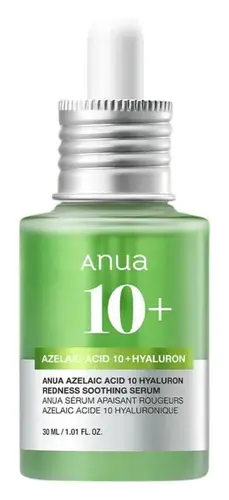
BrioGeo Superfoods Banana + Coconut Nourishing Conditioner Versus Anua Azelaic Acid 10 Hyaluron Redness Soothing Serum
This calming serum is formulated around Azelaic Acid and Panthenol to calm redness and clear breakouts.


What's inside
What's inside
 Key Ingredients
Benefits
Concerns
Ingredients Side-by-side
Water
Skin ConditioningGlycerin
Humectant


Isopropyl Palmitate
Emollient




Behentrimonium Chloride
Preservative
Cetearyl Alcohol
Emollient

Brassica Alcohol
Emollient
Cetyl Esters
Emollient
Musa Sapientum Peel Extract
Skin ConditioningCocos Nucifera Fruit Extract
Emollient
Ananas Sativus Fruit Extract
Skin ConditioningCarica Papaya Fruit Extract
Skin ConditioningMangifera Indica Juice
Skin ConditioningEuterpe Oleracea Fruit Extract

Curcuma Longa Root Extract
Antioxidant

Ocimum Basilicum Flower/Leaf Extract
TonicCorallina Officinalis Extract
Skin Conditioning
Lactobacillus
Skin ConditioningPersea Gratissima Oil
Skin Conditioning
Prunus Amygdalus Dulcis Oil
Skin Conditioning
Melia Azadirachta Flower Extract
Skin ConditioningPanthenol
Skin Conditioning
Melia Azadirachta Leaf Extract
Skin ConditioningOcimum Sanctum Leaf Extract
Skin ConditioningBrassicyl Isoleucinate Esylate
Emulsion StabilisingCetrimonium Chloride
Antimicrobial
Behentrimonium Methosulfate
SurfactantGuar Hydroxypropyltrimonium Chloride
Skin ConditioningParfum
Masking

Benzyl Alcohol
Perfuming

Sodium Benzotriazolyl Butylphenol Sulfonate
UV AbsorberDehydroacetic Acid
Preservative
Sodium Hydroxide
BufferingWater, Glycerin, Isopropyl Palmitate, Behentrimonium Chloride, Cetearyl Alcohol, Brassica Alcohol, Cetyl Esters, Musa Sapientum Peel Extract, Cocos Nucifera Fruit Extract, Ananas Sativus Fruit Extract, Carica Papaya Fruit Extract, Mangifera Indica Juice, Euterpe Oleracea Fruit Extract, Curcuma Longa Root Extract, Ocimum Basilicum Flower/Leaf Extract, Corallina Officinalis Extract, Lactobacillus, Persea Gratissima Oil, Prunus Amygdalus Dulcis Oil, Melia Azadirachta Flower Extract, Panthenol, Melia Azadirachta Leaf Extract, Ocimum Sanctum Leaf Extract, Brassicyl Isoleucinate Esylate, Cetrimonium Chloride, Behentrimonium Methosulfate, Guar Hydroxypropyltrimonium Chloride, Parfum, Benzyl Alcohol, Sodium Benzotriazolyl Butylphenol Sulfonate, Dehydroacetic Acid, Sodium Hydroxide
Water
Skin ConditioningAzelaic Acid
Buffering






Propylene Glycol
Humectant
Sodium Hydroxide
BufferingDipropylene Glycol
Humectant1,2-Hexanediol
Skin Conditioning
Panthenol
Skin Conditioning
Hydroxyethylcellulose
Emulsion StabilisingBetaine Salicylate
Antimicrobial
Glycerin
Humectant
Biosaccharide Gum-1
Humectant
Ethylhexylglycerin
Skin ConditioningAllantoin
Skin Conditioning
Dipotassium Glycyrrhizate
Humectant
Melia Azadirachta Leaf Extract
Skin ConditioningCamellia Sinensis Leaf Water
Masking
Sodium Hyaluronate
Humectant

Melia Azadirachta Flower Extract
Skin ConditioningNiacinamide
Smoothing
Aloe Barbadensis Leaf Juice
Skin Conditioning
Beta-Glucan
Skin Conditioning
Centella Asiatica Extract
Cleansing
Centella Asiatica Leaf Extract
Skin Conditioning
Centella Asiatica Root Extract
Skin Conditioning
Madecassoside
Antioxidant
Asiaticoside
Antioxidant
Asiatic Acid
Skin Conditioning
Madecassic Acid
Skin Conditioning
Squalane
Emollient
Zinc PCA
Humectant
Butylene Glycol
Humectant
Pentylene Glycol
Skin Conditioning
Caprylyl/Capryl Glucoside
CleansingHydrogenated Lecithin
Emulsifying
Ceramide NP
Skin Conditioning
Water, Azelaic Acid, Propylene Glycol, Sodium Hydroxide, Dipropylene Glycol, 1,2-Hexanediol, Panthenol, Hydroxyethylcellulose, Betaine Salicylate, Glycerin, Biosaccharide Gum-1, Ethylhexylglycerin, Allantoin, Dipotassium Glycyrrhizate, Melia Azadirachta Leaf Extract, Camellia Sinensis Leaf Water, Sodium Hyaluronate, Melia Azadirachta Flower Extract, Niacinamide, Aloe Barbadensis Leaf Juice, Beta-Glucan, Centella Asiatica Extract, Centella Asiatica Leaf Extract, Centella Asiatica Root Extract, Madecassoside, Asiaticoside, Asiatic Acid, Madecassic Acid, Squalane, Zinc PCA, Butylene Glycol, Pentylene Glycol, Caprylyl/Capryl Glucoside, Hydrogenated Lecithin, Ceramide NP
Reviews
Ingredients Explained
These ingredients are found in both products.
Ingredients higher up in an ingredient list are typically present in a larger amount.
Glycerin (or glycerol) is a compound naturally found in your skin. It's a powerhouse humectant that pulls water into the stratum corneum.
Topically, glycerin does several things at once:
Your skin makes glycerin on its own (mostly from sebaceous oil breakdown) and shuttles it to your outermost layer of skin, or your epidermis, via aquaporin-3.
Aquaporin-3 is a transporter that is essential for normal skin hydration, elasticity, and repair. Interestingly, mice lacking in AQP3 have dry and less elastic skin that can be fully corrected with glycerin.
This ingredient is non-irritating, plays well with almost every ingredient, and works across all skin types. Typical use is anywhere between 3-10% but can go up to 79% in some leave-on products.
Just know very high concentrations (>40%) can feel tacky in low humidity.
Glycerin is the name for this ingredient in American English. British English uses Glycerol/Glycerine.
Learn more about GlycerinMelia Azadirachta Flower Extract is from the Neem tree. Neem trees originate from India.
Melia Azadirachta Flower Extract contains antioxidants. Antioxidants help fight free-radicals. Free-radicals are molecules that may damage your skin cells, such as pollution.
The flowers of this tree are lilac colored.
Learn more about Melia Azadirachta Flower ExtractThis ingredient is also known as neem leaf extract. It contains natural compounds like nimbidin, quercetin, and other polyphenols that give it antibacterial, antifungal, and anti-inflammatory activity.
Lab studies have shown neem leaf extract can inhibit acne-related bacteria and help calm skin. Animal studies on wound gels using 1-3% neem leaf extract found it sped up healing without causing irritation.
A wound-healing study testing gels with the extract at 1%, 2%, and 3% concentrations and found none of them irritated the skin.
Most commercial products also use it in a similar low range (typically under 5%).
Allergy-wise, there are some case reports on neem oil causing allergic contact dermatitis so people with plant/botanical sensitivities may want to patch test first.
Learn more about Melia Azadirachta Leaf ExtractPanthenol is a common ingredient that helps hydrate and soothe the skin. It is found naturally in our skin and hair.
There are two forms of panthenol: D and L.
D-panthenol is also known as dexpanthenol. Most cosmetics use dexpanthenol or a mixture of D and L-panthenol.
Panthenol is famous due to its ability to go deeper into the skin's layers. Using this ingredient has numerous pros (and no cons):
Like hyaluronic acid, panthenol is a humectant. Humectants are able to bind and hold large amounts of water to keep skin hydrated.
This ingredient works well for wound healing. It works by increasing tissue in the wound and helps close open wounds.
Once oxidized, panthenol converts to pantothenic acid. Panthothenic acid is found in all living cells.
This ingredient is also referred to as pro-vitamin B5.
Learn more about PanthenolSodium Hydroxide is also known as lye or caustic soda. It is used to adjust the pH of products; many ingredients require a specific pH to be effective.
In small amounts, sodium hydroxide is considered safe to use. However, large amounts may cause chemical burns due to its high alkaline.
Your skin has a natural pH and acid mantle. This acid mantle helps prevent harmful bacteria from breaking through. The acid mantle also helps keep your skin hydrated.
"Alkaline" refers to a high pH level. A low pH level would be considered acidic.
Learn more about Sodium HydroxideWater. It's the most common cosmetic ingredient of all. You'll usually see it at the top of ingredient lists, meaning that it makes up the largest part of the product.
So why is it so popular? Water most often acts as a solvent - this means that it helps dissolve other ingredients into the formulation.
You'll also recognize water as that liquid we all need to stay alive. If you see this, drink a glass of water. Remember to stay hydrated!
Learn more about Water

