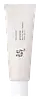
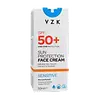
Beauty of Joseon Relief Sun : Rice + Probiotics SPF 50+ PA++++ Versus VZK Sun Protection Cream SPF 50+ Sensitive
This chemical sunscreen covers the full UV range and blocks ~98% of UVB at SPF 50.
This hybrid sunscreen covers the full UV range and blocks ~98% of UVB at SPF 50.


What's inside
What's inside
 Key Ingredients
Benefits
Concerns
Ingredients Side-by-side
Water
Skin ConditioningDibutyl Adipate
EmollientPropanediol
Solvent

Diethylamino Hydroxybenzoyl Hexyl Benzoate
UV Filter
Polymethylsilsesquioxane

Ethylhexyl Triazone
UV Absorber
Niacinamide
Smoothing










Methylene Bis-Benzotriazolyl Tetramethylbutylphenol
UV Filter
Coco-Caprylate/Caprate
Emollient
Caprylyl Methicone
Skin Conditioning
Diethylhexyl Butamido Triazone
UV Absorber
Glycerin
Humectant
1,2-Hexanediol
Skin Conditioning
Butylene Glycol
Humectant
Oryza Sativa Extract
Absorbent
Oryza Sativa Germ Extract
EmollientCamellia Sinensis Leaf Extract
Antimicrobial
Lactobacillus/Pumpkin Ferment Extract
Skin ConditioningBacillus/Soybean Ferment Extract
Skin ConditioningSaccharum Officinarum Extract
MoisturisingMacrocystis Pyrifera Extract
Skin Conditioning

Cocos Nucifera Fruit Extract
Emollient
Panax Ginseng Root Extract
Emollient
Monascus/Rice Ferment
Antioxidant
Behenyl Alcohol
Emollient
Poly C10-30 Alkyl Acrylate
Emulsion StabilisingPolyglyceryl-3 Methylglucose Distearate
Emulsifying

Decyl Glucoside
Cleansing
Tromethamine
BufferingCarbomer
Emulsion StabilisingAcrylates/C10-30 Alkyl Acrylate Crosspolymer
Emulsion StabilisingSodium Stearoyl Glutamate
CleansingPolyacrylate Crosspolymer-6
Emulsion StabilisingAdenosine
Skin Conditioning
Xanthan Gum
EmulsifyingT-Butyl Alcohol
Perfuming



Tocopherol
Antioxidant
Lactobacillus/Rice Ferment
Skin Conditioning
Aspergillus Ferment
Skin ConditioningSaccharomyces/Rice Ferment Filtrate
Skin Conditioning
Pentylene Glycol
Skin Conditioning
Ethylhexylglycerin
Skin ConditioningWater, Dibutyl Adipate, Propanediol, Diethylamino Hydroxybenzoyl Hexyl Benzoate, Polymethylsilsesquioxane, Ethylhexyl Triazone, Niacinamide, Methylene Bis-Benzotriazolyl Tetramethylbutylphenol, Coco-Caprylate/Caprate, Caprylyl Methicone, Diethylhexyl Butamido Triazone, Glycerin, 1,2-Hexanediol, Butylene Glycol, Oryza Sativa Extract, Oryza Sativa Germ Extract, Camellia Sinensis Leaf Extract, Lactobacillus/Pumpkin Ferment Extract, Bacillus/Soybean Ferment Extract, Saccharum Officinarum Extract, Macrocystis Pyrifera Extract, Cocos Nucifera Fruit Extract, Panax Ginseng Root Extract, Monascus/Rice Ferment, Behenyl Alcohol, Poly C10-30 Alkyl Acrylate, Polyglyceryl-3 Methylglucose Distearate, Decyl Glucoside, Tromethamine, Carbomer, Acrylates/C10-30 Alkyl Acrylate Crosspolymer, Sodium Stearoyl Glutamate, Polyacrylate Crosspolymer-6, Adenosine, Xanthan Gum, T-Butyl Alcohol, Tocopherol, Lactobacillus/Rice Ferment, Aspergillus Ferment, Saccharomyces/Rice Ferment Filtrate, Pentylene Glycol, Ethylhexylglycerin
Water
Skin ConditioningEthylhexyl Methoxycinnamate
UV Absorber

C12-15 Alkyl Benzoate
AntimicrobialOctocrylene
UV Absorber
Butyl Methoxydibenzoylmethane
UV Absorber
Homosalate
Skin Conditioning
Benzophenone-3
UV Absorber
Triceteareth-4 Phosphate
EmulsifyingCetearyl Alcohol
Emollient
Glycerin
Humectant
Titanium Dioxide
Cosmetic Colorant
Ethylhexyl Triazone
UV Absorber
Dimethicone
Emollient
Butyrospermum Parkii Butter
Skin Conditioning
Myristyl Myristate
Emollient
Beheneth-25
CleansingPhenoxyethanol
Preservative
Silica
Abrasive
Xanthan Gum
EmulsifyingEthylhexylglycerin
Skin ConditioningDisodium EDTA
Alpha-Isomethyl Ionone
Perfuming
Coumarin
Perfuming
Limonene
Perfuming
Linalool
Perfuming
Parfum
Masking
Water, Ethylhexyl Methoxycinnamate, C12-15 Alkyl Benzoate, Octocrylene, Butyl Methoxydibenzoylmethane, Homosalate, Benzophenone-3, Triceteareth-4 Phosphate, Cetearyl Alcohol, Glycerin, Titanium Dioxide, Ethylhexyl Triazone, Dimethicone, Butyrospermum Parkii Butter, Myristyl Myristate, Beheneth-25, Phenoxyethanol, Silica, Xanthan Gum, Ethylhexylglycerin, Disodium EDTA, Alpha-Isomethyl Ionone, Coumarin, Limonene, Linalool, Parfum
Reviews
Ingredients Explained
These ingredients are found in both products.
Ingredients higher up in an ingredient list are typically present in a larger amount.
Ethylhexyl Triazone (aka Octyl Triazone) is an oil-soluble organic UVB filter. It has peak absorption around 314 nm, right in the middle of the UVB range.
This ingredient is described as one of the most effective UVB filters available and small concentrations are enough to deliver a high SPF thanks to its strong UV absorbing power.
Formulators love it for its stability; its ability to filter UV stays practically unchanged even under intense radiation and it can also help boost the photostability of less stable filters like avobenzone.
It's also a great pick for water resistant products because it's insoluble in water and has a good affinity for keratin.
Because it's a big, heavy molecule, the European Scientific Committee has found to to have very low dermal penetration and negative results for allergenicity.
In vitro testing also showed a low absorption rate and clean results on irritation.
Typical use levels are 1-5% with 5% being the maximum in the EU, Japan, and other markets that allow it. However, this ingredient is not approved yet in the US or Canada.
Learn more about Ethylhexyl TriazoneEthylhexylglycerin is created from glycerin. It is a multitasker ingredient that:
The CIR Expert Panel found minimal skin absorption or sensitization of any kind in a safety assessment. Though this ingredient is considered well-tolerated, a small number of cases of allergic dermatitis have been published since 2002. Just be sure to patch test if you are unsure.
Industry-reported use ranges from 8% in rinse-off products and 2% in leave-on formulations.
Learn more about EthylhexylglycerinGlycerin (or glycerol) is a compound naturally found in your skin. It's a powerhouse humectant that pulls water into the stratum corneum.
Topically, glycerin does several things at once:
Your skin makes glycerin on its own (mostly from sebaceous oil breakdown) and shuttles it to your outermost layer of skin, or your epidermis, via aquaporin-3.
Aquaporin-3 is a transporter that is essential for normal skin hydration, elasticity, and repair. Interestingly, mice lacking in AQP3 have dry and less elastic skin that can be fully corrected with glycerin.
This ingredient is non-irritating, plays well with almost every ingredient, and works across all skin types. Typical use is anywhere between 3-10% but can go up to 79% in some leave-on products.
Just know very high concentrations (>40%) can feel tacky in low humidity.
Glycerin is the name for this ingredient in American English. British English uses Glycerol/Glycerine.
Learn more about GlycerinWater. It's the most common cosmetic ingredient of all. You'll usually see it at the top of ingredient lists, meaning that it makes up the largest part of the product.
So why is it so popular? Water most often acts as a solvent - this means that it helps dissolve other ingredients into the formulation.
You'll also recognize water as that liquid we all need to stay alive. If you see this, drink a glass of water. Remember to stay hydrated!
Learn more about WaterXanthan gum is used as a stabilizer and thickener within cosmetic products. It helps give products a sticky, thick feeling - preventing them from being too runny.
On the technical side of things, xanthan gum is a polysaccharide - a combination consisting of multiple sugar molecules bonded together.
Xanthan gum is a pretty common and great ingredient. It is a natural, non-toxic, non-irritating ingredient that is also commonly used in food products.
Learn more about Xanthan Gum

