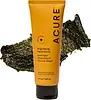
This smoothing exfoliator is formulated around Gluconolactone to refine skin texture and brighten dull-looking skin.

What's inside
What's inside
 Key Ingredients
Benefits
Concerns
Ingredients Side-by-side
Water
Skin ConditioningGlycerin
Humectant


Juglans Regia Shell Powder
Abrasive

Citrus Limon Peel
MaskingAloe Barbadensis Leaf Juice
Skin Conditioning

Sodium Methyl Cocoyl Taurate
Cleansing
Laminaria Digitata Extract
Skin Protecting
Montmorillonite
AbsorbentRubus Fruticosus Fruit Extract
AstringentChamomilla Recutita Flower Extract
Masking
Euterpe Oleracea Fruit Extract
Rosa Canina Fruit Extract
Astringent
Calendula Officinalis Flower Extract
Masking
Aspalathus Linearis Leaf Extract
Skin ConditioningPunica Granatum Extract
AstringentOlea Europaea Fruit Oil
Masking


Argania Spinosa Callus Culture Extract
Skin ConditioningMentha Viridis Leaf Oil
Astringent
Salvia Officinalis Oil
Masking
Cymbopogon Flexuosus Leaf Oil
Masking
Lavandula Hybrida Oil
Emollient
Sodium PCA
Humectant
Kaolin
Abrasive


Lecithin
Emollient
Isomalt
HumectantCellulose Gum
Emulsion StabilisingCarrageenan



Glyceryl Laurate
Emollient
Sodium Lauroyl Lactylate
EmulsifyingSodium Lauroamphoacetate
CleansingSodium Cocoyl Isethionate
Cleansing
Illite
Abrasive
Gluconolactone
Skin Conditioning



Ethylhexylglycerin
Skin ConditioningPotassium Sorbate
Preservative
Phenethyl Alcohol
MaskingChlorophyllin-Copper Complex
Antioxidant
Water, Glycerin, Juglans Regia Shell Powder, Citrus Limon Peel, Aloe Barbadensis Leaf Juice, Sodium Methyl Cocoyl Taurate, Laminaria Digitata Extract, Montmorillonite, Rubus Fruticosus Fruit Extract, Chamomilla Recutita Flower Extract, Euterpe Oleracea Fruit Extract, Rosa Canina Fruit Extract, Calendula Officinalis Flower Extract, Aspalathus Linearis Leaf Extract, Punica Granatum Extract, Olea Europaea Fruit Oil, Argania Spinosa Callus Culture Extract, Mentha Viridis Leaf Oil, Salvia Officinalis Oil, Cymbopogon Flexuosus Leaf Oil, Lavandula Hybrida Oil, Sodium PCA, Kaolin, Lecithin, Isomalt, Cellulose Gum, Carrageenan, Glyceryl Laurate, Sodium Lauroyl Lactylate, Sodium Lauroamphoacetate, Sodium Cocoyl Isethionate, Illite, Gluconolactone, Ethylhexylglycerin, Potassium Sorbate, Phenethyl Alcohol, Chlorophyllin-Copper Complex
Water
Skin ConditioningPumice
Abrasive
Caprylic/Capric Triglyceride
Masking
Kaolin
Abrasive
Glycerin
Humectant
Glyceryl Stearate
Emollient
Propanediol
Solvent
Aloe Barbadensis Leaf Juice
Skin Conditioning
PEG-100 Stearate
Surfactant
Cetearyl Alcohol
Emollient
Panthenol
Skin Conditioning
Tocopherol
Antioxidant
Tocopheryl Acetate
Antioxidant
Chamomilla Recutita Flower Extract
Masking
Lavandula Angustifolia Flower Extract
Cleansing
Vitis Vinifera Seed Extract
Antimicrobial
Camellia Sinensis Leaf Extract
Antimicrobial
Butyrospermum Parkii Butter
Skin Conditioning
Mentha Piperita Oil
Masking

Simmondsia Chinensis Seed Oil
Emollient
Ricinus Communis Seed Oil
Masking
Glycine Soja Oil
Emollient
Papain
Skin Conditioning
Bromelain
Skin Conditioning
Allantoin
Skin Conditioning
Menthol
Masking
Acacia Senegal Gum
MaskingXanthan Gum
EmulsifyingAmmonium Acryloyldimethyltaurate/Vp Copolymer
Menthyl Ethylamido Oxalate
Skin ConditioningSodium Stearoyl Lactylate
EmulsifyingTetrasodium Glutamate Diacetate
Maltodextrin
Absorbent
Disodium EDTA
Phenoxyethanol
Preservative
Ethylhexylglycerin
Skin ConditioningPotassium Sorbate
Preservative
Sodium Benzoate
Masking
Citric Acid
Buffering
Parfum
Masking
CI 77891
Cosmetic ColorantCI 42090
Cosmetic ColorantWater, Pumice, Caprylic/Capric Triglyceride, Kaolin, Glycerin, Glyceryl Stearate, Propanediol, Aloe Barbadensis Leaf Juice, PEG-100 Stearate, Cetearyl Alcohol, Panthenol, Tocopherol, Tocopheryl Acetate, Chamomilla Recutita Flower Extract, Lavandula Angustifolia Flower Extract, Vitis Vinifera Seed Extract, Camellia Sinensis Leaf Extract, Butyrospermum Parkii Butter, Mentha Piperita Oil, Simmondsia Chinensis Seed Oil, Ricinus Communis Seed Oil, Glycine Soja Oil, Papain, Bromelain, Allantoin, Menthol, Acacia Senegal Gum, Xanthan Gum, Ammonium Acryloyldimethyltaurate/Vp Copolymer, Menthyl Ethylamido Oxalate, Sodium Stearoyl Lactylate, Tetrasodium Glutamate Diacetate, Maltodextrin, Disodium EDTA, Phenoxyethanol, Ethylhexylglycerin, Potassium Sorbate, Sodium Benzoate, Citric Acid, Parfum, CI 77891, CI 42090
Alternatives
Ingredients Explained
These ingredients are found in both products.
Ingredients higher up in an ingredient list are typically present in a larger amount.
Aloe Barbadensis Leaf Juice is the filtered, stabilized liquid pressed from the inner gel of the aloe vera leaf.
In cosmetics, it shows up as either soothing active or a water-replacement base. It is roughly 98-99% water and the last 1-2% is an interesting mix of polysaccharides, amino acids, vitamins, minerals, and enzymes.
The polysaccharides do most of the work: they bind water at the skin surface for a light, non-greasy hydration boost. And one of the polysaccharides, glycomannan, is linked to fibroblast stimulation + collagen synthesis. This is also why aloe has such a long track record in wound and burn healing.
This ingredient is also calming with anti-inflammatory and mild antimicrobial activity, making it a great pick for sensitive, irritated, or post-sun skin.
Realistic expectations matter though; the solid evidence is mostly limited to hydration, soothing, and wound support. Deeper claims about anti-aging or sun protection are not well backed, and science reviews note it does not prevent radiation-induced skin injury.
Because it plays well with almost everything, it's commonly used as a base alongside other actives like niacinamide or vitamin C.
Typical usage concentrations range from 0.5% (where hydration benefits already show up) all the way to 90%+ (where it replaces water as the main base).
The safety for this ingredient is well-establish as well. Overall, this is a great supporting ingredient for those who want a boost in hydration.
Learn more about Aloe Barbadensis Leaf JuiceChamomilla Recutita Flower Extract comes from the Chamomile flower.
Chamomile is rich in antioxidants and has anti-inflammatory properties. Several compounds found in chamomile help with soothing, such as bisbolol.
Antioxidant components in chamomile make it an effective ingredient to help slow the signs of aging. Antioxidants help fight free-radical molecules, or molecules that may damage your skin.
Essential oils from chamomile have been found to improve wound healing due to its antimicrobial properties.
Ancient Greeks and Egyptians used Chamomile to treat skin redness and dryness. Chamomile has also been used to help treat stomach issues.
Learn more about Chamomilla Recutita Flower ExtractEthylhexylglycerin is created from glycerin. It is a multitasker ingredient that:
The CIR Expert Panel found minimal skin absorption or sensitization of any kind in a safety assessment. Though this ingredient is considered well-tolerated, a small number of cases of allergic dermatitis have been published since 2002. Just be sure to patch test if you are unsure.
Industry-reported use ranges from 8% in rinse-off products and 2% in leave-on formulations.
Learn more about EthylhexylglycerinGlycerin (or glycerol) is a compound naturally found in your skin. It's a powerhouse humectant that pulls water into the stratum corneum.
Topically, glycerin does several things at once:
Your skin makes glycerin on its own (mostly from sebaceous oil breakdown) and shuttles it to your outermost layer of skin, or your epidermis, via aquaporin-3.
Aquaporin-3 is a transporter that is essential for normal skin hydration, elasticity, and repair. Interestingly, mice lacking in AQP3 have dry and less elastic skin that can be fully corrected with glycerin.
This ingredient is non-irritating, plays well with almost every ingredient, and works across all skin types. Typical use is anywhere between 3-10% but can go up to 79% in some leave-on products.
Just know very high concentrations (>40%) can feel tacky in low humidity.
Glycerin is the name for this ingredient in American English. British English uses Glycerol/Glycerine.
Learn more about GlycerinKaolin is a clay. It is used for oil control and to help minimize pores. Like other clays, kaolin has the ability to absorb excess sebum or oil. This can help clean out pores and mattify the skin.
Some types of kaolin may have exfoliating properties. When water is added to kaolin, it becomes a paste with small abrasive particles.
Most kaolin is a white color, but may be pink/orange/red depending on where it comes from.
The name 'kaolin' comes from a Chinese village named 'Gaoling'. Kaolin clay comes from rocks rich in kaolinite. Kaolinite, the mineral, has a silicate layered structure. Kaolinite is formed from chemical weathering of aluminum siilicate minerals.
Besides skincare, kaolin is commonly used to make glossy paper, in ceramics, toothpaste, and as medicine to soothe stomach issues.
Learn more about KaolinPotassium Sorbate is a preservative used to prevent yeast and mold in products. It is commonly found in both cosmetic and food products.
This ingredient comes from potassium salt derived from sorbic acid. Sorbic acid is a natural antibiotic and effective against fungus.
Both potassium sorbate and sorbic acid can be found in baked goods, cheeses, dried meats, dried fruit, ice cream, pickles, wine, yogurt, and more.
You'll often find this ingredient used with other preservatives.
Learn more about Potassium SorbateWater. It's the most common cosmetic ingredient of all. You'll usually see it at the top of ingredient lists, meaning that it makes up the largest part of the product.
So why is it so popular? Water most often acts as a solvent - this means that it helps dissolve other ingredients into the formulation.
You'll also recognize water as that liquid we all need to stay alive. If you see this, drink a glass of water. Remember to stay hydrated!
Learn more about Water

