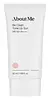
This hybrid sunscreen covers the full UV range and blocks ~98% of UVB at SPF 50.
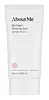
This hybrid sunscreen covers the full UV range and blocks ~98% of UVB at SPF 50.

What's inside
What's inside
 Key Ingredients
Benefits
Concerns
Ingredients Side-by-side
Water
Skin ConditioningTitanium Dioxide
Cosmetic Colorant

Caprylic/Capric Triglyceride
Masking


Propanediol
Solvent
Benzotriazolyl Dodecyl P-Cresol
UV AbsorberButyloctyl Salicylate
Skin Conditioning
Butylene Glycol
Humectant
Glycerin
Humectant
Niacinamide
Smoothing









Cyclohexasiloxane
Emollient
Polymethylsilsesquioxane
Acrylates Copolymer
1,2-Hexanediol
Skin Conditioning
Polyhydroxystearic Acid
Emulsifying

Citrus Junos Fruit Extract
Skin ConditioningRosmarinus Officinalis Leaf Oil
Masking
Citrus Aurantium Amara Flower Water
MaskingOryza Sativa Bran Oil
Emollient
Hydrogenated Lecithin
Emulsifying
Pentylene Glycol
Skin Conditioning
Alumina
Abrasive
Dimethicone/Vinyl Dimethicone Crosspolymer
Skin Conditioning
Stearic Acid
Cleansing
Coco-Caprylate/Caprate
Emollient
Sodium Acrylate/Sodium Acryloyldimethyl Taurate Copolymer
Emulsion StabilisingPolyacrylate Crosspolymer-6
Emulsion StabilisingPolyisobutene
Sodium Polyacryloyldimethyl Taurate
Emulsion StabilisingAmmonium Acryloyldimethyltaurate/Vp Copolymer
Ethylhexylglycerin
Skin ConditioningDicaprylyl Carbonate
EmollientHydroxypropyl Methylcellulose Stearoxy Ether
Silica
Abrasive
Triethoxycaprylylsilane
Aluminum Hydroxide
EmollientSorbitan Oleate
Emulsifying

Caprylyl/Capryl Glucoside
CleansingT-Butyl Alcohol
Perfuming



Tocopherol
Antioxidant

Calamine
AbsorbentCeramide NP
Skin Conditioning
Phytosphingosine
Skin Conditioning
CI 77492
Cosmetic ColorantCI 77491
Cosmetic ColorantCI 77499
Cosmetic ColorantWater, Titanium Dioxide, Caprylic/Capric Triglyceride, Propanediol, Benzotriazolyl Dodecyl P-Cresol, Butyloctyl Salicylate, Butylene Glycol, Glycerin, Niacinamide, Cyclohexasiloxane, Polymethylsilsesquioxane, Acrylates Copolymer, 1,2-Hexanediol, Polyhydroxystearic Acid, Citrus Junos Fruit Extract, Rosmarinus Officinalis Leaf Oil, Citrus Aurantium Amara Flower Water, Oryza Sativa Bran Oil, Hydrogenated Lecithin, Pentylene Glycol, Alumina, Dimethicone/Vinyl Dimethicone Crosspolymer, Stearic Acid, Coco-Caprylate/Caprate, Sodium Acrylate/Sodium Acryloyldimethyl Taurate Copolymer, Polyacrylate Crosspolymer-6, Polyisobutene, Sodium Polyacryloyldimethyl Taurate, Ammonium Acryloyldimethyltaurate/Vp Copolymer, Ethylhexylglycerin, Dicaprylyl Carbonate, Hydroxypropyl Methylcellulose Stearoxy Ether, Silica, Triethoxycaprylylsilane, Aluminum Hydroxide, Sorbitan Oleate, Caprylyl/Capryl Glucoside, T-Butyl Alcohol, Tocopherol, Calamine, Ceramide NP, Phytosphingosine, CI 77492, CI 77491, CI 77499
Water
Skin ConditioningTitanium Dioxide
Cosmetic Colorant
Caprylic/Capric Triglyceride
Masking
Propanediol
Solvent
Benzotriazolyl Dodecyl P-Cresol
UV AbsorberButyloctyl Salicylate
Skin Conditioning
Butylene Glycol
Humectant
Glycerin
Humectant
Niacinamide
Smoothing
Cyclohexasiloxane
Emollient
Polymethylsilsesquioxane
Acrylates Copolymer
1,2-Hexanediol
Skin Conditioning
Polyhydroxystearic Acid
Emulsifying
Citrus Junos Fruit Extract
Skin ConditioningRosmarinus Officinalis Leaf Oil
Masking
Citrus Aurantium Amara Flower Water
MaskingOryza Sativa Bran Oil
Emollient
Hydrogenated Lecithin
Emulsifying
Pentylene Glycol
Skin Conditioning
Alumina
Abrasive
Dimethicone/Vinyl Dimethicone Crosspolymer
Skin Conditioning
Stearic Acid
Cleansing
Coco-Caprylate/Caprate
Emollient
Sodium Acrylate/Sodium Acryloyldimethyl Taurate Copolymer
Emulsion StabilisingPolyacrylate Crosspolymer-6
Emulsion StabilisingPolyisobutene
Sodium Polyacryloyldimethyl Taurate
Emulsion StabilisingAmmonium Acryloyldimethyltaurate/Vp Copolymer
Ethylhexylglycerin
Skin ConditioningDicaprylyl Carbonate
EmollientHydroxypropyl Methylcellulose Stearoxy Ether
Silica
Abrasive
Triethoxycaprylylsilane
Aluminum Hydroxide
EmollientSorbitan Oleate
Emulsifying
Caprylyl/Capryl Glucoside
CleansingT-Butyl Alcohol
Perfuming
Tocopherol
Antioxidant
Calamine
AbsorbentCeramide NP
Skin Conditioning
Phytosphingosine
Skin Conditioning
Iron Oxides
Water, Titanium Dioxide, Caprylic/Capric Triglyceride, Propanediol, Benzotriazolyl Dodecyl P-Cresol, Butyloctyl Salicylate, Butylene Glycol, Glycerin, Niacinamide, Cyclohexasiloxane, Polymethylsilsesquioxane, Acrylates Copolymer, 1,2-Hexanediol, Polyhydroxystearic Acid, Citrus Junos Fruit Extract, Rosmarinus Officinalis Leaf Oil, Citrus Aurantium Amara Flower Water, Oryza Sativa Bran Oil, Hydrogenated Lecithin, Pentylene Glycol, Alumina, Dimethicone/Vinyl Dimethicone Crosspolymer, Stearic Acid, Coco-Caprylate/Caprate, Sodium Acrylate/Sodium Acryloyldimethyl Taurate Copolymer, Polyacrylate Crosspolymer-6, Polyisobutene, Sodium Polyacryloyldimethyl Taurate, Ammonium Acryloyldimethyltaurate/Vp Copolymer, Ethylhexylglycerin, Dicaprylyl Carbonate, Hydroxypropyl Methylcellulose Stearoxy Ether, Silica, Triethoxycaprylylsilane, Aluminum Hydroxide, Sorbitan Oleate, Caprylyl/Capryl Glucoside, T-Butyl Alcohol, Tocopherol, Calamine, Ceramide NP, Phytosphingosine, Iron Oxides
Ingredients Explained
These ingredients are found in both products.
Ingredients higher up in an ingredient list are typically present in a larger amount.
1,2-Hexanediol is a synthetic liquid and another multi-functional powerhouse.
It is a:
- Humectant, drawing moisture into the skin
- Emollient, helping to soften skin
- Solvent, dispersing and stabilizing formulas
- Preservative booster, enhancing the antimicrobial activity of other preservatives
Acrylates Copolymer is used as a film-forming agent and texture enhancer.
After applied, Acrylates Copolymer forms a thin film cover that helps skin feel more soft. It can help sunscreens become more water-resistant.
It is also used to make a product more thick.
Learn more about Acrylates CopolymerAlumina (aka aluminum oxide) is an inorganic mineral powder refined from bauxite that works as a quiet workhorse in a formula.
It shows up often as an abrasive, absorbent, anticaking, bulking, and viscosity-controlling agent.
One of its most common jobs is acting as a pigment carrier and dispersant.
Alumina platelets are often blended with inorganic sunscreens like Titanium Dioxide (or with colorants) and then coated with a silicone such as Triethoxycaprylylsilane so the pigment spreads evenly and smoothly.
In makeup, it can also double as a light-diffusing powder or oil absorber to keep formulas from looking greasy.
The Cosmetic Ingredient Review Expert Panel has concluded alumina to be safe in present practices of use and concentration.
They note it's a stable, oxidized compound and scientific research has failed to establish links to health issues.
Concentrations vary depending on the product:
Learn more about AluminaAluminum Hydroxide is a form of aluminum. It can be naturally found in nature as the mineral gibbsite. In cosmetics, Aluminum Hydroxide is used as a colorant, pH adjuster, and absorbent.
As a colorant, Aluminum Hydroxide may add opacity, or reduce the transparency. Aluminum hydroxide is contains both basic and acidic properties.
According to manufacturers, this ingredient is an emollient and humectant. This means it helps hydrate the skin.
In medicine, this ingredient is used to help relieve heartburn and help heal ulcers.
There is currently no credible scientific evidence linking aluminum hydroxide in cosmetics to increased cancer risk.
Major health organizations allow the use of aluminum hydroxide in personal care products and have not flagged it as a carcinogenic risk at typical usage levels.
Learn more about Aluminum HydroxideAmmonium Acryloyldimethyltaurate/Vp Copolymer is a synthetically created polymer. It's used as a film-forming agent and used to thicken the consistency of products.
Think of it as a supportive ingredient that helps your gel-creams feel silky, "cloud cream-like", and spread evenly without being greasy.
The Cosmetic Ingredient Review (CIR) Expert Panel evaluated it (along with 22 other acryloyldimethyltaurate polymers) and concluded it's:
Due to its large molecular size, it sits on the surface of skin rather than penetrating it.
Learn more about Ammonium Acryloyldimethyltaurate/Vp CopolymerBenzotriazolyl Dodecyl P-Cresol, also known as Tinogard TL, is a broad-spectrum UV absorber.
It helps stabilize light-sensitive ingredients and protects other ingredients from breaking down due to light exposure (especially in transparent packaging).
This ingredient helps extend a product’s shelf life by preventing both photolytic (light-induced) and photo-oxidative degradation. It’s typically used at low concentrations, around 0.01% to 0.1%.
Despite being a chemical UV filter, this ingredient can be found in "100% mineral sunscreens". This is due to regulatory loopholes.
Learn more about Benzotriazolyl Dodecyl P-CresolButylene Glycol (or BG) is used within cosmetic products for a few different reasons:
Overall, Butylene Glycol is a safe and well-rounded ingredient that works well with other ingredients.
Though this ingredient works well with most skin types, some people with sensitive skin may experience a reaction such as allergic rashes, closed comedones, or itchiness.
Learn more about Butylene GlycolButyloctyl Salicylate is a chemical UV filter structurally similar to octisalate. It is a photostabilizer, SPF booster, emollient and solvent. This ingredient helps evenly spread out ingredients.
According to a manufacturer, it is suitable for pairing with micro Titanium Dioxide, Zinc Oxide, and pigments.
Photostabilizers help stabilize UV-filters and prevents them from degrading quickly.
Learn more about Butyloctyl SalicylateCalamine is a "pink powder" that is used to calm itchy or irritated skin. In official medical standards, calamine is basically almost all zinc oxide with a tiny bit of iron oxide added for the pink color.
Lab testing requires that it’s at least 98% zinc oxide, which just means it has to be very pure and mostly zinc oxide.
In skincare, calamine can help relieve itches, calm skin, and absorb excess moisture/oil. This is why you'll often see it used for oozing rashes. Calamine is approved as a skin protectant active at 1-25% in US OTC drug products.
A big part of calamine's soothing effect comes from zinc oxide's protective properties. Since calamine can absorb excess moisture/oil, it might be drying for already dry skin types.
A review of topical medicament allergies notes that contact dermatitis from calamine isn't typically reported, but added actives in a formulation are known sensitizers.
Learn more about CalamineCaprylic/Capric Triglyceride (aka MCT Oil) is a lightweight emollient, solvent, and texture enhancer. It is considered a skin-softener by helping to prevent moisture loss.
Though it behaves like an oil, it is not technically one due to its chemical composition. One perk of this ingredient is that it is very stable, resistant to oxidation, and unlikely to go rancid.
In practice, that translates to a long shelf life and a consistently elegant skin feel.
While there is an assumption Caprylic Triglyceride can clog pores due to it being derived from coconut oil, there is no research supporting this. Just patch test if you have concerns.
Fractionated coconut oil and MCT Oil are both listed as Caprylic/Capric Triglyceride according to INCI. This is because INCI names are based on the ingredient’s final chemical composition and not its marketing name or source.
This ingredient is treated as the gold standard fungal acne safe oil. Even though it is coconut derived, the problematic lauric acid is stripped out.
This leaves just caprylic (C8) and capric (C10) acid. These chain lengths actually trend antifungal; a 2020 study found caprylic acid was enough to disrupt Malassezia furfur cell membrane, with a caprylic acid derivative damaging membrane structures at concentrations as low as 0.2%.
Learn more about Caprylic/Capric TriglycerideThis ingredient is a mild surfactant made by sticking glucose onto a blend of fatty acids.
It does two jobs because it has a sugar head that loves water and a fatty tail that loves oil:
Typical use levels range from 10-20% in cleansers and 15-30% in shower products.
Once on your skin, your skin's glucoside hydrolases breaks it down into glucose and the parent fatty alcohols.
This ingredient is considered fungal acne safe because its fatty alcohol portion sits outside the Malassezia yeast's metabolization range.
Learn more about Caprylyl/Capryl GlucosideCeramide NP (formerly known as Ceramide 3) is one of the skin's naturally occurring lipids.
Since ceramides are the major lipid components of the skin, they are crucial for maintaining skin barrier and hydration. Ceramide NP most closely mirrors the dominant kind in human skin amongst ceramide subtypes.
This ceramide works by slotting into gaps within the stratum corneum's lipid matrix to limit trans-epidermal water loss (TEWL) and shield the skin against external irritants.
A study with 312 patients found that using a ceramide-containing routine for 4 weeks reduced the severity of atopic dermatitis by over 61%.
Another clinical study in subjects aged 60 and older found that a ceramide body wash and moisturizer improved skin dryness and itchy skin in 15 days.
Overall, ceramides are considered non-irritating and safety tests have found little to no observable adverse effects from using this ingredient.
Ceramide NP is usually sourced from plants (like soybean or rice bran), or produced synthetically.
Learn more about Ceramide NPThis ingredient is also known as Neroli Hydrosol or bitter orange blossom water. It is an aromatic water made by distilling the flowers of the bitter orange tree.
Because it is water that contains very small amounts of volatile aromatic compounds, this ingredient is more gentle than essential oil.
Some of the naturally occurring components have been studied for antioxidant and calming effects. However, like other fragrant plant waters, it can cause irritation in fragrance-sensitive skin.
Learn more about Citrus Aurantium Amara Flower WaterCitrus Junos Fruit Extract comes from the Citrus Junos tree, or the Yuzu plant.
Yuzu has many skin benefits. It contains antioxidants and a variety of Vitamins. The vitamins found in yuzu include: Vitamin C, Vitamin A, Vitamin B6, and Vitamin B5.
Vitamins C and A also provide plenty of skin benefits such as boosting collagen production and helping to reduce the signs of aging.
For those with allergies, Yuzu does contain limonene and linalool. Both these compounds may cause skin sensitivity. If you have concerns, we recommend speaking with a professional.
Learn more about Citrus Junos Fruit ExtractCoco-Caprylate/Caprate is a lightweight ester created from coconut oil fatty acids, caprylic acid, and capric acid.
It is an emollient that helps soften skin and reduce transepidermal water loss (TEWL). What sets it apart from heavier emollients is its ultralight, non-greasy feel.
Once applied, this ingredient dries down quickly and leaves a dry, silky finish behind. This also helps improve spreadability and texture.
This ingredient has an excellent safety-record and is non-irritating.
Typical concentrations for cosmetics range from 0.5-62%.
Research on Malassezia growth found no growth on fatty acid esters with chain lengths shorter than 12 carbons (it prefers C11-24).
Since Coco-Caprylate/Caprate is built on C8 and C10 fatty acids, it is out of the range that Malassezia metabolizes, and therefore safe for fungal acne.
Learn more about Coco-Caprylate/CaprateCyclohexasiloxane is a type of silicone more commonly known as D6. It is an emollient and solvent.
Cyclohexasiloxane is used to evenly distribute ingredients throughout the product. When applied to the skin, Cyclohexasiloxane evaporates and leaves behind a silky feel.
As an emollient, it can help the skin feel soft and hydrated. It is also used to reduce frizz in hair products.
Learn more about CyclohexasiloxaneDicaprylyl Carbonate comes from carbonic acid and caprylyl alcohol, a fatty alcohol. It is an emollient and gives skin a velvet feel. The sources of Dicaprylyl Carbonate may be synthetic or from animals.
As an emollient, Dicaprylyl Carbonate creates a film on the skin. This film traps moisture in, keeping your skin soft and hydrated.
This ingredient is a silicone elastomer that works as a texture enhancer, adds a silky slip, and also helps absorb excess oil.
Because it's a large macromolecule that's insoluble in water and chemically inert, it's not expected to penetrate or be absorbed into skin.
Human patch tests with a facial lotion containing 1% of this ingredient found no sensitization.
Learn more about Dimethicone/Vinyl Dimethicone CrosspolymerEthylhexylglycerin is created from glycerin. It is a multitasker ingredient that:
The CIR Expert Panel found minimal skin absorption or sensitization of any kind in a safety assessment. Though this ingredient is considered well-tolerated, a small number of cases of allergic dermatitis have been published since 2002. Just be sure to patch test if you are unsure.
Industry-reported use ranges from 8% in rinse-off products and 2% in leave-on formulations.
Learn more about EthylhexylglycerinGlycerin (or glycerol) is a compound naturally found in your skin. It's a powerhouse humectant that pulls water into the stratum corneum.
Topically, glycerin does several things at once:
Your skin makes glycerin on its own (mostly from sebaceous oil breakdown) and shuttles it to your outermost layer of skin, or your epidermis, via aquaporin-3.
Aquaporin-3 is a transporter that is essential for normal skin hydration, elasticity, and repair. Interestingly, mice lacking in AQP3 have dry and less elastic skin that can be fully corrected with glycerin.
This ingredient is non-irritating, plays well with almost every ingredient, and works across all skin types. Typical use is anywhere between 3-10% but can go up to 79% in some leave-on products.
Just know very high concentrations (>40%) can feel tacky in low humidity.
Glycerin is the name for this ingredient in American English. British English uses Glycerol/Glycerine.
Learn more about GlycerinHydrogenated Lecithin is a more stable version of lecithin.
It's made by taking lecithin (a phospholipid commonly found in soybeans and egg yolks) and hydrogenating it. This just means the unsaturated fatty acids are turned into saturated ones so they don't go bad as easily.
This ingredient is an emollient, emulsifier, and penetration enhancer. As an emollient, it helps soften and hydrate skin by trapping moisture within. As an emulsifier, it prevents oil and water ingredients from separating.
Hydrogenated Lecithin can form tiny spherical structures made of phospholipid bilayers called liposomes. These liposomes are able to capture compounds inside their structure and deliver them through the skin barrier.
Because phospholipids are a natural component of our cell membranes, this ingredient is inherently compatible with skin.
A 2021 study found lecithin-based surfactants were less harsh and more tolerable comared to Sodium Lauryl Sulfate (SLS).
Learn more about Hydrogenated LecithinWe don't have a description for Hydroxypropyl Methylcellulose Stearoxy Ether yet.
Niacinamide is a multitasking form of vitamin B3 that strengthens the skin barrier, reduces pores and dark spots, regulates oil, and improves signs of aging.
And the best part? It's gentle and well-tolerated by most skin types, including sensitive and reactive skin.
You might have heard of "niacin flush", or the reddening of skin that causes itchiness. Niacinamide has not been found to cause this.
In very rare cases, some individuals may not be able to tolerate niacinamide at all or experience an allergic reaction to it.
If you are experiencing flaking, irritation, and dryness with this ingredient, be sure to double check all your products as this ingredient can be found in all categories of skincare.
When incorporating niacinamide into your routine, look out for concentration amounts. Typically, 5% niacinamide provides benefits such as fading dark spots. However, if you have sensitive skin, it is better to begin with a smaller concentration.
When you apply niacinamide to your skin, your body converts it into nicotinamide adenine dinucleotide (NAD). NAD is an essential coenzyme that is already found in your cells as "fuel" and powers countless biological processes.
In your skin, NAD helps repair cell damage, produce new healthy cells, support collagen production, strengthen the skin barrier, and fight environmental stressors (like UV and pollution).
Our natural NAD levels start to decline with age, leading to slower skin repair, visible aging, and a weaker skin barrier. By providing your skin niacinamide, you're recharging your skin's NAD levels. This leads to stronger, healthier, and younger looking skin.
Another name for vitamin B3 is nicotinamide. This vitamin is water-soluble and our bodies don't store it. We obtain Vitamin B3 from either food or skincare. Meat, fish, wheat, yeast, and leafy greens contain vitamin B3.
The type of niacinamide used in skincare is synthetically created.
Learn more about NiacinamideThis oil comes from the outer layer (bran) of rice grains. It is packed with skin-friendly fatty acids to soften and condition the skin while supporting your moisture barrier.
What makes it stand out from other plant oils is its naturally high concentration of gamma-oryzanol, a potent antioxidant. This antioxidant has shown some UV-absorptive properties in research.
Other antioxidants found in this oil include tocopherols, tocotrienols, and ferulic acid.
According to manufacturers, this oil has a lightweight texture that absorbs nicely.
The CIR (Cosmetic Ingredient Review) has concluded this ingredient to be safe as used in cosmetics and it has not shown to be a skin sensitizer in testing (unless you have a known rice allergy).
Due to the fatty acids (primarily Oleic Acid ~40%, Linoleic Acid ~30%, and some Palmitic Acid), this ingredient may not be fungal acne safe.
Learn more about Oryza Sativa Bran OilPentylene Glycol (1,2-pentanediol) is a multitasking little diol with three main roles in a formula:
Research on alkanediols (the family pentylene glycol belongs to) show they work by disrupting microbial cell membranes. This disruption helps the primary preservative system in a product work more effectively at lower doses.
On the safety side, the Cosmetic Ingredient Review Expert Panel has concluded this ingredient to be safe as used in current cosmetic practices + concentrations.
Typical use levels in a formula run about 1-5%.
Learn more about Pentylene GlycolPhytosphingosine is a phospholipid naturally found in our skin as a building block for ceramides.. It helps moisturize, soothe, and protect skin.
Phytosphingosine contributes to your skin's natural moisturizing factor (NMF). The NMF is responsible for hydration, a strong barrier, and plasticity. Our NMF decreases with age. Increasing NMF leads to more healthy and hydrated skin.
Studies show products formulated with NMF ingredients help strengthen our skin's barrier. Having a healthy skin barrier reduces irritation and increases hydration. Our skin barrier is responsible for having plump and firm skin. It also helps protect our skin against infection, allergies, and inflammation.
Fun fact: Phytosphingosine is abundant in plants and fungi.
More ingredients that help boost collagen in skin:
Learn more about PhytosphingosinePolyacrylate Crosspolymer-6 is a texture enhancer and pH adjuster.
It is be used to thicken water-based products and create a gel-texture with a velvet feel.
One manufacturer claims this ingredient to have a pH range of 2-8 and to be biodegradable.
This ingredient is also known as Sepimax Zen.
Learn more about Polyacrylate Crosspolymer-6Polyhydroxystearic Acid is a vegetable-derived soft wax made from castor oil. It's an emulsion stabilizer, thickener, and film former.
You'll likely see it in sunscreens because it helps disperse pigments and UV-reflecting minerals like titanium dioxide and zinc oxide evenly.
Depending on the concentration, it can drastically change the texture of a product from pasty solid (like lipstick) to sprayable liquid.
The CIR Expert Panel for Cosmetic Ingredient Safety has concluded this ingredient to be safe in cosmetics. The highest reported use concentration is 14.2% in lipsticks.
Learn more about Polyhydroxystearic AcidPolyisobutene is a synthetic polymer made from isobutene.
It is a film-forming agent and helps bind ingredients together.
Polyisobutene is not absorbed by the skin.
Learn more about PolyisobutenePolymethylsilsesquioxane is a silicone used as a film forming agent.
When applied to the skin, this ingredient creates an invisible film on the surface. This film still allows oxygen to pass through, but prevents moisture from escaping. This can help condition and hydrate the skin. It also leaves a silky feel when applied.
Polymethylsilsesquioxane has not been shown to clog pores. It has been deemed safe to use up to 55%, but most cosmetics use much less.
If you have concerns about using this ingredient, we recommend speaking with a professional.
Learn more about PolymethylsilsesquioxanePropanediol is an all-star ingredient. It softens, hydrates, and smooths the skin.
It’s often used to:
Propanediol is not likely to cause sensitivity and considered safe to use. It is derived from corn or petroleum with a clear color and no scent.
Learn more about PropanediolRosmarinus Officinalis Leaf Oil is an essential oil also known as rosemary essential oil. In skincare, it is a skin conditioning agent and also acts as a natural fragrance that gives products a fresh/herby smell.
The oil is a mix of over 100 volatile compounds with 1,8-cineole, α-pinene, camphor, and verbenone usually leading the pack.
Lab studies credit this oil with antioxidant, anti-inflammatory, and antimicrobial activity. Some research even show rosemary compounds calming acne-related inflammation.
The Cosmetic Ingredient Review (CIR) has concluded rosemary-derived ingredients to be safe when formulated to be nonsensitizing.
Since this is a fragrant essential oil, the main concern is for fragrance-sensitive folks.
Learn more about Rosmarinus Officinalis Leaf OilSilica, also known as silicon dioxide, is a naturally occurring mineral. It is used as a fine, spherical, and porous powder in cosmetics.
Though it has exfoliant properties, the function of silica varies depending on the product.
The unique structure of silica enhances the spreadability and adds smoothness, making it a great texture enhancer.
It is also used as an active carrier, emulsifier, and mattifier due to its ability to absorb excess oil.
In some products, tiny microneedles called spicules are made from silica or hydrolyzed sponge. When you rub them in, they lightly polish away dead skin layers and enhance the penetration of active ingredients.
Learn more about SilicaThis long ingredient is a copolymer of sodium acrylate and sodium acryloyldimethyl taurate monomers.
It is used to help stabilize other ingredients and create a thicker gel-like texture.
Emulsifiers prevent oils and waters from separating.
Learn more about Sodium Acrylate/Sodium Acryloyldimethyl Taurate CopolymerThis is a lab-made ingredient that plays a huge role in improving the texture of a formula.
It's used to thicken watery gel-creams, prevent water + oil from separating, and give products a silky, non-greasy glide.
Safety-wise, a panel of independent toxicologists reviewed this ingredient and concluded it to be safe in cosmetics in the present practices of use and concentration.
A separate sensitization patch test on humans also showed no evidence of allergic reactivity, and a true allergy to this ingredient is considered rare.
Typical usage levels range from 0.015%-3% in leave-on products and 0.078%-3.2% in rinse-off products.
Learn more about Sodium Polyacryloyldimethyl TaurateSorbitan Oleate is a PEG-free emulsifier made by esterifying sorbitol with oleic acid.
You'll likely see it paired with Polysorbate 80 to create the right emulsification balance.
Typical use levels in formulas range from 2-10%.
The CIR Expert Panel has concluded this ingredient to be safe as a cosmetic ingredient.
Since this ingredient is an ester of oleic acid, it may not be fungal acne safe. Oleic acid is a fatty acid that falls into the C11-24 range that Malassezia can metabolize.
This ingredient does have a comedogenic rating of 3, but this doesn't mean a formula with this ingredient will clog pores. Human testing has proved that any finished product with a comedogenic ingredient won't automatically make you break out; it really comes down to concentration, formula, and your skin.
Learn more about Sorbitan OleateStearic Acid is a fatty acid that is already found in your skin. It's one of the free fatty acids that works alongside ceramides and cholesterols to maintain your barrier.
In cosmetics, it is a multitasker:
Safety-wise, the CIR Expert Panel has concluded it to be safe in cosmetics when formulated to be non-irritating and non-sensitizing.
Free stearic acid is a C18 fatty acid that the Malassezia yeast can substrate, so this ingredient may not be fungal acne safe.
This ingredient does have a comedogenic rating of 2-3, but this doesn't mean a formula with this ingredient will clog pores.
Human testing has proved that any finished product with this ingredient won't automatically make you break out; it really comes down to concentration, formula, and your skin.
Learn more about Stearic AcidT-Butyl Alcohol (aka tert-butanol) is a small, clear, camphor-smelling alcohol.
It has two main jobs:
On the safety side, it's well-studied and has a solid track record. Human repeat-insult patch testing showed no skin irritation or sensitization even at 100%.
Typical use levels are pretty tiny, usually less than 1%.
You might see some fear-mongering around this ingredient:
Studies in male rats showed kidney effects but that's because of a rat-specific protein that humans don't make. So this study isn't really relevant to humans.
Though it's not a typical fragrance like parfum, it does have a natural scent. That's why the official COSIng database lists it as 'perfuming' ingredient. It can be used to modify the scent of a formula.
Learn more about T-Butyl AlcoholTitanium Dioxide (TD) is a mineral UV filter widely used in sunscreens and cosmetics.
It's one of only two UV filters officially classified as "mineral" by regulatory agencies (the other being Zinc Oxide).
A really common myth is that mineral filters work by reflecting UV light off your skin like tiny mirrors.
They don't only do that; modern research shows TD protects mostly by absorbing UV radiation, the same way chemical filters do.
When researchers measured this, reflection accounted for only about 4-5% of the protection (and less than SPF 2 on its own). The other ~95% comes from absorption: the UV photons hit the particle and their energy gets soaked up by its semiconductor band gap rather than bouncing off.
So "reflects vs. absorbs" was never really the right way to split mineral from chemical filters.
TD gives broad-spectrum protection that's strongest in the UVB and UVA-2 range and weaker in the UVA-1 range. Its UVA protection isn't quite as strong as Zinc Oxide's which is why you'll often see the two paired together.
Together, they make a solid broad-spectrum system.
TD is a great pick for sensitive, acne-prone, or redness-prone skin because it's non-irritating and chemically inert. Regulatory reviews classify it as a non-sensitizer and mild-to-non-irritant.
It's also unlikely to cause the "eye sting" some chemical filters are known for.
The main trade-off is cosmetic; TD can leave a white cast and has a thicker texture. This is why mineral sunscreens are often less cosmetically elegant than chemical or hybrid formulas (and harder to shade-match on deeper skin tones).
Formulators often use micronized or nano-sized TD to cut down on white case and improve spreadability. Smaller particles scatter less visible light so the formula looks less chalky while still filtering UV.
TD is almost always bundled with coatings like Alumina, Silica, Stearic Acid, or Dimethicone. These coatings do two important jobs:
TD can be used at up to 25% in a finished sunscreen; this is the regulatory ceiling in both the US and the EU.
In practice, the amount in any given product varies a lot depending on the target SPF and whether it's paired with other UV filters.
TD is one of the most heavily vetted sunscreen ingredients out there. It is approved as a UV filter in all major markets worldwide, including the US, EU, UK, Japan, Korea, China, Australia, and Canada.
The safety evidence is solid. There was an old worry that nano particles might absorb through skin into the body but multiple studies (including on damaged, sunburned, and UV-irradiated skin) have shown that TD stays on the surface and the layer of dead skin cells on top of everything else.
There's also no evidence of carcinogenicity, mutagenicity, or reproductive toxicity from dermal exposure of this ingredient.
For those who have seen the headline about a 2022 EU ban on TD, that was on TD as a food additive (a complete separate use from topical sunscreen).
There are ongoing questions about how nano-TD might affect marine ecosystems. As of now, there has been no conclusive evidence that any form of TD (or any other sunscreen filter) harms coral reefs or marine life.
The science is still developing and it's a space worth watching rather than packing over.
However, several destinations have reef-safety sunscreen rules that restrict certain chemical filters and steer visitors toward mineral, non-nano options. If you're traveling somewhere with these rules, a non-nano mineral sunscreen is the safe bet.
Learn more about Titanium DioxideTocopherol is a fat-soluble antioxidant known as Vitamin E.
You'll find this ingredient in the vast majority of skincare (for good reason). It works to neutralize free radicals, or unstable molecules generated by UV exposure, pollution, and other environmental stressors, before they can cause oxidative damage to your skin cells.
Topically applied tocopherol has been shown to protect against UV damage by ramping up the skin's own natural defense enzymes.
It also acts as a skin conditioning agent; some studies show that regular topical use can improve the skin's water-binding capacity over 2-4 weeks.
This ingredient is especially loved for being a team player. When combined with Vitamin C, the photoprotective effect of both ingredients roughly doubles and the combo also helps reduce UV-induced DNA damage.
This ingredient has some brightening potential but it's more of a prevention ingredient than spot-fader. Cell studies show it can slow down melanin production but it's worth noting that it's not the most powerful brightener out there.
In formulations, it also serves as a stabilizer that helps protect other oxidation-prone ingredients from degrading.
Concentrations usually range from 0.1-1% in most leave-on products.
Learn more about TocopherolTriethoxycaprylylsilane is a silicon-based surface modifier that makes sunscreens feel silky and makeup stay put.
Its main job is to coat mineral particles like titanium dioxide, zinc oxide, and color pigments in a thin, oily layer so they spread smoothly, don't clump, and stick to skin better.
This ingredient is typically used at low levels (up to 2.5% in eyeshadow and 1% in lipstick).
Learn more about TriethoxycaprylylsilaneWater. It's the most common cosmetic ingredient of all. You'll usually see it at the top of ingredient lists, meaning that it makes up the largest part of the product.
So why is it so popular? Water most often acts as a solvent - this means that it helps dissolve other ingredients into the formulation.
You'll also recognize water as that liquid we all need to stay alive. If you see this, drink a glass of water. Remember to stay hydrated!
Learn more about Water

