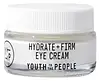
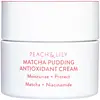
Youth To The People Superfood Hydrate + Firm Peptide Eye Cream Versus Peach & Lily Matcha Pudding Antioxidant Cream
This anti-aging eye moisturizer is formulated around Camellia Sinensis Leaf Extract and Palmitoyl Tripeptide-5 to soften the look of wrinkles and hydrate skin.
This calming moisturizer is formulated around Niacinamide and Camellia Sinensis Leaf Extract to calm redness and hydrate skin.


What's inside
What's inside
 Key Ingredients
Benefits
Concerns
Ingredients Side-by-side
Water
Skin ConditioningGlycerin
Humectant


Brassica Oleracea Acephala Leaf Extract
HumectantSpinacia Oleracea Leaf Extract
Skin ConditioningCamellia Sinensis Leaf Extract
Antimicrobial






Chamomilla Recutita Flower Extract
Masking
Medicago Sativa Extract
TonicAloe Barbadensis Leaf Extract
Emollient
Spirulina Platensis Extract
Skin ProtectingPalmitoyl Tripeptide-5
Skin Conditioning

Palmitoyl Dipeptide-5 Diaminobutyroyl Hydroxythreonine
Skin Conditioning
Tetradecyl Aminobutyroylvalylaminobutyric Urea Trifluoroacetate
Skin ConditioningSodium Hyaluronate Crosspolymer
Humectant
Helianthus Annuus Seed Oil
Emollient


Stearic Acid
Cleansing
Glyceryl Stearate
Emollient
Cetyl Alcohol
Emollient

Lecithin
Emollient
Ascorbic Acid
Antioxidant

Panthenol
Skin Conditioning
Sodium Hyaluronate
Humectant
Tocopheryl Acetate
Antioxidant
Parfum
Masking



Hydroxyethylcellulose
Emulsion StabilisingPentylene Glycol
Skin Conditioning
Ethylhexylglycerin
Skin ConditioningMagnesium Chloride
Phenoxyethanol
Preservative
Potassium Sorbate
Preservative
Water, Glycerin, Brassica Oleracea Acephala Leaf Extract, Spinacia Oleracea Leaf Extract, Camellia Sinensis Leaf Extract, Chamomilla Recutita Flower Extract, Medicago Sativa Extract, Aloe Barbadensis Leaf Extract, Spirulina Platensis Extract, Palmitoyl Tripeptide-5, Palmitoyl Dipeptide-5 Diaminobutyroyl Hydroxythreonine, Tetradecyl Aminobutyroylvalylaminobutyric Urea Trifluoroacetate, Sodium Hyaluronate Crosspolymer, Helianthus Annuus Seed Oil, Stearic Acid, Glyceryl Stearate, Cetyl Alcohol, Lecithin, Ascorbic Acid, Panthenol, Sodium Hyaluronate, Tocopheryl Acetate, Parfum, Hydroxyethylcellulose, Pentylene Glycol, Ethylhexylglycerin, Magnesium Chloride, Phenoxyethanol, Potassium Sorbate
Water
Skin ConditioningEthylhexyl Palmitate
Emollient
Glycerin
Humectant
Niacinamide
Smoothing

Cetearyl Alcohol
Emollient
1,2-Hexanediol
Skin Conditioning
Dicaprylyl Carbonate
EmollientButylene Glycol
Humectant
Glyceryl Stearate
Emollient
Sorbitan Stearate
Emulsifying
Camellia Sinensis Leaf Extract
Antimicrobial
Juniperus Communis Fruit Extract
Perfuming
Melia Azadirachta Flower Extract
Skin ConditioningMelia Azadirachta Leaf Extract
Skin ConditioningMoringa Oleifera Seed Extract
Skin Conditioning
Nelumbo Nucifera Flower Extract
Skin ConditioningPanthenol
Skin Conditioning
Tocopherol
Antioxidant
Adenosine
Skin Conditioning
Allantoin
Skin Conditioning
Betaine
Humectant
Caramel
Cosmetic ColorantChlorphenesin
Antimicrobial
Eriobotrya Japonica Leaf Extract
Skin ConditioningGlyceryl Olivate
Emollient
Cetearyl Olivate
Hydrogenated Rapeseed Alcohol
Emollient
Propanediol
Solvent
Pantolactone
Humectant
Hydroxyethyl Acrylate/Sodium Acryloyldimethyl Taurate Copolymer
Emulsion StabilisingTromethamine
BufferingTrisodium Ethylenediamine Disuccinate
Sucrose
Humectant
Mineral Salts
Skin ConditioningAcrylates/C10-30 Alkyl Acrylate Crosspolymer
Emulsion StabilisingBehenyl Alcohol
Emollient
Polyglyceryl-4 Oleate
Emulsifying
Hydrogenated Vegetable Oil
Emollient
Dipotassium Glycyrrhizate
Humectant
Stearic Acid
Cleansing
Sorbitan Olivate
Emulsifying
Sorbitan Isostearate
Emulsifying
Aniba Rosodora Wood Oil
Astringent
Citrus Aurantium Bergamia Fruit Oil
Masking
Citrus Aurantium Dulcis Peel Oil
Masking
Salvia Sclarea Oil
Masking
Thymus Vulgaris Flower/Leaf Oil
Masking
Water, Ethylhexyl Palmitate, Glycerin, Niacinamide, Cetearyl Alcohol, 1,2-Hexanediol, Dicaprylyl Carbonate, Butylene Glycol, Glyceryl Stearate, Sorbitan Stearate, Camellia Sinensis Leaf Extract, Juniperus Communis Fruit Extract, Melia Azadirachta Flower Extract, Melia Azadirachta Leaf Extract, Moringa Oleifera Seed Extract, Nelumbo Nucifera Flower Extract, Panthenol, Tocopherol, Adenosine, Allantoin, Betaine, Caramel, Chlorphenesin, Eriobotrya Japonica Leaf Extract, Glyceryl Olivate, Cetearyl Olivate, Hydrogenated Rapeseed Alcohol, Propanediol, Pantolactone, Hydroxyethyl Acrylate/Sodium Acryloyldimethyl Taurate Copolymer, Tromethamine, Trisodium Ethylenediamine Disuccinate, Sucrose, Mineral Salts, Acrylates/C10-30 Alkyl Acrylate Crosspolymer, Behenyl Alcohol, Polyglyceryl-4 Oleate, Hydrogenated Vegetable Oil, Dipotassium Glycyrrhizate, Stearic Acid, Sorbitan Olivate, Sorbitan Isostearate, Aniba Rosodora Wood Oil, Citrus Aurantium Bergamia Fruit Oil, Citrus Aurantium Dulcis Peel Oil, Salvia Sclarea Oil, Thymus Vulgaris Flower/Leaf Oil
Reviews
Ingredients Explained
These ingredients are found in both products.
Ingredients higher up in an ingredient list are typically present in a larger amount.
Camellia Sinensis Leaf Extract (tea extract) is one of the most well-researched plant extracts in skincare with an impressive resume.
Black tea, green tea, and oolong tea are all harvested from the Camellia Sinensis plant.
Studies show green tea extract and its catechins (like epigallocatechin gallate (EGCG)) help your skin cells product energy more efficiently and reducing the number of free-radicals that can damage your skin from the inside.
In lab-grown skin models, this translated to younger, healthier, and stronger skin.
There's also good sun protection data; researchers saw less DNA damage and redness on human skin when green tea was applied before UVB exposure. And the more they applied, the better the protection.
Needless to say, this ingredient shouldn't replace your sunscreen. But it is a great supportive ingredient that you can already find in many sunscreens and antioxidant serums.
A 2009 study found a 2% green tea lotion was effective for mild-to-moderate acne thanks to its anti-inflammatory and mild antimicrobial activity.
The quality of the extract matters a lot here:
Good extracts contain 50-90% catechins while lower quality ones are mostly there for marketing. We recommend reaching out to the brand if you have questions about the quality or source of their ingredients.
Human Repeated Insult Patch Testing showed no irritation or sensitization at use concentrations (0.86% in leave-on products and up to 30% as leaf water).
Learn more about Camellia Sinensis Leaf ExtractGlycerin (or glycerol) is a compound naturally found in your skin. It's a powerhouse humectant that pulls water into the stratum corneum.
Topically, glycerin does several things at once:
Your skin makes glycerin on its own (mostly from sebaceous oil breakdown) and shuttles it to your outermost layer of skin, or your epidermis, via aquaporin-3.
Aquaporin-3 is a transporter that is essential for normal skin hydration, elasticity, and repair. Interestingly, mice lacking in AQP3 have dry and less elastic skin that can be fully corrected with glycerin.
This ingredient is non-irritating, plays well with almost every ingredient, and works across all skin types. Typical use is anywhere between 3-10% but can go up to 79% in some leave-on products.
Just know very high concentrations (>40%) can feel tacky in low humidity.
Glycerin is the name for this ingredient in American English. British English uses Glycerol/Glycerine.
Learn more about GlycerinGlyceryl Stearate is made by reacting glycerin with stearic acid (typically sourced from plant oils like palm or coconut). It's an emulsifier, emollient, and mild occlusive.
Emulsifiers help ingredients like oil and water stay mixed so your formula stays nicely blended and uniform in texture.
This ingredient is typically used in concentrations between 1-10%. Studies have found it to be non-sensitizing, non-phototoxic, and non-photoallergenic.
A close cousin of this ingredient is Glyceryl Stearate SE ("self-emulsifying"). This just has a small amount of sodium or potassium stearate added so it can emulsify without a co-emulsifier.
Since this ingredient is an ester of a C18 fatty acid, it may not be fungal acne safe. The Malassezia yeast can potentially metabolize within the C11-C24 range.
Fun fact: The human body also creates Glyceryl Stearate naturally.
Learn more about Glyceryl StearatePanthenol is a common ingredient that helps hydrate and soothe the skin. It is found naturally in our skin and hair.
There are two forms of panthenol: D and L.
D-panthenol is also known as dexpanthenol. Most cosmetics use dexpanthenol or a mixture of D and L-panthenol.
Panthenol is famous due to its ability to go deeper into the skin's layers. Using this ingredient has numerous pros (and no cons):
Like hyaluronic acid, panthenol is a humectant. Humectants are able to bind and hold large amounts of water to keep skin hydrated.
This ingredient works well for wound healing. It works by increasing tissue in the wound and helps close open wounds.
Once oxidized, panthenol converts to pantothenic acid. Panthothenic acid is found in all living cells.
This ingredient is also referred to as pro-vitamin B5.
Learn more about PanthenolStearic Acid is a fatty acid that is already found in your skin. It's one of the free fatty acids that works alongside ceramides and cholesterols to maintain your barrier.
In cosmetics, it is a multitasker:
Safety-wise, the CIR Expert Panel has concluded it to be safe in cosmetics when formulated to be non-irritating and non-sensitizing.
Free stearic acid is a C18 fatty acid that the Malassezia yeast can substrate, so this ingredient may not be fungal acne safe.
Learn more about Stearic AcidWater. It's the most common cosmetic ingredient of all. You'll usually see it at the top of ingredient lists, meaning that it makes up the largest part of the product.
So why is it so popular? Water most often acts as a solvent - this means that it helps dissolve other ingredients into the formulation.
You'll also recognize water as that liquid we all need to stay alive. If you see this, drink a glass of water. Remember to stay hydrated!
Learn more about Water

