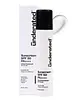
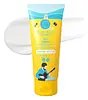
Underated Sunscreen SPF 50 Versus Conscious Chemist Sun Drink Water Resistant Hybrid Gel Unwind Sunscreen SPF 50
This chemical sunscreen leans toward UVA, with lighter cover of burning UVB.
This hybrid sunscreen covers the full UV range and blocks ~98% of UVB at SPF 50.

What's inside
What's inside
 Key Ingredients
Benefits
Concerns
Ingredients Side-by-side
Ethylhexyl Methoxydibenzoylmethane
UV AbsorberButyl Methoxydibenzoylmethane
UV Absorber
Propylene Glycol
Humectant


Caprylic/Capric Triglyceride
Masking

Methyl Methacrylate Crosspolymer

Acrylates/C10-30 Alkyl Acrylate Crosspolymer
Emulsion StabilisingPhenoxyethanol
Preservative
Sodium Gluconate
Skin ConditioningXanthophylls
Skin ConditioningHelianthus Annuus Seed Oil
Emollient

Rosmarinus Officinalis Leaf Extract
AntimicrobialBeta-Carotene
Skin ConditioningTocopherol
Antioxidant





Crambe Abyssinica Seed Oil
Skin Conditioning
Porphyridium Cruentum Extract
Skin Conditioning3-O-Ethyl Ascorbic Acid
Skin Conditioning



Sodium Hydroxide
BufferingParfum
Masking


Ethylhexyl Methoxydibenzoylmethane, Butyl Methoxydibenzoylmethane, Propylene Glycol, Caprylic/Capric Triglyceride, Methyl Methacrylate Crosspolymer, Acrylates/C10-30 Alkyl Acrylate Crosspolymer, Phenoxyethanol, Sodium Gluconate, Xanthophylls, Helianthus Annuus Seed Oil, Rosmarinus Officinalis Leaf Extract, Beta-Carotene, Tocopherol, Crambe Abyssinica Seed Oil, Porphyridium Cruentum Extract, 3-O-Ethyl Ascorbic Acid, Sodium Hydroxide, Parfum
Water
Skin ConditioningTitanium Dioxide
Cosmetic Colorant
Zinc Oxide
Cosmetic Colorant
Ethylhexyl Methoxycinnamate
UV Absorber
Butyl Methoxydibenzoylmethane
UV Absorber
Octocrylene
UV Absorber
Butylene Glycol
Humectant
Lecithin
Emollient
Ceramide NP
Skin Conditioning

Phospholipids
Skin Conditioning
Aluminum Hydroxide
EmollientStearic Acid
Cleansing
Helianthus Annuus Seed Oil
Emollient
Thioctic Acid
Antioxidant
Sodium Polyacrylate
Absorbent
Xylitol
Humectant
Hectorite
AbsorbentHydroxyethylcellulose
Emulsion StabilisingCeramide AP
Skin Conditioning
Ceramide EOP
Skin Conditioning
Cholesterol
Emollient
Sodium Lauroyl Lactylate
EmulsifyingCaprylic Acid
CleansingGlyceryl Stearate
Emollient
Sodium Hyaluronate
Humectant
Phytosphingosine
Skin Conditioning
Milk Extract
Skin ConditioningTocopheryl Acetate
Antioxidant
Squalane
Emollient
Sorbitol
Humectant
Resveratrol
Antioxidant
Potassium Sorbate
Preservative
Water, Titanium Dioxide, Zinc Oxide, Ethylhexyl Methoxycinnamate, Butyl Methoxydibenzoylmethane, Octocrylene, Butylene Glycol, Lecithin, Ceramide NP, Phospholipids, Aluminum Hydroxide, Stearic Acid, Helianthus Annuus Seed Oil, Thioctic Acid, Sodium Polyacrylate, Xylitol, Hectorite, Hydroxyethylcellulose, Ceramide AP, Ceramide EOP, Cholesterol, Sodium Lauroyl Lactylate, Caprylic Acid, Glyceryl Stearate, Sodium Hyaluronate, Phytosphingosine, Milk Extract, Tocopheryl Acetate, Squalane, Sorbitol, Resveratrol, Potassium Sorbate
Ingredients Explained
These ingredients are found in both products.
Ingredients higher up in an ingredient list are typically present in a larger amount.
Also known as Avobenzone, this ingredient is an oil-soluble used to absorb the full spectrum of UVA rays (peak 357 nm).
It's one of the most effective UVA filters available but has a major caveat of photostability: avobenzone is susceptible to photodegradation.
This means it can lose efficacy when exposed to sunlight without the help of a stabilizing agent.
Studies show antioxidants (like vitamin E or vitamin C) and some UV filters (like octocrylene and Tinosorb S) can meaningfully improve its stability in a formulation.
The maximum allowable concentration according to regulation is 3% in the US + Canada, and 5% in the EU, Australia, China, Korea, and ASEAN countries.
It has a well-support safety profile: a comprehensive 2025 review found minimal toxicity with no evidence of carcinogenicity.
Overall, avobenzone is a safe and regulated ingredient used in sunscreen for over 40 years.
Learn more about Butyl MethoxydibenzoylmethaneHelianthus Annuus Seed Oil is a plant oil derived from the seeds of a sunflower.
It is rich in fatty acids, primarily linoleic acid and oleic acid. This gives it emollient and skin conditioning properties.
The reason this ingredient is so effective is because it forms a thin film on the skin that reduces transepidermal water loss (TEWL) while supplying linoleic acid to the stratum corneum to improve barrier strength.
The high linoleic acid content is particularly noteworthy for acne-prone skin.
Research suggests that acne-prone skin tends to be deficient in linoleic acid in sebum. Topical application may help replenish this to support a healthier follicular environment and less comedone-promoting sebum.
One randomized study found sunflower seed oil preserved skin barrier integrity in adult volunteers with and without atopic dermatitis (outperforming olive oil).
This ingredient is well-studied, gentle, and an effective emollient suitable for most skin types.
On fungal acne: This ingredient may not be Fungal acne (Malassezia folliculitis) safe. This is because it contains fatty acids with carbon chain lengths in the C11-C24 range.
Learn more about Helianthus Annuus Seed Oil

