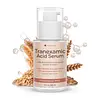
This brightening serum is formulated around Tranexamic Acid and Niacinamide to fade the look of dark spots and brighten dull-looking skin.
This anti-aging serum is formulated around Tetrahexyldecyl Ascorbate and Carnosine to soften the look of wrinkles and brighten dull-looking skin.


What's inside
What's inside
 Key Ingredients
Benefits
Concerns
Ingredients Side-by-side
Water
Skin ConditioningButylene Glycol
Humectant

Glycerin
Humectant
Tranexamic Acid
Astringent




Niacinamide
Smoothing





Caprylic/Capric Triglyceride
Masking
Dicaprylyl Carbonate
EmollientBenzyl Glycol
SolventAlpha-Arbutin
Antioxidant

Sodium Hyaluronate
Humectant
Hydrolyzed Hyaluronic Acid
Humectant
Sodium Acetylated Hyaluronate
Humectant
Malt Extract
Skin ProtectingArginine
Masking
Polyglyceryl-2 Stearate
Emulsifying

Polyglyceryl-4 Laurate
Emulsifying
Glyceryl Stearate
Emollient
Polyglyceryl-6 Laurate
Emulsifying
Stearyl Alcohol
Emollient
Carbomer
Emulsion StabilisingBetaine
Humectant
Ethylhexylglycerin
Skin ConditioningAdenosine
Skin Conditioning
Citric Acid
Buffering
Sodium Acrylate/Sodium Acryloyldimethyl Taurate Copolymer
Emulsion StabilisingPolyisobutene
1,2-Hexanediol
Skin Conditioning
Sorbitan Oleate
Emulsifying

Caprylyl/Capryl Glucoside
CleansingCetraria Islandica Extract
CleansingTocopherol
Antioxidant
Caprylyl Glycol
Emollient
Ascorbyl Glucoside
Antioxidant
Sodium Ascorbyl Phosphate
Antioxidant
Magnesium Ascorbyl Phosphate
Antioxidant
Tetrahexyldecyl Ascorbate
Antioxidant
Sodium Riboflavin Phosphate
Skin ConditioningWater, Butylene Glycol, Glycerin, Tranexamic Acid, Niacinamide, Caprylic/Capric Triglyceride, Dicaprylyl Carbonate, Benzyl Glycol, Alpha-Arbutin, Sodium Hyaluronate, Hydrolyzed Hyaluronic Acid, Sodium Acetylated Hyaluronate, Malt Extract, Arginine, Polyglyceryl-2 Stearate, Polyglyceryl-4 Laurate, Glyceryl Stearate, Polyglyceryl-6 Laurate, Stearyl Alcohol, Carbomer, Betaine, Ethylhexylglycerin, Adenosine, Citric Acid, Sodium Acrylate/Sodium Acryloyldimethyl Taurate Copolymer, Polyisobutene, 1,2-Hexanediol, Sorbitan Oleate, Caprylyl/Capryl Glucoside, Cetraria Islandica Extract, Tocopherol, Caprylyl Glycol, Ascorbyl Glucoside, Sodium Ascorbyl Phosphate, Magnesium Ascorbyl Phosphate, Tetrahexyldecyl Ascorbate, Sodium Riboflavin Phosphate
Water
Skin ConditioningDimethicone
Emollient
Propanediol
Solvent
Coco-Caprylate/Caprate
Emollient
Butylene Glycol
Humectant
Polysilicone-11
Caprylyl Glycol
Emollient
Glycerin
Humectant
Arginine PCA
HumectantDicaprylyl Carbonate
EmollientSodium Acrylate/Sodium Acryloyldimethyl Taurate Copolymer
Emulsion StabilisingHydrolyzed Hyaluronic Acid
Humectant
Tetrahexyldecyl Ascorbate
Antioxidant
Tocopheryl Acetate
Antioxidant
Sodium Hyaluronate
Humectant
Tocopherol
Antioxidant
Silybum Marianum Extract
Skin Conditioning
Acetyl Tyrosine
Skin ConditioningProline
Skin Conditioning
Carnosine
Skin Conditioning
Alteromonas Ferment Filtrate
HumectantAdenosine Triphosphate
Skin ConditioningDecyl Glucoside
Cleansing
Yeast Extract
Skin ConditioningHydrolyzed Vegetable Protein
Skin ConditioningLecithin
Emollient
Caprylyl/Capryl Glucoside
CleansingCoco-Glucoside
Cleansing
Caprylic Acid
CleansingSorbitan Oleate
Emulsifying
Polyisobutene
Acrylates/C10-30 Alkyl Acrylate Crosspolymer
Emulsion StabilisingAlcohol
Antimicrobial


Disodium EDTA
ChelatingXylitol
Humectant
Sodium Hydroxide
Buffering1,2-Hexanediol
Skin Conditioning
Ethylhexylglycerin
Skin ConditioningWater, Dimethicone, Propanediol, Coco-Caprylate/Caprate, Butylene Glycol, Polysilicone-11, Caprylyl Glycol, Glycerin, Arginine PCA, Dicaprylyl Carbonate, Sodium Acrylate/Sodium Acryloyldimethyl Taurate Copolymer, Hydrolyzed Hyaluronic Acid, Tetrahexyldecyl Ascorbate, Tocopheryl Acetate, Sodium Hyaluronate, Tocopherol, Silybum Marianum Extract, Acetyl Tyrosine, Proline, Carnosine, Alteromonas Ferment Filtrate, Adenosine Triphosphate, Decyl Glucoside, Yeast Extract, Hydrolyzed Vegetable Protein, Lecithin, Caprylyl/Capryl Glucoside, Coco-Glucoside, Caprylic Acid, Sorbitan Oleate, Polyisobutene, Acrylates/C10-30 Alkyl Acrylate Crosspolymer, Alcohol, Disodium EDTA, Xylitol, Sodium Hydroxide, 1,2-Hexanediol, Ethylhexylglycerin
Ingredients Explained
These ingredients are found in both products.
Ingredients higher up in an ingredient list are typically present in a larger amount.
1,2-Hexanediol is a synthetic liquid and another multi-functional powerhouse.
It is a:
- Humectant, drawing moisture into the skin
- Emollient, helping to soften skin
- Solvent, dispersing and stabilizing formulas
- Preservative booster, enhancing the antimicrobial activity of other preservatives
Butylene Glycol (or BG) is used within cosmetic products for a few different reasons:
Overall, Butylene Glycol is a safe and well-rounded ingredient that works well with other ingredients.
Though this ingredient works well with most skin types, some people with sensitive skin may experience a reaction such as allergic rashes, closed comedones, or itchiness.
Learn more about Butylene GlycolCaprylyl Glycol is a humectant, skin conditioner, emollient, and preservative booster derived from either caprylic acid or synthetically created.
Typical use levels vary from 0.3-1% as a preservative booster and go up to 2% to condition skin.
Because it is not a free-fatty acid, this ingredient is fungal acne safe (there's nothing for Malassezia to feed on).
Learn more about Caprylyl GlycolThis ingredient is a mild surfactant made by sticking glucose onto a blend of fatty acids.
It does two jobs because it has a sugar head that loves water and a fatty tail that loves oil:
Typical use levels range from 10-20% in cleansers and 15-30% in shower products.
Once on your skin, your skin's glucoside hydrolases breaks it down into glucose and the parent fatty alcohols.
This ingredient is considered fungal acne safe because its fatty alcohol portion sits outside the Malassezia yeast's metabolization range.
Learn more about Caprylyl/Capryl GlucosideDicaprylyl Carbonate comes from carbonic acid and caprylyl alcohol, a fatty alcohol. It is an emollient and gives skin a velvet feel. The sources of Dicaprylyl Carbonate may be synthetic or from animals.
As an emollient, Dicaprylyl Carbonate creates a film on the skin. This film traps moisture in, keeping your skin soft and hydrated.
Ethylhexylglycerin is created from glycerin. It is a multitasker ingredient that:
The CIR Expert Panel found minimal skin absorption or sensitization of any kind in a safety assessment. Though this ingredient is considered well-tolerated, a small number of cases of allergic dermatitis have been published since 2002. Just be sure to patch test if you are unsure.
Industry-reported use ranges from 8% in rinse-off products and 2% in leave-on formulations.
Learn more about EthylhexylglycerinGlycerin (or glycerol) is a compound naturally found in your skin. It's a powerhouse humectant that pulls water into the stratum corneum.
Topically, glycerin does several things at once:
Your skin makes glycerin on its own (mostly from sebaceous oil breakdown) and shuttles it to your outermost layer of skin, or your epidermis, via aquaporin-3.
Aquaporin-3 is a transporter that is essential for normal skin hydration, elasticity, and repair. Interestingly, mice lacking in AQP3 have dry and less elastic skin that can be fully corrected with glycerin.
This ingredient is non-irritating, plays well with almost every ingredient, and works across all skin types. Typical use is anywhere between 3-10% but can go up to 79% in some leave-on products.
Just know very high concentrations (>40%) can feel tacky in low humidity.
Glycerin is the name for this ingredient in American English. British English uses Glycerol/Glycerine.
Learn more about GlycerinHydrolyzed Hyaluronic Acid is hyaluronic acid (HA) that is broken down into lower molecular weight fragments.
It's a humectant that pulls and holds water in the skin to help with hydration, plumpness, and reduce transepidermal water loss.
Because hydrolyzed hyaluronic acid is smaller in size, it can slip past your outermost layer of skin more easily than full-sized HA.
Most formulations will combine all sizes to get the best of both worlds.
Typical usage levels range from 0.01-1%. Any percentage higher than 2% might become goopy and tacky.
Learn more about Hydrolyzed Hyaluronic AcidPolyisobutene is a synthetic polymer made from isobutene.
It is a film-forming agent and helps bind ingredients together.
Polyisobutene is not absorbed by the skin.
Learn more about PolyisobuteneThis long ingredient is a copolymer of sodium acrylate and sodium acryloyldimethyl taurate monomers.
It is used to help stabilize other ingredients and create a thicker gel-like texture.
Emulsifiers prevent oils and waters from separating.
Learn more about Sodium Acrylate/Sodium Acryloyldimethyl Taurate CopolymerSodium Hyaluronate is the salt form of hyaluronic acid. It is a long sugar chain that is naturally found in your skin, joints, and connective tissue that maintains hydration and elasticity.
In skincare, it works as a humectant. It pulls water from the environment and deeper layers of skin and binds it to the surface.
Interestingly, the size of the molecule affects its behavior:
Some clinical evidence links low molecular weight versions to improved wrinkle depth, elasticity, anti-inflammatory effects, and barrier repair.
Many serums use a blend of both weights so you can get surface hydration plus longer-lasting and deeper effects.
You'll typically see concentrations between 0.1-2% for this ingredient.
Learn more about Sodium HyaluronateSorbitan Oleate is a PEG-free emulsifier made by esterifying sorbitol with oleic acid.
You'll likely see it paired with Polysorbate 80 to create the right emulsification balance.
Typical use levels in formulas range from 2-10%.
The CIR Expert Panel has concluded this ingredient to be safe as a cosmetic ingredient.
Since this ingredient is an ester of oleic acid, it may not be fungal acne safe. Oleic acid is a fatty acid that falls into the C11-24 range that Malassezia can metabolize.
This ingredient does have a comedogenic rating of 3, but this doesn't mean a formula with this ingredient will clog pores. Human testing has proved that any finished product with a comedogenic ingredient won't automatically make you break out; it really comes down to concentration, formula, and your skin.
Learn more about Sorbitan OleateTetrahexyldecyl Ascorbate (THD) is a stable and oil-soluble form of Vitamin C.
THD is special in that it has the ability to travel deeper into skin than traditional ascorbic acid while maintaining the same skin benefits (double win!).
Because it’s oil-soluble, THD dives deep into your skin’s fatty layers (think ceramides and cholesterol) to fight off the kind of free radicals that mess with your skin barrier. This makes it a great pair with water-based vitamin C (ascorbic acid) that mainly works on the surface.
Even at just 0.1%, THD is already showing great antioxidant activity. When used up to 2%, it helps keep your skin happy and calm, especially when it’s stressed from pollution or sun.
Want to fade dark spots or tackle hyperpigmentation? You’ll want 5% or more. Pairing it with brightening buddies like niacinamide or licorice root gives even better results. One study even used 30% THD with other brighteners and saw real results on stubborn discoloration, even in melasma-prone skin.
A note on THD: It’s has a slightly silky, oily texture and usually shows up colorless or pale yellow (though the exact shade can vary by supplier).
While you can sneak it into water-based formulas, it really shines when paired with silicones or oils, which help your skin soak it up better.
THD is pretty stable, but it’s still vulnerable to degradation like ascorbic acid. Too much light or heat (above 113°F / 45°C) can break it down over time. Go for dark and opaque packaging that keeps it safe and shady!
Read more about other types of Vitamin C:
Learn more about Tetrahexyldecyl AscorbateTocopherol is a fat-soluble antioxidant known as Vitamin E.
You'll find this ingredient in the vast majority of skincare (for good reason). It works to neutralize free radicals, or unstable molecules generated by UV exposure, pollution, and other environmental stressors, before they can cause oxidative damage to your skin cells.
Topically applied tocopherol has been shown to protect against UV damage by ramping up the skin's own natural defense enzymes.
It also acts as a skin conditioning agent; some studies show that regular topical use can improve the skin's water-binding capacity over 2-4 weeks.
This ingredient is especially loved for being a team player. When combined with Vitamin C, the photoprotective effect of both ingredients roughly doubles and the combo also helps reduce UV-induced DNA damage.
This ingredient has some brightening potential but it's more of a prevention ingredient than spot-fader. Cell studies show it can slow down melanin production but it's worth noting that it's not the most powerful brightener out there.
In formulations, it also serves as a stabilizer that helps protect other oxidation-prone ingredients from degrading.
Concentrations usually range from 0.1-1% in most leave-on products.
Learn more about TocopherolWater. It's the most common cosmetic ingredient of all. You'll usually see it at the top of ingredient lists, meaning that it makes up the largest part of the product.
So why is it so popular? Water most often acts as a solvent - this means that it helps dissolve other ingredients into the formulation.
You'll also recognize water as that liquid we all need to stay alive. If you see this, drink a glass of water. Remember to stay hydrated!
Learn more about Water

