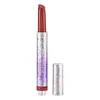
This barrier-repair lip moisturizer is formulated around Squalane and Ceramide NP to strengthen the lip barrier and hydrate lips.
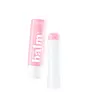
This barrier-repair lip moisturizer is formulated around Petrolatum and Butyrospermum Parkii Butter to strengthen the lip barrier and hydrate lips.

What's inside
What's inside
 Key Ingredients
Benefits
Concerns
Ingredients Side-by-side
Hydrogenated Polyisobutene
EmollientDiisostearyl Malate
EmollientPolyisobutene
Ethylhexyl Methoxycinnamate
UV Absorber


Homosalate
Skin Conditioning
Microcrystalline Wax
Emulsion StabilisingEthylhexyl Salicylate
UV Absorber
Tridecyl Trimellitate
EmollientCaprylic/Capric Triglyceride
Masking


Bis-Ethylhexyloxyphenol Methoxyphenyl Triazine
UV Absorber
Synthetic Wax
Abrasive

Silica Dimethyl Silylate
EmollientParfum
Masking



BHT
Antioxidant
Bisabolol
Antioxidant


Squalane
Emollient
Ascorbyl Tetraisopalmitate
Antioxidant


Tocopheryl Acetate
Antioxidant

Olea Europaea Fruit Oil
Masking

Tocopherol
Antioxidant
Ethylhexyl Palmitate
Emollient
Tribehenin
Emollient
Ceramide NP
Skin Conditioning
Sorbitan Isostearate
Emulsifying
Laminaria Ochroleuca Extract
Skin Conditioning
Lactic Acid
Buffering



Palmitoyl Tripeptide-1
Skin Conditioning
CI 77891
Cosmetic ColorantCI 77491
Cosmetic ColorantCI 19140
Cosmetic ColorantCI 15850
Cosmetic ColorantCI 77499
Cosmetic ColorantCI 77492
Cosmetic ColorantHydrogenated Polyisobutene, Diisostearyl Malate, Polyisobutene, Ethylhexyl Methoxycinnamate, Homosalate, Microcrystalline Wax, Ethylhexyl Salicylate, Tridecyl Trimellitate, Caprylic/Capric Triglyceride, Bis-Ethylhexyloxyphenol Methoxyphenyl Triazine, Synthetic Wax, Silica Dimethyl Silylate, Parfum, BHT, Bisabolol, Squalane, Ascorbyl Tetraisopalmitate, Tocopheryl Acetate, Olea Europaea Fruit Oil, Tocopherol, Ethylhexyl Palmitate, Tribehenin, Ceramide NP, Sorbitan Isostearate, Laminaria Ochroleuca Extract, Lactic Acid, Palmitoyl Tripeptide-1, CI 77891, CI 77491, CI 19140, CI 15850, CI 77499, CI 77492
Ethylhexyl Palmitate
Emollient
Petrolatum
Emollient
Synthetic Wax
Abrasive
Bis-Diglyceryl Polyacyladipate-2
Emollient
Ethylhexyl Methoxycinnamate
UV Absorber
Ozokerite
Emulsion StabilisingCrambe Abyssinica Seed Oil
Skin Conditioning
Olea Europaea Fruit Oil
Masking
Butyrospermum Parkii Butter
Skin Conditioning
Phenoxyethanol
Preservative
Jojoba Esters
Emollient
Titanium Dioxide
Cosmetic Colorant
Simmondsia Chinensis Seed Oil
Emollient
Ethylhexylglycerin
Skin ConditioningHelianthus Annuus Seed Extract
Skin Conditioning
Parfum
Masking
Allantoin
Skin Conditioning
Tocopheryl Acetate
Antioxidant
BHT
Antioxidant
Acacia Decurrens Flower Wax
Emollient
Polyglycerin-3
Humectant
Punica Granatum Flower Extract
Skin Conditioning
Polyglyceryl-3 Diisostearate
Emulsifying
Tocopherol
Antioxidant
CI 45370
Cosmetic ColorantCI 15850
Cosmetic ColorantCI 45380
Cosmetic ColorantEthylhexyl Palmitate, Petrolatum, Synthetic Wax, Bis-Diglyceryl Polyacyladipate-2, Ethylhexyl Methoxycinnamate, Ozokerite, Crambe Abyssinica Seed Oil, Olea Europaea Fruit Oil, Butyrospermum Parkii Butter, Phenoxyethanol, Jojoba Esters, Titanium Dioxide, Simmondsia Chinensis Seed Oil, Ethylhexylglycerin, Helianthus Annuus Seed Extract, Parfum, Allantoin, Tocopheryl Acetate, BHT, Acacia Decurrens Flower Wax, Polyglycerin-3, Punica Granatum Flower Extract, Polyglyceryl-3 Diisostearate, Tocopherol, CI 45370, CI 15850, CI 45380
Ingredients Explained
These ingredients are found in both products.
Ingredients higher up in an ingredient list are typically present in a larger amount.
BHT is a synthetic antioxidant and preservative.
As an antioxidant, it helps your body fight off free-radicals. Free-radicals are molecules that may damage your skin cells.
As a preservative, it is used to stabilize products and prevent them from degrading. Specifically, BHT prevents degradation from oxidation.
The concerns related to BHT come from oral studies; this ingredient is currently allowed for use by both the FDA and EU.
However, it was recently restricted for use in the UK as of April 2024.
Learn more about BHTCi 15850 is the pigment color red. It is an azo dye and created synthetically.
Azo dyes need to be thoroughly purified before use. This allows them to be more stable and longer-lasting.
This ingredient is common in foundations, lipsticks, and blushes. This color is described as brown/orangey red.
It has many secondary names such as Red 6 and Red 7. According to a manufacturer, Red 6 usually contains aluminum.
Learn more about CI 15850This ingredient is also known as Octinoxate and is one of the oldest and most widely used chemical UV filters in skincare.
It has a simple job: soap up UVB radiation (290-320 nm), the wavelengths responsible for sunburn and a big chunk of long-term sun damage.
In formulas, it's always paired with a separate UVA filter because octinoxate solely protects skin from UVB.
Because it's an oil-soluble liquid, it's easy to blend into the oil phase of lotions/creams and gives a cosmetically elegant feel.
The one quirk about formulating this ingredient is photostability; the molecule slowly changes shape into a less effective version when sunlight hits it. So the longer you're in the sun, the weaker its protection gets. The drop can be more than 30% in some formulas.
It also doesn't play nice with Avobenzone (the common UVA filter) since avobenzone destabilizes octinoxate and the two degrade each other. But don't worry: brands have solved this issue by adding photostabilizers like Tinosorb S to prevent degradation and keep SPF stable under heavy UV exposure.
The maximum allowed level is 10% in the EU and Australia, 7.5% in the US and Canada, and 20% in Japan.
The Cosmetic Ingredient Review Panel has concluded this ingredient to be safe in cosmetics up to 10%.
One last thing worth knowing for context:
Octinoxate has been the subject of ongoing review in Europe where the Scientific Committee on Consumer Safety's (SCCS) 2025 final opinion is that this ingredient is an endocrine-active substance.
Lab and animal studies suggest it can act a bit like a hormone in the body (mildly mimicking estrogen and slightly blocking male hormones). It's important to know this hasn't really been shown to happen in everyday human use.
This ingredient is also banned in Hawaii over coral reef concerns.
Learn more about Ethylhexyl MethoxycinnamateEthylhexyl Palmitate, also known as octyl palmitate, is created from 2-ethylhexyl alcohol and palmitic acid.
In cosmetics, it plays many roles:
One thing worth noting: a controlled study found this ingredient applied under occlusion to acne-prone subjects increased microcomedones. Just keep in mind this was under occlusive conditions and don't reflect how most products are used day-to-day.
For most people, this is a well-tolerated and lightweight ingredient.
This ingredient may not be fungal acne safe because it is an ester of palmitic acid, a C16 fatty acid that falls within the C11-24 range that Malassezia can metabolize.
Learn more about Ethylhexyl PalmitateThis ingredient is also known as olive oil. It has been used in skincare for centuries and science largely backs up its reputation as a nourishing emollient.
The main components of olive oil are oleic acid (55-83%), linoleic acid (3.5-20%), and palmitic acid (7-20%). Oleic acid promotes skin regeneration and helps regulate inflammatory responses.
Squalene is also naturally present in olive oil and exhibits moisturizing and antioxidant properties.
The polyphenols in olive oil also show anti-aging promise; one clinical study found a measurable improvement in skin appearance after 30 days of topical serum use.
Just be aware that applying olive oil directly to skin can weaken the barrier and cause redness. One study with volunteers found even people without sensitive skin experienced a significant reduction in stratum corneum integrity and induced mild erythema.
It's best to use this ingredient as part of a carefully crafted formula (instead of putting it on skin directly from the bottle).
Because it has a 0-2 on the comedogenic scale, it is low risk for acne-prone skin. Just remember the overall formulation of a product matters more than a few ingredients with comedogenic ratings.
This ingredient may not be fungal acne safe because of the oleic and palmitic acid content. These fall within the C11-24 fatty acid range that the Malassezia yeast can metabolize to grow.
Overall, olive oil is a well-studied and nourishing skincare ingredient.
Learn more about Olea Europaea Fruit OilParfum is a catch-all term for an ingredient or more that is used to give a scent to products.
Also called "fragrance", this ingredient can be a blend of hundreds of chemicals or plant oils. This means every product with "fragrance" or "parfum" in the ingredients list is a different mixture.
For instance, Habanolide is a proprietary trade name for a specific aroma chemical. When used as a fragrance ingredient in cosmetics, most aroma chemicals fall under the broad labeling category of “FRAGRANCE” or “PARFUM” according to EU and US regulations.
The term 'parfum' or 'fragrance' is not regulated in many countries. In many cases, it is up to the brand to define this term.
For instance, many brands choose to label themselves as "fragrance-free" because they are not using synthetic fragrances. However, their products may still contain ingredients such as essential oils that are considered a fragrance by INCI standards.
One example is Calendula flower extract. Calendula is an essential oil that still imparts a scent or 'fragrance'.
Depending on the blend, the ingredients in the mixture can cause allergies and sensitivities on the skin. Some ingredients that are known EU allergens include linalool and citronellol.
Parfum can also be used to mask or cover an unpleasant scent.
The bottom line is: not all fragrances/parfum/ingredients are created equally. If you are worried about fragrances, we recommend taking a closer look at an ingredient. And of course, we always recommend speaking with a professional.
Learn more about ParfumSynthetic Wax is a manufactured hydrocarbon wax. In formulas, it works as an occlusive emollient that helps reduce water loss and improves the spreadability of products.
Research comparing synthetic wax to traditional mineral-derived products found that formulas containing it perform as well for skin hydration.
It is considered non-comedogenic and vegan-friendly.
This ingredient has a well-established safety record by the CIR Expert Panel for Cosmetic Ingredient Safety.
Synthetic Waxes are straight/branched-chain hydrocarbons with no ester bond or fatty acids. That means there is nothing for the Malassezia yeast to feed on.
Learn more about Synthetic WaxTocopherol is a fat-soluble antioxidant known as Vitamin E.
You'll find this ingredient in the vast majority of skincare (for good reason). It works to neutralize free radicals, or unstable molecules generated by UV exposure, pollution, and other environmental stressors, before they can cause oxidative damage to your skin cells.
Topically applied tocopherol has been shown to protect against UV damage by ramping up the skin's own natural defense enzymes.
It also acts as a skin conditioning agent; some studies show that regular topical use can improve the skin's water-binding capacity over 2-4 weeks.
This ingredient is especially loved for being a team player. When combined with Vitamin C, the photoprotective effect of both ingredients roughly doubles and the combo also helps reduce UV-induced DNA damage.
This ingredient has some brightening potential but it's more of a prevention ingredient than spot-fader. Cell studies show it can slow down melanin production but it's worth noting that it's not the most powerful brightener out there.
In formulations, it also serves as a stabilizer that helps protect other oxidation-prone ingredients from degrading.
Concentrations usually range from 0.1-1% in most leave-on products.
Learn more about TocopherolTocopheryl Acetate is a stable, shelf-friendly form of vitamin E.
Formulators love it because plain vitamin E oxidizes quickly once it hits air. This acetate version stays stable and resists going off, helping to extend a product's shelf life.
It's actually inactive on its own and works like a slow-release "storage" form; the enzymes in your skin called esterases gradually convert it into active vitamin E over time.
One in vivo study showed 5% of the acetate in the living layer of the epidermis converted to vitamin E after 5 days of application. This study also found the skin gained protection against UV damage even though the conversion was slow and small.
Once converted, vitamin E acts as a skin's main fat-soluble antioxidant that fights free radicals to protect skin from damage.
Topical vitamin E generally boosts the skin's photoprotection, and it reduced UV-damage in animal models.
This ingredient has some brightening potential but it's more of a prevention ingredient than spot-fader. Cell studies show it can slow down melanin production but it's worth noting that it's not the most powerful brightener out there.
Overall, it has a pretty solid safety profile and has been found to be non-irritating and non-comedogenic. Allergic reactions may happen but stay rare due to how widely the ingredient gets used.
The concentration will vary depending on the formula; industry data shows 0.1% in baby lotions, 3% in lipsticks, and 5% in foot powders. You can also find this ingredient at 100% in a pure vitamin E oil.
Most leave-on skincare keeps it at the lower end, often between 0.5-1%.
Learn more about Tocopheryl Acetate

