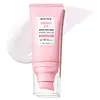
This chemical sunscreen covers the full UV range and blocks ~98% of UVB at SPF 50.
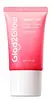
This chemical sunscreen covers the full UV range and blocks ~97% of UVB at SPF 30.


What's inside
What's inside
 Key Ingredients
Benefits
Concerns
Ingredients Side-by-side
Water
Skin ConditioningOctocrylene
UV Absorber



Homosalate
Skin Conditioning
Phenylbenzimidazole Sulfonic Acid
UV Absorber
Vinyl Dimethicone/Methicone Silsesquioxane Crosspolymer


Butyl Methoxydibenzoylmethane
UV Absorber
Ethylhexyl Salicylate
UV Absorber
Bis-Ethylhexyloxyphenol Methoxyphenyl Triazine
UV Absorber
Niacinamide
Smoothing










Undecylenoyl Phenylalanine
Skin Conditioning
Tranexamic Acid
Astringent
Methylpropanediol
SolventSodium Stearoyl Glutamate
CleansingGlycerin
Humectant
Arbutin
Antioxidant

Glutathione
Curcuma Longa Root Extract
Antioxidant
Silica Dimethyl Silylate
EmollientGlyceryl Stearates
Emollient

Jojoba Esters
Emollient
Tromethamine
BufferingCetyl Alcohol
Emollient

Stearyl Alcohol
Emollient
Butylene Glycol
Humectant
Ceramide EOP
Skin Conditioning
Ceramide NP
Skin Conditioning
Ceramide AP
Skin Conditioning
Acrylates/C10-30 Alkyl Acrylate Crosspolymer
Emulsion StabilisingTocopherol
Antioxidant
Helianthus Annuus Seed Wax
Skin Conditioning
Ethylhexylglycerin
Skin ConditioningLactobacillus Ferment
Skin Conditioning
Carbomer
Emulsion StabilisingSphingomonas Ferment Extract
Skin Conditioning
1,2-Hexanediol
Skin Conditioning
Disodium EDTA
ChelatingPhytosphingosine
Skin Conditioning
Hydroxypropyl Cyclodextrin
MaskingPhenoxyethanol
Preservative
Dipropylene Glycol
HumectantPolyglycerin-3
Humectant
Pinus Densiflora Leaf Extract
Antimicrobial
Cholesterol
Emollient
Sodium Lauroyl Lactylate
EmulsifyingXanthan Gum
EmulsifyingWater, Octocrylene, Homosalate, Phenylbenzimidazole Sulfonic Acid, Vinyl Dimethicone/Methicone Silsesquioxane Crosspolymer, Butyl Methoxydibenzoylmethane, Ethylhexyl Salicylate, Bis-Ethylhexyloxyphenol Methoxyphenyl Triazine, Niacinamide, Undecylenoyl Phenylalanine, Tranexamic Acid, Methylpropanediol, Sodium Stearoyl Glutamate, Glycerin, Arbutin, Glutathione, Curcuma Longa Root Extract, Silica Dimethyl Silylate, Glyceryl Stearates, Jojoba Esters, Tromethamine, Cetyl Alcohol, Stearyl Alcohol, Butylene Glycol, Ceramide EOP, Ceramide NP, Ceramide AP, Acrylates/C10-30 Alkyl Acrylate Crosspolymer, Tocopherol, Helianthus Annuus Seed Wax, Ethylhexylglycerin, Lactobacillus Ferment, Carbomer, Sphingomonas Ferment Extract, 1,2-Hexanediol, Disodium EDTA, Phytosphingosine, Hydroxypropyl Cyclodextrin, Phenoxyethanol, Dipropylene Glycol, Polyglycerin-3, Pinus Densiflora Leaf Extract, Cholesterol, Sodium Lauroyl Lactylate, Xanthan Gum
Water
Skin ConditioningBis-Ethylhexyloxyphenol Methoxyphenyl Triazine
UV Absorber
Dimethicone
Emollient
Ethylhexyl Methoxycinnamate
UV Absorber
Butyl Methoxydibenzoylmethane
UV Absorber
Niacinamide
Smoothing
Panthenol
Skin Conditioning
Squalane
Emollient
Methylpropanediol
SolventCI 77891
Cosmetic ColorantIsohexadecane
EmollientDiethoxyethyl Succinate
SolventC14-22 Alcohols
Emulsion Stabilising
Glyceryl Stearate
Emollient
Behenyl Alcohol
Emollient
Litchi Chinensis Pericarp Extract
Skin ConditioningPEG-100
HumectantPEG-100 Stearate
Surfactant
Ammonium Acryloyldimethyltaurate/Vp Copolymer
Hydroxyacetophenone
Antioxidant
Potassium Cetyl Phosphate
EmulsifyingC12-20 Alkyl Glucoside
EmulsifyingDimethicone/Vinyl Dimethicone Crosspolymer
Skin Conditioning
Urea
Buffering
Tocopherol
Antioxidant
Ascorbic Acid
Antioxidant
Pancratium Maritimum Extract
BleachingGlabridin
Bleaching1,2-Hexanediol
Skin Conditioning
PEG/PPG-17/6 Copolymer
SolventPhormidium Persicinum Extract
Antioxidant
Maris Aqua
HumectantAluminum Hydroxide
EmollientPolymethylsilsesquioxane
Parfum
Masking
Glycerin
Humectant
Butylene Glycol
Humectant
BHT
Antioxidant
Water, Bis-Ethylhexyloxyphenol Methoxyphenyl Triazine, Dimethicone, Ethylhexyl Methoxycinnamate, Butyl Methoxydibenzoylmethane, Niacinamide, Panthenol, Squalane, Methylpropanediol, CI 77891, Isohexadecane, Diethoxyethyl Succinate, C14-22 Alcohols, Glyceryl Stearate, Behenyl Alcohol, Litchi Chinensis Pericarp Extract, PEG-100, PEG-100 Stearate, Ammonium Acryloyldimethyltaurate/Vp Copolymer, Hydroxyacetophenone, Potassium Cetyl Phosphate, C12-20 Alkyl Glucoside, Dimethicone/Vinyl Dimethicone Crosspolymer, Urea, Tocopherol, Ascorbic Acid, Pancratium Maritimum Extract, Glabridin, 1,2-Hexanediol, PEG/PPG-17/6 Copolymer, Phormidium Persicinum Extract, Maris Aqua, Aluminum Hydroxide, Polymethylsilsesquioxane, Parfum, Glycerin, Butylene Glycol, BHT
Reviews
Ingredients Explained
These ingredients are found in both products.
Ingredients higher up in an ingredient list are typically present in a larger amount.
1,2-Hexanediol is a synthetic liquid and another multi-functional powerhouse.
It is a:
- Humectant, drawing moisture into the skin
- Emollient, helping to soften skin
- Solvent, dispersing and stabilizing formulas
- Preservative booster, enhancing the antimicrobial activity of other preservatives
This ingredient is better known as bemotrizinol or Tinosorb S and is one of the best broad-spectrum UV filters in modern sunscreen.
It works by absorbing UV light across a whole range (280-400 nm) with peaks around 310 nm (UVB) and 340-345 nm (UVA). This means it covers UVB plus the deeper UVA wavelengths that drive photoaging and pigmentation.
Another pro?
It's exceptionally photostable, barely degrades in sunlight, and acts as a "bodyguard" for less stable filters.
That's why you'll see it paired with avobenzone or octinoxate; this team up ensures they keep working through sun exposure.
Safety reviews have been reassuring across the board. This ingredient shows low absorption through the skin, rarely irritates, and lab studies found it doesn't act like a hormone in the body (a concern that's been raised about some older sunscreen filters).
On maximum concentrations:
In 2026, the US F.D.A finally added it as an OTC sunscreen ingredient at concentrations up to 6% for adults / children 6 months and older
Learn more about Bis-Ethylhexyloxyphenol Methoxyphenyl TriazineAlso known as Avobenzone, this ingredient is an oil-soluble used to absorb the full spectrum of UVA rays (peak 357 nm).
It's one of the most effective UVA filters available but has a major caveat of photostability: avobenzone is susceptible to photodegradation.
This means it can lose efficacy when exposed to sunlight without the help of a stabilizing agent.
Studies show antioxidants (like vitamin E or vitamin C) and some UV filters (like octocrylene and Tinosorb S) can meaningfully improve its stability in a formulation.
The maximum allowable concentration according to regulation is 3% in the US + Canada, and 5% in the EU, Australia, China, Korea, and ASEAN countries.
It has a well-support safety profile: a comprehensive 2025 review found minimal toxicity with no evidence of carcinogenicity.
Overall, avobenzone is a safe and regulated ingredient used in sunscreen for over 40 years.
Learn more about Butyl MethoxydibenzoylmethaneButylene Glycol (or BG) is used within cosmetic products for a few different reasons:
Overall, Butylene Glycol is a safe and well-rounded ingredient that works well with other ingredients.
Though this ingredient works well with most skin types, some people with sensitive skin may experience a reaction such as allergic rashes, closed comedones, or itchiness.
Learn more about Butylene GlycolGlycerin (or glycerol) is a compound naturally found in your skin. It's a powerhouse humectant that pulls water into the stratum corneum.
Topically, glycerin does several things at once:
Your skin makes glycerin on its own (mostly from sebaceous oil breakdown) and shuttles it to your outermost layer of skin, or your epidermis, via aquaporin-3.
Aquaporin-3 is a transporter that is essential for normal skin hydration, elasticity, and repair. Interestingly, mice lacking in AQP3 have dry and less elastic skin that can be fully corrected with glycerin.
This ingredient is non-irritating, plays well with almost every ingredient, and works across all skin types. Typical use is anywhere between 3-10% but can go up to 79% in some leave-on products.
Just know very high concentrations (>40%) can feel tacky in low humidity.
Glycerin is the name for this ingredient in American English. British English uses Glycerol/Glycerine.
Learn more about GlycerinMethylpropanediol is a synthetic solvent and humectant.
As a solvent, it helps dissolve other ingredients, helping to evenly distribute ingredients throughout the product. This ingredient has also been shown to have antimicrobial properties which makes it a preservative booster.
Methylpropanediol is able to add a bit of moisture to the skin. It also helps other ingredients be better absorbed into the skin, such as salicylic acid.
Learn more about MethylpropanediolNiacinamide is a multitasking form of vitamin B3 that strengthens the skin barrier, reduces pores and dark spots, regulates oil, and improves signs of aging.
And the best part? It's gentle and well-tolerated by most skin types, including sensitive and reactive skin.
You might have heard of "niacin flush", or the reddening of skin that causes itchiness. Niacinamide has not been found to cause this.
In very rare cases, some individuals may not be able to tolerate niacinamide at all or experience an allergic reaction to it.
If you are experiencing flaking, irritation, and dryness with this ingredient, be sure to double check all your products as this ingredient can be found in all categories of skincare.
When incorporating niacinamide into your routine, look out for concentration amounts. Typically, 5% niacinamide provides benefits such as fading dark spots. However, if you have sensitive skin, it is better to begin with a smaller concentration.
When you apply niacinamide to your skin, your body converts it into nicotinamide adenine dinucleotide (NAD). NAD is an essential coenzyme that is already found in your cells as "fuel" and powers countless biological processes.
In your skin, NAD helps repair cell damage, produce new healthy cells, support collagen production, strengthen the skin barrier, and fight environmental stressors (like UV and pollution).
Our natural NAD levels start to decline with age, leading to slower skin repair, visible aging, and a weaker skin barrier. By providing your skin niacinamide, you're recharging your skin's NAD levels. This leads to stronger, healthier, and younger looking skin.
Another name for vitamin B3 is nicotinamide. This vitamin is water-soluble and our bodies don't store it. We obtain Vitamin B3 from either food or skincare. Meat, fish, wheat, yeast, and leafy greens contain vitamin B3.
The type of niacinamide used in skincare is synthetically created.
Learn more about NiacinamideTocopherol is a fat-soluble antioxidant known as Vitamin E.
You'll find this ingredient in the vast majority of skincare (for good reason). It works to neutralize free radicals, or unstable molecules generated by UV exposure, pollution, and other environmental stressors, before they can cause oxidative damage to your skin cells.
Topically applied tocopherol has been shown to protect against UV damage by ramping up the skin's own natural defense enzymes.
It also acts as a skin conditioning agent; some studies show that regular topical use can improve the skin's water-binding capacity over 2-4 weeks.
This ingredient is especially loved for being a team player. When combined with Vitamin C, the photoprotective effect of both ingredients roughly doubles and the combo also helps reduce UV-induced DNA damage.
This ingredient has some brightening potential but it's more of a prevention ingredient than spot-fader. Cell studies show it can slow down melanin production but it's worth noting that it's not the most powerful brightener out there.
In formulations, it also serves as a stabilizer that helps protect other oxidation-prone ingredients from degrading.
Concentrations usually range from 0.1-1% in most leave-on products.
Learn more about TocopherolWater. It's the most common cosmetic ingredient of all. You'll usually see it at the top of ingredient lists, meaning that it makes up the largest part of the product.
So why is it so popular? Water most often acts as a solvent - this means that it helps dissolve other ingredients into the formulation.
You'll also recognize water as that liquid we all need to stay alive. If you see this, drink a glass of water. Remember to stay hydrated!
Learn more about Water

