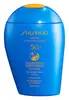
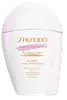
Shiseido Ultimate Sun Protector Lotion SPF 50+ Versus Shiseido Urban Environment Sun Dual Care Oil-Free Sunscreen SPF 42
This chemical sunscreen covers most of the UV range, lighter on the deep UVA that drives aging.
This hybrid sunscreen covers the full UV range and blocks ~98% of UVB at SPF 42.

What's inside
What's inside
 Key Ingredients
Benefits
Concerns
Ingredients Side-by-side
Butyl Methoxydibenzoylmethane 2.3%
UV Absorber
Homosalate 10%
Skin Conditioning
Ethylhexyl Salicylate 5%
UV Absorber
Octocrylene 5%
UV Absorber

Water
Skin ConditioningDiisopropyl Sebacate
EmollientTalc
Abrasive
Methyl Methacrylate Crosspolymer

Dimethicone
Emollient

PEG/PPG-9/2 Dimethyl Ether
Skin ConditioningSd Alcohol 40-B
Astringent

Lauryl PEG-9 Polydimethylsiloxyethyl Dimethicone
Skin Conditioning
Triethylhexanoin
MaskingGlycerin
Humectant

Dextrin Palmitate
Emulsifying

Sucrose Tetrastearate Triacetate
Emollient
Isododecane
EmollientPPG-3 Dipivalate
Skin ConditioningTrimethylsiloxysilicate
Emollient
Silica
Abrasive
Sodium Chloride
MaskingPEG/PPG-14/7 Dimethyl Ether
Skin ConditioningSaxifraga Sarmentosa Extract
Skin ConditioningCamellia Sinensis Leaf Extract
Antimicrobial




Sophora Angustifolia Root Extract
Skin ConditioningPPG-17
Skin ConditioningDisteardimonium Hectorite
StabilisingCalcium Stearate
Cosmetic ColorantIsostearic Acid
Cleansing
Palmitic Acid
Emollient
Trisodium EDTA
ChelatingAlcohol
Antimicrobial
Silica Dimethyl Silylate
EmollientVinyl Dimethicone/Methicone Silsesquioxane Crosspolymer
PEG-6
HumectantBHT
Antioxidant
Tocopherol
Antioxidant

Butylene Glycol
Humectant
Stearic Acid
Cleansing
Sodium Metabisulfite
Antioxidant
Syzygium Jambos Leaf Extract
Skin ConditioningPolysilicone-2
Methylparaben
Preservative
Parfum
Masking

Iron Oxides
Butyl Methoxydibenzoylmethane 2.3%, Homosalate 10%, Ethylhexyl Salicylate 5%, Octocrylene 5%, Water, Diisopropyl Sebacate, Talc, Methyl Methacrylate Crosspolymer, Dimethicone, PEG/PPG-9/2 Dimethyl Ether, Sd Alcohol 40-B, Lauryl PEG-9 Polydimethylsiloxyethyl Dimethicone, Triethylhexanoin, Glycerin, Dextrin Palmitate, Sucrose Tetrastearate Triacetate, Isododecane, PPG-3 Dipivalate, Trimethylsiloxysilicate, Silica, Sodium Chloride, PEG/PPG-14/7 Dimethyl Ether, Saxifraga Sarmentosa Extract, Camellia Sinensis Leaf Extract, Sophora Angustifolia Root Extract, PPG-17, Disteardimonium Hectorite, Calcium Stearate, Isostearic Acid, Palmitic Acid, Trisodium EDTA, Alcohol, Silica Dimethyl Silylate, Vinyl Dimethicone/Methicone Silsesquioxane Crosspolymer, PEG-6, BHT, Tocopherol, Butylene Glycol, Stearic Acid, Sodium Metabisulfite, Syzygium Jambos Leaf Extract, Polysilicone-2, Methylparaben, Parfum, Iron Oxides
Phenylbenzimidazole Sulfonic Acid 1%
UV Absorber
Homosalate 15%
Skin Conditioning
Ethylhexyl Salicylate 5%
UV Absorber
Zinc Oxide 15.5%
Cosmetic Colorant
Water
Skin ConditioningDimethicone
Emollient
Trisiloxane
Skin Conditioning
Sd Alcohol 40-B
Astringent
Glycerin
Humectant
Silica
Abrasive
PEG/PPG-14/7 Dimethyl Ether
Skin ConditioningLauryl PEG-9 Polydimethylsiloxyethyl Dimethicone
Skin Conditioning
PEG-10 Dimethicone
Skin Conditioning
Trehalose
Humectant
Myristyl Myristate
Emollient
Ethylhexyl Palmitate
Emollient
Dextrin Palmitate
Emulsifying
Isodecyl Neopentanoate
EmollientAscorbyl Tetraisopalmitate
Antioxidant
Thiotaurine
Antioxidant
Dipotassium Glycyrrhizate
Humectant
Scutellaria Baicalensis Root Extract
Astringent
Paeonia Albiflora Root Extract
Skin ConditioningSodium Hyaluronate
Humectant
Sanguisorba Officinalis Root Extract
CleansingCamellia Sinensis Leaf Extract
Antimicrobial
Garcinia Mangostana Bark Extract
Skin ConditioningPerilla Ocymoides Leaf Extract
TonicSpirulina Platensis Extract
Skin ProtectingTriethanolamine
BufferingTriethoxycaprylylsilane
Butylene Glycol
Humectant
Disodium EDTA
ChelatingDisteardimonium Hectorite
StabilisingTocopherol
Antioxidant
BHT
Antioxidant
Alcohol
Antimicrobial
Isostearic Acid
Cleansing
Menthoxypropanediol
Masking
Sodium Metabisulfite
Antioxidant
Polysilicone-2
CI 77120
Cosmetic ColorantSodium Citrate
BufferingPhenoxyethanol
Preservative
Benzoic Acid
Masking
Parfum
Masking
Iron Oxides
Phenylbenzimidazole Sulfonic Acid 1%, Homosalate 15%, Ethylhexyl Salicylate 5%, Zinc Oxide 15.5%, Water, Dimethicone, Trisiloxane, Sd Alcohol 40-B, Glycerin, Silica, PEG/PPG-14/7 Dimethyl Ether, Lauryl PEG-9 Polydimethylsiloxyethyl Dimethicone, PEG-10 Dimethicone, Trehalose, Myristyl Myristate, Ethylhexyl Palmitate, Dextrin Palmitate, Isodecyl Neopentanoate, Ascorbyl Tetraisopalmitate, Thiotaurine, Dipotassium Glycyrrhizate, Scutellaria Baicalensis Root Extract, Paeonia Albiflora Root Extract, Sodium Hyaluronate, Sanguisorba Officinalis Root Extract, Camellia Sinensis Leaf Extract, Garcinia Mangostana Bark Extract, Perilla Ocymoides Leaf Extract, Spirulina Platensis Extract, Triethanolamine, Triethoxycaprylylsilane, Butylene Glycol, Disodium EDTA, Disteardimonium Hectorite, Tocopherol, BHT, Alcohol, Isostearic Acid, Menthoxypropanediol, Sodium Metabisulfite, Polysilicone-2, CI 77120, Sodium Citrate, Phenoxyethanol, Benzoic Acid, Parfum, Iron Oxides
Reviews
Ingredients Explained
These ingredients are found in both products.
Ingredients higher up in an ingredient list are typically present in a larger amount.
This ingredient is also called ethanol or ethyl alcohol. It is denatured, meaning made undrinkable for cosmetic use.
In formulas, it:
Is it bad for your skin?
The answer comes down to concentration. Patch and wash studies have found highly concentrated alcohol-based hand rubs (60-100%) cause less barrier disruption than washing with a basic detergent like SLS. The only measurable effect in these studies was a temporary dip in skin hydration.
Concentrations below 12-15% in leave-on cosmetics is generally well-tolerated. Concentrations above start to see increased transepidermal water loss (TEWL) and reduced hydration.
In concentrations about 58%, it creates temporary channels in your skin's lipid layers to become more permeable and allow other ingredients to slip through easily.
This ingredient can be up to 80% of the formula in alcohol-based perfumes.
Overall, this ingredient is probably harmless if found lower down an ingredients list but worth side-eyeing if it's high up (especially if your barrier is already struggling).
Alcohol can worsen dry skin, eczema, and oily skin, especially at higher concentrations. This is because it can increase transepidermal water loss and decrease hydration to disrupt the skin barrier.
According to the National Rosacea Society based in the US, you should be mindful of products with these alcohols in the top half of ingredients.
True allergic contact dermatitis to ethanol is uncommon, but be sure to patch test if you have dry or sensitive skin.
Learn more about AlcoholBHT is a synthetic antioxidant and preservative.
As an antioxidant, it helps your body fight off free-radicals. Free-radicals are molecules that may damage your skin cells.
As a preservative, it is used to stabilize products and prevent them from degrading. Specifically, BHT prevents degradation from oxidation.
The concerns related to BHT come from oral studies; this ingredient is currently allowed for use by both the FDA and EU.
However, it was recently restricted for use in the UK as of April 2024.
Learn more about BHTButylene Glycol (or BG) is used within cosmetic products for a few different reasons:
Overall, Butylene Glycol is a safe and well-rounded ingredient that works well with other ingredients.
Though this ingredient works well with most skin types, some people with sensitive skin may experience a reaction such as allergic rashes, closed comedones, or itchiness.
Learn more about Butylene GlycolCamellia Sinensis Leaf Extract (tea extract) is one of the most well-researched plant extracts in skincare with an impressive resume.
Black tea, green tea, and oolong tea are all harvested from the Camellia Sinensis plant.
Studies show green tea extract and its catechins (like epigallocatechin gallate (EGCG)) help your skin cells product energy more efficiently and reducing the number of free-radicals that can damage your skin from the inside.
In lab-grown skin models, this translated to younger, healthier, and stronger skin.
There's also good sun protection data; researchers saw less DNA damage and redness on human skin when green tea was applied before UVB exposure. And the more they applied, the better the protection.
Needless to say, this ingredient shouldn't replace your sunscreen. But it is a great supportive ingredient that you can already find in many sunscreens and antioxidant serums.
A 2009 study found a 2% green tea lotion was effective for mild-to-moderate acne thanks to its anti-inflammatory and mild antimicrobial activity.
The quality of the extract matters a lot here:
Good extracts contain 50-90% catechins while lower quality ones are mostly there for marketing. We recommend reaching out to the brand if you have questions about the quality or source of their ingredients.
Human Repeated Insult Patch Testing showed no irritation or sensitization at use concentrations (0.86% in leave-on products and up to 30% as leaf water).
Learn more about Camellia Sinensis Leaf ExtractDextrin Palmitate is an oil-loving texture helper made by bonding palmitic acid onto Dextrin. It's main roles are to turn liquid oils into spreadable gels and prevent ingredients from separating.
It also lends a silky, non-greasy slip that makes products feel more elegant.
Typical use concentrations range from 0.5-5%, but can go up to 10% depending on how firm the gel is.
Because it's an ester built on a fatty acid, it may not be fungal acne safe.
Learn more about Dextrin PalmitateDimethicone is a type of synthetic silicone created from natural materials such as quartz. It is also known as polydimethylsiloxane.
What it does:
Dimethicone comes in different viscosities:
Depending on the viscosity, dimethicone has different properties.
Ingredients lists don't always show which type is used, so we recommend reaching out to the brand if you have questions about the viscosity.
This ingredient is unlikely to cause irritation because it does not get absorbed into skin. However, people with silicone allergies should be careful about using this ingredient.
Note: Dimethicone may contribute to pilling. This is because it is not oil or water soluble, so pilling may occur when layered with products. When mixed with heavy oils in a formula, the outcome is also quite greasy.
Learn more about DimethiconeDisteardimonium Hectorite comes from the clay mineral named hectorite. It is used to add thickness to a product.
It can also help stabilize a product by helping to disperse other ingredients.
Hectorite is a rare, white clay mineral.
Learn more about Disteardimonium HectoriteEthylhexyl Salicylate (also called Octisalate or Octyl Salicylate) is an oil-soluble organic UV filter that's been used in sunscreen since the 1950's.
It absorbs UVB light in the 280-320 nm range with a peak absorbance around 306 nm.
You'll often see it paired with other UV filters to boost overall SPF because octisalate is a fairly week filter on its own.
The reason you'll see it so often is because it can help solubilize and stabilize the trickier filters like oxybenzone and avobenzone.
Unlike these filters, octisalate has pretty good photostability and doesn't create skin-damaging free radicals when exposed to sunlight.
The fatty-alcohol part of the molecule also gives it a light, emollient feel so it doubles as a nice texture enhancer.
Usage levels vary around the world:
Safety-wise, this ingredient has a pretty reassuring track record. The EU's Scientific Committee on Consumer Products (SCCP) found very low skin penetration in human skin tests and negative results for irritation, phototoxicity, and photoallergy.
The real-world allergy risk is pretty low too; a 2012 European study of 1,031 people recorded only 2 reactions to it (a rate of 0.19%).
You might have seen scary headlines about sunscreen getting into your blood.
In 2019, the FDA found that several chemical filters can absorb through the skin and show up in the bloodstream at small but measurable levels.
Here's the important part: these tiny levels are just a cutoff the FDA uses to decide which ingredients need more testing and doesn't mean anything harmful was found.
The researchers were clear that the results are no reason to stop wearing sunscreen.
Learn more about Ethylhexyl SalicylateGlycerin (or glycerol) is a compound naturally found in your skin. It's a powerhouse humectant that pulls water into the stratum corneum.
Topically, glycerin does several things at once:
Your skin makes glycerin on its own (mostly from sebaceous oil breakdown) and shuttles it to your outermost layer of skin, or your epidermis, via aquaporin-3.
Aquaporin-3 is a transporter that is essential for normal skin hydration, elasticity, and repair. Interestingly, mice lacking in AQP3 have dry and less elastic skin that can be fully corrected with glycerin.
This ingredient is non-irritating, plays well with almost every ingredient, and works across all skin types. Typical use is anywhere between 3-10% but can go up to 79% in some leave-on products.
Just know very high concentrations (>40%) can feel tacky in low humidity.
Glycerin is the name for this ingredient in American English. British English uses Glycerol/Glycerine.
Learn more about GlycerinHomosalate is an oil-soluble organic UVB filter that has been a sunscreen staple for decades. Its job is to absorb UVB rays (~295-315 nm) and protect your skin against sunburn,
This is one of the more photostable organic UV filters; it holds up pretty well under UV and a 2022 quantum-chemistry study found it stays stable in sunlight.
It's actually so reliable that formulators often pair it with shakier ingredients like oxybenzone and avobenzone. Formulators also use it to help dissolve the other UV filters into the oil phase.
One thing to keep in mind: "stable" isn't the same as "strong". On its own, homosalate is actually a pretty weak UV filter so it's better off as a helpful team player that helps boost overall SPF protection.
The safety picture is a bit nuanced but not scary.
This ingredient has a long track record of being gentle and regulators agree it isn't an irritant; EU's Scientific Committee on Consumer Safety found that homosalate is not considered a skin irritant and doesn't raise eye-irritation flags either.
There's talk about homosalate because your skin absorbs a little bit of it into your bloodstream. A 2020 FDA-backed study found homosalate showed up in people's blood levels at the level where the FDA decides to double check.
The EU's Scientific Committee on Consumer Safety (SCCS) also found small amounts in blood and breast milk. They estimated that about 5% of what you apply gets absorbed through the skin.
Due to the debate about whether it might mess with hormones, the SCCS recommended a maximum limit of 0.5% in most products of 7.3% in face creams/pump sprays.
One important thing to keep in mind: in the US, Homosalate is currently labeled "non-GRASE" by the FDA. This sounds alarming but really just means the FDA wants more data to confirm it's safe. It's not confidently saying this ingredient is harmful.
As of now, homosalate is still completely legal and widely used while that research gets done.
The current maximum limits are:
Learn more about HomosalateIsostearic Acid is a fatty acid and a structural cousin of stearic acid. It is an emulsifier.
The branched structure of this ingredient enhances fluidity and gives it a lighter, less greasy feel compared to other fatty acids. It helps improve texture and consistency because it prevents oil and water phases from separating.
This ingredient is sourced from plant-based oils like soybean or rapeseed.
Clinical studies found no signs of irritation from this ingredient.
Since Isostearic Acid is an 18-carbon fatty acid, it is in the range that Malassezia can feed on. This ingredient may not be fungal acne safe.
You might have seen sources that this ingredient is comedogenic. The original comedogenic testing on rabbit ear actually tested the ester, Isopropyl Isostearate and not Isostearic acid itself.
Any finished product with this ingredient won't automatically make you break out; it really comes down to concentration, formula, and your skin.
Because isostearic acid is a C18 fatty acid, this ingredient may not be fungal acne safe. The Malassezia yeast metabolizes fatty acids in the C11-24 range.
Learn more about Isostearic AcidThis is a silicone-polyether copolymer with skin conditioning, emulsifying, texture enhancing, and surfactant properties. It is used to help blend water and silicone based ingredients to improve slip and spreadability.
Due to its large molecular size and hydrophilic-lipophilic structure (it loves both oil and water), this ingredient is minimally absorbed into the skin.
Parfum is a catch-all term for an ingredient or more that is used to give a scent to products.
Also called "fragrance", this ingredient can be a blend of hundreds of chemicals or plant oils. This means every product with "fragrance" or "parfum" in the ingredients list is a different mixture.
For instance, Habanolide is a proprietary trade name for a specific aroma chemical. When used as a fragrance ingredient in cosmetics, most aroma chemicals fall under the broad labeling category of “FRAGRANCE” or “PARFUM” according to EU and US regulations.
The term 'parfum' or 'fragrance' is not regulated in many countries. In many cases, it is up to the brand to define this term.
For instance, many brands choose to label themselves as "fragrance-free" because they are not using synthetic fragrances. However, their products may still contain ingredients such as essential oils that are considered a fragrance by INCI standards.
One example is Calendula flower extract. Calendula is an essential oil that still imparts a scent or 'fragrance'.
Depending on the blend, the ingredients in the mixture can cause allergies and sensitivities on the skin. Some ingredients that are known EU allergens include linalool and citronellol.
Parfum can also be used to mask or cover an unpleasant scent.
The bottom line is: not all fragrances/parfum/ingredients are created equally. If you are worried about fragrances, we recommend taking a closer look at an ingredient. And of course, we always recommend speaking with a professional.
Learn more about ParfumWe don't have a description for PEG/PPG-14/7 Dimethyl Ether yet.
Polysilicone-2 is a type of silicone.
SD Alcohol 40-B is created by denaturing ethanol with tert-Butyl alcohol and denatonium benzoate. It is a solvent and astringent.
The 'SD' stands for 'specially denatured'. Denatured alcohol means the structure has been altered.
The 40-B is given by the U.S. Bureau of Alcohol, Tobacco, and Firearms. This is in accordance to the method of how the alcohol was denatured.
This ingredient is a solvent alcohol.
Learn more about Sd Alcohol 40-BSilica, also known as silicon dioxide, is a naturally occurring mineral. It is used as a fine, spherical, and porous powder in cosmetics.
Though it has exfoliant properties, the function of silica varies depending on the product.
The unique structure of silica enhances the spreadability and adds smoothness, making it a great texture enhancer.
It is also used as an active carrier, emulsifier, and mattifier due to its ability to absorb excess oil.
In some products, tiny microneedles called spicules are made from silica or hydrolyzed sponge. When you rub them in, they lightly polish away dead skin layers and enhance the penetration of active ingredients.
Learn more about SilicaSodium metabisulfite is also known as Sodium Pyrosulfite. It is a preservative, antioxidant, and disinfectant.
As a preservative, it helps stabilize cosmetic formulas without affecting their color or scent.
Tocopherol is a fat-soluble antioxidant known as Vitamin E.
You'll find this ingredient in the vast majority of skincare (for good reason). It works to neutralize free radicals, or unstable molecules generated by UV exposure, pollution, and other environmental stressors, before they can cause oxidative damage to your skin cells.
Topically applied tocopherol has been shown to protect against UV damage by ramping up the skin's own natural defense enzymes.
It also acts as a skin conditioning agent; some studies show that regular topical use can improve the skin's water-binding capacity over 2-4 weeks.
This ingredient is especially loved for being a team player. When combined with Vitamin C, the photoprotective effect of both ingredients roughly doubles and the combo also helps reduce UV-induced DNA damage.
This ingredient has some brightening potential but it's more of a prevention ingredient than spot-fader. Cell studies show it can slow down melanin production but it's worth noting that it's not the most powerful brightener out there.
In formulations, it also serves as a stabilizer that helps protect other oxidation-prone ingredients from degrading.
Concentrations usually range from 0.1-1% in most leave-on products.
Learn more about TocopherolWater. It's the most common cosmetic ingredient of all. You'll usually see it at the top of ingredient lists, meaning that it makes up the largest part of the product.
So why is it so popular? Water most often acts as a solvent - this means that it helps dissolve other ingredients into the formulation.
You'll also recognize water as that liquid we all need to stay alive. If you see this, drink a glass of water. Remember to stay hydrated!
Learn more about WaterThis ingredient is a combination of red, black, and yellow iron oxide pigments. This combination of colors is usually found in foundation, because it results in a "skin" color.
The EU typically uses CI numbers for colorants when applicable, such as CI 77489. In the US, iron oxides are regulated as color additives and "iron oxides" is the most commonly used name in US cosmetic practice.
A 2021 paper looked at skincare formulations containing iron oxides and found that they reduced transmission of blue light when measured optically. In simple terms, the pigment particles helped block or scatter part of the visible light spectrum in lab testing and the authors suggest this could translate into better protection against blue-light-related skin effects.
There is also clinical and experimental research showing that tinted products containing iron oxides can reduce visible light-induced pigmentation:
Please note, whether a product reduces visible or blue light depends on things like:
In the EU's CosIng database, iron oxides are only listed as a colorant. CosIng groups ingredients by their main cosmetic role, such as colorant, preservative, or UV filter.
Though studies say iron oxides can "attenuate blue light", they're describing an optical property and not an officially recognized cosmetic function.
So CosIng isn’t contradicting the research. It’s just classifying iron oxides by what they officially are: pigments that add color.
Learn more about Iron Oxides

