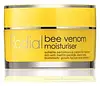
This moisturizer is formulated around Butyrospermum Parkii Butter and Ascorbyl Tetraisopalmitate to hydrate skin.
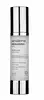
This barrier-repair moisturizer is formulated around Caprylic/Capric Triglyceride and Tranexamic Acid to strengthen the skin barrier and hydrate skin.


What's inside
What's inside
 Key Ingredients
Benefits
Concerns
Ingredients Side-by-side
Water
Skin ConditioningCyclopentasiloxane
Emollient
Butyrospermum Parkii Butter
Skin Conditioning






Glycerin
Humectant
Oryza Sativa Germ Oil
Emollient
Dimethicone
Emollient
Ethylhexanol
Perfuming

Squalane
Emollient
Caprylic/Capric Triglyceride
Masking
Cetyl Alcohol
Emollient
Cyclohexasiloxane
Emollient
Polysilicone-11

Cetearyl Alcohol
Emollient
Glyceryl Dibehenate
Emollient
Phenoxyethanol
Preservative
Glyceryl Stearate
Emollient
PEG-75 Stearate
Surfactant
Tribehenin
Emollient
Alcohol
Antimicrobial


Ascorbyl Tetraisopalmitate
Antioxidant


Ceteth-20
CleansingSteareth-20
CleansingGlyceryl Behenate
Emollient
Ectoin
Skin Conditioning


Lecithin
Emollient
Polyacrylamide
Xanthan Gum
EmulsifyingOcimum Basilicum Meristem Cell Culture
Skin ConditioningParfum
Masking
Ethylhexylglycerin
Skin ConditioningSodium Hyaluronate
Humectant
Tocopherol
Antioxidant

C13-14 Isoparaffin
Emollient
Disodium EDTA
Geranylgeranylisopropanol
Skin ConditioningHelianthus Annuus Seed Oil
Emollient
Laureth-7
EmulsifyingTriethanolamine
BufferingCitric Acid
Buffering
Alpha-Isomethyl Ionone
Perfuming
Hydroxycitronellal
Perfuming
Limonene
Perfuming
Citronellol
Perfuming
Sodium Benzoate
Masking
Potassium Sorbate
Preservative
Beta-Carotene
Skin ConditioningDaucus Carota Sativa Root Extract
Skin Conditioning
Daucus Carota Sativa Seed Oil
Emollient
Cyclotetrapeptide-24 Aminocyclohexane Carboxylate
Antioxidant
Ascorbyl Palmitate
Antioxidant
Bee Venom
Astringent
Water, Cyclopentasiloxane, Butyrospermum Parkii Butter, Glycerin, Oryza Sativa Germ Oil, Dimethicone, Ethylhexanol, Squalane, Caprylic/Capric Triglyceride, Cetyl Alcohol, Cyclohexasiloxane, Polysilicone-11, Cetearyl Alcohol, Glyceryl Dibehenate, Phenoxyethanol, Glyceryl Stearate, PEG-75 Stearate, Tribehenin, Alcohol, Ascorbyl Tetraisopalmitate, Ceteth-20, Steareth-20, Glyceryl Behenate, Ectoin, Lecithin, Polyacrylamide, Xanthan Gum, Ocimum Basilicum Meristem Cell Culture, Parfum, Ethylhexylglycerin, Sodium Hyaluronate, Tocopherol, C13-14 Isoparaffin, Disodium EDTA, Geranylgeranylisopropanol, Helianthus Annuus Seed Oil, Laureth-7, Triethanolamine, Citric Acid, Alpha-Isomethyl Ionone, Hydroxycitronellal, Limonene, Citronellol, Sodium Benzoate, Potassium Sorbate, Beta-Carotene, Daucus Carota Sativa Root Extract, Daucus Carota Sativa Seed Oil, Cyclotetrapeptide-24 Aminocyclohexane Carboxylate, Ascorbyl Palmitate, Bee Venom
Water
Skin ConditioningTribehenin PEG-20 Esters
EmollientCaprylic/Capric Triglyceride
Masking
Cyclopentasiloxane
Emollient
Propanediol
Solvent
Hydrogenated Polydecene
EmollientPrunus Amygdalus Dulcis Oil
Skin Conditioning
Polymethyl Methacrylate
Dimethicone
Emollient
Tocopheryl Acetate
Antioxidant
Tranexamic Acid
Astringent
Sodium Hyaluronate
Humectant
Lecithin
Emollient
Ammonium Acryloyldimethyltaurate/Vp Copolymer
Glyceryl Behenate
Emollient
Alcohol
Antimicrobial
Polysilicone-11
Xanthan Gum
EmulsifyingDimethicone/Vinyl Dimethicone Crosspolymer
Skin Conditioning
Triethanolamine
BufferingSodium Chloride
MaskingSodium Cholate
Skin ConditioningPolysorbate 20
Emulsifying
Propylene Glycol
Humectant
Retinyl Palmitate
Skin Conditioning
Tocopherol
Antioxidant
Phenoxyethanol
Preservative
Ethylhexylglycerin
Skin ConditioningMethylparaben
Preservative

Propylparaben
Preservative
Ethylparaben
Preservative
Parfum
Masking
Alpha-Isomethyl Ionone
Perfuming
Water, Tribehenin PEG-20 Esters, Caprylic/Capric Triglyceride, Cyclopentasiloxane, Propanediol, Hydrogenated Polydecene, Prunus Amygdalus Dulcis Oil, Polymethyl Methacrylate, Dimethicone, Tocopheryl Acetate, Tranexamic Acid, Sodium Hyaluronate, Lecithin, Ammonium Acryloyldimethyltaurate/Vp Copolymer, Glyceryl Behenate, Alcohol, Polysilicone-11, Xanthan Gum, Dimethicone/Vinyl Dimethicone Crosspolymer, Triethanolamine, Sodium Chloride, Sodium Cholate, Polysorbate 20, Propylene Glycol, Retinyl Palmitate, Tocopherol, Phenoxyethanol, Ethylhexylglycerin, Methylparaben, Propylparaben, Ethylparaben, Parfum, Alpha-Isomethyl Ionone
Ingredients Explained
These ingredients are found in both products.
Ingredients higher up in an ingredient list are typically present in a larger amount.
This ingredient is also called ethanol or ethyl alcohol. It is denatured, meaning made undrinkable for cosmetic use.
In formulas, it:
Is it bad for your skin?
The answer comes down to concentration. Patch and wash studies have found highly concentrated alcohol-based hand rubs (60-100%) cause less barrier disruption than washing with a basic detergent like SLS. The only measurable effect in these studies was a temporary dip in skin hydration.
Concentrations below 12-15% in leave-on cosmetics is generally well-tolerated. Concentrations above start to see increased transepidermal water loss (TEWL) and reduced hydration.
In concentrations about 58%, it creates temporary channels in your skin's lipid layers to become more permeable and allow other ingredients to slip through easily.
This ingredient can be up to 80% of the formula in alcohol-based perfumes.
Overall, this ingredient is probably harmless if found lower down an ingredients list but worth side-eyeing if it's high up (especially if your barrier is already struggling).
Alcohol can worsen dry skin, eczema, and oily skin, especially at higher concentrations. This is because it can increase transepidermal water loss and decrease hydration to disrupt the skin barrier.
According to the National Rosacea Society based in the US, you should be mindful of products with these alcohols in the top half of ingredients.
True allergic contact dermatitis to ethanol is uncommon, but be sure to patch test if you have dry or sensitive skin.
Learn more about AlcoholAlpha-Isomethyl Ionone is a fragrance. It can be synthetically created or naturally occurring.
The scent of Alpha-Isomethyl Ionone is described as "flowery" but can also be "woody".
Naturally occurring Alpha-Isomethyl Ionone may be found in Saccharomyces cerevisiae, or the yeast used to make wine and bread.
The term 'fragrance' is not regulated in many countries. In many cases, it is up to the brand to define this term. For instance, many brands choose to label themselves as "fragrance-free" because they are not using synthetic fragrances. However, their products may still contain ingredients such as essential oils that are considered a fragrance.
Learn more about Alpha-Isomethyl IononeCaprylic/Capric Triglyceride (aka MCT Oil) is a lightweight emollient, solvent, and texture enhancer. It is considered a skin-softener by helping to prevent moisture loss.
Though it behaves like an oil, it is not technically one due to its chemical composition. One perk of this ingredient is that it is very stable, resistant to oxidation, and unlikely to go rancid.
In practice, that translates to a long shelf life and a consistently elegant skin feel.
While there is an assumption Caprylic Triglyceride can clog pores due to it being derived from coconut oil, there is no research supporting this. Just patch test if you have concerns.
Fractionated coconut oil and MCT Oil are both listed as Caprylic/Capric Triglyceride according to INCI. This is because INCI names are based on the ingredient’s final chemical composition and not its marketing name or source.
This ingredient is treated as the gold standard fungal acne safe oil. Even though it is coconut derived, the problematic lauric acid is stripped out.
This leaves just caprylic (C8) and capric (C10) acid. These chain lengths actually trend antifungal; a 2020 study found caprylic acid was enough to disrupt Malassezia furfur cell membrane, with a caprylic acid derivative damaging membrane structures at concentrations as low as 0.2%.
Learn more about Caprylic/Capric TriglycerideCyclopentasiloxane (D5) is a lightweight silicone that mostly acts as an emollient and solvent in cosmetics. Its the reason your products feel silky, fast-spreading, and non-greasy.
Since D5 is volatile, it does its thing and then evaporates off the skin quickly.
The safety profile of this ingredient is reassuring; the US CIR Expert Panel concluded D5 is safe as used in cosmetics and Health Canada concluded that D5 is not harmful to human health or the environment as currently used in cosmetics
There's a study that people mention about D5 in a rat study showing tumors. This study is related to long-term inhalation of high D5 levels.
Regulatory bodies have judged this study to be not applicable in topical skincare since skin absorption of D5 is very low and we're not really inhaling huge amounts of D5.
The only restriction for this ingredient is environmental. The European Chemicals Agency (ECHA) restricted D5 in wash-off cosmetics at or above 0.1% due to their persistence in water.
Learn more about CyclopentasiloxaneDimethicone is a type of synthetic silicone created from natural materials such as quartz. It is also known as polydimethylsiloxane.
What it does:
Dimethicone comes in different viscosities:
Depending on the viscosity, dimethicone has different properties.
Ingredients lists don't always show which type is used, so we recommend reaching out to the brand if you have questions about the viscosity.
This ingredient is unlikely to cause irritation because it does not get absorbed into skin. However, people with silicone allergies should be careful about using this ingredient.
Note: Dimethicone may contribute to pilling. This is because it is not oil or water soluble, so pilling may occur when layered with products. When mixed with heavy oils in a formula, the outcome is also quite greasy.
Learn more about DimethiconeEthylhexylglycerin is created from glycerin. It is a multitasker ingredient that:
The CIR Expert Panel found minimal skin absorption or sensitization of any kind in a safety assessment. Though this ingredient is considered well-tolerated, a small number of cases of allergic dermatitis have been published since 2002. Just be sure to patch test if you are unsure.
Industry-reported use ranges from 8% in rinse-off products and 2% in leave-on formulations.
Learn more about EthylhexylglycerinGlyceryl Behenate is an emollient and emulsifier.
It has a lipophilic-hydrophilic structure that lets it sit at the oil-water interface to keep emulsions stable while leaving skin feeling soft and smooth.
In pressed powder cosmetics, it double as a compacting agent.
This ingredient can be synthetically created or plant-derived. Safety-wise, it has a solid track record.
One thing to flag for fungal acne: since this ingredient is the monoester of behenic acid (C22), it falls within the C11-24 range that Malassezia can metabolize.
Learn more about Glyceryl BehenateLecithin is a term for a group of substances found in the cell membranes of plants, animals, and humans. They are made up of phospholipids.
Thanks to its amphiphilic structure (water-loving head and oil-loving tail), it is a true multitasker:
It plays well with most ingredients and is typically used at 0.1-1%. However, concentrations up to 50% have been reported in moisturizers.
Learn more about LecithinParfum is a catch-all term for an ingredient or more that is used to give a scent to products.
Also called "fragrance", this ingredient can be a blend of hundreds of chemicals or plant oils. This means every product with "fragrance" or "parfum" in the ingredients list is a different mixture.
For instance, Habanolide is a proprietary trade name for a specific aroma chemical. When used as a fragrance ingredient in cosmetics, most aroma chemicals fall under the broad labeling category of “FRAGRANCE” or “PARFUM” according to EU and US regulations.
The term 'parfum' or 'fragrance' is not regulated in many countries. In many cases, it is up to the brand to define this term.
For instance, many brands choose to label themselves as "fragrance-free" because they are not using synthetic fragrances. However, their products may still contain ingredients such as essential oils that are considered a fragrance by INCI standards.
One example is Calendula flower extract. Calendula is an essential oil that still imparts a scent or 'fragrance'.
Depending on the blend, the ingredients in the mixture can cause allergies and sensitivities on the skin. Some ingredients that are known EU allergens include linalool and citronellol.
Parfum can also be used to mask or cover an unpleasant scent.
The bottom line is: not all fragrances/parfum/ingredients are created equally. If you are worried about fragrances, we recommend taking a closer look at an ingredient. And of course, we always recommend speaking with a professional.
Learn more about ParfumPhenoxyethanol is one of the most widely used preservatives in skincare (and for good reason!).
It has a large spectrum of antimicrobial activity and especially effective bacteria, yeast, and mold while only having a weak effect on your skin's natural microbiome.
On a cellular level, it disrupts the cell membranes of microbes by poking holes that make the cell leak. This shuts down the chemical reactions the microbe needs to make energy so it can no longer survive.
Another perk of this ingredient is that it stays functional across a wide pH range (3-10).
You'll often see it paired with boosters like Ethylhexylglycerin; one study showed that a 1:9 ratio of Ethylhexylglycerin to Phenoxyethanol damages bacterial membranes as effectively as doubling the Phenoxyethanol concentration on its own.
Typical use concentrations range from 0.3-1% depending on the formula, and this ingredient is capped at 1% int the EU.
Safety-wise, the fear mongering does not hold up to the evidence. The EU's Scientific Committee on Consumer Safety and FDA consider it safe as a preservative at up to 1%, including for children of all ages.
Adverse systemic effects only showed up in animal studies at exposures roughly 200x higher than what people get from cosmetics. And despite its very widespread use, this ingredient is a rare sensitizer and allergic reactions are uncommon.
Learn more about PhenoxyethanolPolysilicone-11 is a film-forming silicone that creates a non-tacky and matte finish on the skin. It's commonly used to improve texture, absorb excess oil, and help active ingredients spread evenly.
Due to its "rubber-like" structure, it stays on the skin's surface instead of being absorbed. On the skin, it creates a flexible layer that enhances wearability and stability.
Sodium Hyaluronate is the salt form of hyaluronic acid. It is a long sugar chain that is naturally found in your skin, joints, and connective tissue that maintains hydration and elasticity.
In skincare, it works as a humectant. It pulls water from the environment and deeper layers of skin and binds it to the surface.
Interestingly, the size of the molecule affects its behavior:
Some clinical evidence links low molecular weight versions to improved wrinkle depth, elasticity, anti-inflammatory effects, and barrier repair.
Many serums use a blend of both weights so you can get surface hydration plus longer-lasting and deeper effects.
You'll typically see concentrations between 0.1-2% for this ingredient.
Learn more about Sodium HyaluronateTocopherol is a fat-soluble antioxidant known as Vitamin E.
You'll find this ingredient in the vast majority of skincare (for good reason). It works to neutralize free radicals, or unstable molecules generated by UV exposure, pollution, and other environmental stressors, before they can cause oxidative damage to your skin cells.
Topically applied tocopherol has been shown to protect against UV damage by ramping up the skin's own natural defense enzymes.
It also acts as a skin conditioning agent; some studies show that regular topical use can improve the skin's water-binding capacity over 2-4 weeks.
This ingredient is especially loved for being a team player. When combined with Vitamin C, the photoprotective effect of both ingredients roughly doubles and the combo also helps reduce UV-induced DNA damage.
This ingredient has some brightening potential but it's more of a prevention ingredient than spot-fader. Cell studies show it can slow down melanin production but it's worth noting that it's not the most powerful brightener out there.
In formulations, it also serves as a stabilizer that helps protect other oxidation-prone ingredients from degrading.
Concentrations usually range from 0.1-1% in most leave-on products.
Learn more about TocopherolTriethanolamine (TEA) is an emulsifier and pH adjuster. It is created using ethylene oxide and ammonia. This gives Triethanolamine a nitrogen core and a similar scent to ammonia.
As an emulsifier, it prevents ingredients from separating and enhances texture by adding volume to a product.
PH adjusters are common in cosmetic products. The pH of a product can affect the effectiveness of other ingredients. A product with a high pH may also irritate the skin.
If you are looking for the tea leaf ingredient, click here.
Learn more about TriethanolamineWater. It's the most common cosmetic ingredient of all. You'll usually see it at the top of ingredient lists, meaning that it makes up the largest part of the product.
So why is it so popular? Water most often acts as a solvent - this means that it helps dissolve other ingredients into the formulation.
You'll also recognize water as that liquid we all need to stay alive. If you see this, drink a glass of water. Remember to stay hydrated!
Learn more about WaterXanthan gum is used as a stabilizer and thickener within cosmetic products. It helps give products a sticky, thick feeling - preventing them from being too runny.
On the technical side of things, xanthan gum is a polysaccharide - a combination consisting of multiple sugar molecules bonded together.
Xanthan gum is a pretty common and great ingredient. It is a natural, non-toxic, non-irritating ingredient that is also commonly used in food products.
Learn more about Xanthan Gum

