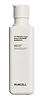
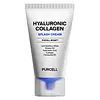
Purcell Pixcell Biom Scalp Barrier Shampoo Versus Purcell Pixcell Biom Hyaluronic Collagen Splash Cream
This barrier-repair moisturizer is formulated around Bifida Ferment Lysate and Hydrolyzed Hyaluronic Acid to strengthen the skin barrier and hydrate skin.

What's inside
What's inside
 Key Ingredients
Benefits
Concerns
Ingredients Side-by-side
Water
Skin ConditioningSodium C14-16 Olefin Sulfonate
Cleansing

Disodium Laureth Sulfosuccinate
CleansingC12-13 Alkyl Methacrylate
Lauryl Betaine
CleansingBifida Ferment Lysate
Skin Conditioning



Lactobacillus Ferment Lysate
Skin Conditioning
Lauryl Hydroxysultaine
CleansingButylene Glycol
Humectant
Glycine Soja Extract
Skin ConditioningPanthenol
Skin Conditioning
Biotin
AntiseborrhoeicTocopherol
Antioxidant




Quillaja Saponaria Bark Extract
Cleansing4-Terpineol
Masking
Caprylyl Glycol
Emollient
Coco-Glucoside
Cleansing
Citric Acid
Buffering

Lauramidopropyl Betaine
CleansingPolyquaternium-10
Polyquaternium-22
Ethylhexylglycerin
Skin ConditioningMenthol
Masking

Sodium Citrate
Buffering1,2-Hexanediol
Skin Conditioning
Sodium Cocoyl Isethionate
Cleansing
Sodium Phytate
ChelatingGlycerin
Humectant
Pentylene Glycol
Skin Conditioning
Octanediol
Alcohol Denat.
Antimicrobial
Potassium Sorbate
Preservative
Water, Sodium C14-16 Olefin Sulfonate, Disodium Laureth Sulfosuccinate, C12-13 Alkyl Methacrylate, Lauryl Betaine, Bifida Ferment Lysate, Lactobacillus Ferment Lysate, Lauryl Hydroxysultaine, Butylene Glycol, Glycine Soja Extract, Panthenol, Biotin, Tocopherol, Quillaja Saponaria Bark Extract, 4-Terpineol, Caprylyl Glycol, Coco-Glucoside, Citric Acid, Lauramidopropyl Betaine, Polyquaternium-10, Polyquaternium-22, Ethylhexylglycerin, Menthol, Sodium Citrate, 1,2-Hexanediol, Sodium Cocoyl Isethionate, Sodium Phytate, Glycerin, Pentylene Glycol, Octanediol, Alcohol Denat., Potassium Sorbate
Water
Skin ConditioningVinyldimethicone

Glycerin
Humectant
Butylene Glycol
Humectant
Bifida Ferment Lysate 2.25%
Skin Conditioning
Lactobacillus Ferment Lysate 2.25%
Skin Conditioning
Saccharomyces Ferment Lysate Filtrate
Skin Conditioning
Dipropylene Glycol
HumectantNiacinamide
Smoothing



Pentylene Glycol
Skin Conditioning
1,2-Hexanediol
Skin Conditioning
Caprylyl Methicone
Skin Conditioning
Ethylhexyl Palmitate
Emollient

Hydrolyzed Hyaluronic Acid
Humectant
Saccharomyces Ferment Filtrate
Humectant
Hydrolyzed Collagen
Emollient
Sodium Hyaluronate
Humectant
Xylitol
Humectant
Aureobasidium Pullulans Ferment
Skin ConditioningHydrolyzed Glycosaminoglycans
HumectantChlorella Vulgaris Extract
Skin ConditioningErythritol
Humectant
Panthenol
Skin Conditioning
Allantoin
Skin Conditioning
Squalane
Emollient
Ammonium Acryloyldimethyltaurate/Vp Copolymer
Tromethamine
BufferingAcrylates/C10-30 Alkyl Acrylate Crosspolymer
Emulsion StabilisingSorbitol
Humectant
Caprylic/Capric Triglyceride
Masking
Propanediol
Solvent
Ethylhexylglycerin
Skin ConditioningAdenosine
Skin Conditioning
Hydrolyzed Elastin
EmollientCeramide NP
Skin Conditioning
Beta-Glucan
Skin Conditioning
Hydrogenated Lecithin
Emulsifying
Sodium Phytate
ChelatingBiosaccharide Gum-1
Humectant
Albatrellus Confluens Extract
Humectant
Cellulose
Absorbent
Polyglutamic Acid
Skin Conditioning
Tocopherol
Antioxidant
Dipotassium Phosphate
BufferingAcetyl Glutamine
Skin Conditioning4-Terpineol
Masking
Glucose
Humectant
Fructooligosaccharides
Humectant
Fructose
Humectant
Cellulose Gum
Emulsion StabilisingCarbomer
Emulsion StabilisingWater, Vinyldimethicone, Glycerin, Butylene Glycol, Bifida Ferment Lysate 2.25%, Lactobacillus Ferment Lysate 2.25%, Saccharomyces Ferment Lysate Filtrate, Dipropylene Glycol, Niacinamide, Pentylene Glycol, 1,2-Hexanediol, Caprylyl Methicone, Ethylhexyl Palmitate, Hydrolyzed Hyaluronic Acid, Saccharomyces Ferment Filtrate, Hydrolyzed Collagen, Sodium Hyaluronate, Xylitol, Aureobasidium Pullulans Ferment, Hydrolyzed Glycosaminoglycans, Chlorella Vulgaris Extract, Erythritol, Panthenol, Allantoin, Squalane, Ammonium Acryloyldimethyltaurate/Vp Copolymer, Tromethamine, Acrylates/C10-30 Alkyl Acrylate Crosspolymer, Sorbitol, Caprylic/Capric Triglyceride, Propanediol, Ethylhexylglycerin, Adenosine, Hydrolyzed Elastin, Ceramide NP, Beta-Glucan, Hydrogenated Lecithin, Sodium Phytate, Biosaccharide Gum-1, Albatrellus Confluens Extract, Cellulose, Polyglutamic Acid, Tocopherol, Dipotassium Phosphate, Acetyl Glutamine, 4-Terpineol, Glucose, Fructooligosaccharides, Fructose, Cellulose Gum, Carbomer
Ingredients Explained
These ingredients are found in both products.
Ingredients higher up in an ingredient list are typically present in a larger amount.
1,2-Hexanediol is a synthetic liquid and another multi-functional powerhouse.
It is a:
- Humectant, drawing moisture into the skin
- Emollient, helping to soften skin
- Solvent, dispersing and stabilizing formulas
- Preservative booster, enhancing the antimicrobial activity of other preservatives
4-Terpineol is the main component of tea tree oil.
This ingredient is the reason tea tree oil has most of its reputation. Research points to a broad range of biological activity including antimicrobial, antioxidant, and anti-inflammatory effects.
Studies show it can significantly block the pathway involved in skin inflammation. It has also been shown to work against acne-causing bacteria, fungi, and even some viruses (and seems to be more effective on its own rather than part of tea tree oil).
Overall, this botanical extract is well-researched and skin-friendly.
Learn more about 4-TerpineolBifida Ferment Lysate is a postbiotic ingredient made by fermenting Bifidobacterium to extract a nutrient-rich mix of peptides, amino acids, vitamins, organic acids, and polysaccharides.
These components are basically the building blocks that your skin already uses to stay hydrated, repair itself, and maintain its barrier. That's why this ingredient helps your skin hold onto moisture and stay resilient against irritation.
One in-vitro study found that this ingredient tells your skin cells to produce more of the proteins (filaggrin, loricrin, and involucrin) for building a strong and healthy barrier. This study also found this ingredient to be a solid antioxidant that helped neutralize damage against UV and pollution.
A study with people from 2010 found that sensitive, reactive skin using a cream with 10% of this ingredient for a month became noticeably less dry, less reactive, and harder to irritate compared to the group using a plain cream.
In short, this ingredient is a well-tolerated ingredient that can help with barrier repair, antioxidant protection, and calming reactive skin.
This ingredient is generally considered fungal acne (Malassezia) safe; Bifidobacterium is a bacterium, not a yeast or fungus.
The fungal acne concern with fermented ingredients mainly applies to yeast-derived ferments like Saccharomyces and Galactomyces, because those are in the same kingdom as Malassezia and could theoretically contain residual compounds that feed it.
Bifida is a completely different organism, so on its own it doesn't provide a food source for the Malassezia yeast that causes fungal acne.
Learn more about Bifida Ferment LysateButylene Glycol (or BG) is used within cosmetic products for a few different reasons:
Overall, Butylene Glycol is a safe and well-rounded ingredient that works well with other ingredients.
Though this ingredient works well with most skin types, some people with sensitive skin may experience a reaction such as allergic rashes, closed comedones, or itchiness.
Learn more about Butylene GlycolEthylhexylglycerin is created from glycerin. It is a multitasker ingredient that:
The CIR Expert Panel found minimal skin absorption or sensitization of any kind in a safety assessment. Though this ingredient is considered well-tolerated, a small number of cases of allergic dermatitis have been published since 2002. Just be sure to patch test if you are unsure.
Industry-reported use ranges from 8% in rinse-off products and 2% in leave-on formulations.
Learn more about EthylhexylglycerinGlycerin (or glycerol) is a compound naturally found in your skin. It's a powerhouse humectant that pulls water into the stratum corneum.
Topically, glycerin does several things at once:
Your skin makes glycerin on its own (mostly from sebaceous oil breakdown) and shuttles it to your outermost layer of skin, or your epidermis, via aquaporin-3.
Aquaporin-3 is a transporter that is essential for normal skin hydration, elasticity, and repair. Interestingly, mice lacking in AQP3 have dry and less elastic skin that can be fully corrected with glycerin.
This ingredient is non-irritating, plays well with almost every ingredient, and works across all skin types. Typical use is anywhere between 3-10% but can go up to 79% in some leave-on products.
Just know very high concentrations (>40%) can feel tacky in low humidity.
Glycerin is the name for this ingredient in American English. British English uses Glycerol/Glycerine.
Learn more about GlycerinLactobacillus Ferment Lysate is a postbiotic with skin soothing properties. Postbiotics are inactive molecules produced by probiotic bacteria that provide skin benefits.
This ingredient comes from the secretion of the bacteria, Lactobacillus.
Studies show this ingredient can help calm redness and may help treat the signs of photoaging; however, the evidence is inconclusive and further studies are needed.
Lactobacillus Ferment is generally considered safe for fungal-acne prone skin. The key thing to understand is that it comes from bacteria, not yeast or fungus.
Yeast-derived ferments (like galactomyces) have been shown to activate a protein that's linked to Malassezia-related skin issues whereas lactobacillus doesn't have that problem.
Its byproducts also don't contain the types of fatty acids (C11-24 chain lengths) that Malassezia feeds on.
Learn more about Lactobacillus Ferment LysatePanthenol is a common ingredient that helps hydrate and soothe the skin. It is found naturally in our skin and hair.
There are two forms of panthenol: D and L.
D-panthenol is also known as dexpanthenol. Most cosmetics use dexpanthenol or a mixture of D and L-panthenol.
Panthenol is famous due to its ability to go deeper into the skin's layers. Using this ingredient has numerous pros (and no cons):
Like hyaluronic acid, panthenol is a humectant. Humectants are able to bind and hold large amounts of water to keep skin hydrated.
This ingredient works well for wound healing. It works by increasing tissue in the wound and helps close open wounds.
Once oxidized, panthenol converts to pantothenic acid. Panthothenic acid is found in all living cells.
This ingredient is also referred to as pro-vitamin B5.
Learn more about PanthenolPentylene Glycol (1,2-pentanediol) is a multitasking little diol with three main roles in a formula:
Research on alkanediols (the family pentylene glycol belongs to) show they work by disrupting microbial cell membranes. This disruption helps the primary preservative system in a product work more effectively at lower doses.
On the safety side, the Cosmetic Ingredient Review Expert Panel has concluded this ingredient to be safe as used in current cosmetic practices + concentrations.
Typical use levels in a formula run about 1-5%.
Learn more about Pentylene GlycolSodium Phytate is the sodium salt of Phytic acid, a compound that plants store phosphorus in. It's the plant-derived alternative to ingredients like Disodium EDTA.
In skincare, this ingredient is a chelator that grabs onto trace metal ions like iron and copper that sneak into formulas through water/raw materials.
Those metals speed up oxidation so binding them keeps oils, fragrance, and actives from going off, stops color changes, and helps the preservative system work harder.
Survey data shows usage levels range from 0.0099%-0.5% in leave-on products, 0.025%-0.3% in rinse-off, and up to 0.05% in eye-area products. Suppliers typically recommend a range between 0.05-0.5%.
Learn more about Sodium PhytateTocopherol is a fat-soluble antioxidant known as Vitamin E.
You'll find this ingredient in the vast majority of skincare (for good reason). It works to neutralize free radicals, or unstable molecules generated by UV exposure, pollution, and other environmental stressors, before they can cause oxidative damage to your skin cells.
Topically applied tocopherol has been shown to protect against UV damage by ramping up the skin's own natural defense enzymes.
It also acts as a skin conditioning agent; some studies show that regular topical use can improve the skin's water-binding capacity over 2-4 weeks.
This ingredient is especially loved for being a team player. When combined with Vitamin C, the photoprotective effect of both ingredients roughly doubles and the combo also helps reduce UV-induced DNA damage.
This ingredient has some brightening potential but it's more of a prevention ingredient than spot-fader. Cell studies show it can slow down melanin production but it's worth noting that it's not the most powerful brightener out there.
In formulations, it also serves as a stabilizer that helps protect other oxidation-prone ingredients from degrading.
Concentrations usually range from 0.1-1% in most leave-on products.
Learn more about TocopherolWater. It's the most common cosmetic ingredient of all. You'll usually see it at the top of ingredient lists, meaning that it makes up the largest part of the product.
So why is it so popular? Water most often acts as a solvent - this means that it helps dissolve other ingredients into the formulation.
You'll also recognize water as that liquid we all need to stay alive. If you see this, drink a glass of water. Remember to stay hydrated!
Learn more about Water

