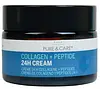
This anti-aging moisturizer is formulated around Niacinamide to soften the look of wrinkles.


What's inside
What's inside
 Key Ingredients
Benefits
Concerns
Ingredients Side-by-side
Water
Skin ConditioningCetearyl Alcohol
Emollient






Ethylhexyl Palmitate
Emollient
Isopropyl Myristate
Emollient
Propanediol
Solvent

Glycerin
Humectant
Butyrospermum Parkii Oil
Emollient
Macadamia Ternifolia Seed Oil
Emollient
Caprylic/Capric Triglyceride
Masking
Corn Gluten Amino Acids
Skin ConditioningCetearyl Glucoside
Emulsifying
Sorbitan Olivate
Emulsifying
Tocopheryl Acetate
Antioxidant


Glyceryl Stearate
Emollient
Dicaprylyl Carbonate
EmollientCollagen
Moisturising
Hydrolyzed Collagen
Emollient
Oligopeptide-1
Skin Conditioning


Oligopeptide-2
Skin Conditioning
Oligopeptide-5
Skin Conditioning
Hyaluronic Acid
Humectant
Yeast Ferment Extract
Skin ConditioningAvena Sativa Kernel Extract
Abrasive


Mentha Arvensis Leaf Extract
MaskingPelargonium Graveolens Extract
Masking
Chrysanthemum Indicum Flower Extract
Skin Conditioning
Aloe Barbadensis Leaf Extract
Emollient
Olea Europaea Oil Unsaponifiables
Skin Conditioning
Sophora Flavescens Root Extract
Antioxidant
Portulaca Oleracea Extract
Skin Conditioning
Inositol
Humectant
Panthenol
Skin Conditioning
Squalane
Emollient
Arginine
Masking
Euglena Gracilis Polysaccharide
Gel FormingSodium Polyglutamate
HumectantXanthan Gum
EmulsifyingGlyceryl Glucoside
Humectant
Citric Acid
Buffering
Saccharide Isomerate
Humectant
Hexylene Glycol
EmulsifyingButylene Glycol
Humectant
1,2-Hexanediol
Skin Conditioning
Sodium Citrate
BufferingEthylhexylglycerin
Skin ConditioningSodium Hydroxide
BufferingPhenoxyethanol
Preservative
Potassium Sorbate
Preservative
Sodium Benzoate
Masking
Carbomer
Emulsion StabilisingHydroxyacetophenone
Antioxidant
Parfum
Masking

Citronellol
Perfuming
Water, Cetearyl Alcohol, Ethylhexyl Palmitate, Isopropyl Myristate, Propanediol, Glycerin, Butyrospermum Parkii Oil, Macadamia Ternifolia Seed Oil, Caprylic/Capric Triglyceride, Corn Gluten Amino Acids, Cetearyl Glucoside, Sorbitan Olivate, Tocopheryl Acetate, Glyceryl Stearate, Dicaprylyl Carbonate, Collagen, Hydrolyzed Collagen, Oligopeptide-1, Oligopeptide-2, Oligopeptide-5, Hyaluronic Acid, Yeast Ferment Extract, Avena Sativa Kernel Extract, Mentha Arvensis Leaf Extract, Pelargonium Graveolens Extract, Chrysanthemum Indicum Flower Extract, Aloe Barbadensis Leaf Extract, Olea Europaea Oil Unsaponifiables, Sophora Flavescens Root Extract, Portulaca Oleracea Extract, Inositol, Panthenol, Squalane, Arginine, Euglena Gracilis Polysaccharide, Sodium Polyglutamate, Xanthan Gum, Glyceryl Glucoside, Citric Acid, Saccharide Isomerate, Hexylene Glycol, Butylene Glycol, 1,2-Hexanediol, Sodium Citrate, Ethylhexylglycerin, Sodium Hydroxide, Phenoxyethanol, Potassium Sorbate, Sodium Benzoate, Carbomer, Hydroxyacetophenone, Parfum, Citronellol
Water
Skin ConditioningPropanediol
Solvent
Dipropylene Glycol
HumectantButylene Glycol
Humectant
Methylpropanediol
SolventDiethoxyethyl Succinate
SolventEthoxydiglycol
HumectantAmmonium Acryloyldimethyltaurate/Beheneth-25 Methacrylate Crosspolymer
Emulsion StabilisingNiacinamide
Smoothing



Trehalose
Humectant
1,2-Hexanediol
Skin Conditioning
Chlorella Vulgaris Extract
Skin ConditioningCollagen
Moisturising
Hydrolyzed Collagen
Emollient
Cynanchum Atratum Extract
Skin ConditioningAlthaea Rosea Flower Extract
Skin ConditioningSoluble Collagen
Humectant
Allium Sativum Bulb Extract
Skin ConditioningAvena Sativa Kernel Extract
Abrasive
Bertholletia Excelsa Seed Extract
Skin ConditioningBrassica Oleracea Italica Extract
AstringentCamellia Sinensis Seed Extract
Humectant
Salmon Egg Extract
Solanum Lycopersicum Fruit Extract
Antioxidant
Spinacia Oleracea Leaf Extract
Skin ConditioningVaccinium Angustifolium Fruit Extract
Skin Protecting
Wine Extract
Antioxidant
Polyglyceryl-10 Isostearate
Skin Conditioning
Tromethamine
BufferingGlucose
Humectant
Polyglyceryl-10 Oleate
Skin Conditioning
Ethylhexylglycerin
Skin ConditioningFructooligosaccharides
Humectant
Fructose
Humectant
Adenosine
Skin Conditioning
Sodium Phytate
ChelatingCyanocobalamin
Skin ConditioningTocopherol
Antioxidant
Pullulan
Glycerin
Humectant
Hydroxypropyltrimonium Hyaluronate
Squalane
Emollient
Soluble Proteoglycan
Skin ConditioningHydrolyzed Elastin
EmollientSodium DNA
Skin Conditioning
Carbomer
Emulsion StabilisingXanthan Gum
EmulsifyingParfum
Masking
Water, Propanediol, Dipropylene Glycol, Butylene Glycol, Methylpropanediol, Diethoxyethyl Succinate, Ethoxydiglycol, Ammonium Acryloyldimethyltaurate/Beheneth-25 Methacrylate Crosspolymer, Niacinamide, Trehalose, 1,2-Hexanediol, Chlorella Vulgaris Extract, Collagen, Hydrolyzed Collagen, Cynanchum Atratum Extract, Althaea Rosea Flower Extract, Soluble Collagen, Allium Sativum Bulb Extract, Avena Sativa Kernel Extract, Bertholletia Excelsa Seed Extract, Brassica Oleracea Italica Extract, Camellia Sinensis Seed Extract, Salmon Egg Extract, Solanum Lycopersicum Fruit Extract, Spinacia Oleracea Leaf Extract, Vaccinium Angustifolium Fruit Extract, Wine Extract, Polyglyceryl-10 Isostearate, Tromethamine, Glucose, Polyglyceryl-10 Oleate, Ethylhexylglycerin, Fructooligosaccharides, Fructose, Adenosine, Sodium Phytate, Cyanocobalamin, Tocopherol, Pullulan, Glycerin, Hydroxypropyltrimonium Hyaluronate, Squalane, Soluble Proteoglycan, Hydrolyzed Elastin, Sodium DNA, Carbomer, Xanthan Gum, Parfum
Reviews
Ingredients Explained
These ingredients are found in both products.
Ingredients higher up in an ingredient list are typically present in a larger amount.
1,2-Hexanediol is a synthetic liquid and another multi-functional powerhouse.
It is a:
- Humectant, drawing moisture into the skin
- Emollient, helping to soften skin
- Solvent, dispersing and stabilizing formulas
- Preservative booster, enhancing the antimicrobial activity of other preservatives
Avena Sativa Kernel Extract is is derived from colloidal oatmeal. Besides being a healthy breakfast, oats have many benefits in skincare too.
This ingredient helps sooth, hydrate, and protect the skin. The starches in colloidal oatmeal are able to bind water, keeping the skin hydrated.
The cellulose and fiber in colloidal oatmeal help reduce inflammation. This can also help the skin feel softer.
Colloidal Oatmeal is also an antioxidant. Antioxidants protect our skin from free-radical damage.
Oatmeal also contains beneficial compounds:
This ingredient is created by mixing grounded oatmeal and a liquid base.
Learn more about Avena Sativa Kernel ExtractButylene Glycol (or BG) is used within cosmetic products for a few different reasons:
Overall, Butylene Glycol is a safe and well-rounded ingredient that works well with other ingredients.
Though this ingredient works well with most skin types, some people with sensitive skin may experience a reaction such as allergic rashes, closed comedones, or itchiness.
Learn more about Butylene GlycolCarbomer is a synthetic thickening and gelling agent. It's basically the ingredient that gives a lot of serums, gels, creams, and sunscreens their smooth, non-sticky texture.
Although legally permitted at very high levels, carbomers are normally used at concentrations below 1%.
It also needs to be neutralized to actually thicken, and because it is a large molecule, it doesn't really penetrate the skin barrier.
Allergy-wise, the risk is very low. Clinical studies show carbomers have low potential for skin irritation/sensitization even at concentrations up to 100%.
A 2024 UK study patch-tested 1,302 patients and found true allergy to the parent group of carbomer to be rare with no confirmed relevant reactions.
Learn more about CarbomerCollagen is a big structural protein that your body uses to keep skin firm and bouncy. Despite the marketing, topically applied collagen doesn't "refill" the collagen in your skin.
The molecule is too big to pass through your skin barrier so intact Collagen physically can't get past the surface.
What it actually does in your skincare is work as a humectant and film-former: it binds water, lays down a light moisturizing film, and reduces water loss from the surface. This helps make skin feel smoother and temporarily plumper.
This ingredient has been found safe for use in cosmetics with clinical studies showing no irritation, sensitization, or phototoxicity. It's typically used at low concentrations (often a fraction of a percent up to a few percent).
Collagen will not increase sun sensitivity, but you should always wear sunscreen during the day.
Learn more about hydrolyzed collagen or soluble collagen.
Learn more about CollagenEthylhexylglycerin is created from glycerin. It is a multitasker ingredient that:
The CIR Expert Panel found minimal skin absorption or sensitization of any kind in a safety assessment. Though this ingredient is considered well-tolerated, a small number of cases of allergic dermatitis have been published since 2002. Just be sure to patch test if you are unsure.
Industry-reported use ranges from 8% in rinse-off products and 2% in leave-on formulations.
Learn more about EthylhexylglycerinGlycerin (or glycerol) is a compound naturally found in your skin. It's a powerhouse humectant that pulls water into the stratum corneum.
Topically, glycerin does several things at once:
Your skin makes glycerin on its own (mostly from sebaceous oil breakdown) and shuttles it to your outermost layer of skin, or your epidermis, via aquaporin-3.
Aquaporin-3 is a transporter that is essential for normal skin hydration, elasticity, and repair. Interestingly, mice lacking in AQP3 have dry and less elastic skin that can be fully corrected with glycerin.
This ingredient is non-irritating, plays well with almost every ingredient, and works across all skin types. Typical use is anywhere between 3-10% but can go up to 79% in some leave-on products.
Just know very high concentrations (>40%) can feel tacky in low humidity.
Glycerin is the name for this ingredient in American English. British English uses Glycerol/Glycerine.
Learn more about GlycerinHydrolyzed Collagen is Collagen (usually sourced from fish, bovine, or porcine byproducts) that's been broken down into smaller peptides. This makes it water-soluble and easy to blend into formulations.
In a formula, it works mainly as a skin-conditioning and moisturizing agent.
The small peptides and amino acids (including Natural Moisturizing Factor components like Hydroxyproline, Serine, and Aspartic Acid) help the surface of the skin hold onto water, feel softer, and look temporarily plumper.
This ingredient also has mild film-forming and antioxidant properties with research showing the antioxidant effect is stronger the lower the molecular weight of the peptides.
It's worth being realistic here:
Topically applied Hydrolyzed Collagen conditions the upper layers of skin rather than rebuilding the structural collagen deep in your dermis (the wrinkle-and-firmness benefits people associate with Collagen mostly come from oral supplements in studies, not topicals).
However, recent lab and skin-model work on Hydrolyzed Fish Collagen has shown promising effects on cell viability and wound healing when used as an active.
Typical concentrations range from 0.2-2%, but the percentage can go much higher in rinse-off or hair products (sometimes even above 50%).
Clinical studies on this ingredient showed no irritation, sensitization, or phototoxicity.
If you are looking for vegan collagen, it usually goes by a different INCI name like hydrolyzed soy protein. Vegan collagen is derived from yeast, bacteria, or plant sources.
The results are varied.
A study from 2021 found hydrolyzed collagen increased elasticity and improved wrinkles in 1,125 participants between age 20 and 70. Another study found increased skin thickness in participants between the ages of 45 to 59.
However, It is difficult to prove that oral collagen will end up working on your skin. Many of the studies using hydrolyzed collagen also add several vitamins and nutrients into the test mixture as well.
Further studies are needed at this time.
Learn more about Hydrolyzed CollagenParfum is a catch-all term for an ingredient or more that is used to give a scent to products.
Also called "fragrance", this ingredient can be a blend of hundreds of chemicals or plant oils. This means every product with "fragrance" or "parfum" in the ingredients list is a different mixture.
For instance, Habanolide is a proprietary trade name for a specific aroma chemical. When used as a fragrance ingredient in cosmetics, most aroma chemicals fall under the broad labeling category of “FRAGRANCE” or “PARFUM” according to EU and US regulations.
The term 'parfum' or 'fragrance' is not regulated in many countries. In many cases, it is up to the brand to define this term.
For instance, many brands choose to label themselves as "fragrance-free" because they are not using synthetic fragrances. However, their products may still contain ingredients such as essential oils that are considered a fragrance by INCI standards.
One example is Calendula flower extract. Calendula is an essential oil that still imparts a scent or 'fragrance'.
Depending on the blend, the ingredients in the mixture can cause allergies and sensitivities on the skin. Some ingredients that are known EU allergens include linalool and citronellol.
Parfum can also be used to mask or cover an unpleasant scent.
The bottom line is: not all fragrances/parfum/ingredients are created equally. If you are worried about fragrances, we recommend taking a closer look at an ingredient. And of course, we always recommend speaking with a professional.
Learn more about ParfumPropanediol is an all-star ingredient. It softens, hydrates, and smooths the skin.
It’s often used to:
Propanediol is not likely to cause sensitivity and considered safe to use. It is derived from corn or petroleum with a clear color and no scent.
Learn more about PropanediolSqualane is the hydrogenated and shelf-stable form of squalene (a lipid that naturally occurs in human sebum).
It is an emollient and skin conditioning agent that is able to integrate seamlessly into the skin's lipid barrier without clogging pores.
This is due to how structurally similar it is to what your skin already produces.
Though it is mostly an emollient that helps soften and hydrate skin, it also has some humectant and occlusive action. Humectants help the skin retain moisture while occlusives seal it in, making squalane a triple-threat moisturizer.
Research shows it has antioxidant capabilities that help protect against stressors like UV exposure, specifically UVA induced oxidative stress. This study also found that it supports collagen biosynthesis in human dermal fibroblasts.
No clinical study has reported significant adverse effects and irritation reactions are very rare from this ingredient (even at 100% concentration).
Overall, it's a fantastic ingredient for hydration and is suitable for all skin types.
This depends on the source. Squalane can be derived from both plants and animals. Most squalane used in skincare comes from plants.
Please note: the source of squalane is only known if disclosed by the brand. We recommend reaching out to the brand if you have any questions about their squalane.
Read more about squalene with an "e".
Though squalane is often called an oil, it’s technically not one. It is a hydrocarbon, meaning it is only made of carbon and hydrogen. True oils are triglycerides and made of fatty acids and glycerol.
The term “oil-free” isn’t regulated so companies can define it however they want. Some exclude all oils, while others just avoid mineral oil or comedogenic oils.
Squalane has a comedogenic rating of 1 from the original 1972 study that tested raw ingredients under occlusion on rabbit ears. This system is not standardized or peer-reviewed, and using the raw ingredients is very different from how diluted cosmetic formulations are used on human skin.
A comedogenic rating of 1 means it is "unlikely to clog pores" according to the original rating system.
The overall formula of a product matters more than the individual ingredients on whether or not it will cause clogged pores.
Learn more about SqualaneWater. It's the most common cosmetic ingredient of all. You'll usually see it at the top of ingredient lists, meaning that it makes up the largest part of the product.
So why is it so popular? Water most often acts as a solvent - this means that it helps dissolve other ingredients into the formulation.
You'll also recognize water as that liquid we all need to stay alive. If you see this, drink a glass of water. Remember to stay hydrated!
Learn more about WaterXanthan gum is used as a stabilizer and thickener within cosmetic products. It helps give products a sticky, thick feeling - preventing them from being too runny.
On the technical side of things, xanthan gum is a polysaccharide - a combination consisting of multiple sugar molecules bonded together.
Xanthan gum is a pretty common and great ingredient. It is a natural, non-toxic, non-irritating ingredient that is also commonly used in food products.
Learn more about Xanthan Gum

