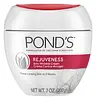
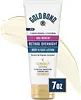
Pond's Rejuveness Anti-Wrinkle Cream Versus Gold Bond Age Renew Retinol Overnight Body & Face Lotion
This anti-aging day moisturizer is formulated around Lactic Acid to soften the look of wrinkles and refine skin texture.

What's inside
What's inside
 Key Ingredients
Benefits
Concerns
Ingredients Side-by-side
Water
Skin ConditioningLactic Acid
Buffering










Glycerin
Humectant

Butylene Glycol
Humectant
Cetyl Alcohol
Emollient


Isopropyl Palmitate
Emollient

Steareth-21
CleansingDimethicone
Emollient
Paraffinum Liquidum
Emollient
Ethylhexyl Methoxycinnamate
UV Absorber

Steareth-2
EmulsifyingPotassium Hydroxide
BufferingStearyl Dimethicone
Emollient
Stearic Acid
Cleansing
Borago Officinalis Seed Oil
Emollient

Magnesium Aluminum Silicate
Absorbent
Phenoxyethanol
Preservative
Hydroxyethyl Acrylate/Sodium Acryloyldimethyl Taurate Copolymer
Emulsion StabilisingParfum
Masking

Octadecene
SolventIsohexadecane
EmollientMethylparaben
Preservative
Hydroxyethylcellulose
Emulsion StabilisingDimethiconol
Emollient
Xanthan Gum
EmulsifyingDisodium EDTA
ChelatingTocopheryl Acetate
Antioxidant

Propylparaben
Preservative
Benzophenone-3
UV Absorber
Polysorbate 60
Emulsifying
Potassium Carbonate
BufferingSorbitan Isostearate
Emulsifying
Sodium Nitrate
SoothingTocopherol
Antioxidant
Quartz
Abrasive
Ascorbyl Palmitate
Antioxidant
Disodium Phosphate
BufferingBHT
Antioxidant
Phospholipids
Skin Conditioning
Sodium Phosphate
BufferingHydrolyzed Collagen
Emollient
Cholesterol
Emollient
Citronellol
Perfuming
Citrus Aurantium Peel Oil
Coumarin
Perfuming
Geraniol
Perfuming
Hexyl Cinnamal
Perfuming
Limonene
Perfuming
Linalool
Perfuming
Linalyl Acetate
Masking
Terpineol
Masking
Tetramethyl Acetyloctahydronaphthalenes
Masking
CI 77891
Cosmetic ColorantWater, Lactic Acid, Glycerin, Butylene Glycol, Cetyl Alcohol, Isopropyl Palmitate, Steareth-21, Dimethicone, Paraffinum Liquidum, Ethylhexyl Methoxycinnamate, Steareth-2, Potassium Hydroxide, Stearyl Dimethicone, Stearic Acid, Borago Officinalis Seed Oil, Magnesium Aluminum Silicate, Phenoxyethanol, Hydroxyethyl Acrylate/Sodium Acryloyldimethyl Taurate Copolymer, Parfum, Octadecene, Isohexadecane, Methylparaben, Hydroxyethylcellulose, Dimethiconol, Xanthan Gum, Disodium EDTA, Tocopheryl Acetate, Propylparaben, Benzophenone-3, Polysorbate 60, Potassium Carbonate, Sorbitan Isostearate, Sodium Nitrate, Tocopherol, Quartz, Ascorbyl Palmitate, Disodium Phosphate, BHT, Phospholipids, Sodium Phosphate, Hydrolyzed Collagen, Cholesterol, Citronellol, Citrus Aurantium Peel Oil, Coumarin, Geraniol, Hexyl Cinnamal, Limonene, Linalool, Linalyl Acetate, Terpineol, Tetramethyl Acetyloctahydronaphthalenes, CI 77891
Water
Skin ConditioningHydroxyethyl Urea
Humectant
Butyrospermum Parkii Butter Extract
Skin Conditioning
Dimethicone
Emollient
Glycerin
Humectant
Stearyl Alcohol
Emollient
Niacinamide
Smoothing

Selaginella Lepidophylla Extract
EmollientSteareth-21
CleansingGlyceryl Stearate
Emollient
Cetyl Alcohol
Emollient
Jojoba Esters
Emollient
Jojoba Oil/Macadamia Seed Oil Esters
Skin Conditioning
Squalene
Emollient
Phytosteryl Macadamiate
Skin Conditioning
Phytosterols
Skin Conditioning
Tocopherol
Antioxidant
Retinol
Skin Conditioning
Cetearyl Alcohol
Emollient
Caprylic/Capric Triglyceride
Masking
Sodium Ascorbate
Antioxidant
Palmitoyl Hexapeptide-12
Skin Conditioning
Polysorbate 60
Emulsifying
Citrullus Lanatus Fruit Extract
Skin Conditioning
Pyrus Malus Fruit Extract
Skin Conditioning
Lens Esculenta Fruit Extract
Skin ConditioningSodium Lactate
Buffering
Sodium PCA
Humectant
Propylene Glycol
Humectant
Hydroxyacetophenone
Antioxidant
Theobroma Cacao Seed Butter
Emollient
Behentrimonium Methosulfate
SurfactantStearamidopropyl Pg-Dimonium Chloride Phosphate
Butylene Glycol
Humectant
Polyacrylate Crosspolymer-6
Emulsion StabilisingEthylhexylglycerin
Skin ConditioningGuar Hydroxypropyltrimonium Chloride
Skin ConditioningPanthenol
Skin Conditioning
Disodium EDTA
ChelatingCitric Acid
Buffering
C12-15 Alkyl Benzoate
AntimicrobialTribehenin
Emollient
Ceramide Ng
Skin Conditioning
PEG-10 Phytosterol
EmulsifyingCaramel
Cosmetic ColorantWater, Hydroxyethyl Urea, Butyrospermum Parkii Butter Extract, Dimethicone, Glycerin, Stearyl Alcohol, Niacinamide, Selaginella Lepidophylla Extract, Steareth-21, Glyceryl Stearate, Cetyl Alcohol, Jojoba Esters, Jojoba Oil/Macadamia Seed Oil Esters, Squalene, Phytosteryl Macadamiate, Phytosterols, Tocopherol, Retinol, Cetearyl Alcohol, Caprylic/Capric Triglyceride, Sodium Ascorbate, Palmitoyl Hexapeptide-12, Polysorbate 60, Citrullus Lanatus Fruit Extract, Pyrus Malus Fruit Extract, Lens Esculenta Fruit Extract, Sodium Lactate, Sodium PCA, Propylene Glycol, Hydroxyacetophenone, Theobroma Cacao Seed Butter, Behentrimonium Methosulfate, Stearamidopropyl Pg-Dimonium Chloride Phosphate, Butylene Glycol, Polyacrylate Crosspolymer-6, Ethylhexylglycerin, Guar Hydroxypropyltrimonium Chloride, Panthenol, Disodium EDTA, Citric Acid, C12-15 Alkyl Benzoate, Tribehenin, Ceramide Ng, PEG-10 Phytosterol, Caramel
Reviews
Ingredients Explained
These ingredients are found in both products.
Ingredients higher up in an ingredient list are typically present in a larger amount.
Butylene Glycol (or BG) is used within cosmetic products for a few different reasons:
Overall, Butylene Glycol is a safe and well-rounded ingredient that works well with other ingredients.
Though this ingredient works well with most skin types, some people with sensitive skin may experience a reaction such as allergic rashes, closed comedones, or itchiness.
Learn more about Butylene GlycolCetyl Alcohol is a fatty alcohol. Fatty Alcohols are most often used as an emollient or to thicken a product.
Its main roles are:
Though it has "alcohol" in the name, it is not related to denatured alcohol or ethyl alcohol.
The FDA allows products labeled "alcohol-free" to have fatty alcohols.
This ingredient may not be fungal acne safe. It is a primary fatty alcohol with a chain length above 12 carbons. A study from 2019 show Malassezia can feed on fatty alcohols in this range, so it may trigger fungal acne in those prone to it.
Learn more about Cetyl AlcoholDimethicone is a type of synthetic silicone created from natural materials such as quartz. It is also known as polydimethylsiloxane.
What it does:
Dimethicone comes in different viscosities:
Depending on the viscosity, dimethicone has different properties.
Ingredients lists don't always show which type is used, so we recommend reaching out to the brand if you have questions about the viscosity.
This ingredient is unlikely to cause irritation because it does not get absorbed into skin. However, people with silicone allergies should be careful about using this ingredient.
Note: Dimethicone may contribute to pilling. This is because it is not oil or water soluble, so pilling may occur when layered with products. When mixed with heavy oils in a formula, the outcome is also quite greasy.
Learn more about DimethiconeDisodium EDTA is a chelating agent. It grabs onto and deactivates metal ions that sneak into your products from water, packaging, or air.
This ingredient mainly works behind the scenes and helps with:
On top of that, this ingredient can counteract the effects of hard water by binding to the minerals in it.
One thing worth knowing is that Disodium EDTA has been shown to be a mild penetration enhancer. It can help other ingredients absorb into skin more effectively which can be a double-edged sword (great for actives, but can also make the active too strong if you have sensitive skin).
Clinical patch testing showed no significant skin irritation at typical use concentrations and minimal dermal absorption.
You'll most likely see this ingredient near the end of an ingredient list. It's typically found in concentrations less than 1%.
Learn more about Disodium EDTAGlycerin (or glycerol) is a compound naturally found in your skin. It's a powerhouse humectant that pulls water into the stratum corneum.
Topically, glycerin does several things at once:
Your skin makes glycerin on its own (mostly from sebaceous oil breakdown) and shuttles it to your outermost layer of skin, or your epidermis, via aquaporin-3.
Aquaporin-3 is a transporter that is essential for normal skin hydration, elasticity, and repair. Interestingly, mice lacking in AQP3 have dry and less elastic skin that can be fully corrected with glycerin.
This ingredient is non-irritating, plays well with almost every ingredient, and works across all skin types. Typical use is anywhere between 3-10% but can go up to 79% in some leave-on products.
Just know very high concentrations (>40%) can feel tacky in low humidity.
Glycerin is the name for this ingredient in American English. British English uses Glycerol/Glycerine.
Learn more about GlycerinPolysorbate 60 is used to help stabilize products. It is a surfactant and emulsifier. These properties help keep ingredients together in a product. Surfactants help reduce surface tension between ingredients with different states, such as liquids and solids. Emulsifiers help prevent oils and waters from separating.
Polysorbate 60 is sorbitol-based and created from the ethoxylation of sorbitan. Ethoxylation is a chemical reaction used to add ethylene oxide. Sorbitan is a the dehydrated version of sorbitol, a sugar found in fruits.
In this case, the 60 comes from reacting 60 units of ethylene oxide with sorbitan.
Polysorbates are commonly used in medicine and foods.
Learn more about Polysorbate 60Steareth-21 is a nonionic emulsifier made by reacting stearyl alcohol with 21 units of ethylene oxide. It is mainly a cleansing agent and emulsifier.
The "21" in the name just tells you it has a longer water-loving chain. This makes it more gentle and less likely to irritate skin compared to lower-numbered steareths.
You'll most likely see it paired with steareth-2 because the two work together to create stable formulations.
1,4-dioxane is often brought up as a concern but this is usually removed through purification.
Learn more about Steareth-21Tocopherol is a fat-soluble antioxidant known as Vitamin E.
You'll find this ingredient in the vast majority of skincare (for good reason). It works to neutralize free radicals, or unstable molecules generated by UV exposure, pollution, and other environmental stressors, before they can cause oxidative damage to your skin cells.
Topically applied tocopherol has been shown to protect against UV damage by ramping up the skin's own natural defense enzymes.
It also acts as a skin conditioning agent; some studies show that regular topical use can improve the skin's water-binding capacity over 2-4 weeks.
This ingredient is especially loved for being a team player. When combined with Vitamin C, the photoprotective effect of both ingredients roughly doubles and the combo also helps reduce UV-induced DNA damage.
This ingredient has some brightening potential but it's more of a prevention ingredient than spot-fader. Cell studies show it can slow down melanin production but it's worth noting that it's not the most powerful brightener out there.
In formulations, it also serves as a stabilizer that helps protect other oxidation-prone ingredients from degrading.
Concentrations usually range from 0.1-1% in most leave-on products.
Learn more about TocopherolWater. It's the most common cosmetic ingredient of all. You'll usually see it at the top of ingredient lists, meaning that it makes up the largest part of the product.
So why is it so popular? Water most often acts as a solvent - this means that it helps dissolve other ingredients into the formulation.
You'll also recognize water as that liquid we all need to stay alive. If you see this, drink a glass of water. Remember to stay hydrated!
Learn more about Water

