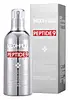
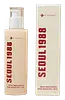
MEDI-PEEL Peptide 9 Volume All In One Essence Versus K-Secret Seoul 1988 Essence Snail Mucin 97% + Rice
This anti-aging essence is formulated around Niacinamide and Acetyl Hexapeptide-8 to soften the look of wrinkles and refine skin texture.
This hydrating essence is formulated around Snail Secretion Filtrate and Oryza Sativa Extract to hydrate skin and fade the look of dark spots.

What's inside
What's inside
 Key Ingredients
Benefits
Concerns
No concerns
Ingredients Side-by-side
Water
Skin ConditioningMethylpropanediol
SolventGlycerin
Humectant


Hydrogenated Polyisobutene
EmollientMethyl Perfluoroisobutyl Ether
SolventCaprylic/Capric Triglyceride
Masking
Methyl Perfluorobutyl Ether
SolventCyclopentasiloxane
Emollient
Niacinamide
Smoothing









Butylene Glycol Dicaprylate/Dicaprate
EmollientCetearyl Alcohol
Emollient





Cyclohexasiloxane
Emollient
Elaeis Guineensis Oil
Emollient
Decyl Glucoside
Cleansing
Sodium Myristoyl Glutamate
CleansingStearic Acid
Cleansing
Glyceryl Stearate
Emollient
PEG-100 Stearate
Surfactant
Betaine
Humectant
Hydroxyethyl Urea
Humectant
Elaeis Guineensis Kernel Oil
Emollient
Hydroxyacetophenone
Antioxidant
Dimethicone
Emollient
Arginine
Masking
Ammonium Acryloyldimethyltaurate/Vp Copolymer
Carbomer
Emulsion StabilisingHydrogenated Lecithin
Emulsifying
Propanediol
Solvent
Juniperus Communis Fruit Extract
Perfuming
Eucalyptus Globulus Leaf Extract
Perfuming
Dimethicone/Vinyl Dimethicone Crosspolymer
Skin Conditioning
Glyceryl Acrylate/Acrylic Acid Copolymer
HumectantSodium Hyaluronate Crosspolymer
Humectant
Ethylhexylglycerin
Skin ConditioningAllantoin
Skin Conditioning
Ammonium Lactate
Buffering

Urea
Buffering
Parfum
Masking
Adenosine
Skin Conditioning
Sodium Hyaluronate
Humectant
Laureth-23
Cleansing
Propylene Glycol
Humectant
Disodium EDTA
ChelatingHydrolyzed Glycosaminoglycans
HumectantButylene Glycol
Humectant
Camellia Sinensis Leaf Extract
Antimicrobial
Taraxacum Officinale Rhizome/Root Extract
Skin ConditioningSodium Guaiazulene Sulfonate
SurfactantArgania Spinosa Kernel Oil
Emollient
Magnolia Officinalis Bark Extract
Antimicrobial
Anthemis Nobilis Flower Water
Masking
Fructan
Skin ConditioningBenzyl Glycol
SolventHydrolyzed Hyaluronic Acid
Humectant
Desamido Collagen
Skin Conditioning
Hydrolyzed Elastin
EmollientHydrolyzed Collagen
Emollient
Decylene Glycol
Skin ConditioningSodium Polyacrylate
Absorbent
Caprylyl Glycol
Emollient
Trideceth-6
EmulsifyingPentylene Glycol
Skin Conditioning
Hydrogenated Polydecene
EmollientGlyceryl Polymethacrylate
Anemarrhena Asphodeloides Root Extract
Skin Conditioning
1,2-Hexanediol
Skin Conditioning
Raspberry Ketone
Masking
Hyaluronic Acid
Humectant
Sorbitan Laurate
Emulsifying
Nonoxynol-14
Phenoxyethanol
Preservative
Hydroxyethylcellulose
Emulsion StabilisingAcetyl Dipeptide-1 Cetyl Ester
Skin Conditioning
Astaxanthin
Skin Conditioning
Ethyl Hexanediol
SolventAcetyl Hexapeptide-8
Humectant
Copper Tripeptide-1
Skin Conditioning
Oligopeptide-29
Antioxidant
Oligopeptide-32
Antiseborrhoeic
Palmitoyl Pentapeptide-4
Skin Conditioning
Palmitoyl Tripeptide-1
Skin Conditioning
Palmitoyl Tetrapeptide-7
Skin Conditioning
Palmitoyl Tripeptide-5
Skin Conditioning
Palmitoyl Oligopeptide
Cleansing
Water, Methylpropanediol, Glycerin, Hydrogenated Polyisobutene, Methyl Perfluoroisobutyl Ether, Caprylic/Capric Triglyceride, Methyl Perfluorobutyl Ether, Cyclopentasiloxane, Niacinamide, Butylene Glycol Dicaprylate/Dicaprate, Cetearyl Alcohol, Cyclohexasiloxane, Elaeis Guineensis Oil, Decyl Glucoside, Sodium Myristoyl Glutamate, Stearic Acid, Glyceryl Stearate, PEG-100 Stearate, Betaine, Hydroxyethyl Urea, Elaeis Guineensis Kernel Oil, Hydroxyacetophenone, Dimethicone, Arginine, Ammonium Acryloyldimethyltaurate/Vp Copolymer, Carbomer, Hydrogenated Lecithin, Propanediol, Juniperus Communis Fruit Extract, Eucalyptus Globulus Leaf Extract, Dimethicone/Vinyl Dimethicone Crosspolymer, Glyceryl Acrylate/Acrylic Acid Copolymer, Sodium Hyaluronate Crosspolymer, Ethylhexylglycerin, Allantoin, Ammonium Lactate, Urea, Parfum, Adenosine, Sodium Hyaluronate, Laureth-23, Propylene Glycol, Disodium EDTA, Hydrolyzed Glycosaminoglycans, Butylene Glycol, Camellia Sinensis Leaf Extract, Taraxacum Officinale Rhizome/Root Extract, Sodium Guaiazulene Sulfonate, Argania Spinosa Kernel Oil, Magnolia Officinalis Bark Extract, Anthemis Nobilis Flower Water, Fructan, Benzyl Glycol, Hydrolyzed Hyaluronic Acid, Desamido Collagen, Hydrolyzed Elastin, Hydrolyzed Collagen, Decylene Glycol, Sodium Polyacrylate, Caprylyl Glycol, Trideceth-6, Pentylene Glycol, Hydrogenated Polydecene, Glyceryl Polymethacrylate, Anemarrhena Asphodeloides Root Extract, 1,2-Hexanediol, Raspberry Ketone, Hyaluronic Acid, Sorbitan Laurate, Nonoxynol-14, Phenoxyethanol, Hydroxyethylcellulose, Acetyl Dipeptide-1 Cetyl Ester, Astaxanthin, Ethyl Hexanediol, Acetyl Hexapeptide-8, Copper Tripeptide-1, Oligopeptide-29, Oligopeptide-32, Palmitoyl Pentapeptide-4, Palmitoyl Tripeptide-1, Palmitoyl Tetrapeptide-7, Palmitoyl Tripeptide-5, Palmitoyl Oligopeptide
Snail Secretion Filtrate
Skin Conditioning
Butylene Glycol
Humectant
1,2-Hexanediol
Skin Conditioning
Ethyl Hexanediol
SolventAllantoin
Skin Conditioning
Phenoxyethanol
Preservative
Sodium Polyacrylate
Absorbent
Sodium Hyaluronate
Humectant
Carbomer
Emulsion StabilisingAmmonium Acryloyldimethyltaurate/Vp Copolymer
Panthenol
Skin Conditioning
Water
Skin ConditioningOryza Sativa Extract
Absorbent
Arginine
Masking
Oryza Sativa Seed Water
Antimicrobial
Rice Ferment Filtrate
Skin Conditioning
Reviews
Ingredients Explained
These ingredients are found in both products.
Ingredients higher up in an ingredient list are typically present in a larger amount.
1,2-Hexanediol is a synthetic liquid and another multi-functional powerhouse.
It is a:
- Humectant, drawing moisture into the skin
- Emollient, helping to soften skin
- Solvent, dispersing and stabilizing formulas
- Preservative booster, enhancing the antimicrobial activity of other preservatives
Allantoin is a soothing ingredient known for its protective and moisturizing properties; it's basically a quiet workhorse ingredient you can find in a huge range of cosmetics.
Though it can be derived from the comfrey plant, allantoin is produced synthetically for cosmetic products to ensure purity.
Research shows it can encourage your skin cells to turn over and renew by stimulating keratinocyte and fibroblast proliferation.
It also has mild keratolytic properties to help loosen and shed dead skin cells without being harsh.
Studies also suggest allantoin can help calm inflammation by dialing down some of the chemical signals your skin sends out when it is irritated.
This ingredient is typically used in the 0.1-0.5% range, and the FDA recognizes it as a skin protectant in OTC products up to 2%.
Overall, allantoin is a wonderful addition to most routines; it is stable across a wide pH range (~4-8), works well with other ingredients, and is considered non-sensitizing/non-irritating.
Fun fact: Allantoin is naturally occurring in comfrey root, beets, chamomile, and wheat sprouts. Our bodies even produce it as a byproduct of uric acid metabolism.
Learn more about AllantoinAmmonium Acryloyldimethyltaurate/Vp Copolymer is a synthetically created polymer. It's used as a film-forming agent and used to thicken the consistency of products.
Think of it as a supportive ingredient that helps your gel-creams feel silky, "cloud cream-like", and spread evenly without being greasy.
The Cosmetic Ingredient Review (CIR) Expert Panel evaluated it (along with 22 other acryloyldimethyltaurate polymers) and concluded it's:
Due to its large molecular size, it sits on the surface of skin rather than penetrating it.
Learn more about Ammonium Acryloyldimethyltaurate/Vp CopolymerArginine is a semi-essential amino acid. This just means our bodies can product a bit on its own, but sometimes needs a little boost from food sources.
It is a part of your skin's natural moisturizing factor (NMF), or the water-loving molecules in your outermost layer of skin (stratum corneum) that keeps everything hydrated and happy.
Here's an interesting thing about Arginine: your skin converts it into urea through the Krebs-Henseleit urea cycle. Urea is one of the most effective humectants your skin naturally produces.
A clinical study showed applying 2.5% arginine hydrochloride to atopic dermatitis skin showed significant urea levels in the stratum corneum and improved moisture in just four weeks.
Arginine is also a precursor to nitric oxide; nitric oxide improves microcirculation and supports wound healing and collagen synthesis.
One study found that an amino acid complex containing Arginine reduced skin irritation, improved hydration, and accelerated skin repair in clinical / in-vivo studies.
Arginine itself is an amino acid and not a fatty acid, oil, or ester. On its own, it's not a direct food source for Malassezia, or the yeast that causes fungal acne.
Learn more about ArginineButylene Glycol (or BG) is used within cosmetic products for a few different reasons:
Overall, Butylene Glycol is a safe and well-rounded ingredient that works well with other ingredients.
Though this ingredient works well with most skin types, some people with sensitive skin may experience a reaction such as allergic rashes, closed comedones, or itchiness.
Learn more about Butylene GlycolCarbomer is a synthetic thickening and gelling agent. It's basically the ingredient that gives a lot of serums, gels, creams, and sunscreens their smooth, non-sticky texture.
Although legally permitted at very high levels, carbomers are normally used at concentrations below 1%.
It also needs to be neutralized to actually thicken, and because it is a large molecule, it doesn't really penetrate the skin barrier.
Allergy-wise, the risk is very low. Clinical studies show carbomers have low potential for skin irritation/sensitization even at concentrations up to 100%.
A 2024 UK study patch-tested 1,302 patients and found true allergy to the parent group of carbomer to be rare with no confirmed relevant reactions.
Learn more about CarbomerEthyl Hexanediol is an aliphatic alcohol. It is a solvent.
Solvents are used to keep ingredients together in a product. They can help dissolve ingredients to stable bases or help evenly distribute ingredients throughout the product.
Phenoxyethanol is one of the most widely used preservatives in skincare (and for good reason!).
It has a large spectrum of antimicrobial activity and especially effective bacteria, yeast, and mold while only having a weak effect on your skin's natural microbiome.
On a cellular level, it disrupts the cell membranes of microbes by poking holes that make the cell leak. This shuts down the chemical reactions the microbe needs to make energy so it can no longer survive.
Another perk of this ingredient is that it stays functional across a wide pH range (3-10).
You'll often see it paired with boosters like Ethylhexylglycerin; one study showed that a 1:9 ratio of Ethylhexylglycerin to Phenoxyethanol damages bacterial membranes as effectively as doubling the Phenoxyethanol concentration on its own.
Typical use concentrations range from 0.3-1% depending on the formula, and this ingredient is capped at 1% int the EU.
Safety-wise, the fear mongering does not hold up to the evidence. The EU's Scientific Committee on Consumer Safety and FDA consider it safe as a preservative at up to 1%, including for children of all ages.
Adverse systemic effects only showed up in animal studies at exposures roughly 200x higher than what people get from cosmetics. And despite its very widespread use, this ingredient is a rare sensitizer and allergic reactions are uncommon.
Learn more about PhenoxyethanolSodium Hyaluronate is the salt form of hyaluronic acid. It is a long sugar chain that is naturally found in your skin, joints, and connective tissue that maintains hydration and elasticity.
In skincare, it works as a humectant. It pulls water from the environment and deeper layers of skin and binds it to the surface.
Interestingly, the size of the molecule affects its behavior:
Some clinical evidence links low molecular weight versions to improved wrinkle depth, elasticity, anti-inflammatory effects, and barrier repair.
Many serums use a blend of both weights so you can get surface hydration plus longer-lasting and deeper effects.
You'll typically see concentrations between 0.1-2% for this ingredient.
Learn more about Sodium HyaluronateSodium Polyacrylate is the sodium salt of polyacrylic acid. It is used as an absorber, emollient, and stabilizer.
This ingredient is a super-absorbent polymer - meaning it can absorb 100 to 1000 times its mass in water. As an emollient, Sodium Polyacrylate helps soften and soothe skin. Emollients work by creating a barrier to trap moisture in. This helps keep your skin hydrated.
Water. It's the most common cosmetic ingredient of all. You'll usually see it at the top of ingredient lists, meaning that it makes up the largest part of the product.
So why is it so popular? Water most often acts as a solvent - this means that it helps dissolve other ingredients into the formulation.
You'll also recognize water as that liquid we all need to stay alive. If you see this, drink a glass of water. Remember to stay hydrated!
Learn more about Water

