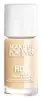
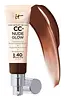
Make Up For Ever HD Skin Hydra Glow Hydrating Foundation Versus IT Cosmetics CC+ Nude Glow Lightweight Foundation SPF 40


What's inside
What's inside
 Key Ingredients
Benefits
Concerns
Ingredients Side-by-side
Water
Skin ConditioningCitrus Limon Fruit Extract
Masking
Dicaprylyl Carbonate
EmollientPolyglyceryl-2 Dipolyhydroxystearate
Skin Conditioning

C13-15 Alkane
SolventIsododecane
EmollientPropanediol
Solvent

Glycerin
Humectant
Polyglyceryl-3 Diisostearate
Emulsifying


Pentylene Glycol
Skin Conditioning
Heptyl Undecylenate
EmollientSynthetic Fluorphlogopite
Simmondsia Chinensis Seed Oil
Emollient
Sodium Chloride
MaskingC18-21 Alkane
SolventStearalkonium Hectorite
Gel FormingUndecane
EmollientCocos Nucifera Fruit Extract
Emollient
Tridecane
Perfuming

Persea Gratissima Oil
Skin Conditioning
Tocopheryl Acetate
Antioxidant


Dimethicone/Vinyl Dimethicone Crosspolymer
Skin Conditioning
Sodium Dehydroacetate
Preservative
Propylene Carbonate
SolventTriethoxysilylethyl Polydimethylsiloxyethyl Hexyl Dimethicone
Skin Conditioning
Parfum
Masking
Sodium Phytate
Citric Acid
Buffering
Hydrogen Dimethicone
Sodium Hydroxide
BufferingAlgin
Masking
Galactoarabinan

Levulinic Acid
Perfuming
Sodium Hyaluronate
Humectant

Potassium Sorbate
Preservative
Sodium Levulinate
Skin ConditioningTocopherol
Antioxidant
Maltodextrin
Absorbent
Biosaccharide Gum-1
Humectant
CI 77891
Cosmetic ColorantCI 77491
Cosmetic ColorantCI 77492
Cosmetic ColorantCI 77499
Cosmetic ColorantWater, Citrus Limon Fruit Extract, Dicaprylyl Carbonate, Polyglyceryl-2 Dipolyhydroxystearate, C13-15 Alkane, Isododecane, Propanediol, Glycerin, Polyglyceryl-3 Diisostearate, Pentylene Glycol, Heptyl Undecylenate, Synthetic Fluorphlogopite, Simmondsia Chinensis Seed Oil, Sodium Chloride, C18-21 Alkane, Stearalkonium Hectorite, Undecane, Cocos Nucifera Fruit Extract, Tridecane, Persea Gratissima Oil, Tocopheryl Acetate, Dimethicone/Vinyl Dimethicone Crosspolymer, Sodium Dehydroacetate, Propylene Carbonate, Triethoxysilylethyl Polydimethylsiloxyethyl Hexyl Dimethicone, Parfum, Sodium Phytate, Citric Acid, Hydrogen Dimethicone, Sodium Hydroxide, Algin, Galactoarabinan, Levulinic Acid, Sodium Hyaluronate, Potassium Sorbate, Sodium Levulinate, Tocopherol, Maltodextrin, Biosaccharide Gum-1, CI 77891, CI 77491, CI 77492, CI 77499
Water
Skin ConditioningGlycerin
Humectant
Homosalate
Skin Conditioning

Octocrylene
UV Absorber
Caprylyl Methicone
Skin Conditioning
Ethylhexyl Salicylate
UV Absorber
Dimethicone
Emollient
Butyloctyl Salicylate
Skin Conditioning
Cetyl PEG/PPG-10/1 Dimethicone
Emulsifying
Niacinamide
Smoothing





Propanediol
Solvent
Dimethicone/PEG-10/15 Crosspolymer
Synthetic Fluorphlogopite
Phenoxyethanol
Preservative
Sodium Chloride
MaskingButylene Glycol
Humectant
Trimethylsiloxysilicate
Emollient
Disteardimonium Hectorite
StabilisingDisodium Stearoyl Glutamate
CleansingParfum
Masking
Chlorphenesin
Antimicrobial
Caprylyl Glycol
Emollient
Snail Secretion Filtrate
Skin Conditioning
Silica Silylate
Emollient
Trisodium Ethylenediamine Disuccinate
Limonene
Perfuming
Simethicone
Emollient
Maltodextrin
Absorbent
Aluminum Hydroxide
EmollientAdenosine
Skin Conditioning
Ethyl Hexanediol
SolventDipropylene Glycol
HumectantSodium Hyaluronate
Humectant
Citral
Perfuming
Linalool
Perfuming
Sodium Citrate
BufferingCamellia Sinensis Leaf Extract
Antimicrobial
Tocopherol
Antioxidant
Water, Glycerin, Homosalate, Octocrylene, Caprylyl Methicone, Ethylhexyl Salicylate, Dimethicone, Butyloctyl Salicylate, Cetyl PEG/PPG-10/1 Dimethicone, Niacinamide, Propanediol, Dimethicone/PEG-10/15 Crosspolymer, Synthetic Fluorphlogopite, Phenoxyethanol, Sodium Chloride, Butylene Glycol, Trimethylsiloxysilicate, Disteardimonium Hectorite, Disodium Stearoyl Glutamate, Parfum, Chlorphenesin, Caprylyl Glycol, Snail Secretion Filtrate, Silica Silylate, Trisodium Ethylenediamine Disuccinate, Limonene, Simethicone, Maltodextrin, Aluminum Hydroxide, Adenosine, Ethyl Hexanediol, Dipropylene Glycol, Sodium Hyaluronate, Citral, Linalool, Sodium Citrate, Camellia Sinensis Leaf Extract, Tocopherol
Reviews
Ingredients Explained
These ingredients are found in both products.
Ingredients higher up in an ingredient list are typically present in a larger amount.
Glycerin (or glycerol) is a compound naturally found in your skin. It's a powerhouse humectant that pulls water into the stratum corneum.
Topically, glycerin does several things at once:
Your skin makes glycerin on its own (mostly from sebaceous oil breakdown) and shuttles it to your outermost layer of skin, or your epidermis, via aquaporin-3.
Aquaporin-3 is a transporter that is essential for normal skin hydration, elasticity, and repair. Interestingly, mice lacking in AQP3 have dry and less elastic skin that can be fully corrected with glycerin.
This ingredient is non-irritating, plays well with almost every ingredient, and works across all skin types. Typical use is anywhere between 3-10% but can go up to 79% in some leave-on products.
Just know very high concentrations (>40%) can feel tacky in low humidity.
Glycerin is the name for this ingredient in American English. British English uses Glycerol/Glycerine.
Learn more about GlycerinMaltodextrin is a plant-derived carbohydrate made by breaking down starch (usually from corn, potato, or rice). In cosmetic formulas, it's a multitasking absorbent, emulsion stabilizer, and skin conditioner.
This ingredient is mostly used to stabilize emulsions and improve the powdery, non-greasy feel of products (like dry shampoos).
Safety-wise, this ingredient is pretty solid; it's even recognized as a food additive. Both animal and clinical studies found no adverse effects at the levels used in cosmetics.
Industry data shows this ingredient is used up to 45.7% in spray products and up to 33% in powder products.
Learn more about MaltodextrinParfum is a catch-all term for an ingredient or more that is used to give a scent to products.
Also called "fragrance", this ingredient can be a blend of hundreds of chemicals or plant oils. This means every product with "fragrance" or "parfum" in the ingredients list is a different mixture.
For instance, Habanolide is a proprietary trade name for a specific aroma chemical. When used as a fragrance ingredient in cosmetics, most aroma chemicals fall under the broad labeling category of “FRAGRANCE” or “PARFUM” according to EU and US regulations.
The term 'parfum' or 'fragrance' is not regulated in many countries. In many cases, it is up to the brand to define this term.
For instance, many brands choose to label themselves as "fragrance-free" because they are not using synthetic fragrances. However, their products may still contain ingredients such as essential oils that are considered a fragrance by INCI standards.
One example is Calendula flower extract. Calendula is an essential oil that still imparts a scent or 'fragrance'.
Depending on the blend, the ingredients in the mixture can cause allergies and sensitivities on the skin. Some ingredients that are known EU allergens include linalool and citronellol.
Parfum can also be used to mask or cover an unpleasant scent.
The bottom line is: not all fragrances/parfum/ingredients are created equally. If you are worried about fragrances, we recommend taking a closer look at an ingredient. And of course, we always recommend speaking with a professional.
Learn more about ParfumPropanediol is an all-star ingredient. It softens, hydrates, and smooths the skin.
It’s often used to:
Propanediol is not likely to cause sensitivity and considered safe to use. It is derived from corn or petroleum with a clear color and no scent.
Learn more about PropanediolChances are, you eat sodium chloride every day. Sodium Chloride is also known as table salt. This ingredient has many purposes in skincare: thickener, emulsifier, and exfoliator.
You'll most likely find this ingredient in cleansers where it is used to create a gel-like texture. As an emulsifier, it also prevents ingredients from separating.
You might see people debate whether Sodium Chloride is comedogenic, but there actually haven't been any comedogenic tests done on it. Either way, the overall formulation of a product matters a lot more than any single ingredient.
You might see this ingredient used in scrubs as a primary exfoliating ingredient.
Learn more about Sodium ChlorideSodium Hyaluronate is the salt form of hyaluronic acid. It is a long sugar chain that is naturally found in your skin, joints, and connective tissue that maintains hydration and elasticity.
In skincare, it works as a humectant. It pulls water from the environment and deeper layers of skin and binds it to the surface.
Interestingly, the size of the molecule affects its behavior:
Some clinical evidence links low molecular weight versions to improved wrinkle depth, elasticity, anti-inflammatory effects, and barrier repair.
Many serums use a blend of both weights so you can get surface hydration plus longer-lasting and deeper effects.
You'll typically see concentrations between 0.1-2% for this ingredient.
Learn more about Sodium HyaluronateSynthetic Fluorphlogopite is the synthethic version of mica. It consists of fluorine, aluminum and silicate.
Synthetic Fluorphlogopite is used to add volume to products.
It is considered non-irritating on the skin.
Learn more about Synthetic FluorphlogopiteTocopherol is a fat-soluble antioxidant known as Vitamin E.
You'll find this ingredient in the vast majority of skincare (for good reason). It works to neutralize free radicals, or unstable molecules generated by UV exposure, pollution, and other environmental stressors, before they can cause oxidative damage to your skin cells.
Topically applied tocopherol has been shown to protect against UV damage by ramping up the skin's own natural defense enzymes.
It also acts as a skin conditioning agent; some studies show that regular topical use can improve the skin's water-binding capacity over 2-4 weeks.
This ingredient is especially loved for being a team player. When combined with Vitamin C, the photoprotective effect of both ingredients roughly doubles and the combo also helps reduce UV-induced DNA damage.
This ingredient has some brightening potential but it's more of a prevention ingredient than spot-fader. Cell studies show it can slow down melanin production but it's worth noting that it's not the most powerful brightener out there.
In formulations, it also serves as a stabilizer that helps protect other oxidation-prone ingredients from degrading.
Concentrations usually range from 0.1-1% in most leave-on products.
Learn more about TocopherolWater. It's the most common cosmetic ingredient of all. You'll usually see it at the top of ingredient lists, meaning that it makes up the largest part of the product.
So why is it so popular? Water most often acts as a solvent - this means that it helps dissolve other ingredients into the formulation.
You'll also recognize water as that liquid we all need to stay alive. If you see this, drink a glass of water. Remember to stay hydrated!
Learn more about Water

