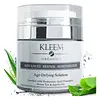
This anti-aging night moisturizer is formulated around Aloe Barbadensis Leaf Extract and Retinol to soften the look of wrinkles and refine skin texture.
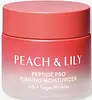
This anti-aging moisturizer is formulated around Collagen Extract and Acetyl Hexapeptide-8 to soften the look of wrinkles and hydrate skin.


What's inside
What's inside
 Key Ingredients
Benefits
Concerns
Ingredients Side-by-side
Aloe Barbadensis Leaf Extract
Emollient


Helianthus Annuus Seed Oil
Emollient


Isopropyl Palmitate
Emollient


Pentylene Glycol
Skin Conditioning
Phospholipids
Skin Conditioning
Retinol
Skin Conditioning









Polysorbate 20
Emulsifying
Potassium Phosphate
BufferingTocopheryl Acetate
Antioxidant

Cassia Angustifolia Seed Polysaccharide
Skin ConditioningGlyceryl Stearate
Emollient
Cetyl Alcohol
Emollient

Stearic Acid
Cleansing
Glycerin
Humectant
Simmondsia Chinensis Seed Oil
Emollient
Camellia Sinensis Callus
Antimicrobial
Propolis Wax
EmollientButyrospermum Parkii Butter
Skin Conditioning
Panthenol
Skin Conditioning
Ethylhexylglycerin
Skin ConditioningXanthan Gum
EmulsifyingCitric Acid
Buffering
Aloe Barbadensis Leaf Extract, Helianthus Annuus Seed Oil, Isopropyl Palmitate, Pentylene Glycol, Phospholipids, Retinol, Polysorbate 20, Potassium Phosphate, Tocopheryl Acetate, Cassia Angustifolia Seed Polysaccharide, Glyceryl Stearate, Cetyl Alcohol, Stearic Acid, Glycerin, Simmondsia Chinensis Seed Oil, Camellia Sinensis Callus, Propolis Wax, Butyrospermum Parkii Butter, Panthenol, Ethylhexylglycerin, Xanthan Gum, Citric Acid
Water
Skin ConditioningButylene Glycol
Humectant
Sorbitol
Humectant
Glycerin
Humectant
Cetearyl Alcohol
Emollient
Butylene Glycol Dicaprylate/Dicaprate
Emollient1,2-Hexanediol
Skin Conditioning
Caprylic/Capric Triglyceride
Masking
Hydrogenated Polydecene
EmollientC10-18 Triglycerides
Emollient
Stearic Acid
Cleansing
Cetearyl Glucoside
Emulsifying
Collagen Extract
Skin Conditioning
Acetyl Hexapeptide-8
Humectant
Dipeptide-2
Skin Conditioning
Acetyl Tetrapeptide-5
Humectant
Sh-Oligopeptide-1
Skin Conditioning
Copper Tripeptide-1
Skin Conditioning
Tripeptide-1
Skin Conditioning
Palmitoyl Tripeptide-5
Skin Conditioning
Palmitoyl Tripeptide-1
Skin Conditioning
Nonapeptide-1
Skin Conditioning
Hexapeptide-9
Skin Conditioning
Palmitoyl Pentapeptide-4
Skin Conditioning
Sh-Polypeptide-1
Skin Conditioning
Serine
Masking
Methionine
Skin ConditioningCysteine
Antioxidant
Arginine
Masking
Tremella Fuciformis Extract
Humectant
Phytosteryl/Octyldodecyl Lauroyl Glutamate
Skin ConditioningPolyglutamic Acid
Skin Conditioning
Polyglyceryl-3 Methylglucose Distearate
Emulsifying
Hydrolyzed Sodium Hyaluronate
Skin Conditioning
Hydrolyzed Hyaluronic Acid
Humectant
Hyaluronic Acid
Humectant
Squalane
Emollient
Sodium Hyaluronate
Humectant
Sodium Hyaluronate Crosspolymer
Humectant
Glyceryl Glucoside
Humectant
Saccharomyces/Rice Ferment Filtrate
Skin Conditioning
Prunus Mume Fruit Extract
Humectant
Curcuma Longa Root Extract
Antioxidant
Corallina Officinalis Extract
Skin Conditioning
Panax Ginseng Callus Culture Extract
Skin ConditioningSolanum Melongena Fruit Extract
Skin ConditioningPrunus Armeniaca Fruit Extract
Skin ConditioningAloe Barbadensis Leaf Extract
Emollient
Ocimum Sanctum Leaf Extract
Skin ConditioningAdenosine
Skin Conditioning
Tocopherol
Antioxidant
Sorbitan Stearate
Emulsifying
Carbomer
Emulsion StabilisingSodium Polyacryloyldimethyl Taurate
Emulsion StabilisingOriganum Majorana Leaf Extract
AntiseborrhoeicMelia Azadirachta Leaf Extract
Skin ConditioningMelia Azadirachta Flower Extract
Skin ConditioningAloe Barbadensis Flower Extract
EmollientPhellinus Linteus Extract
Skin Conditioning3-O-Ethyl Ascorbic Acid
Skin Conditioning
Glucose
Humectant
Ethylhexylglycerin
Skin ConditioningCoccinia Indica Fruit Extract
Skin Conditioning
Pentylene Glycol
Skin Conditioning
Caprylyl Glycol
Emollient
Tropolone
Skin ConditioningCitrus Aurantium Bergamia Fruit Oil
Masking
Water, Butylene Glycol, Sorbitol, Glycerin, Cetearyl Alcohol, Butylene Glycol Dicaprylate/Dicaprate, 1,2-Hexanediol, Caprylic/Capric Triglyceride, Hydrogenated Polydecene, C10-18 Triglycerides, Stearic Acid, Cetearyl Glucoside, Collagen Extract, Acetyl Hexapeptide-8, Dipeptide-2, Acetyl Tetrapeptide-5, Sh-Oligopeptide-1, Copper Tripeptide-1, Tripeptide-1, Palmitoyl Tripeptide-5, Palmitoyl Tripeptide-1, Nonapeptide-1, Hexapeptide-9, Palmitoyl Pentapeptide-4, Sh-Polypeptide-1, Serine, Methionine, Cysteine, Arginine, Tremella Fuciformis Extract, Phytosteryl/Octyldodecyl Lauroyl Glutamate, Polyglutamic Acid, Polyglyceryl-3 Methylglucose Distearate, Hydrolyzed Sodium Hyaluronate, Hydrolyzed Hyaluronic Acid, Hyaluronic Acid, Squalane, Sodium Hyaluronate, Sodium Hyaluronate Crosspolymer, Glyceryl Glucoside, Saccharomyces/Rice Ferment Filtrate, Prunus Mume Fruit Extract, Curcuma Longa Root Extract, Corallina Officinalis Extract, Panax Ginseng Callus Culture Extract, Solanum Melongena Fruit Extract, Prunus Armeniaca Fruit Extract, Aloe Barbadensis Leaf Extract, Ocimum Sanctum Leaf Extract, Adenosine, Tocopherol, Sorbitan Stearate, Carbomer, Sodium Polyacryloyldimethyl Taurate, Origanum Majorana Leaf Extract, Melia Azadirachta Leaf Extract, Melia Azadirachta Flower Extract, Aloe Barbadensis Flower Extract, Phellinus Linteus Extract, 3-O-Ethyl Ascorbic Acid, Glucose, Ethylhexylglycerin, Coccinia Indica Fruit Extract, Pentylene Glycol, Caprylyl Glycol, Tropolone, Citrus Aurantium Bergamia Fruit Oil
Reviews
Ingredients Explained
These ingredients are found in both products.
Ingredients higher up in an ingredient list are typically present in a larger amount.
Aloe Barbadensis Leaf Extract is a botanical extract pulled from the leaves of aloe vera and one of the most studied plant ingredients in cosmetics.
The inner leaf gel it comes from is mostly water (~99-99.5%) and the remaining fraction is made up of pretty good stuff: polysaccharides, vitamins, phenolics, and enzymes.
Its headline job is hydration.
The star polysaccharide in aloe, acemannan, is a humectant that retains moisture and helps reduce trans-epidermal water loss.
Aloe also has real soothing credentials; it contains anti-inflammatory compounds like bradykinase and C-glucosyl chromone that help calm irritation and redness.
On the repair side, lab work shows that acemannan wakes up your skin's repair cells (fibroblasts), prompting them to multiply and speed up healing.
There's some human data for cosmetic benefit too: a cream containing 10% Aloe Barbadensis leaf extract improved skin hydration and elasticity in a real-use study.
Safety-wise, this ingredient is well-regarded with just one rare downside; there have been some case reports of acute eczema, contact urticaria, and dermatitis in people who applied aloe-derived ingredients topically. Those with a known aloe or Liliaceae sensitivity should patch test.
Typical use levels range widely, from under 1% up to 90%+ depending on the format and the effect you are after.
Learn more about Aloe Barbadensis Leaf ExtractEthylhexylglycerin is created from glycerin. It is a multitasker ingredient that:
The CIR Expert Panel found minimal skin absorption or sensitization of any kind in a safety assessment. Though this ingredient is considered well-tolerated, a small number of cases of allergic dermatitis have been published since 2002. Just be sure to patch test if you are unsure.
Industry-reported use ranges from 8% in rinse-off products and 2% in leave-on formulations.
Learn more about EthylhexylglycerinGlycerin (or glycerol) is a compound naturally found in your skin. It's a powerhouse humectant that pulls water into the stratum corneum.
Topically, glycerin does several things at once:
Your skin makes glycerin on its own (mostly from sebaceous oil breakdown) and shuttles it to your outermost layer of skin, or your epidermis, via aquaporin-3.
Aquaporin-3 is a transporter that is essential for normal skin hydration, elasticity, and repair. Interestingly, mice lacking in AQP3 have dry and less elastic skin that can be fully corrected with glycerin.
This ingredient is non-irritating, plays well with almost every ingredient, and works across all skin types. Typical use is anywhere between 3-10% but can go up to 79% in some leave-on products.
Just know very high concentrations (>40%) can feel tacky in low humidity.
Glycerin is the name for this ingredient in American English. British English uses Glycerol/Glycerine.
Learn more about GlycerinPentylene Glycol (1,2-pentanediol) is a multitasking little diol with three main roles in a formula:
Research on alkanediols (the family pentylene glycol belongs to) show they work by disrupting microbial cell membranes. This disruption helps the primary preservative system in a product work more effectively at lower doses.
On the safety side, the Cosmetic Ingredient Review Expert Panel has concluded this ingredient to be safe as used in current cosmetic practices + concentrations.
Typical use levels in a formula run about 1-5%.
Learn more about Pentylene GlycolStearic Acid is a fatty acid that is already found in your skin. It's one of the free fatty acids that works alongside ceramides and cholesterols to maintain your barrier.
In cosmetics, it is a multitasker:
Safety-wise, the CIR Expert Panel has concluded it to be safe in cosmetics when formulated to be non-irritating and non-sensitizing.
Free stearic acid is a C18 fatty acid that the Malassezia yeast can substrate, so this ingredient may not be fungal acne safe.
This ingredient does have a comedogenic rating of 2-3, but this doesn't mean a formula with this ingredient will clog pores.
Human testing has proved that any finished product with this ingredient won't automatically make you break out; it really comes down to concentration, formula, and your skin.
Learn more about Stearic Acid

