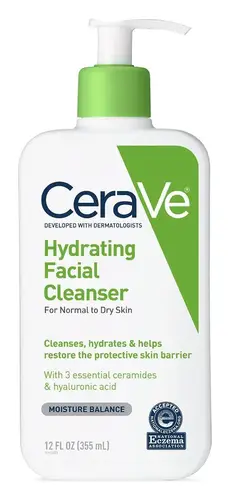
This cream cleanser uses mild cleansing ingredients, but contains alcohol that may feel drying for some.
This barrier-repair day moisturizer is formulated around Helianthus Annuus Seed Oil and Niacinamide to strengthen the skin barrier and hydrate skin.


What's inside
What's inside
 Key Ingredients
Benefits
Concerns
Ingredients Side-by-side
Water
Skin ConditioningSodium Cocoyl Isethionate
Cleansing
Cocamidopropyl Hydroxysultaine
Cleansing
Glycerin
Humectant


Polyglyceryl-3 Methylglucose Distearate
Emulsifying

Betaine
Humectant
Glyceryl Distearate
Emollient
Vitis Vinifera Seed Oil
Emollient

Simmondsia Chinensis Seed Oil
Emollient
Persea Gratissima Oil
Skin Conditioning

Cocos Nucifera Oil
Masking

Caprylic/Capric Triglyceride
Masking
Xylitylglucoside
Humectant
Propanediol
Solvent
Polyacrylate Crosspolymer-6
Emulsion StabilisingGlyceryl Stearate
Emollient
Cetearyl Alcohol
Emollient
Caprae Lac
Skin ConditioningLactose
HumectantMilk Protein
Skin ConditioningLactic Acid
Buffering







Tocopherol
Antioxidant

Mel Extract
MoisturisingRosmarinus Officinalis Leaf Extract
AntimicrobialHelianthus Annuus Extract
Emollient
Bisabolol
Antioxidant
Aloe Barbadensis Leaf Juice
Skin Conditioning
Sodium Lauroyl Glutamate
SurfactantOryza Sativa Bran Extract
Skin Conditioning
Xylitol
Humectant
1,2-Hexanediol
Skin Conditioning
Anhydroxylitol
Humectant
Parfum
Masking
Stearic Acid
Cleansing
Disodium EDTA
ChelatingCaprylhydroxamic Acid
ChelatingXanthan Gum
EmulsifyingT-Butyl Alcohol
Perfuming

Benzyl Salicylate
Perfuming
Water, Sodium Cocoyl Isethionate, Cocamidopropyl Hydroxysultaine, Glycerin, Polyglyceryl-3 Methylglucose Distearate, Betaine, Glyceryl Distearate, Vitis Vinifera Seed Oil, Simmondsia Chinensis Seed Oil, Persea Gratissima Oil, Cocos Nucifera Oil, Caprylic/Capric Triglyceride, Xylitylglucoside, Propanediol, Polyacrylate Crosspolymer-6, Glyceryl Stearate, Cetearyl Alcohol, Caprae Lac, Lactose, Milk Protein, Lactic Acid, Tocopherol, Mel Extract, Rosmarinus Officinalis Leaf Extract, Helianthus Annuus Extract, Bisabolol, Aloe Barbadensis Leaf Juice, Sodium Lauroyl Glutamate, Oryza Sativa Bran Extract, Xylitol, 1,2-Hexanediol, Anhydroxylitol, Parfum, Stearic Acid, Disodium EDTA, Caprylhydroxamic Acid, Xanthan Gum, T-Butyl Alcohol, Benzyl Salicylate
Water
Skin ConditioningCetyl Alcohol
Emollient
Glyceryl Stearate Se
Emulsifying
Cetearyl Alcohol
Emollient
Helianthus Annuus Seed Oil
Emollient
Heptyl Undecylenate
EmollientPropanediol
Solvent
Dicaprylyl Ether
Emollient
Niacinamide
Smoothing

Polyglyceryl-6 Distearate
Emulsifying
Glycerin
Humectant
Potassium Cetyl Phosphate
EmulsifyingGlyceryl Caprylate
EmollientJojoba Esters
Emollient
Fructose
Humectant
Polyglyceryl-3 Beeswax
Emulsifying
Sodium Benzoate
Masking
Xanthan Gum
EmulsifyingPotassium Sorbate
Preservative
Citric Acid
Buffering
Glyceryl Undecylenate
Emollient
Simmondsia Chinensis Seed Oil
Emollient
Echinacea Purpurea Extract
MoisturisingWithania Somnifera Root Extract
Skin Conditioning
Pelargonium Graveolens Oil
Masking
Ganoderma Lucidum Extract
Skin Protecting
Aloe Barbadensis Leaf Juice
Skin Conditioning
Tocopherol
Antioxidant
Myristyl Alcohol
Emollient
Stearyl Alcohol
Emollient
Potassium Phosphate
BufferingCedrus Atlantica Bark Oil
Masking
Maltodextrin
Absorbent
Moringa Oleifera Seed Extract
Skin Conditioning
Cananga Odorata Flower Oil
Masking
Camellia Sinensis Leaf Extract
Antimicrobial
Glycine Soja Oil
Emollient
Sodium Riboflavin Phosphate
Skin ConditioningPotassium Hydroxide
BufferingBixa Orellana Seed Oil
Emollient
CI 75120
Cosmetic ColorantCitronellol
Perfuming
Geraniol
Perfuming
Linalool
Perfuming
Benzyl Benzoate
Antimicrobial
Water, Cetyl Alcohol, Glyceryl Stearate Se, Cetearyl Alcohol, Helianthus Annuus Seed Oil, Heptyl Undecylenate, Propanediol, Dicaprylyl Ether, Niacinamide, Polyglyceryl-6 Distearate, Glycerin, Potassium Cetyl Phosphate, Glyceryl Caprylate, Jojoba Esters, Fructose, Polyglyceryl-3 Beeswax, Sodium Benzoate, Xanthan Gum, Potassium Sorbate, Citric Acid, Glyceryl Undecylenate, Simmondsia Chinensis Seed Oil, Echinacea Purpurea Extract, Withania Somnifera Root Extract, Pelargonium Graveolens Oil, Ganoderma Lucidum Extract, Aloe Barbadensis Leaf Juice, Tocopherol, Myristyl Alcohol, Stearyl Alcohol, Potassium Phosphate, Cedrus Atlantica Bark Oil, Maltodextrin, Moringa Oleifera Seed Extract, Cananga Odorata Flower Oil, Camellia Sinensis Leaf Extract, Glycine Soja Oil, Sodium Riboflavin Phosphate, Potassium Hydroxide, Bixa Orellana Seed Oil, CI 75120, Citronellol, Geraniol, Linalool, Benzyl Benzoate
Reviews
Ingredients Explained
These ingredients are found in both products.
Ingredients higher up in an ingredient list are typically present in a larger amount.
Aloe Barbadensis Leaf Juice is the filtered, stabilized liquid pressed from the inner gel of the aloe vera leaf.
In cosmetics, it shows up as either soothing active or a water-replacement base. It is roughly 98-99% water and the last 1-2% is an interesting mix of polysaccharides, amino acids, vitamins, minerals, and enzymes.
The polysaccharides do most of the work: they bind water at the skin surface for a light, non-greasy hydration boost. And one of the polysaccharides, glycomannan, is linked to fibroblast stimulation + collagen synthesis. This is also why aloe has such a long track record in wound and burn healing.
This ingredient is also calming with anti-inflammatory and mild antimicrobial activity, making it a great pick for sensitive, irritated, or post-sun skin.
Realistic expectations matter though; the solid evidence is mostly limited to hydration, soothing, and wound support. Deeper claims about anti-aging or sun protection are not well backed, and science reviews note it does not prevent radiation-induced skin injury.
Because it plays well with almost everything, it's commonly used as a base alongside other actives like niacinamide or vitamin C.
Typical usage concentrations range from 0.5% (where hydration benefits already show up) all the way to 90%+ (where it replaces water as the main base).
The safety for this ingredient is well-establish as well. Overall, this is a great supporting ingredient for those who want a boost in hydration.
Learn more about Aloe Barbadensis Leaf JuiceCetearyl alcohol is a waxy mixture of two fatty alcohols: cetyl alcohol and stearyl alcohol. It is an emollient and emulsifier.
Despite having "alcohol" in its name, it has nothing to do with drying solvent alcohols; the FDA also allows "alcohol-free" products to contain fatty alcohols like this ingredient.
It plays several roles in a formula:
Typical use levels for this ingredient sit around 1-10% and the Cosmetic Ingredient Review Expert Panel has affirmed safety at concentrations up to 25% in leave-on products.
Multiple assessments have found it to be non-irritating and non-sensitizing to most people.
However, there have been some cases of allergic contact dermatitis in patients with chronically compromised skin barriers.
Cetearyl alcohol has a comedogenic rating of 2 and irritancy rating of 1. Both of these numbers come from the 1989 study that used rabbit ears; a "2" means mildly comedogenic and a "1" means low irritancy.
Here's the catch: rabbit skin is more sensitive than human skin and throws a lot of false positives. A 1996 reappraisal found that ingredients rated 1-2 in the rabbit ear tests are generally safe for humans.
Remember comedogenic ratings are unable to assess the entire formula of a product or how it will react on your skin. Just be sure to patch test if you are unsure about certain ingredients.
This ingredient is not fungal acne safe. Cetearyl alcohol is a fatty alcohol with chain lengths that fall within the range that Malassezia can metabolize.
A 2019 study has also observed Malassezia growth in the presence of this ingredient, confirming it to be not-fungal acne safe.
Learn more about Cetearyl AlcoholGlycerin (or glycerol) is a compound naturally found in your skin. It's a powerhouse humectant that pulls water into the stratum corneum.
Topically, glycerin does several things at once:
Your skin makes glycerin on its own (mostly from sebaceous oil breakdown) and shuttles it to your outermost layer of skin, or your epidermis, via aquaporin-3.
Aquaporin-3 is a transporter that is essential for normal skin hydration, elasticity, and repair. Interestingly, mice lacking in AQP3 have dry and less elastic skin that can be fully corrected with glycerin.
This ingredient is non-irritating, plays well with almost every ingredient, and works across all skin types. Typical use is anywhere between 3-10% but can go up to 79% in some leave-on products.
Just know very high concentrations (>40%) can feel tacky in low humidity.
Glycerin is the name for this ingredient in American English. British English uses Glycerol/Glycerine.
Learn more about GlycerinPropanediol is an all-star ingredient. It softens, hydrates, and smooths the skin.
It’s often used to:
Propanediol is not likely to cause sensitivity and considered safe to use. It is derived from corn or petroleum with a clear color and no scent.
Learn more about PropanediolJojoba oil is one of the most well-studied plant-derived ingredients in cosmetics. It is an emollient with a special structure.
Because it is made up of 97-98% wax esters, it closely mirrors the linear monoesters found in human sebum. This makes it skin compatible, non-greasy, and lightweight.
Unlike other plant oils, jojoba wax doesn't easily penetrate skin. It mostly works in the uppermost layers as an emollient. This just means it forms a light barrier on the skin to help retain moisture.
Formulations with jojoba esters up to 90% reduced transepidermal water loss (TEWL) and increased barrier recovery by 81% (outperforming bisabolol at 47%).
Besides barrier support, the science also suggests jojoba to have anti-inflammatory effects and potential applications for skin infections, aging, and wound healing.
Fun fact: Indigenous cultures have used jojoba as a moisturizer and to help treat burns for centuries.
Fungal acne: The Malassezia yeast is known to metabolize fatty acids in the C11-24 range and jojoba's dominant fatty acid components fall into this range. This ingredient may not be fungal acne safe.
Learn more about Simmondsia Chinensis Seed OilTocopherol is a fat-soluble antioxidant known as Vitamin E.
You'll find this ingredient in the vast majority of skincare (for good reason). It works to neutralize free radicals, or unstable molecules generated by UV exposure, pollution, and other environmental stressors, before they can cause oxidative damage to your skin cells.
Topically applied tocopherol has been shown to protect against UV damage by ramping up the skin's own natural defense enzymes.
It also acts as a skin conditioning agent; some studies show that regular topical use can improve the skin's water-binding capacity over 2-4 weeks.
This ingredient is especially loved for being a team player. When combined with Vitamin C, the photoprotective effect of both ingredients roughly doubles and the combo also helps reduce UV-induced DNA damage.
This ingredient has some brightening potential but it's more of a prevention ingredient than spot-fader. Cell studies show it can slow down melanin production but it's worth noting that it's not the most powerful brightener out there.
In formulations, it also serves as a stabilizer that helps protect other oxidation-prone ingredients from degrading.
Concentrations usually range from 0.1-1% in most leave-on products.
Learn more about TocopherolWater. It's the most common cosmetic ingredient of all. You'll usually see it at the top of ingredient lists, meaning that it makes up the largest part of the product.
So why is it so popular? Water most often acts as a solvent - this means that it helps dissolve other ingredients into the formulation.
You'll also recognize water as that liquid we all need to stay alive. If you see this, drink a glass of water. Remember to stay hydrated!
Learn more about WaterXanthan gum is used as a stabilizer and thickener within cosmetic products. It helps give products a sticky, thick feeling - preventing them from being too runny.
On the technical side of things, xanthan gum is a polysaccharide - a combination consisting of multiple sugar molecules bonded together.
Xanthan gum is a pretty common and great ingredient. It is a natural, non-toxic, non-irritating ingredient that is also commonly used in food products.
Learn more about Xanthan Gum