It's Skin Prestige Eclapair Glow Firming Sleeping Mask Versus Fresh Black Tea Firming Overnight Mask
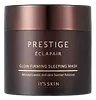
This anti-aging overnight mask is formulated around Adenosine and Astaxanthin to soften the look of wrinkles and brighten dull-looking skin.
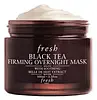
This anti-aging overnight mask is formulated around Saccharomyces Ferment Filtrate and Camellia Sinensis Leaf Extract to soften the look of wrinkles and hydrate skin.


What's inside
What's inside
 Key Ingredients
Benefits
Concerns
Ingredients Side-by-side
Water
Skin ConditioningGlycerin
Humectant


Butylene Glycol
Humectant
Isopropyl Myristate
Emollient





Jojoba Esters
Emollient
Ammonium Acryloyldimethyltaurate/Vp Copolymer
1,2-Hexanediol
Skin Conditioning
Butyrospermum Parkii Butter
Skin Conditioning
Selaginella Tamariscina Extract
Skin ConditioningDaemonorops Draco Extract
AstringentAdenosine
Skin Conditioning

Theobroma Cacao Seed Extract
Antioxidant
Tocopherol
Antioxidant



Ficus Carica Fruit Extract
Humectant
Astaxanthin
Skin Conditioning
Acetyl Hexapeptide-8
Humectant
Palmitoyl Tetrapeptide-7
Skin Conditioning
Glyceryl Stearate
Emollient
Steareth-21
CleansingBehenyl Alcohol
Emollient
Ceteareth-12
EmulsifyingCeteareth-20
Cleansing
Cetearyl Alcohol
Emollient
Sodium Polyacrylate
Absorbent
Dextrin
AbsorbentParfum
Masking

Water, Glycerin, Butylene Glycol, Isopropyl Myristate, Jojoba Esters, Ammonium Acryloyldimethyltaurate/Vp Copolymer, 1,2-Hexanediol, Butyrospermum Parkii Butter, Selaginella Tamariscina Extract, Daemonorops Draco Extract, Adenosine, Theobroma Cacao Seed Extract, Tocopherol, Ficus Carica Fruit Extract, Astaxanthin, Acetyl Hexapeptide-8, Palmitoyl Tetrapeptide-7, Glyceryl Stearate, Steareth-21, Behenyl Alcohol, Ceteareth-12, Ceteareth-20, Cetearyl Alcohol, Sodium Polyacrylate, Dextrin, Parfum
Water
Skin ConditioningGlycerin
Humectant
Butylene Glycol
Humectant
Jojoba Esters
Emollient
Isohexadecane
EmollientAmmonium Acryloyldimethyltaurate/Vp Copolymer
Dicaprylyl Carbonate
EmollientCamellia Oleifera Seed Oil
Skin Conditioning
Pentylene Glycol
Skin Conditioning
Ethylhexyl Palmitate
Emollient
Mirabilis Jalapa Extract
Skin ConditioningGlyceryl Stearate
Emollient
Steareth-21
CleansingCaprylic/Capric Triglyceride
Masking
Dimethicone
Emollient
Oxidized Corn Oil
Skin Conditioning
Butyrospermum Parkii Butter
Skin Conditioning
Cera Alba
Emollient
Kigelia Africana Fruit Extract
Skin ConditioningSaccharomyces Ferment Filtrate
Humectant
Camellia Sinensis Leaf Extract
Antimicrobial

Rubus Fruticosus Leaf Extract
MaskingLitchi Chinensis Seed Extract
Skin ConditioningRosa Damascena Flower Oil
Masking

Sodium Hyaluronate
Humectant
Adenosine
Skin Conditioning
Tocopheryl Acetate
Antioxidant
Tocopherol
Antioxidant
Ceteareth-20
Cleansing
Behenyl Alcohol
Emollient
Parfum
Masking
Ceteareth-12
EmulsifyingCetearyl Alcohol
Emollient
Sodium Citrate
BufferingSodium Polyacrylate Starch
AbsorbentSodium Polyacrylate
Absorbent
Sorbitan Laurate
Emulsifying
Disodium EDTA
ChelatingMaltodextrin
Absorbent
Silica
Abrasive
Tetrasodium EDTA
ChelatingHydroxyethylcellulose
Emulsion StabilisingAcetyl Dipeptide-1 Cetyl Ester
Skin Conditioning
Citric Acid
Buffering
CI 77891
Cosmetic ColorantBHT
Antioxidant
Potassium Sorbate
Preservative
Biotin
AntiseborrhoeicPhenoxyethanol
Preservative
Linalool
Perfuming
Citronellol
Perfuming
Geraniol
Perfuming
Water, Glycerin, Butylene Glycol, Jojoba Esters, Isohexadecane, Ammonium Acryloyldimethyltaurate/Vp Copolymer, Dicaprylyl Carbonate, Camellia Oleifera Seed Oil, Pentylene Glycol, Ethylhexyl Palmitate, Mirabilis Jalapa Extract, Glyceryl Stearate, Steareth-21, Caprylic/Capric Triglyceride, Dimethicone, Oxidized Corn Oil, Butyrospermum Parkii Butter, Cera Alba, Kigelia Africana Fruit Extract, Saccharomyces Ferment Filtrate, Camellia Sinensis Leaf Extract, Rubus Fruticosus Leaf Extract, Litchi Chinensis Seed Extract, Rosa Damascena Flower Oil, Sodium Hyaluronate, Adenosine, Tocopheryl Acetate, Tocopherol, Ceteareth-20, Behenyl Alcohol, Parfum, Ceteareth-12, Cetearyl Alcohol, Sodium Citrate, Sodium Polyacrylate Starch, Sodium Polyacrylate, Sorbitan Laurate, Disodium EDTA, Maltodextrin, Silica, Tetrasodium EDTA, Hydroxyethylcellulose, Acetyl Dipeptide-1 Cetyl Ester, Citric Acid, CI 77891, BHT, Potassium Sorbate, Biotin, Phenoxyethanol, Linalool, Citronellol, Geraniol
Ingredients Explained
These ingredients are found in both products.
Ingredients higher up in an ingredient list are typically present in a larger amount.
Adenosine is a purine nucleoside that your body already makes in every cell. In skincare, it acts mainly as a skin conditioning and anti-aging agent.
The way it works is fairly well mapped out:
Your skin has cells called fibroblasts that build collagen (the stuff that keeps skin firm and smooth). Adenosine basically flips a switch on these cells that tells them to get to work making more collagen and other proteins. These cells slow down on their own as skin ages, so Adenosine helps give them a little nudge to keep going.
The clinical backing is pretty solid too.
A blind, randomized, placebo-controlled trial of 126 women aged 45-65 tested a 0.1% cream twice daily and found real improvements in crow's feet and frown lines using a precise 3D skin-mapping technique; these changes showed up by week 3 and held at 2 months.
A later study using Adenosine-loaded dissolving microneedle patches reported gains in wrinkle depth, dermal density, elasticity, and hydration.
On concentrations, South Korea's Ministry of Food and Drug Safety has set 0.04% as the approved functional anti-wrinkle level. You'll typically see this ingredient used somewhere in the 0.04-0.1% range since it works at low doses.
This ingredient has been found safe for cosmetics with the data showing no irritation or sensitization.
Overall, this is a great ingredient for any anti-aging routine and has no photosensitizing effect, so it suits both AM and PM use.
Learn more about AdenosineAmmonium Acryloyldimethyltaurate/Vp Copolymer is a synthetically created polymer. It's used as a film-forming agent and used to thicken the consistency of products.
Think of it as a supportive ingredient that helps your gel-creams feel silky, "cloud cream-like", and spread evenly without being greasy.
The Cosmetic Ingredient Review (CIR) Expert Panel evaluated it (along with 22 other acryloyldimethyltaurate polymers) and concluded it's:
Due to its large molecular size, it sits on the surface of skin rather than penetrating it.
Learn more about Ammonium Acryloyldimethyltaurate/Vp CopolymerBehenyl Alcohol is a type of fatty alcohol (these are different from the drying, solvent alcohols).
Fatty Alcohols have hydrating properties and are most often used as an emollient or to thicken a product. They are usually derived from natural fats and oils; behenyl alcohol is derived from the fats of vegetable oils.
Emollients help keep your skin soft and hydrated by creating a film that traps moisture in.
In 2000, Behenyl Alcohol was approved by the US as medicine to reduce the duration of cold sores.
Learn more about Behenyl AlcoholButylene Glycol (or BG) is used within cosmetic products for a few different reasons:
Overall, Butylene Glycol is a safe and well-rounded ingredient that works well with other ingredients.
Though this ingredient works well with most skin types, some people with sensitive skin may experience a reaction such as allergic rashes, closed comedones, or itchiness.
Learn more about Butylene GlycolThis ingredient is also known as shea butter. It is a plant-derived extract from the nuts of the Africa shea tree and one of the most well-studied emollients.
Because it has a high concentration of fatty acids (primarily oleic, stearic, and linoleic) it is able to form a protective barrier on the skin's surface. This helps seal in moisture and prevents transepidermal water loss (TEWL).
In vitro research found an increase in skin hydration by 58% and a decrease in TEWL by 37.8% after 24 hours of applying this ingredient (pretty impressive for a single ingredient!).
Besides hydration, shea butter also contains triterpenes that have anti-inflammatory potential. In particule, lupeol cinnamate has shown the highest anti-inflammatory activity in vivo.
Shea butter also contains vitamins A and E which may contribute to antioxidant activity.
While Shea Butter has an SPF rating of about 3-4, it is not a sunscreen replacement.
This ingredient may not be fungal acne safe because its fatty acids fall within the C11-C24 range that the Malassezia yeast can metabolize.
This ingredient shows up on a lot of "pore-clogging" lists but there's no real evidence behind that. It doesn't even have a comedogenic rating from an actual study; the numbers you'll find online come from blogs citing other blogs.
Ratings for other ingredients mostly come from a 1980s rabbit ear test. This test doesn't translate well to human skin or to real products because the ingredient sits at a much lower percentage.
Some people still find it breaks them out. So if that's you, definitely trust your skin. Just know this one's based on experience and not evidence.
Learn more about Butyrospermum Parkii ButterWe don't have a description for Ceteareth-12 yet.
Ceteareth-20 is an emulsifier and surfactant made by reacting cetearyl alcohol with 20 moles of ethylene oxide.
This gives it both oil and water-loving properties that makes it an effect emulsifier; it's really great at pulling oil droplets into water to create a stable, creamy, and easy-to-spread base.
Typical use ranges from 0.5-30%. Most leave-on products are in the 1-10% zone.
The 20 ethylene oxide units is well above the PEG-10 threshold and therefore not a food source for Malassezia (it's fungal acne safe).
This ingredient has a comedogenic rating of 2 and an irritancy rating of 3. These numbers come from testing the raw ingredient on rabbit ears and doesn't reflect how it will behave in a finished product.
In practice, this ingredient is a well-tolerated ingredient. The ratings reflect cautious lab conditions and not real-world use. Just be sure to patch test any formulas you feel unsure about.
Learn more about Ceteareth-20Cetearyl alcohol is a waxy mixture of two fatty alcohols: cetyl alcohol and stearyl alcohol. It is an emollient and emulsifier.
Despite having "alcohol" in its name, it has nothing to do with drying solvent alcohols; the FDA also allows "alcohol-free" products to contain fatty alcohols like this ingredient.
It plays several roles in a formula:
Typical use levels for this ingredient sit around 1-10% and the Cosmetic Ingredient Review Expert Panel has affirmed safety at concentrations up to 25% in leave-on products.
Multiple assessments have found it to be non-irritating and non-sensitizing to most people.
However, there have been some cases of allergic contact dermatitis in patients with chronically compromised skin barriers.
Cetearyl alcohol has a comedogenic rating of 2 and irritancy rating of 1. Both of these numbers come from the 1989 study that used rabbit ears; a "2" means mildly comedogenic and a "1" means low irritancy.
Here's the catch: rabbit skin is more sensitive than human skin and throws a lot of false positives. A 1996 reappraisal found that ingredients rated 1-2 in the rabbit ear tests are generally safe for humans.
Remember comedogenic ratings are unable to assess the entire formula of a product or how it will react on your skin. Just be sure to patch test if you are unsure about certain ingredients.
This ingredient is not fungal acne safe. Cetearyl alcohol is a fatty alcohol with chain lengths that fall within the range that Malassezia can metabolize.
A 2019 study has also observed Malassezia growth in the presence of this ingredient, confirming it to be not-fungal acne safe.
Learn more about Cetearyl AlcoholGlycerin (or glycerol) is a compound naturally found in your skin. It's a powerhouse humectant that pulls water into the stratum corneum.
Topically, glycerin does several things at once:
Your skin makes glycerin on its own (mostly from sebaceous oil breakdown) and shuttles it to your outermost layer of skin, or your epidermis, via aquaporin-3.
Aquaporin-3 is a transporter that is essential for normal skin hydration, elasticity, and repair. Interestingly, mice lacking in AQP3 have dry and less elastic skin that can be fully corrected with glycerin.
This ingredient is non-irritating, plays well with almost every ingredient, and works across all skin types. Typical use is anywhere between 3-10% but can go up to 79% in some leave-on products.
Just know very high concentrations (>40%) can feel tacky in low humidity.
Glycerin is the name for this ingredient in American English. British English uses Glycerol/Glycerine.
Learn more about GlycerinGlyceryl Stearate is made by reacting glycerin with stearic acid (typically sourced from plant oils like palm or coconut). It's an emulsifier, emollient, and mild occlusive.
Emulsifiers help ingredients like oil and water stay mixed so your formula stays nicely blended and uniform in texture.
This ingredient is typically used in concentrations between 1-10%. Studies have found it to be non-sensitizing, non-phototoxic, and non-photoallergenic.
A close cousin of this ingredient is Glyceryl Stearate SE ("self-emulsifying"). This just has a small amount of sodium or potassium stearate added so it can emulsify without a co-emulsifier.
Since this ingredient is an ester of a C18 fatty acid, it may not be fungal acne safe. The Malassezia yeast can potentially metabolize within the C11-C24 range.
Fun fact: The human body also creates Glyceryl Stearate naturally.
Learn more about Glyceryl StearateJojoba Esters is a wax created from Jojoba oil. It is an emollient and film-forming ingredient. In bead form, it is an exfoliator.
This ingredient has high oxidative stability, meaning it doesn't break down when exposed to oxygen.
Its similarity to our skin's natural oils makes it a great emollient. Emollients help soften and soothe our skin by creating a barrier on top. This barrier helps trap moisture in, keeping skin hydrated.
It is created using either the hydrogenation or transesterification processes on jojoba oil.
Learn more about Jojoba EstersParfum is a catch-all term for an ingredient or more that is used to give a scent to products.
Also called "fragrance", this ingredient can be a blend of hundreds of chemicals or plant oils. This means every product with "fragrance" or "parfum" in the ingredients list is a different mixture.
For instance, Habanolide is a proprietary trade name for a specific aroma chemical. When used as a fragrance ingredient in cosmetics, most aroma chemicals fall under the broad labeling category of “FRAGRANCE” or “PARFUM” according to EU and US regulations.
The term 'parfum' or 'fragrance' is not regulated in many countries. In many cases, it is up to the brand to define this term.
For instance, many brands choose to label themselves as "fragrance-free" because they are not using synthetic fragrances. However, their products may still contain ingredients such as essential oils that are considered a fragrance by INCI standards.
One example is Calendula flower extract. Calendula is an essential oil that still imparts a scent or 'fragrance'.
Depending on the blend, the ingredients in the mixture can cause allergies and sensitivities on the skin. Some ingredients that are known EU allergens include linalool and citronellol.
Parfum can also be used to mask or cover an unpleasant scent.
The bottom line is: not all fragrances/parfum/ingredients are created equally. If you are worried about fragrances, we recommend taking a closer look at an ingredient. And of course, we always recommend speaking with a professional.
Learn more about ParfumSodium Polyacrylate is the sodium salt of polyacrylic acid. It is used as an absorber, emollient, and stabilizer.
This ingredient is a super-absorbent polymer - meaning it can absorb 100 to 1000 times its mass in water. As an emollient, Sodium Polyacrylate helps soften and soothe skin. Emollients work by creating a barrier to trap moisture in. This helps keep your skin hydrated.
Steareth-21 is a nonionic emulsifier made by reacting stearyl alcohol with 21 units of ethylene oxide. It is mainly a cleansing agent and emulsifier.
The "21" in the name just tells you it has a longer water-loving chain. This makes it more gentle and less likely to irritate skin compared to lower-numbered steareths.
You'll most likely see it paired with steareth-2 because the two work together to create stable formulations.
1,4-dioxane is often brought up as a concern but this is usually removed through purification.
Learn more about Steareth-21Tocopherol is a fat-soluble antioxidant known as Vitamin E.
You'll find this ingredient in the vast majority of skincare (for good reason). It works to neutralize free radicals, or unstable molecules generated by UV exposure, pollution, and other environmental stressors, before they can cause oxidative damage to your skin cells.
Topically applied tocopherol has been shown to protect against UV damage by ramping up the skin's own natural defense enzymes.
It also acts as a skin conditioning agent; some studies show that regular topical use can improve the skin's water-binding capacity over 2-4 weeks.
This ingredient is especially loved for being a team player. When combined with Vitamin C, the photoprotective effect of both ingredients roughly doubles and the combo also helps reduce UV-induced DNA damage.
This ingredient has some brightening potential but it's more of a prevention ingredient than spot-fader. Cell studies show it can slow down melanin production but it's worth noting that it's not the most powerful brightener out there.
In formulations, it also serves as a stabilizer that helps protect other oxidation-prone ingredients from degrading.
Concentrations usually range from 0.1-1% in most leave-on products.
Learn more about TocopherolWater. It's the most common cosmetic ingredient of all. You'll usually see it at the top of ingredient lists, meaning that it makes up the largest part of the product.
So why is it so popular? Water most often acts as a solvent - this means that it helps dissolve other ingredients into the formulation.
You'll also recognize water as that liquid we all need to stay alive. If you see this, drink a glass of water. Remember to stay hydrated!
Learn more about Water

