ISDIN Foto Ultra ISDIN Age Repair Fusion Water SPF 50 Versus ISDIN Fotoultra 100 Depigmenting Active Unify Color SPF 50+
This chemical sunscreen covers the full UV range and blocks ~98% of UVB at SPF 50.
This hybrid sunscreen covers the full UV range and blocks ~98% of UVB at SPF 50.

What's inside
What's inside
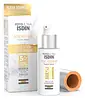 Key Ingredients
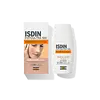
Benefits
Concerns
Ingredients Side-by-side
Water
Skin ConditioningOctocrylene
UV Absorber



Propanediol
Solvent

Butyl Methoxydibenzoylmethane
UV Absorber
Ethylhexyl Salicylate
UV Absorber
Polymethyl Methacrylate

Dimethicone
Emollient

Phenylbenzimidazole Sulfonic Acid
UV Absorber
Polysilicone-15
UV Filter
Propylene Glycol Dicaprylate/Dicaprate
EmollientTromethamine
BufferingGlycerin
Humectant
Bis-Ethylhexyloxyphenol Methoxyphenyl Triazine
UV Absorber
Silica
Abrasive

Dimethicone/Vinyl Dimethicone Crosspolymer
Skin Conditioning
Butylene Glycol
Humectant
1,2-Hexanediol
Skin Conditioning
Hydroxyacetophenone
Antioxidant
Polysorbate 60
Emulsifying

PEG-10 Dimethicone
Skin Conditioning
Sodium Hyaluronate
Humectant


Tocopheryl Acetate
Antioxidant

Xanthan Gum
EmulsifyingCaprylyl Glycol
Emollient
Parfum
Masking

Disodium EDTA
ChelatingPEG-8
HumectantCarbomer
Emulsion StabilisingPolysorbate 20
Emulsifying
Sodium Lactate
Buffering
Tocopherol
Antioxidant
Phenoxyethanol
Preservative
Tropolone
Skin ConditioningLecithin
Emollient
Plankton Extract
Skin ConditioningAscorbyl Palmitate
Antioxidant
Sodium Benzoate
Masking
Ascorbic Acid
Antioxidant
Citric Acid
Buffering
Palmitoyl Tripeptide-1
Skin Conditioning
Palmitoyl Tetrapeptide-7
Skin Conditioning
Pentapeptide-34 Trifluoroacetate
Emollient
Water, Octocrylene, Propanediol, Butyl Methoxydibenzoylmethane, Ethylhexyl Salicylate, Polymethyl Methacrylate, Dimethicone, Phenylbenzimidazole Sulfonic Acid, Polysilicone-15, Propylene Glycol Dicaprylate/Dicaprate, Tromethamine, Glycerin, Bis-Ethylhexyloxyphenol Methoxyphenyl Triazine, Silica, Dimethicone/Vinyl Dimethicone Crosspolymer, Butylene Glycol, 1,2-Hexanediol, Hydroxyacetophenone, Polysorbate 60, PEG-10 Dimethicone, Sodium Hyaluronate, Tocopheryl Acetate, Xanthan Gum, Caprylyl Glycol, Parfum, Disodium EDTA, PEG-8, Carbomer, Polysorbate 20, Sodium Lactate, Tocopherol, Phenoxyethanol, Tropolone, Lecithin, Plankton Extract, Ascorbyl Palmitate, Sodium Benzoate, Ascorbic Acid, Citric Acid, Palmitoyl Tripeptide-1, Palmitoyl Tetrapeptide-7, Pentapeptide-34 Trifluoroacetate
Water
Skin ConditioningDibutyl Adipate
EmollientPropylene Glycol Dicaprylate/Dicaprate
EmollientSilica
Abrasive
Diethylamino Hydroxybenzoyl Hexyl Benzoate
UV Filter
Isododecane
EmollientBis-Ethylhexyloxyphenol Methoxyphenyl Triazine
UV Absorber
Diisopropyl Sebacate
EmollientEthylhexyl Salicylate
UV Absorber
Ethylhexyl Triazone
UV Absorber
Caprylic/Capric Triglyceride
Masking
Glycerin
Humectant
Niacinamide
Smoothing


C12-15 Alkyl Benzoate
AntimicrobialTitanium Dioxide
Cosmetic Colorant
Polyglyceryl-6 Polyhydroxystearate
Emulsifying
Maltodextrin
Absorbent
Polyglyceryl-6 Polyricinoleate
Emulsifying
1,2-Hexanediol
Skin Conditioning
Sodium Chloride
MaskingSucrose Dilaurate
Emollient
Stearalkonium Hectorite
Gel FormingHydroxyacetophenone
Antioxidant
Polyglyceryl-2 Dipolyhydroxystearate
Skin Conditioning
Tocopheryl Acetate
Antioxidant
Trimethylpentanediol/Adipic Acid/Glycerin Crosspolymer
Skin ConditioningPolyglyceryl-3 Diisostearate
Emulsifying

Polyglyceryl-3 Polyricinoleate
Emulsifying
CI 77492
Cosmetic ColorantSclareolide
Masking
Diethylhexyl Syringylidenemalonate
Skin Protecting
Sodium Cocoyl Glutamate
Cleansing
Sorbitan Laurate
Emulsifying
Dimethicone
Emollient
Ethylhexylglycerin
Skin ConditioningCI 77491
Cosmetic ColorantC18-36 Acid Glycol Ester
EmollientC18-36 Acid Triglyceride
EmollientPisum Sativum Extract
Skin ConditioningGlyceryl Stearate
Emollient
Tetrasodium Glutamate Diacetate
ChelatingCI 77499
Cosmetic ColorantTriethoxycaprylylsilane
Palmitoyl Tripeptide-1
Skin Conditioning
Palmitoyl Tetrapeptide-7
Skin Conditioning
Water, Dibutyl Adipate, Propylene Glycol Dicaprylate/Dicaprate, Silica, Diethylamino Hydroxybenzoyl Hexyl Benzoate, Isododecane, Bis-Ethylhexyloxyphenol Methoxyphenyl Triazine, Diisopropyl Sebacate, Ethylhexyl Salicylate, Ethylhexyl Triazone, Caprylic/Capric Triglyceride, Glycerin, Niacinamide, C12-15 Alkyl Benzoate, Titanium Dioxide, Polyglyceryl-6 Polyhydroxystearate, Maltodextrin, Polyglyceryl-6 Polyricinoleate, 1,2-Hexanediol, Sodium Chloride, Sucrose Dilaurate, Stearalkonium Hectorite, Hydroxyacetophenone, Polyglyceryl-2 Dipolyhydroxystearate, Tocopheryl Acetate, Trimethylpentanediol/Adipic Acid/Glycerin Crosspolymer, Polyglyceryl-3 Diisostearate, Polyglyceryl-3 Polyricinoleate, CI 77492, Sclareolide, Diethylhexyl Syringylidenemalonate, Sodium Cocoyl Glutamate, Sorbitan Laurate, Dimethicone, Ethylhexylglycerin, CI 77491, C18-36 Acid Glycol Ester, C18-36 Acid Triglyceride, Pisum Sativum Extract, Glyceryl Stearate, Tetrasodium Glutamate Diacetate, CI 77499, Triethoxycaprylylsilane, Palmitoyl Tripeptide-1, Palmitoyl Tetrapeptide-7
Ingredients Explained
These ingredients are found in both products.
Ingredients higher up in an ingredient list are typically present in a larger amount.
1,2-Hexanediol is a synthetic liquid and another multi-functional powerhouse.
It is a:
- Humectant, drawing moisture into the skin
- Emollient, helping to soften skin
- Solvent, dispersing and stabilizing formulas
- Preservative booster, enhancing the antimicrobial activity of other preservatives
This ingredient is better known as bemotrizinol or Tinosorb S and is one of the best broad-spectrum UV filters in modern sunscreen.
It works by absorbing UV light across a whole range (280-400 nm) with peaks around 310 nm (UVB) and 340-345 nm (UVA). This means it covers UVB plus the deeper UVA wavelengths that drive photoaging and pigmentation.
Another pro?
It's exceptionally photostable, barely degrades in sunlight, and acts as a "bodyguard" for less stable filters.
That's why you'll see it paired with avobenzone or octinoxate; this team up ensures they keep working through sun exposure.
Safety reviews have been reassuring across the board. This ingredient shows low absorption through the skin, rarely irritates, and lab studies found it doesn't act like a hormone in the body (a concern that's been raised about some older sunscreen filters).
On maximum concentrations:
In 2026, the US F.D.A finally added it as an OTC sunscreen ingredient at concentrations up to 6% for adults / children 6 months and older
Learn more about Bis-Ethylhexyloxyphenol Methoxyphenyl TriazineDimethicone is a type of synthetic silicone created from natural materials such as quartz. It is also known as polydimethylsiloxane.
What it does:
Dimethicone comes in different viscosities:
Depending on the viscosity, dimethicone has different properties.
Ingredients lists don't always show which type is used, so we recommend reaching out to the brand if you have questions about the viscosity.
This ingredient is unlikely to cause irritation because it does not get absorbed into skin. However, people with silicone allergies should be careful about using this ingredient.
Note: Dimethicone may contribute to pilling. This is because it is not oil or water soluble, so pilling may occur when layered with products. When mixed with heavy oils in a formula, the outcome is also quite greasy.
Learn more about DimethiconeEthylhexyl Salicylate (also called Octisalate or Octyl Salicylate) is an oil-soluble organic UV filter that's been used in sunscreen since the 1950's.
It absorbs UVB light in the 280-320 nm range with a peak absorbance around 306 nm.
You'll often see it paired with other UV filters to boost overall SPF because octisalate is a fairly week filter on its own.
The reason you'll see it so often is because it can help solubilize and stabilize the trickier filters like oxybenzone and avobenzone.
Unlike these filters, octisalate has pretty good photostability and doesn't create skin-damaging free radicals when exposed to sunlight.
The fatty-alcohol part of the molecule also gives it a light, emollient feel so it doubles as a nice texture enhancer.
Usage levels vary around the world:
Safety-wise, this ingredient has a pretty reassuring track record. The EU's Scientific Committee on Consumer Products (SCCP) found very low skin penetration in human skin tests and negative results for irritation, phototoxicity, and photoallergy.
The real-world allergy risk is pretty low too; a 2012 European study of 1,031 people recorded only 2 reactions to it (a rate of 0.19%).
You might have seen scary headlines about sunscreen getting into your blood.
In 2019, the FDA found that several chemical filters can absorb through the skin and show up in the bloodstream at small but measurable levels.
Here's the important part: these tiny levels are just a cutoff the FDA uses to decide which ingredients need more testing and doesn't mean anything harmful was found.
The researchers were clear that the results are no reason to stop wearing sunscreen.
Learn more about Ethylhexyl SalicylateGlycerin (or glycerol) is a compound naturally found in your skin. It's a powerhouse humectant that pulls water into the stratum corneum.
Topically, glycerin does several things at once:
Your skin makes glycerin on its own (mostly from sebaceous oil breakdown) and shuttles it to your outermost layer of skin, or your epidermis, via aquaporin-3.
Aquaporin-3 is a transporter that is essential for normal skin hydration, elasticity, and repair. Interestingly, mice lacking in AQP3 have dry and less elastic skin that can be fully corrected with glycerin.
This ingredient is non-irritating, plays well with almost every ingredient, and works across all skin types. Typical use is anywhere between 3-10% but can go up to 79% in some leave-on products.
Just know very high concentrations (>40%) can feel tacky in low humidity.
Glycerin is the name for this ingredient in American English. British English uses Glycerol/Glycerine.
Learn more about GlycerinHydroxyacetophenone is a small phenolic molecule that earns its place in a formulas as an antioxidant and preservative booster.
As a phenol, it is able to neutralize free radicals to protect both the product and the skin from oxidative stress.
Though it can't kill microbes on its own, it works as a good supporting agent when combined with other preservatives like Phenoxyethanol or 1,2-Hexanediol.
This ingredient naturally occurs as piceol in Norwegian spruce needles (~0.4-1.1% dry weight and in cloudberries). Though the cosmetic-grade material is synthesized for purity and consistency.
You'll usually see it used at low levels and suppliers recommend up to 1% added to a water phase.
Safety testing was done at concentrations like 0.05% in SPF products and 0.5% in a Human Repeated Insult Patch Test. The safety evidence is assuring; this ingredient is safe for cosmetics in current use and also holds safety status as a food flavoring as well.
An honest caveat: the "soothing" and "anti-inflammatory" claims come mostly from supplier marketing rather than published clinical trials. The Cosmetic Ingredient Review's own literature search found no useful efficacy studies on this ingredient.
So the antioxidant and preservative-boosting roles are the well supported ones while the calming benefit is plausible but thinly evidenced.
Overall, this is a well-tolerated, low-irritation multitasker that quietly helps a formula stay fresh and stable.
Learn more about HydroxyacetophenonePalmitoyl Tetrapeptide-7 (formerly Palmitoyl Tetrapeptide-3) is a synthetic peptide. Its main job is to fight what researchers call "inflammaging".
"Inflammaging" is the slow, low-grade chronic inflammation that quietly breaks down collagen as we age.
This ingredient calms down a specific inflammation signal in your skin cells (called IL-6). When left unchecked, this signal triggers enzymes that break down collagen and elastin.
Clinical testing showed statistically significant improvements in:
Studies also found the more of this ingredient used, the more your skin produces Collagen I, fibronectin, and hyaluronic acid.
You'll likely see this ingredient paired with Palmitoyl Tripeptide-1 in the well-known Matrixyl 3000 complex for enhanced anti-aging effects.
A 3% concentration applied twice daily for two months showed meaningful skin rejuvenation results in clinical panels.
Fungal acne note:
Usually a palmitic acid component can feed Malassezia in unbound form, but here is is covalently bonded to the peptide. This means it is very difficult for Malassezia to access, and therefore very unlikely to cause fungal acne.
Palmitoyl Tripeptide-1 (aka Pal-GHK) is a synthetic signal peptide made of three amino acids attached to palmitic acid.
That fatty acid attachment is the key: it boosts the peptide's ability to penetrate the skin barrier. This puts it closer to the dermal cells where it can actually make a difference.
Once there, it acts as a matrikine, a signaling peptide that prompts fibroblasts to produce more collagen, fibronectin, and hyaluronic acid.
In vitro studies show it can boost collagen production in skin cells even when UV-damaged skin samples were treated with it at a tiny concentration (it almost fully restored dermal collagen at 5ppm). It achieved this at 100x lower concentration than retinoic acid, which needed 500 ppm to do the same thing.
Human clinical data is promising, but modest:
A study of 23 female volunteers found a small but statistically significant increase (~4%) in skin thickness after treatment at 4 ppm.
A separate small trial of 15 women showed statistically significant reductions in wrinkle length, depth, and skin roughness after applying it twice daily for four weeks.
You'll likely see Pal-GHK paired with Palmitoyl Tetrapeptide-7 as part of the Matrixyl 3000 complex.
Fungal acne note:
Usually a palmitic acid component can feed Malassezia in unbound form, but here is is covalently bonded to the peptide. This means it is very difficult for Malassezia to access, and therefore very unlikely to cause fungal acne.
This ingredient is an emollient designed to leave a non-greasy feel. It is also a skin conditioning agent and viscosity modifier.
Skin irritation studies for this ingredient (up to 80%) showed mimimal to no irritation.
One thing worth knowing: this ingredient may enhance the skin penetration of other ingredients.
Overall, this ingredient is a well-tolerated and lightweight emollient.
Learn more about Propylene Glycol Dicaprylate/DicaprateSilica, also known as silicon dioxide, is a naturally occurring mineral. It is used as a fine, spherical, and porous powder in cosmetics.
Though it has exfoliant properties, the function of silica varies depending on the product.
The unique structure of silica enhances the spreadability and adds smoothness, making it a great texture enhancer.
It is also used as an active carrier, emulsifier, and mattifier due to its ability to absorb excess oil.
In some products, tiny microneedles called spicules are made from silica or hydrolyzed sponge. When you rub them in, they lightly polish away dead skin layers and enhance the penetration of active ingredients.
Learn more about SilicaTocopheryl Acetate is a stable, shelf-friendly form of vitamin E.
Formulators love it because plain vitamin E oxidizes quickly once it hits air. This acetate version stays stable and resists going off, helping to extend a product's shelf life.
It's actually inactive on its own and works like a slow-release "storage" form; the enzymes in your skin called esterases gradually convert it into active vitamin E over time.
One in vivo study showed 5% of the acetate in the living layer of the epidermis converted to vitamin E after 5 days of application. This study also found the skin gained protection against UV damage even though the conversion was slow and small.
Once converted, vitamin E acts as a skin's main fat-soluble antioxidant that fights free radicals to protect skin from damage.
Topical vitamin E generally boosts the skin's photoprotection, and it reduced UV-damage in animal models.
This ingredient has some brightening potential but it's more of a prevention ingredient than spot-fader. Cell studies show it can slow down melanin production but it's worth noting that it's not the most powerful brightener out there.
Overall, it has a pretty solid safety profile and has been found to be non-irritating and non-comedogenic. Allergic reactions may happen but stay rare due to how widely the ingredient gets used.
The concentration will vary depending on the formula; industry data shows 0.1% in baby lotions, 3% in lipsticks, and 5% in foot powders. You can also find this ingredient at 100% in a pure vitamin E oil.
Most leave-on skincare keeps it at the lower end, often between 0.5-1%.
Learn more about Tocopheryl AcetateWater. It's the most common cosmetic ingredient of all. You'll usually see it at the top of ingredient lists, meaning that it makes up the largest part of the product.
So why is it so popular? Water most often acts as a solvent - this means that it helps dissolve other ingredients into the formulation.
You'll also recognize water as that liquid we all need to stay alive. If you see this, drink a glass of water. Remember to stay hydrated!
Learn more about Water

