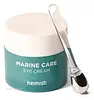
This anti-aging eye moisturizer is formulated around Laminaria Japonica Extract and Niacinamide to soften the look of wrinkles and hydrate skin.
This barrier-repair eye moisturizer is formulated around Niacinamide and Ceramide NP to strengthen the skin barrier and calm redness.


What's inside
What's inside
 Key Ingredients
Benefits
Concerns
Ingredients Side-by-side
Water
Skin ConditioningButylene Glycol
Humectant

Ecklonia Cava Extract
Skin Conditioning

Undaria Pinnatifida Extract
Skin ConditioningHizikia Fusiforme Extract
Skin Conditioning
Laminaria Japonica Extract
Skin Protecting

Glycerin
Humectant
Cetearyl Alcohol
Emollient




Caprylic/Capric Triglyceride
Masking
Cetyl Ethylhexanoate
EmollientHydrogenated Polydecene
EmollientMacadamia Ternifolia Seed Oil
Emollient
Niacinamide
Smoothing







Cyclopentasiloxane
Emollient
Glycol Palmitate
Emulsifying
Glycol Stearate Se
Emulsifying
1,2-Hexanediol
Skin Conditioning
Hydrogenated Vegetable Oil
Emollient
Butyrospermum Parkii Butter
Skin Conditioning
Glyceryl Stearate
Emollient
Cyclohexasiloxane
Emollient
Sodium Hyaluronate
Humectant
Beta-Glucan
Skin Conditioning
Leontopodium Alpinum Callus Culture Extract
Antioxidant
Agarum Cribrosum Extract
Skin ConditioningCodium Fragile Extract
Skin Conditioning
Codium Tomentosum Extract
Skin ProtectingEnteromorpha Compressa Extract
Skin Protecting
Laminaria Cloustoni Extract
Skin ProtectingLaminaria Digitata Extract
Skin Protecting
Porphyra Yezoensis Extract
Skin ConditioningSolidago Virgaurea Extract
Skin ConditioningUlva Lactuca Extract
Skin ConditioningCopper Tripeptide-1
Skin Conditioning
Ethylhexylglycerin
Skin ConditioningAcetyl Hexapeptide-8
Humectant
Adenosine
Skin Conditioning
Trehalose
Humectant
Tocopheryl Acetate
Antioxidant
Sorbitan Olivate
Emulsifying
Sorbitan Palmitate
Emulsifying
Dipropylene Glycol
HumectantTitanium Dioxide
Cosmetic Colorant

Glycol
HumectantCI 77288
Cosmetic ColorantPalmitic Acid
Emollient
Sorbitan Isostearate
Emulsifying
CI 77492
Cosmetic ColorantCI 77499
Cosmetic ColorantStearic Acid
Cleansing
Aluminum Starch Octenylsuccinate
Absorbent
Hydrogenated Lecithin
Emulsifying
Cetyl Palmitate
Emollient
Dimethicone
Emollient
Hydroxyacetophenone
Antioxidant
Polyacrylate-13
PEG-100 Stearate
Surfactant
Polyisobutene
Polysorbate 20
Emulsifying
Butylphenyl Methylpropional
Perfuming



Linalool
Perfuming
Parfum
Masking
Disodium EDTA
ChelatingWater, Butylene Glycol, Ecklonia Cava Extract, Undaria Pinnatifida Extract, Hizikia Fusiforme Extract, Laminaria Japonica Extract, Glycerin, Cetearyl Alcohol, Caprylic/Capric Triglyceride, Cetyl Ethylhexanoate, Hydrogenated Polydecene, Macadamia Ternifolia Seed Oil, Niacinamide, Cyclopentasiloxane, Glycol Palmitate, Glycol Stearate Se, 1,2-Hexanediol, Hydrogenated Vegetable Oil, Butyrospermum Parkii Butter, Glyceryl Stearate, Cyclohexasiloxane, Sodium Hyaluronate, Beta-Glucan, Leontopodium Alpinum Callus Culture Extract, Agarum Cribrosum Extract, Codium Fragile Extract, Codium Tomentosum Extract, Enteromorpha Compressa Extract, Laminaria Cloustoni Extract, Laminaria Digitata Extract, Porphyra Yezoensis Extract, Solidago Virgaurea Extract, Ulva Lactuca Extract, Copper Tripeptide-1, Ethylhexylglycerin, Acetyl Hexapeptide-8, Adenosine, Trehalose, Tocopheryl Acetate, Sorbitan Olivate, Sorbitan Palmitate, Dipropylene Glycol, Titanium Dioxide, Glycol, CI 77288, Palmitic Acid, Sorbitan Isostearate, CI 77492, CI 77499, Stearic Acid, Aluminum Starch Octenylsuccinate, Hydrogenated Lecithin, Cetyl Palmitate, Dimethicone, Hydroxyacetophenone, Polyacrylate-13, PEG-100 Stearate, Polyisobutene, Polysorbate 20, Butylphenyl Methylpropional, Linalool, Parfum, Disodium EDTA
Glycerin
Humectant
Water
Skin ConditioningPEG-8
HumectantIsopentyldiol
Humectant
Centella Asiatica Leaf/Stem Extract
HumectantNiacinamide
Smoothing
Ceramide EOP
Skin Conditioning
Ceramide Ng
Skin Conditioning
Ceramide NP
Skin Conditioning
Ceramide Ag
Humectant
Ceramide AP
Skin Conditioning
Sodium Hyaluronate
Humectant
Lactobacillus
Skin ConditioningLactobacillus/Soymilk Ferment Filtrate
Skin ConditioningBetaine
Humectant
Hydrogenated Lecithin
Emulsifying
Butylene Glycol
Humectant
Cyclopentasiloxane
Emollient
Dimethicone
Emollient
Acrylates/C10-30 Alkyl Acrylate Crosspolymer
Emulsion StabilisingDimethicone/Vinyl Dimethicone Crosspolymer
Skin Conditioning
Triethanolamine
BufferingPhenoxyethanol
Preservative
Methylparaben
Preservative
Propylparaben
Preservative
Glycerin, Water, PEG-8, Isopentyldiol, Centella Asiatica Leaf/Stem Extract, Niacinamide, Ceramide EOP, Ceramide Ng, Ceramide NP, Ceramide Ag, Ceramide AP, Sodium Hyaluronate, Lactobacillus, Lactobacillus/Soymilk Ferment Filtrate, Betaine, Hydrogenated Lecithin, Butylene Glycol, Cyclopentasiloxane, Dimethicone, Acrylates/C10-30 Alkyl Acrylate Crosspolymer, Dimethicone/Vinyl Dimethicone Crosspolymer, Triethanolamine, Phenoxyethanol, Methylparaben, Propylparaben
Reviews
Ingredients Explained
These ingredients are found in both products.
Ingredients higher up in an ingredient list are typically present in a larger amount.
Butylene Glycol (or BG) is used within cosmetic products for a few different reasons:
Overall, Butylene Glycol is a safe and well-rounded ingredient that works well with other ingredients.
Though this ingredient works well with most skin types, some people with sensitive skin may experience a reaction such as allergic rashes, closed comedones, or itchiness.
Learn more about Butylene GlycolCyclopentasiloxane (D5) is a lightweight silicone that mostly acts as an emollient and solvent in cosmetics. Its the reason your products feel silky, fast-spreading, and non-greasy.
Since D5 is volatile, it does its thing and then evaporates off the skin quickly.
The safety profile of this ingredient is reassuring; the US CIR Expert Panel concluded D5 is safe as used in cosmetics and Health Canada concluded that D5 is not harmful to human health or the environment as currently used in cosmetics
There's a study that people mention about D5 in a rat study showing tumors. This study is related to long-term inhalation of high D5 levels.
Regulatory bodies have judged this study to be not applicable in topical skincare since skin absorption of D5 is very low and we're not really inhaling huge amounts of D5.
The only restriction for this ingredient is environmental. The European Chemicals Agency (ECHA) restricted D5 in wash-off cosmetics at or above 0.1% due to their persistence in water.
Learn more about CyclopentasiloxaneDimethicone is a type of synthetic silicone created from natural materials such as quartz. It is also known as polydimethylsiloxane.
What it does:
Dimethicone comes in different viscosities:
Depending on the viscosity, dimethicone has different properties.
Ingredients lists don't always show which type is used, so we recommend reaching out to the brand if you have questions about the viscosity.
This ingredient is unlikely to cause irritation because it does not get absorbed into skin. However, people with silicone allergies should be careful about using this ingredient.
Note: Dimethicone may contribute to pilling. This is because it is not oil or water soluble, so pilling may occur when layered with products. When mixed with heavy oils in a formula, the outcome is also quite greasy.
Learn more about DimethiconeGlycerin (or glycerol) is a compound naturally found in your skin. It's a powerhouse humectant that pulls water into the stratum corneum.
Topically, glycerin does several things at once:
Your skin makes glycerin on its own (mostly from sebaceous oil breakdown) and shuttles it to your outermost layer of skin, or your epidermis, via aquaporin-3.
Aquaporin-3 is a transporter that is essential for normal skin hydration, elasticity, and repair. Interestingly, mice lacking in AQP3 have dry and less elastic skin that can be fully corrected with glycerin.
This ingredient is non-irritating, plays well with almost every ingredient, and works across all skin types. Typical use is anywhere between 3-10% but can go up to 79% in some leave-on products.
Just know very high concentrations (>40%) can feel tacky in low humidity.
Glycerin is the name for this ingredient in American English. British English uses Glycerol/Glycerine.
Learn more about GlycerinHydrogenated Lecithin is a more stable version of lecithin.
It's made by taking lecithin (a phospholipid commonly found in soybeans and egg yolks) and hydrogenating it. This just means the unsaturated fatty acids are turned into saturated ones so they don't go bad as easily.
This ingredient is an emollient, emulsifier, and penetration enhancer. As an emollient, it helps soften and hydrate skin by trapping moisture within. As an emulsifier, it prevents oil and water ingredients from separating.
Hydrogenated Lecithin can form tiny spherical structures made of phospholipid bilayers called liposomes. These liposomes are able to capture compounds inside their structure and deliver them through the skin barrier.
Because phospholipids are a natural component of our cell membranes, this ingredient is inherently compatible with skin.
A 2021 study found lecithin-based surfactants were less harsh and more tolerable comared to Sodium Lauryl Sulfate (SLS).
Learn more about Hydrogenated LecithinNiacinamide is a multitasking form of vitamin B3 that strengthens the skin barrier, reduces pores and dark spots, regulates oil, and improves signs of aging.
And the best part? It's gentle and well-tolerated by most skin types, including sensitive and reactive skin.
You might have heard of "niacin flush", or the reddening of skin that causes itchiness. Niacinamide has not been found to cause this.
In very rare cases, some individuals may not be able to tolerate niacinamide at all or experience an allergic reaction to it.
If you are experiencing flaking, irritation, and dryness with this ingredient, be sure to double check all your products as this ingredient can be found in all categories of skincare.
When incorporating niacinamide into your routine, look out for concentration amounts. Typically, 5% niacinamide provides benefits such as fading dark spots. However, if you have sensitive skin, it is better to begin with a smaller concentration.
When you apply niacinamide to your skin, your body converts it into nicotinamide adenine dinucleotide (NAD). NAD is an essential coenzyme that is already found in your cells as "fuel" and powers countless biological processes.
In your skin, NAD helps repair cell damage, produce new healthy cells, support collagen production, strengthen the skin barrier, and fight environmental stressors (like UV and pollution).
Our natural NAD levels start to decline with age, leading to slower skin repair, visible aging, and a weaker skin barrier. By providing your skin niacinamide, you're recharging your skin's NAD levels. This leads to stronger, healthier, and younger looking skin.
Another name for vitamin B3 is nicotinamide. This vitamin is water-soluble and our bodies don't store it. We obtain Vitamin B3 from either food or skincare. Meat, fish, wheat, yeast, and leafy greens contain vitamin B3.
The type of niacinamide used in skincare is synthetically created.
Learn more about NiacinamideSodium Hyaluronate is the salt form of hyaluronic acid. It is a long sugar chain that is naturally found in your skin, joints, and connective tissue that maintains hydration and elasticity.
In skincare, it works as a humectant. It pulls water from the environment and deeper layers of skin and binds it to the surface.
Interestingly, the size of the molecule affects its behavior:
Some clinical evidence links low molecular weight versions to improved wrinkle depth, elasticity, anti-inflammatory effects, and barrier repair.
Many serums use a blend of both weights so you can get surface hydration plus longer-lasting and deeper effects.
You'll typically see concentrations between 0.1-2% for this ingredient.
Learn more about Sodium HyaluronateWater. It's the most common cosmetic ingredient of all. You'll usually see it at the top of ingredient lists, meaning that it makes up the largest part of the product.
So why is it so popular? Water most often acts as a solvent - this means that it helps dissolve other ingredients into the formulation.
You'll also recognize water as that liquid we all need to stay alive. If you see this, drink a glass of water. Remember to stay hydrated!
Learn more about Water

