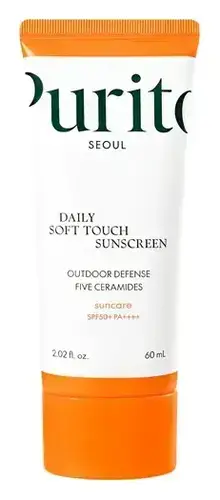
This chemical sunscreen covers the full UV range and blocks ~98% of UVB at SPF 50.
This chemical sunscreen covers most of the UV range, lighter on the deep UVA that drives aging.


What's inside
What's inside
 Key Ingredients
Benefits
Concerns
Ingredients Side-by-side
Water
Skin ConditioningPropanediol
Solvent

Camellia Sinensis Leaf Water
Masking
Dibutyl Adipate
EmollientEthylhexyl Triazone
UV Absorber
Polymethylsilsesquioxane

Diisopropyl Sebacate
EmollientButyloctyl Salicylate
Skin Conditioning
Diethylamino Hydroxybenzoyl Hexyl Benzoate
UV Filter
Niacinamide
Smoothing










Drometrizole Trisiloxane
UV Absorber
Methylene Bis-Benzotriazolyl Tetramethylbutylphenol
UV Filter
Caprylyl Methicone
Skin Conditioning
Butylene Glycol
Humectant
1,2-Hexanediol
Skin Conditioning
Pentylene Glycol
Skin Conditioning
Behenyl Alcohol
Emollient
Polyglyceryl-3 Methylglucose Distearate
Emulsifying

Polyglyceryl-6 Distearate
Emulsifying
Decyl Glucoside
Cleansing
Tromethamine
BufferingCandelilla/Jojoba/Rice Bran Polyglyceryl-3 Esters
Emulsifying
Carbomer
Emulsion StabilisingAcrylates/C10-30 Alkyl Acrylate Crosspolymer
Emulsion StabilisingSodium Stearoyl Glutamate
CleansingPolyacrylate Crosspolymer-6
Emulsion StabilisingEthylhexylglycerin
Skin ConditioningAdenosine
Skin Conditioning
Glycerin
Humectant
Xanthan Gum
EmulsifyingTocopherol
Antioxidant

Centella Asiatica Extract
Cleansing
Centella Asiatica Leaf Extract
Skin Conditioning
Saccharomyces Ferment
Skin Conditioning
Centella Asiatica Root Extract
Skin Conditioning
Houttuynia Cordata Extract
Skin Conditioning
Asiaticoside
Antioxidant
Madecassoside
Antioxidant
Sodium DNA
Skin Conditioning
Madecassic Acid
Skin Conditioning
Asiatic Acid
Skin Conditioning
Water, Propanediol, Camellia Sinensis Leaf Water, Dibutyl Adipate, Ethylhexyl Triazone, Polymethylsilsesquioxane, Diisopropyl Sebacate, Butyloctyl Salicylate, Diethylamino Hydroxybenzoyl Hexyl Benzoate, Niacinamide, Drometrizole Trisiloxane, Methylene Bis-Benzotriazolyl Tetramethylbutylphenol, Caprylyl Methicone, Butylene Glycol, 1,2-Hexanediol, Pentylene Glycol, Behenyl Alcohol, Polyglyceryl-3 Methylglucose Distearate, Polyglyceryl-6 Distearate, Decyl Glucoside, Tromethamine, Candelilla/Jojoba/Rice Bran Polyglyceryl-3 Esters, Carbomer, Acrylates/C10-30 Alkyl Acrylate Crosspolymer, Sodium Stearoyl Glutamate, Polyacrylate Crosspolymer-6, Ethylhexylglycerin, Adenosine, Glycerin, Xanthan Gum, Tocopherol, Centella Asiatica Extract, Centella Asiatica Leaf Extract, Saccharomyces Ferment, Centella Asiatica Root Extract, Houttuynia Cordata Extract, Asiaticoside, Madecassoside, Sodium DNA, Madecassic Acid, Asiatic Acid
Homosalate 7.5%
Skin Conditioning
Octocrylene 5%
UV Absorber

Ethylhexyl Salicylate 5%
UV Absorber
Butyl Methoxydibenzoylmethane 3%
UV Absorber
Aloe Barbadensis Leaf Juice
Skin Conditioning
Aminomethyl Propanol
BufferingButyloctyl Salicylate
Skin Conditioning
Cocos Nucifera Oil
Masking


Dimethicone
Emollient
Ethylhexylglycerin
Skin ConditioningParfum
Masking
Glycerin
Humectant
Microcrystalline Cellulose
AbsorbentMusa Sapientum Fruit Extract
Skin ConditioningNiacinamide
Smoothing
Vp/Hexadecene Copolymer
Phenoxyethanol
Preservative
Polymethylsilsesquioxane
Polysorbate 20
Emulsifying
Sodium Hyaluronate
Humectant
Stearic Acid
Cleansing
Tapioca Starch
Tetrafluoropropene
Tetrasodium EDTA
Homosalate 7.5%, Octocrylene 5%, Ethylhexyl Salicylate 5%, Butyl Methoxydibenzoylmethane 3%, Aloe Barbadensis Leaf Juice, Aminomethyl Propanol, Butyloctyl Salicylate, Cocos Nucifera Oil, Dimethicone, Ethylhexylglycerin, Parfum, Glycerin, Microcrystalline Cellulose, Musa Sapientum Fruit Extract, Niacinamide, Vp/Hexadecene Copolymer, Phenoxyethanol, Polymethylsilsesquioxane, Polysorbate 20, Sodium Hyaluronate, Stearic Acid, Tapioca Starch, Tetrafluoropropene, Tetrasodium EDTA
Reviews
Ingredients Explained
These ingredients are found in both products.
Ingredients higher up in an ingredient list are typically present in a larger amount.
Butyloctyl Salicylate is a chemical UV filter structurally similar to octisalate. It is a photostabilizer, SPF booster, emollient and solvent. This ingredient helps evenly spread out ingredients.
According to a manufacturer, it is suitable for pairing with micro Titanium Dioxide, Zinc Oxide, and pigments.
Photostabilizers help stabilize UV-filters and prevents them from degrading quickly.
Learn more about Butyloctyl SalicylateEthylhexylglycerin is created from glycerin. It is a multitasker ingredient that:
The CIR Expert Panel found minimal skin absorption or sensitization of any kind in a safety assessment. Though this ingredient is considered well-tolerated, a small number of cases of allergic dermatitis have been published since 2002. Just be sure to patch test if you are unsure.
Industry-reported use ranges from 8% in rinse-off products and 2% in leave-on formulations.
Learn more about EthylhexylglycerinGlycerin (or glycerol) is a compound naturally found in your skin. It's a powerhouse humectant that pulls water into the stratum corneum.
Topically, glycerin does several things at once:
Your skin makes glycerin on its own (mostly from sebaceous oil breakdown) and shuttles it to your outermost layer of skin, or your epidermis, via aquaporin-3.
Aquaporin-3 is a transporter that is essential for normal skin hydration, elasticity, and repair. Interestingly, mice lacking in AQP3 have dry and less elastic skin that can be fully corrected with glycerin.
This ingredient is non-irritating, plays well with almost every ingredient, and works across all skin types. Typical use is anywhere between 3-10% but can go up to 79% in some leave-on products.
Just know very high concentrations (>40%) can feel tacky in low humidity.
Glycerin is the name for this ingredient in American English. British English uses Glycerol/Glycerine.
Learn more about GlycerinNiacinamide is a multitasking form of vitamin B3 that strengthens the skin barrier, reduces pores and dark spots, regulates oil, and improves signs of aging.
And the best part? It's gentle and well-tolerated by most skin types, including sensitive and reactive skin.
You might have heard of "niacin flush", or the reddening of skin that causes itchiness. Niacinamide has not been found to cause this.
In very rare cases, some individuals may not be able to tolerate niacinamide at all or experience an allergic reaction to it.
If you are experiencing flaking, irritation, and dryness with this ingredient, be sure to double check all your products as this ingredient can be found in all categories of skincare.
When incorporating niacinamide into your routine, look out for concentration amounts. Typically, 5% niacinamide provides benefits such as fading dark spots. However, if you have sensitive skin, it is better to begin with a smaller concentration.
When you apply niacinamide to your skin, your body converts it into nicotinamide adenine dinucleotide (NAD). NAD is an essential coenzyme that is already found in your cells as "fuel" and powers countless biological processes.
In your skin, NAD helps repair cell damage, produce new healthy cells, support collagen production, strengthen the skin barrier, and fight environmental stressors (like UV and pollution).
Our natural NAD levels start to decline with age, leading to slower skin repair, visible aging, and a weaker skin barrier. By providing your skin niacinamide, you're recharging your skin's NAD levels. This leads to stronger, healthier, and younger looking skin.
Another name for vitamin B3 is nicotinamide. This vitamin is water-soluble and our bodies don't store it. We obtain Vitamin B3 from either food or skincare. Meat, fish, wheat, yeast, and leafy greens contain vitamin B3.
The type of niacinamide used in skincare is synthetically created.
Learn more about NiacinamidePolymethylsilsesquioxane is a silicone used as a film forming agent.
When applied to the skin, this ingredient creates an invisible film on the surface. This film still allows oxygen to pass through, but prevents moisture from escaping. This can help condition and hydrate the skin. It also leaves a silky feel when applied.
Polymethylsilsesquioxane has not been shown to clog pores. It has been deemed safe to use up to 55%, but most cosmetics use much less.
If you have concerns about using this ingredient, we recommend speaking with a professional.
Learn more about Polymethylsilsesquioxane