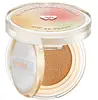
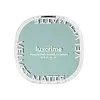
Barenbliss True Beauty Inside Cushion Versus Luxcrime Perfecting Cover Cushion Velvet Matte SPF 50 PA +++


What's inside
What's inside
 Key Ingredients
Benefits
Concerns
Ingredients Side-by-side
Water
Skin ConditioningEthylhexyl Methoxycinnamate
UV Absorber


Dimethicone
Emollient

Methylpropanediol
SolventDicaprylyl Carbonate
EmollientCyclopentasiloxane
Emollient
Trimethylsiloxysilicate
Emollient
Silica
Abrasive


Diethylamino Hydroxybenzoyl Hexyl Benzoate
UV Filter
Cetyl PEG/PPG-10/1 Dimethicone
Emulsifying
Isododecane
EmollientBis-Ethylhexyloxyphenol Methoxyphenyl Triazine
UV Absorber
Cyclohexasiloxane
Emollient
Sodium Chloride
MaskingDimethicone/Vinyl Dimethicone Crosspolymer
Skin Conditioning
Polyglyceryl-4 Isostearate
Emulsifying

Disteardimonium Hectorite
StabilisingTriethoxycaprylylsilane
Isopropyl Titanium Triisostearate
Emollient
Parfum
Masking


1,2-Hexanediol
Skin Conditioning
Alumina
Abrasive
Calendula Officinalis Extract
Skin Conditioning

Chrysanthellum Indicum Extract
Skin Conditioning
Hibiscus Mutabilis Flower Extract
Skin ConditioningCamellia Japonica Flower Extract
EmollientMagnolia Sieboldii Extract
Skin ConditioningPropolis Extract
Skin Conditioning

Butylene Glycol
Humectant
Glyceryl Caprylate
EmollientHydroxyacetophenone
Antioxidant
Caprylhydroxamic Acid
Sodium Hyaluronate
Humectant

EDTA
CI 77891
Cosmetic ColorantCI 77492
Cosmetic ColorantCI 77491
Cosmetic ColorantCI 77499
Cosmetic ColorantWater, Ethylhexyl Methoxycinnamate, Dimethicone, Methylpropanediol, Dicaprylyl Carbonate, Cyclopentasiloxane, Trimethylsiloxysilicate, Silica, Diethylamino Hydroxybenzoyl Hexyl Benzoate, Cetyl PEG/PPG-10/1 Dimethicone, Isododecane, Bis-Ethylhexyloxyphenol Methoxyphenyl Triazine, Cyclohexasiloxane, Sodium Chloride, Dimethicone/Vinyl Dimethicone Crosspolymer, Polyglyceryl-4 Isostearate, Disteardimonium Hectorite, Triethoxycaprylylsilane, Isopropyl Titanium Triisostearate, Parfum, 1,2-Hexanediol, Alumina, Calendula Officinalis Extract, Chrysanthellum Indicum Extract, Hibiscus Mutabilis Flower Extract, Camellia Japonica Flower Extract, Magnolia Sieboldii Extract, Propolis Extract, Butylene Glycol, Glyceryl Caprylate, Hydroxyacetophenone, Caprylhydroxamic Acid, Sodium Hyaluronate, EDTA, CI 77891, CI 77492, CI 77491, CI 77499
Water
Skin ConditioningCI 77891
Cosmetic ColorantPolymethylsilsesquioxane
Ethylhexyl Methoxycinnamate
UV Absorber
Cyclopentasiloxane
Emollient
Silica
Abrasive
Trimethylsiloxysilicate
Emollient
Isododecane
EmollientEthylhexyl Salicylate
UV Absorber
Butylene Glycol
Humectant
Lauryl PEG-10 Tris(Trimethylsiloxy)Silylethyl Dimethicone
Emulsifying
Niacinamide
Smoothing



Butylene Glycol Dicaprylate/Dicaprate
EmollientPhenyl Trimethicone
Skin Conditioning
Pentylene Glycol
Skin Conditioning
Hdi/Trimethylol Hexyllactone Crosspolymer
Disteardimonium Hectorite
StabilisingC12-15 Alkyl Benzoate
AntimicrobialPEG-9 Polydimethylsiloxyethyl Dimethicone
Emulsifying
PEG-10 Dimethicone
Skin Conditioning
Magnesium Sulfate
Phenoxyethanol
Preservative
Triethoxycaprylylsilane
Polypropylsilsesquioxane
Copernicia Cerifera Wax
Octyldodecanol
Emollient
Polymethyl Methacrylate
Stearic Acid
Cleansing
Alumina
Abrasive
Ethylhexylglycerin
Skin ConditioningPropylene Carbonate
SolventCeteareth-20
Cleansing
Polyglyceryl-4 Isostearate
Emulsifying
Steareth-100
Gel FormingDisodium EDTA
Isopropyl Titanium Triisostearate
Emollient
Caprylyl Glycol
Emollient
Hexylene Glycol
EmulsifyingBHT
Antioxidant
Tocopherol
Antioxidant
Caffeine
Skin Conditioning
Hydrogenated Lecithin
Emulsifying
Cetearyl Alcohol
Emollient
Ceramide NP
Skin Conditioning
Ceramide Ns
Skin Conditioning
Cholesterol
Emollient
Phytosphingosine
Skin Conditioning
Ceramide AP
Skin Conditioning
Ceramide As
Skin Conditioning
Ceramide EOP
Skin Conditioning
Water, CI 77891, Polymethylsilsesquioxane, Ethylhexyl Methoxycinnamate, Cyclopentasiloxane, Silica, Trimethylsiloxysilicate, Isododecane, Ethylhexyl Salicylate, Butylene Glycol, Lauryl PEG-10 Tris(Trimethylsiloxy)Silylethyl Dimethicone, Niacinamide, Butylene Glycol Dicaprylate/Dicaprate, Phenyl Trimethicone, Pentylene Glycol, Hdi/Trimethylol Hexyllactone Crosspolymer, Disteardimonium Hectorite, C12-15 Alkyl Benzoate, PEG-9 Polydimethylsiloxyethyl Dimethicone, PEG-10 Dimethicone, Magnesium Sulfate, Phenoxyethanol, Triethoxycaprylylsilane, Polypropylsilsesquioxane, Copernicia Cerifera Wax, Octyldodecanol, Polymethyl Methacrylate, Stearic Acid, Alumina, Ethylhexylglycerin, Propylene Carbonate, Ceteareth-20, Polyglyceryl-4 Isostearate, Steareth-100, Disodium EDTA, Isopropyl Titanium Triisostearate, Caprylyl Glycol, Hexylene Glycol, BHT, Tocopherol, Caffeine, Hydrogenated Lecithin, Cetearyl Alcohol, Ceramide NP, Ceramide Ns, Cholesterol, Phytosphingosine, Ceramide AP, Ceramide As, Ceramide EOP
Ingredients Explained
These ingredients are found in both products.
Ingredients higher up in an ingredient list are typically present in a larger amount.
Alumina (aka aluminum oxide) is an inorganic mineral powder refined from bauxite that works as a quiet workhorse in a formula.
It shows up often as an abrasive, absorbent, anticaking, bulking, and viscosity-controlling agent.
One of its most common jobs is acting as a pigment carrier and dispersant.
Alumina platelets are often blended with inorganic sunscreens like Titanium Dioxide (or with colorants) and then coated with a silicone such as Triethoxycaprylylsilane so the pigment spreads evenly and smoothly.
In makeup, it can also double as a light-diffusing powder or oil absorber to keep formulas from looking greasy.
The Cosmetic Ingredient Review Expert Panel has concluded alumina to be safe in present practices of use and concentration.
They note it's a stable, oxidized compound and scientific research has failed to establish links to health issues.
Concentrations vary depending on the product:
Learn more about AluminaButylene Glycol (or BG) is used within cosmetic products for a few different reasons:
Overall, Butylene Glycol is a safe and well-rounded ingredient that works well with other ingredients.
Though this ingredient works well with most skin types, some people with sensitive skin may experience a reaction such as allergic rashes, closed comedones, or itchiness.
Learn more about Butylene GlycolCi 77891 is a white pigment from Titanium dioxide. It is naturally found in minerals such as rutile and ilmenite.
It's main function is to add a white color to cosmetics. It can also be mixed with other colors to create different shades.
Ci 77891 is commonly found in sunscreens due to its ability to block UV rays.
Learn more about CI 77891Cyclopentasiloxane (D5) is a lightweight silicone that mostly acts as an emollient and solvent in cosmetics. Its the reason your products feel silky, fast-spreading, and non-greasy.
Since D5 is volatile, it does its thing and then evaporates off the skin quickly.
The safety profile of this ingredient is reassuring; the US CIR Expert Panel concluded D5 is safe as used in cosmetics and Health Canada concluded that D5 is not harmful to human health or the environment as currently used in cosmetics
There's a study that people mention about D5 in a rat study showing tumors. This study is related to long-term inhalation of high D5 levels.
Regulatory bodies have judged this study to be not applicable in topical skincare since skin absorption of D5 is very low and we're not really inhaling huge amounts of D5.
The only restriction for this ingredient is environmental. The European Chemicals Agency (ECHA) restricted D5 in wash-off cosmetics at or above 0.1% due to their persistence in water.
Learn more about CyclopentasiloxaneDisteardimonium Hectorite comes from the clay mineral named hectorite. It is used to add thickness to a product.
It can also help stabilize a product by helping to disperse other ingredients.
Hectorite is a rare, white clay mineral.
Learn more about Disteardimonium HectoriteThis ingredient is also known as Octinoxate and is one of the oldest and most widely used chemical UV filters in skincare.
It has a simple job: soap up UVB radiation (290-320 nm), the wavelengths responsible for sunburn and a big chunk of long-term sun damage.
In formulas, it's always paired with a separate UVA filter because octinoxate solely protects skin from UVB.
Because it's an oil-soluble liquid, it's easy to blend into the oil phase of lotions/creams and gives a cosmetically elegant feel.
The one quirk about formulating this ingredient is photostability; the molecule slowly changes shape into a less effective version when sunlight hits it. So the longer you're in the sun, the weaker its protection gets. The drop can be more than 30% in some formulas.
It also doesn't play nice with Avobenzone (the common UVA filter) since avobenzone destabilizes octinoxate and the two degrade each other. But don't worry: brands have solved this issue by adding photostabilizers like Tinosorb S to prevent degradation and keep SPF stable under heavy UV exposure.
The maximum allowed level is 10% in the EU and Australia, 7.5% in the US and Canada, and 20% in Japan.
The Cosmetic Ingredient Review Panel has concluded this ingredient to be safe in cosmetics up to 10%.
One last thing worth knowing for context:
Octinoxate has been the subject of ongoing review in Europe where the Scientific Committee on Consumer Safety's (SCCS) 2025 final opinion is that this ingredient is an endocrine-active substance.
Lab and animal studies suggest it can act a bit like a hormone in the body (mildly mimicking estrogen and slightly blocking male hormones). It's important to know this hasn't really been shown to happen in everyday human use.
This ingredient is also banned in Hawaii over coral reef concerns.
Learn more about Ethylhexyl MethoxycinnamateIsododecane is a fragrance, emollient, and solvent.
As an emollient, it helps your skin stay soft and hydrated. Emollients help trap moisture into your skin.
Isododecane's role as a solvent makes it a great texture enhancer. It spreads smoothly on skin and does not leave a sticky feeling behind. Isododecane also helps prevent color transfer in makeup products.
Isododecane is not absorbed into skin.
The chemical name for this ingredient is 2,2,4,6,6-PENTAMETHYLHEPTANE.
Learn more about IsododecaneThis ingredient is an synthetic emollient, emulsifier, and used as a surface treatment for pigment particles (like iron oxides or titanium dioxide).
The “triisostearate” part of this ingredient is an ester derived from isostearic acid, a long-chain fatty acid.
It "wraps" these ingredients in a form of slippery jacket so they disperse more evenly in oils, glide better on skin, and stick longer without smudging.
Human repeat insult patch tests on foundations containing this ingredient found no sensitization concerns.
Since isostearic acid is a C18 fatty acid, it falls within the carbon chain length that Malassezia can potentially metabolize. This is why this ingredient may not be fungal acne safe.
Learn more about Isopropyl Titanium TriisostearatePolyglyceryl-4 Isostearate is a plant-derived, PEG-free emulsifier.
It's made by hooking isostearic acid onto a chain of glycerin units to give it a water-loving "head" and oil-loving "tail". This allows it to keep the oil and water mixed in a formula.
The highest reported concentration is about 24% in eye makeup but most suppliers recommend a level below 10%.
It has a clean track record for safety and found to be non-irritating.
Because it is an ester of a C18 fatty acid, Malassezia can potentially metabolize it (it sits in the C11-24 range that Malassezia likes). Therefore, this ingredient may not be fungal acne safe.
Learn more about Polyglyceryl-4 IsostearateSilica, also known as silicon dioxide, is a naturally occurring mineral. It is used as a fine, spherical, and porous powder in cosmetics.
Though it has exfoliant properties, the function of silica varies depending on the product.
The unique structure of silica enhances the spreadability and adds smoothness, making it a great texture enhancer.
It is also used as an active carrier, emulsifier, and mattifier due to its ability to absorb excess oil.
In some products, tiny microneedles called spicules are made from silica or hydrolyzed sponge. When you rub them in, they lightly polish away dead skin layers and enhance the penetration of active ingredients.
Learn more about SilicaTriethoxycaprylylsilane is a silicon-based surface modifier that makes sunscreens feel silky and makeup stay put.
Its main job is to coat mineral particles like titanium dioxide, zinc oxide, and color pigments in a thin, oily layer so they spread smoothly, don't clump, and stick to skin better.
This ingredient is typically used at low levels (up to 2.5% in eyeshadow and 1% in lipstick).
Learn more about TriethoxycaprylylsilaneThis silicone is an emollient. Emollients create a thin film on the skin to prevent moisture from escaping.
It is not soluble in water and helps increase water-resistance in products.
According to a manufacturer, it can blend seamlessly with silicone oils, such as Cyclopentasiloxane.
Learn more about TrimethylsiloxysilicateWater. It's the most common cosmetic ingredient of all. You'll usually see it at the top of ingredient lists, meaning that it makes up the largest part of the product.
So why is it so popular? Water most often acts as a solvent - this means that it helps dissolve other ingredients into the formulation.
You'll also recognize water as that liquid we all need to stay alive. If you see this, drink a glass of water. Remember to stay hydrated!
Learn more about Water

