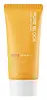
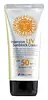
A'Pieu Pure Block Daily Sun Cream SPF45 PA+++ Versus 3W Clinic Intensive UV Sunblock Cream SPF50+ PA+++
This chemical sunscreen covers the full UV range and blocks ~98% of UVB at SPF 45.
This hybrid sunscreen covers the full UV range and blocks ~98% of UVB at SPF 50.

What's inside
What's inside
 Key Ingredients
Benefits
Concerns
Ingredients Side-by-side
Water
Skin ConditioningEthylhexyl Methoxycinnamate
UV Absorber


Ethylhexyl Salicylate
UV Absorber
Butylene Glycol
Humectant

Phenylbenzimidazole Sulfonic Acid
UV Absorber
Caprylic/Capric Triglyceride
Masking
Butyl Methoxydibenzoylmethane
UV Absorber
Bis-Ethylhexyloxyphenol Methoxyphenyl Triazine
Skin Conditioning
Methyl Methacrylate Crosspolymer

Glyceryl Stearate
Emollient

Citrus Aurantifolia Flower Extract
AstringentCetearyl Olivate
Sea Water
HumectantPrunus Persica Flower Extract
MoisturisingCetearyl Alcohol
Emollient



Nylon-12
Sorbitan Olivate
Emulsifying
Sodium Hydroxide
BufferingPyrus Malus Flower Extract
Skin ConditioningDimethicone
Emollient

Polyacrylate-13
Panthenol
Skin Conditioning

Polyisobutene
PEG-100 Stearate
Surfactant
Tocopheryl Acetate
Antioxidant


Punica Granatum Flower Extract
Skin Conditioning
Sorbitan Stearate
Emulsifying
Oryza Sativa Bran Extract
Skin Conditioning
Malpighia Glabra Fruit Extract
Skin ConditioningAloe Barbadensis Leaf Extract
Emollient
Eucalyptus Globulus Leaf Extract
Perfuming
Rosa Damascena Flower Water
Masking
Prunus Avium Flower Extract
Skin ConditioningCitrus Aurantium Dulcis Flower Extract
Skin ConditioningCitrullus Lanatus Fruit Extract
Skin Conditioning
Sorbitan Isostearate
Emulsifying
Polysorbate 20
Emulsifying
BHT
Antioxidant
Disodium EDTA
1,2-Hexanediol
Skin Conditioning
Ethylhexylglycerin
Skin ConditioningCaprylyl Glycol
Emollient
Parfum
Masking
Water, Ethylhexyl Methoxycinnamate, Ethylhexyl Salicylate, Butylene Glycol, Phenylbenzimidazole Sulfonic Acid, Caprylic/Capric Triglyceride, Butyl Methoxydibenzoylmethane, Bis-Ethylhexyloxyphenol Methoxyphenyl Triazine, Methyl Methacrylate Crosspolymer, Glyceryl Stearate, Citrus Aurantifolia Flower Extract, Cetearyl Olivate, Sea Water, Prunus Persica Flower Extract, Cetearyl Alcohol, Nylon-12, Sorbitan Olivate, Sodium Hydroxide, Pyrus Malus Flower Extract, Dimethicone, Polyacrylate-13, Panthenol, Polyisobutene, PEG-100 Stearate, Tocopheryl Acetate, Punica Granatum Flower Extract, Sorbitan Stearate, Oryza Sativa Bran Extract, Malpighia Glabra Fruit Extract, Aloe Barbadensis Leaf Extract, Eucalyptus Globulus Leaf Extract, Rosa Damascena Flower Water, Prunus Avium Flower Extract, Citrus Aurantium Dulcis Flower Extract, Citrullus Lanatus Fruit Extract, Sorbitan Isostearate, Polysorbate 20, BHT, Disodium EDTA, 1,2-Hexanediol, Ethylhexylglycerin, Caprylyl Glycol, Parfum
Water
Skin ConditioningEthylhexyl Methoxycinnamate
UV Absorber
Glycerin
Humectant
Ethylhexyl Salicylate
UV Absorber
Paraffinum Liquidum
Emollient
Titanium Dioxide
Cosmetic Colorant
Isoamyl P-Methoxycinnamate
UV Absorber
Diethylamino Hydroxybenzoyl Hexyl Benzoate
UV Filter
Cetyl Alcohol
Emollient
Zinc Oxide
Cosmetic Colorant
Stearic Acid
Cleansing
Glyceryl Stearate
Emollient
Polysorbate 60
Emulsifying
Beeswax
Emulsion Stabilising
Ethylhexyl Triazone
UV Absorber
PEG-100 Stearate
Surfactant
Butylene Glycol
Humectant
Aloe Barbadensis Leaf Extract
Emollient
Morus Alba Bark Extract
Skin ConditioningPanax Ginseng Root Extract
Emollient
Phenoxyethanol
Preservative
Betaine
Humectant
Dimethicone
Emollient
Carbomer
Emulsion StabilisingTriethanolamine
BufferingDisodium EDTA
CI 19140
Cosmetic ColorantCI 15985
Cosmetic ColorantParfum
Masking
Water, Ethylhexyl Methoxycinnamate, Glycerin, Ethylhexyl Salicylate, Paraffinum Liquidum, Titanium Dioxide, Isoamyl P-Methoxycinnamate, Diethylamino Hydroxybenzoyl Hexyl Benzoate, Cetyl Alcohol, Zinc Oxide, Stearic Acid, Glyceryl Stearate, Polysorbate 60, Beeswax, Ethylhexyl Triazone, PEG-100 Stearate, Butylene Glycol, Aloe Barbadensis Leaf Extract, Morus Alba Bark Extract, Panax Ginseng Root Extract, Phenoxyethanol, Betaine, Dimethicone, Carbomer, Triethanolamine, Disodium EDTA, CI 19140, CI 15985, Parfum
Reviews
Ingredients Explained
These ingredients are found in both products.
Ingredients higher up in an ingredient list are typically present in a larger amount.
Aloe Barbadensis Leaf Extract is a botanical extract pulled from the leaves of aloe vera and one of the most studied plant ingredients in cosmetics.
The inner leaf gel it comes from is mostly water (~99-99.5%) and the remaining fraction is made up of pretty good stuff: polysaccharides, vitamins, phenolics, and enzymes.
Its headline job is hydration.
The star polysaccharide in aloe, acemannan, is a humectant that retains moisture and helps reduce trans-epidermal water loss.
Aloe also has real soothing credentials; it contains anti-inflammatory compounds like bradykinase and C-glucosyl chromone that help calm irritation and redness.
On the repair side, lab work shows that acemannan wakes up your skin's repair cells (fibroblasts), prompting them to multiply and speed up healing.
There's some human data for cosmetic benefit too: a cream containing 10% Aloe Barbadensis leaf extract improved skin hydration and elasticity in a real-use study.
Safety-wise, this ingredient is well-regarded with just one rare downside; there have been some case reports of acute eczema, contact urticaria, and dermatitis in people who applied aloe-derived ingredients topically. Those with a known aloe or Liliaceae sensitivity should patch test.
Typical use levels range widely, from under 1% up to 90%+ depending on the format and the effect you are after.
Learn more about Aloe Barbadensis Leaf ExtractButylene Glycol (or BG) is used within cosmetic products for a few different reasons:
Overall, Butylene Glycol is a safe and well-rounded ingredient that works well with other ingredients.
Though this ingredient works well with most skin types, some people with sensitive skin may experience a reaction such as allergic rashes, closed comedones, or itchiness.
Learn more about Butylene GlycolDimethicone is a type of synthetic silicone created from natural materials such as quartz. It is also known as polydimethylsiloxane.
What it does:
Dimethicone comes in different viscosities:
Depending on the viscosity, dimethicone has different properties.
Ingredients lists don't always show which type is used, so we recommend reaching out to the brand if you have questions about the viscosity.
This ingredient is unlikely to cause irritation because it does not get absorbed into skin. However, people with silicone allergies should be careful about using this ingredient.
Note: Dimethicone may contribute to pilling. This is because it is not oil or water soluble, so pilling may occur when layered with products. When mixed with heavy oils in a formula, the outcome is also quite greasy.
Learn more about DimethiconeDisodium EDTA is a chelating agent. It grabs onto and deactivates metal ions that sneak into your products from water, packaging, or air.
This ingredient mainly works behind the scenes and helps with:
On top of that, this ingredient can counteract the effects of hard water by binding to the minerals in it.
One thing worth knowing is that Disodium EDTA has been shown to be a mild penetration enhancer. It can help other ingredients absorb into skin more effectively which can be a double-edged sword (great for actives, but can also make the active too strong if you have sensitive skin).
Clinical patch testing showed no significant skin irritation at typical use concentrations and minimal dermal absorption.
You'll most likely see this ingredient near the end of an ingredient list. It's typically found in concentrations less than 1%.
Learn more about Disodium EDTAThis ingredient is also known as Octinoxate and is one of the oldest and most widely used chemical UV filters in skincare.
It has a simple job: soap up UVB radiation (290-320 nm), the wavelengths responsible for sunburn and a big chunk of long-term sun damage.
In formulas, it's always paired with a separate UVA filter because octinoxate solely protects skin from UVB.
Because it's an oil-soluble liquid, it's easy to blend into the oil phase of lotions/creams and gives a cosmetically elegant feel.
The one quirk about formulating this ingredient is photostability; the molecule slowly changes shape into a less effective version when sunlight hits it. So the longer you're in the sun, the weaker its protection gets. The drop can be more than 30% in some formulas.
It also doesn't play nice with Avobenzone (the common UVA filter) since avobenzone destabilizes octinoxate and the two degrade each other. But don't worry: brands have solved this issue by adding photostabilizers like Tinosorb S to prevent degradation and keep SPF stable under heavy UV exposure.
The maximum allowed level is 10% in the EU and Australia, 7.5% in the US and Canada, and 20% in Japan.
The Cosmetic Ingredient Review Panel has concluded this ingredient to be safe in cosmetics up to 10%.
One last thing worth knowing for context:
Octinoxate has been the subject of ongoing review in Europe where the Scientific Committee on Consumer Safety's (SCCS) 2025 final opinion is that this ingredient is an endocrine-active substance.
Lab and animal studies suggest it can act a bit like a hormone in the body (mildly mimicking estrogen and slightly blocking male hormones). It's important to know this hasn't really been shown to happen in everyday human use.
This ingredient is also banned in Hawaii over coral reef concerns.
Learn more about Ethylhexyl MethoxycinnamateEthylhexyl Salicylate (also called Octisalate or Octyl Salicylate) is an oil-soluble organic UV filter that's been used in sunscreen since the 1950's.
It absorbs UVB light in the 280-320 nm range with a peak absorbance around 306 nm.
You'll often see it paired with other UV filters to boost overall SPF because octisalate is a fairly week filter on its own.
The reason you'll see it so often is because it can help solubilize and stabilize the trickier filters like oxybenzone and avobenzone.
Unlike these filters, octisalate has pretty good photostability and doesn't create skin-damaging free radicals when exposed to sunlight.
The fatty-alcohol part of the molecule also gives it a light, emollient feel so it doubles as a nice texture enhancer.
Usage levels vary around the world:
Safety-wise, this ingredient has a pretty reassuring track record. The EU's Scientific Committee on Consumer Products (SCCP) found very low skin penetration in human skin tests and negative results for irritation, phototoxicity, and photoallergy.
The real-world allergy risk is pretty low too; a 2012 European study of 1,031 people recorded only 2 reactions to it (a rate of 0.19%).
You might have seen scary headlines about sunscreen getting into your blood.
In 2019, the FDA found that several chemical filters can absorb through the skin and show up in the bloodstream at small but measurable levels.
Here's the important part: these tiny levels are just a cutoff the FDA uses to decide which ingredients need more testing and doesn't mean anything harmful was found.
The researchers were clear that the results are no reason to stop wearing sunscreen.
Learn more about Ethylhexyl SalicylateGlyceryl Stearate is made by reacting glycerin with stearic acid (typically sourced from plant oils like palm or coconut). It's an emulsifier, emollient, and mild occlusive.
Emulsifiers help ingredients like oil and water stay mixed so your formula stays nicely blended and uniform in texture.
This ingredient is typically used in concentrations between 1-10%. Studies have found it to be non-sensitizing, non-phototoxic, and non-photoallergenic.
A close cousin of this ingredient is Glyceryl Stearate SE ("self-emulsifying"). This just has a small amount of sodium or potassium stearate added so it can emulsify without a co-emulsifier.
Since this ingredient is an ester of a C18 fatty acid, it may not be fungal acne safe. The Malassezia yeast can potentially metabolize within the C11-C24 range.
Fun fact: The human body also creates Glyceryl Stearate naturally.
Learn more about Glyceryl StearateParfum is a catch-all term for an ingredient or more that is used to give a scent to products.
Also called "fragrance", this ingredient can be a blend of hundreds of chemicals or plant oils. This means every product with "fragrance" or "parfum" in the ingredients list is a different mixture.
For instance, Habanolide is a proprietary trade name for a specific aroma chemical. When used as a fragrance ingredient in cosmetics, most aroma chemicals fall under the broad labeling category of “FRAGRANCE” or “PARFUM” according to EU and US regulations.
The term 'parfum' or 'fragrance' is not regulated in many countries. In many cases, it is up to the brand to define this term.
For instance, many brands choose to label themselves as "fragrance-free" because they are not using synthetic fragrances. However, their products may still contain ingredients such as essential oils that are considered a fragrance by INCI standards.
One example is Calendula flower extract. Calendula is an essential oil that still imparts a scent or 'fragrance'.
Depending on the blend, the ingredients in the mixture can cause allergies and sensitivities on the skin. Some ingredients that are known EU allergens include linalool and citronellol.
Parfum can also be used to mask or cover an unpleasant scent.
The bottom line is: not all fragrances/parfum/ingredients are created equally. If you are worried about fragrances, we recommend taking a closer look at an ingredient. And of course, we always recommend speaking with a professional.
Learn more about ParfumPeg-100 Stearate is an emollient and emulsifier. As an emollient, it helps keep skin soft by trapping moisture in. On the other hand, emulsifiers help prevent oil and water from separating in a product.
PEGS are a hydrophilic polyether compound . There are 100 ethylene oxide monomers in Peg-100 Stearate. Peg-100 Stearate is polyethylene glycol ester of stearic acid.
Water. It's the most common cosmetic ingredient of all. You'll usually see it at the top of ingredient lists, meaning that it makes up the largest part of the product.
So why is it so popular? Water most often acts as a solvent - this means that it helps dissolve other ingredients into the formulation.
You'll also recognize water as that liquid we all need to stay alive. If you see this, drink a glass of water. Remember to stay hydrated!
Learn more about Water

