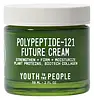
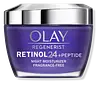
Youth To The People Polypeptide-121 Future Cream with Peptides and Ceramides Versus Olay Regenerist Retinol 24 + Peptide Night Moisturizer
This anti-aging moisturizer is formulated around Hydrolyzed Hyaluronic Acid and Acetyl Tetrapeptide-9 to soften the look of wrinkles and hydrate skin.
This anti-aging night moisturizer is formulated around Retinol and Niacinamide to soften the look of wrinkles and refine skin texture.

What's inside
What's inside
 Key Ingredients
Benefits
Concerns
Ingredients Side-by-side
Water
Skin ConditioningDicaprylyl Carbonate
EmollientHydrolyzed Hyaluronic Acid
Humectant



Trimethylolpropane Tricaprylate/Tricaprate
EmollientTridecyl Trimellitate
EmollientPropanediol
Solvent
Sh-Polypeptide-121
Skin Conditioning
Polyglyceryl-3 Methylglucose Distearate
Emulsifying

Panthenol
Skin Conditioning

Niacinamide
Smoothing






Proline
Skin Conditioning
Tocopheryl Acetate
Antioxidant

Aloe Barbadensis Leaf Juice
Skin Conditioning
Hydrolyzed Cannabis Sativa Seed Extract
Skin ConditioningHydrolyzed Rice Protein
Skin ConditioningHydrolyzed Pea Protein
EmollientSalvia Hispanica Seed Extract
Emollient
Acetyl Tetrapeptide-11
Skin Conditioning
Acetyl Tetrapeptide-9
Skin Conditioning
Acetyl Tetrapeptide-2
Skin Conditioning
Hibiscus Sabdariffa Fruit Extract
Ammonium Acryloyldimethyltaurate/Beheneth-25 Methacrylate Crosspolymer
Emulsion StabilisingHydrolyzed Linseed Seed
HumectantCastor Oil/Ipdi Copolymer

Ceramide AP
Skin Conditioning
Ceramide NP
Skin Conditioning
Cetearyl Alcohol
Emollient




Cetearyl Glucoside
Emulsifying
Glycerin
Humectant
Hydrolyzed Sodium Hyaluronate
Skin Conditioning
Coco-Caprylate/Caprate
Emollient
Dilinoleic Acid
Emollient
Benzyl Alcohol
Perfuming





Zingiber Officinale Root Extract
Masking
Bisabolol
Antioxidant
Caprylyl Glycol
Emollient
Carbomer
Emulsion StabilisingDimethyl Isosorbide
SolventDipropylene Glycol
HumectantErythritol
Humectant
Ethylhexylglycerin
Skin ConditioningGlucose
Humectant
1,2-Hexanediol
Skin Conditioning
Trisodium Ethylenediamine Disuccinate
ChelatingGlyceryl Stearate
Emollient
Phytosphingosine
Skin Conditioning
Polyacrylate Crosspolymer-6
Emulsion StabilisingPolysorbate 20
Emulsifying
Caprylhydroxamic Acid
ChelatingPotassium Sorbate
Preservative
Glycine
Buffering
Hydroxyacetophenone
Antioxidant
Sodium Benzoate
Masking
T-Butyl Alcohol
Perfuming
Citric Acid
Buffering
Sodium Citrate
BufferingSodium Lactate
Buffering
Triheptanoin
Skin ConditioningXanthan Gum
EmulsifyingWater, Dicaprylyl Carbonate, Hydrolyzed Hyaluronic Acid, Trimethylolpropane Tricaprylate/Tricaprate, Tridecyl Trimellitate, Propanediol, Sh-Polypeptide-121, Polyglyceryl-3 Methylglucose Distearate, Panthenol, Niacinamide, Proline, Tocopheryl Acetate, Aloe Barbadensis Leaf Juice, Hydrolyzed Cannabis Sativa Seed Extract, Hydrolyzed Rice Protein, Hydrolyzed Pea Protein, Salvia Hispanica Seed Extract, Acetyl Tetrapeptide-11, Acetyl Tetrapeptide-9, Acetyl Tetrapeptide-2, Hibiscus Sabdariffa Fruit Extract, Ammonium Acryloyldimethyltaurate/Beheneth-25 Methacrylate Crosspolymer, Hydrolyzed Linseed Seed, Castor Oil/Ipdi Copolymer, Ceramide AP, Ceramide NP, Cetearyl Alcohol, Cetearyl Glucoside, Glycerin, Hydrolyzed Sodium Hyaluronate, Coco-Caprylate/Caprate, Dilinoleic Acid, Benzyl Alcohol, Zingiber Officinale Root Extract, Bisabolol, Caprylyl Glycol, Carbomer, Dimethyl Isosorbide, Dipropylene Glycol, Erythritol, Ethylhexylglycerin, Glucose, 1,2-Hexanediol, Trisodium Ethylenediamine Disuccinate, Glyceryl Stearate, Phytosphingosine, Polyacrylate Crosspolymer-6, Polysorbate 20, Caprylhydroxamic Acid, Potassium Sorbate, Glycine, Hydroxyacetophenone, Sodium Benzoate, T-Butyl Alcohol, Citric Acid, Sodium Citrate, Sodium Lactate, Triheptanoin, Xanthan Gum
Water
Skin ConditioningDimethicone
Emollient
Glycerin
Humectant
Tapioca Starch
Dimethicone Crosspolymer
Emulsion Stabilising
Retinol
Skin Conditioning
Retinyl Propionate
Skin Conditioning
Niacinamide
Smoothing
Palmitoyl Pentapeptide-4
Skin Conditioning
Polyacrylamide
C13-14 Isoparaffin
Emollient
DMDM Hydantoin
Preservative
Polysorbate 20
Emulsifying
Laureth-4
Emulsifying
Acrylates/C10-30 Alkyl Acrylate Crosspolymer
Emulsion StabilisingLaureth-7
EmulsifyingDimethiconol
Emollient
Polymethylsilsesquioxane
Aminomethyl Propanol
BufferingTitanium Dioxide
Cosmetic Colorant

Disodium EDTA
ChelatingIodopropynyl Butylcarbamate
Preservative
Caprylic/Capric Triglyceride
Masking
Water, Dimethicone, Glycerin, Tapioca Starch, Dimethicone Crosspolymer, Retinol, Retinyl Propionate, Niacinamide, Palmitoyl Pentapeptide-4, Polyacrylamide, C13-14 Isoparaffin, DMDM Hydantoin, Polysorbate 20, Laureth-4, Acrylates/C10-30 Alkyl Acrylate Crosspolymer, Laureth-7, Dimethiconol, Polymethylsilsesquioxane, Aminomethyl Propanol, Titanium Dioxide, Disodium EDTA, Iodopropynyl Butylcarbamate, Caprylic/Capric Triglyceride
Reviews
Ingredients Explained
These ingredients are found in both products.
Ingredients higher up in an ingredient list are typically present in a larger amount.
Glycerin (or glycerol) is a compound naturally found in your skin. It's a powerhouse humectant that pulls water into the stratum corneum.
Topically, glycerin does several things at once:
Your skin makes glycerin on its own (mostly from sebaceous oil breakdown) and shuttles it to your outermost layer of skin, or your epidermis, via aquaporin-3.
Aquaporin-3 is a transporter that is essential for normal skin hydration, elasticity, and repair. Interestingly, mice lacking in AQP3 have dry and less elastic skin that can be fully corrected with glycerin.
This ingredient is non-irritating, plays well with almost every ingredient, and works across all skin types. Typical use is anywhere between 3-10% but can go up to 79% in some leave-on products.
Just know very high concentrations (>40%) can feel tacky in low humidity.
Glycerin is the name for this ingredient in American English. British English uses Glycerol/Glycerine.
Learn more about GlycerinNiacinamide is a multitasking form of vitamin B3 that strengthens the skin barrier, reduces pores and dark spots, regulates oil, and improves signs of aging.
And the best part? It's gentle and well-tolerated by most skin types, including sensitive and reactive skin.
You might have heard of "niacin flush", or the reddening of skin that causes itchiness. Niacinamide has not been found to cause this.
In very rare cases, some individuals may not be able to tolerate niacinamide at all or experience an allergic reaction to it.
If you are experiencing flaking, irritation, and dryness with this ingredient, be sure to double check all your products as this ingredient can be found in all categories of skincare.
When incorporating niacinamide into your routine, look out for concentration amounts. Typically, 5% niacinamide provides benefits such as fading dark spots. However, if you have sensitive skin, it is better to begin with a smaller concentration.
When you apply niacinamide to your skin, your body converts it into nicotinamide adenine dinucleotide (NAD). NAD is an essential coenzyme that is already found in your cells as "fuel" and powers countless biological processes.
In your skin, NAD helps repair cell damage, produce new healthy cells, support collagen production, strengthen the skin barrier, and fight environmental stressors (like UV and pollution).
Our natural NAD levels start to decline with age, leading to slower skin repair, visible aging, and a weaker skin barrier. By providing your skin niacinamide, you're recharging your skin's NAD levels. This leads to stronger, healthier, and younger looking skin.
Another name for vitamin B3 is nicotinamide. This vitamin is water-soluble and our bodies don't store it. We obtain Vitamin B3 from either food or skincare. Meat, fish, wheat, yeast, and leafy greens contain vitamin B3.
The type of niacinamide used in skincare is synthetically created.
Learn more about NiacinamidePolysorbate 20 is a gentle, water-soluble emulsifier and mild surfactant. It stops oil and water from separating to keep your formulas blended and stable.
It also acts as a mild penetration enhancer by helping active ingredients absorb slightly better.
The common safety discussion around this ingredient involves a manufacturing byproduct called 1,4-dioxane.
Trace amounts can form during production but the EU's Scientific Committee on Consumer Safety has concluded that levels at/below 10 ppm in finished products are safe (commercial products consistently fall within acceptable margins).
True allergic reactions are uncommon and the CIR Expert Panel has confirmed this ingredient to be safe as used in cosmetics.
Because it is derived from lauric acid, it may not be fungal acne safe.
Learn more about Polysorbate 20Water. It's the most common cosmetic ingredient of all. You'll usually see it at the top of ingredient lists, meaning that it makes up the largest part of the product.
So why is it so popular? Water most often acts as a solvent - this means that it helps dissolve other ingredients into the formulation.
You'll also recognize water as that liquid we all need to stay alive. If you see this, drink a glass of water. Remember to stay hydrated!
Learn more about Water

