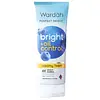
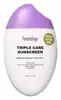
Wardah Perfect Bright Creamy Foam Bright + Oil Control Versus Facetology Triple Care Sunscreen SPF 40
This hybrid sunscreen covers the full UV range and blocks ~98% of UVB at SPF 40.

What's inside
What's inside
 Key Ingredients
Benefits
Concerns
Ingredients Side-by-side
Myristic Acid
Cleansing




Glycerin
Humectant

Water
Skin ConditioningPropylene Glycol
Humectant
Potassium Hydroxide
BufferingStearic Acid
Cleansing
Glycol Distearate
Emollient
Lauric Acid
Cleansing
Glyceryl Stearate
Emollient
Decyl Glucoside
Cleansing
Olive Oil PEG-7 Esters
Emollient
Parfum
Masking


Niacinamide
Smoothing









Phenoxyethanol
Preservative
Ethylhexylglycerin
Skin ConditioningKaolin
Abrasive
Panthenol
Skin Conditioning
Silica
Abrasive
Disodium EDTA
ChelatingPolyquaternium-7
Sodium Benzoate
Masking
Butylene Glycol
Humectant
Isomalt
HumectantVaccinium Macrocarpon Fruit Extract
AstringentEuterpe Oleracea Fruit Extract
Potassium Sorbate
Preservative
Callicarpa Japonica Fruit Extract
Skin ConditioningLecithin
Emollient
Lycium Barbarum Callus Culture Extract
Skin ConditioningMyristic Acid, Glycerin, Water, Propylene Glycol, Potassium Hydroxide, Stearic Acid, Glycol Distearate, Lauric Acid, Glyceryl Stearate, Decyl Glucoside, Olive Oil PEG-7 Esters, Parfum, Niacinamide, Phenoxyethanol, Ethylhexylglycerin, Kaolin, Panthenol, Silica, Disodium EDTA, Polyquaternium-7, Sodium Benzoate, Butylene Glycol, Isomalt, Vaccinium Macrocarpon Fruit Extract, Euterpe Oleracea Fruit Extract, Potassium Sorbate, Callicarpa Japonica Fruit Extract, Lecithin, Lycium Barbarum Callus Culture Extract
Water
Skin ConditioningEthylhexyl Methoxycinnamate
UV Absorber

Niacinamide
Smoothing
Butyloctyl Salicylate
Skin Conditioning
Butyl Methoxydibenzoylmethane
UV Absorber
Silica
Abrasive
Glycerin
Humectant
Centella Asiatica Extract
Cleansing
Butylene Glycol
Humectant
Octocrylene
UV Absorber
Methylene Bis-Benzotriazolyl Tetramethylbutylphenol
UV Filter
Ethylhexyl Salicylate
UV Absorber
Titanium Dioxide
Cosmetic Colorant
Madecassoside
Antioxidant
Artemisia Vulgaris Extract
Skin Conditioning
Camellia Japonica Flower Extract
EmollientMorus Alba Bark Extract
Skin ConditioningBroussonetia Papyrifera Bark Extract
Skin ConditioningCamellia Sinensis Leaf Extract
Antimicrobial
Rhus Semialata Extract
Skin ConditioningPyrus Malus Fruit Extract
Skin Conditioning
Tricholoma Matsutake Extract
Skin ConditioningPhragmites Communis Extract
Skin ConditioningPoria Cocos Extract
Skin ConditioningTranexamic Acid
Astringent
Salicylic Acid
Masking

Aloe Barbadensis Leaf Extract
Emollient
Propylene Glycol
Humectant
Triethoxycaprylylsilane

Acetyl Glucosamine
Skin Conditioning
Citric Acid
Buffering
Aluminum Hydroxide
EmollientCaprylhydroxamic Acid
ChelatingDecyl Glucoside
Cleansing
PEG-40 Hydrogenated Castor Oil
Emulsifying
Xanthan Gum
Emulsifying1,2-Hexanediol
Skin Conditioning
Cocamidopropyl Dimethylamine
Emulsifying
Laureth-7
EmulsifyingLecithin
Emollient
Pentylene Glycol
Skin Conditioning
Polyacrylamide
Potassium Sorbate
Preservative
Sodium Benzoate
Masking
Phenoxyethanol
Preservative
Ethylhexylglycerin
Skin ConditioningBHT
Antioxidant
Water, Ethylhexyl Methoxycinnamate, Niacinamide, Butyloctyl Salicylate, Butyl Methoxydibenzoylmethane, Silica, Glycerin, Centella Asiatica Extract, Butylene Glycol, Octocrylene, Methylene Bis-Benzotriazolyl Tetramethylbutylphenol, Ethylhexyl Salicylate, Titanium Dioxide, Madecassoside, Artemisia Vulgaris Extract, Camellia Japonica Flower Extract, Morus Alba Bark Extract, Broussonetia Papyrifera Bark Extract, Camellia Sinensis Leaf Extract, Rhus Semialata Extract, Pyrus Malus Fruit Extract, Tricholoma Matsutake Extract, Phragmites Communis Extract, Poria Cocos Extract, Tranexamic Acid, Salicylic Acid, Aloe Barbadensis Leaf Extract, Propylene Glycol, Triethoxycaprylylsilane, Acetyl Glucosamine, Citric Acid, Aluminum Hydroxide, Caprylhydroxamic Acid, Decyl Glucoside, PEG-40 Hydrogenated Castor Oil, Xanthan Gum, 1,2-Hexanediol, Cocamidopropyl Dimethylamine, Laureth-7, Lecithin, Pentylene Glycol, Polyacrylamide, Potassium Sorbate, Sodium Benzoate, Phenoxyethanol, Ethylhexylglycerin, BHT
Reviews
Ingredients Explained
These ingredients are found in both products.
Ingredients higher up in an ingredient list are typically present in a larger amount.
Butylene Glycol (or BG) is used within cosmetic products for a few different reasons:
Overall, Butylene Glycol is a safe and well-rounded ingredient that works well with other ingredients.
Though this ingredient works well with most skin types, some people with sensitive skin may experience a reaction such as allergic rashes, closed comedones, or itchiness.
Learn more about Butylene GlycolDecyl Glucoside is a plant-derived surfactant and emulsion stabilizer. It is created by reacting glucose with the fatty acids from plants.
Like all surfactants, it works by lowering the surface tension between water and oil. This makes it so that dirt, sebum, and makeup can be lifted off your skin and rinsed away. It also produces a dense and creamy foam.
Because it has a neutral charge, it is compatible with a wide range of ingredients and stays stable across a broad pH range/water hardiness conditions.
Patch testing has shown it to have the lowest irritation potential among common cleansing surfactants (like SLS).
Typical use levels range from 5-20% in rinse-off cleansers.
One thing worth knowing: The American Contact Dermatitis Society named the parent family, alkyl glucosides, "Allergen of the Year" in 2017. The prevalence of allergy is pretty low but be sure to patch test if you've reacted to "gentle" or sulfate-free cleansers before.
This ingredient is fungal acne safe because the fatty alcohol portion of this ingredient is not within the C11-24 chain length that Malassezia can metabolize.
Learn more about Decyl GlucosideEthylhexylglycerin is created from glycerin. It is a multitasker ingredient that:
The CIR Expert Panel found minimal skin absorption or sensitization of any kind in a safety assessment. Though this ingredient is considered well-tolerated, a small number of cases of allergic dermatitis have been published since 2002. Just be sure to patch test if you are unsure.
Industry-reported use ranges from 8% in rinse-off products and 2% in leave-on formulations.
Learn more about EthylhexylglycerinGlycerin (or glycerol) is a compound naturally found in your skin. It's a powerhouse humectant that pulls water into the stratum corneum.
Topically, glycerin does several things at once:
Your skin makes glycerin on its own (mostly from sebaceous oil breakdown) and shuttles it to your outermost layer of skin, or your epidermis, via aquaporin-3.
Aquaporin-3 is a transporter that is essential for normal skin hydration, elasticity, and repair. Interestingly, mice lacking in AQP3 have dry and less elastic skin that can be fully corrected with glycerin.
This ingredient is non-irritating, plays well with almost every ingredient, and works across all skin types. Typical use is anywhere between 3-10% but can go up to 79% in some leave-on products.
Just know very high concentrations (>40%) can feel tacky in low humidity.
Glycerin is the name for this ingredient in American English. British English uses Glycerol/Glycerine.
Learn more about GlycerinLecithin is a term for a group of substances found in the cell membranes of plants, animals, and humans. They are made up of phospholipids.
Thanks to its amphiphilic structure (water-loving head and oil-loving tail), it is a true multitasker:
It plays well with most ingredients and is typically used at 0.1-1%. However, concentrations up to 50% have been reported in moisturizers.
Learn more about LecithinNiacinamide is a multitasking form of vitamin B3 that strengthens the skin barrier, reduces pores and dark spots, regulates oil, and improves signs of aging.
And the best part? It's gentle and well-tolerated by most skin types, including sensitive and reactive skin.
You might have heard of "niacin flush", or the reddening of skin that causes itchiness. Niacinamide has not been found to cause this.
In very rare cases, some individuals may not be able to tolerate niacinamide at all or experience an allergic reaction to it.
If you are experiencing flaking, irritation, and dryness with this ingredient, be sure to double check all your products as this ingredient can be found in all categories of skincare.
When incorporating niacinamide into your routine, look out for concentration amounts. Typically, 5% niacinamide provides benefits such as fading dark spots. However, if you have sensitive skin, it is better to begin with a smaller concentration.
When you apply niacinamide to your skin, your body converts it into nicotinamide adenine dinucleotide (NAD). NAD is an essential coenzyme that is already found in your cells as "fuel" and powers countless biological processes.
In your skin, NAD helps repair cell damage, produce new healthy cells, support collagen production, strengthen the skin barrier, and fight environmental stressors (like UV and pollution).
Our natural NAD levels start to decline with age, leading to slower skin repair, visible aging, and a weaker skin barrier. By providing your skin niacinamide, you're recharging your skin's NAD levels. This leads to stronger, healthier, and younger looking skin.
Another name for vitamin B3 is nicotinamide. This vitamin is water-soluble and our bodies don't store it. We obtain Vitamin B3 from either food or skincare. Meat, fish, wheat, yeast, and leafy greens contain vitamin B3.
The type of niacinamide used in skincare is synthetically created.
Learn more about NiacinamidePhenoxyethanol is one of the most widely used preservatives in skincare (and for good reason!).
It has a large spectrum of antimicrobial activity and especially effective bacteria, yeast, and mold while only having a weak effect on your skin's natural microbiome.
On a cellular level, it disrupts the cell membranes of microbes by poking holes that make the cell leak. This shuts down the chemical reactions the microbe needs to make energy so it can no longer survive.
Another perk of this ingredient is that it stays functional across a wide pH range (3-10).
You'll often see it paired with boosters like Ethylhexylglycerin; one study showed that a 1:9 ratio of Ethylhexylglycerin to Phenoxyethanol damages bacterial membranes as effectively as doubling the Phenoxyethanol concentration on its own.
Typical use concentrations range from 0.3-1% depending on the formula, and this ingredient is capped at 1% int the EU.
Safety-wise, the fear mongering does not hold up to the evidence. The EU's Scientific Committee on Consumer Safety and FDA consider it safe as a preservative at up to 1%, including for children of all ages.
Adverse systemic effects only showed up in animal studies at exposures roughly 200x higher than what people get from cosmetics. And despite its very widespread use, this ingredient is a rare sensitizer and allergic reactions are uncommon.
Learn more about PhenoxyethanolPotassium Sorbate is a preservative used to prevent yeast and mold in products. It is commonly found in both cosmetic and food products.
This ingredient comes from potassium salt derived from sorbic acid. Sorbic acid is a natural antibiotic and effective against fungus.
Both potassium sorbate and sorbic acid can be found in baked goods, cheeses, dried meats, dried fruit, ice cream, pickles, wine, yogurt, and more.
You'll often find this ingredient used with other preservatives.
Learn more about Potassium SorbatePropylene Glycol is a synthetic, colorless, odorless liquid that has been a staple in cosmetics for decades. It is a skin conditioning agent, humectant, and solvent.
As a humectant, it draw water to the skin to reduce flaking and restore suppleness. It's also a solvent that helps dissolve other actives and keeps formulas stable across temperature changes.
The CIR Expert Panel has confirmed this ingredient to be nontoxic and clinical studies show no sensitization at cosmetic use concentrations.
True allergic reactions are quite rare: a 15-year retrospective study of 6,751 patients found only 0.31% had a positive reaction (and less than half were considered clinically relevant).
It seemed that when sensitization does occur, it's most commonly linked to topical medication (like corticosteroids) and not cosmetics. Allergic contact dermatitis also appears largely limited to individuals with underlying skin conditions.
Overall, propylene glycol is a well-studied ingredient that most people can tolerate without issue.
Learn more about Propylene GlycolSilica, also known as silicon dioxide, is a naturally occurring mineral. It is used as a fine, spherical, and porous powder in cosmetics.
Though it has exfoliant properties, the function of silica varies depending on the product.
The unique structure of silica enhances the spreadability and adds smoothness, making it a great texture enhancer.
It is also used as an active carrier, emulsifier, and mattifier due to its ability to absorb excess oil.
In some products, tiny microneedles called spicules are made from silica or hydrolyzed sponge. When you rub them in, they lightly polish away dead skin layers and enhance the penetration of active ingredients.
Learn more about SilicaSodium Benzoate is a preservative. It's used in both cosmetic and food products to inhibit the growth of mold and bacteria. It is typically produced synthetically.
Both the US FDA and EU Health Committee have approved the use of sodium benzoate. In the US, levels of 0.1% (of the total product) are allowed.
Sodium benzoate works as a preservative by inhibiting the growth of bacteria inside of cells. It prevents the cell from fermenting a type of sugar using an enzyme called phosphofructokinase.
It is the salt of benzoic acid. Foods containing sodium benzoate include soda, salad dressings, condiments, fruit juices, wines, and snack foods.
Studies for using ascorbic acid and sodium benzoate in cosmetics are lacking, especially in skincare routines with multiple steps.
We always recommend speaking with a professional, such as a dermatologist, if you have any concerns.
Learn more about Sodium BenzoateWater. It's the most common cosmetic ingredient of all. You'll usually see it at the top of ingredient lists, meaning that it makes up the largest part of the product.
So why is it so popular? Water most often acts as a solvent - this means that it helps dissolve other ingredients into the formulation.
You'll also recognize water as that liquid we all need to stay alive. If you see this, drink a glass of water. Remember to stay hydrated!
Learn more about Water

