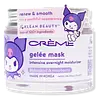
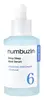
The Creme Shop Sanrio Kuromi Klean Beauty Intensive Overnight Moisture Gelee Mask Versus Numbuzin No.6 Deep Sleep Mask Serum
This hydrating overnight mask is formulated around Caprylic/Capric Triglyceride and Allantoin to hydrate skin and calm redness.
This hydrating serum is formulated around Niacinamide and Sodium Hyaluronate to hydrate skin and strengthen the skin barrier.


What's inside
What's inside
 Key Ingredients
Benefits
Concerns
Ingredients Side-by-side
Water
Skin ConditioningButylene Glycol
Humectant

PEG-240/Hdi Copolymer Bis-Decyltetradeceth-20 Ether
StabilisingCaprylic/Capric Triglyceride
Masking
Dipropylene Glycol
HumectantHydroxyacetophenone
Antioxidant
PEG-100 Stearate
Surfactant

Dimethicone
Emollient

Glyceryl Stearate
Emollient
Glycerin
Humectant
Glycereth-26
Humectant
Macadamia Ternifolia Seed Oil
Emollient
Caprylyl Glycol
Emollient
Allantoin
Skin Conditioning

Coco-Caprylate/Caprate
Emollient
Tocopheryl Acetate
Antioxidant

Adenosine
Skin Conditioning
Disodium EDTA
1,2-Hexanediol
Skin Conditioning
Vitis Vinifera Fruit Extract
Skin ConditioningWine Extract
Antioxidant
Vaccinium Macrocarpon Fruit Extract
AstringentFragaria Vesca Leaf Extract
AstringentEuterpe Oleracea Fruit Extract
Punica Granatum Fruit Extract
Antioxidant
Morus Alba Fruit Extract
Antioxidant
Rubus Coreanus Fruit Extract
Skin ConditioningVaccinium Angustifolium Fruit Extract
Skin Protecting
Rubus Idaeus Fruit Extract
AstringentDipotassium Glycyrrhizate
Humectant
Sodium Hyaluronate
Humectant
Hydrolyzed Hyaluronic Acid
Humectant
Sodium Acetylated Hyaluronate
Humectant
Astragalus Membranaceus Root Extract
Emollient
Cnidium Officinale Root Extract
Skin ConditioningAngelica Gigas Root Extract
Skin ConditioningPaeonia Officinalis Root Extract
Skin ConditioningPanax Ginseng Root Extract
Emollient
Glycyrrhiza Glabra Root Extract
Bleaching
Atractylodes Japonica Rhizome Extract
Skin ConditioningPoria Cocos Extract
Skin ConditioningPrunus Mume Flower Extract
Skin ConditioningOenothera Biennis Seed Extract
Skin ConditioningPaeonia Lactiflora Root Extract
Skin ConditioningCinnamomum Cassia Bark Extract
Masking
Tocopherol
Antioxidant
Eclipta Prostrata Extract
Skin Conditioning
Lithospermum Erythrorhizon Root Oil
Skin Conditioning
Brassica Campestris Seed Oil
Skin Conditioning
Schisandra Chinensis Fruit Extract
Skin Conditioning
Lycium Chinense Fruit Extract
Antioxidant
Melia Azadirachta Leaf Extract
Skin ConditioningMoringa Oleifera Seed Oil
Emollient
Melia Azadirachta Flower Extract
Skin ConditioningCoccinia Indica Fruit Extract
Skin Conditioning
Solanum Melongena Fruit Extract
Skin ConditioningSimmondsia Chinensis Seed Oil
Emollient
Ocimum Sanctum Leaf Extract
Skin ConditioningCorallina Officinalis Extract
Skin Conditioning
Curcuma Longa Root Extract
Antioxidant
Guaiazulene
Antimicrobial
Parfum
Masking
Water, Butylene Glycol, PEG-240/Hdi Copolymer Bis-Decyltetradeceth-20 Ether, Caprylic/Capric Triglyceride, Dipropylene Glycol, Hydroxyacetophenone, PEG-100 Stearate, Dimethicone, Glyceryl Stearate, Glycerin, Glycereth-26, Macadamia Ternifolia Seed Oil, Caprylyl Glycol, Allantoin, Coco-Caprylate/Caprate, Tocopheryl Acetate, Adenosine, Disodium EDTA, 1,2-Hexanediol, Vitis Vinifera Fruit Extract, Wine Extract, Vaccinium Macrocarpon Fruit Extract, Fragaria Vesca Leaf Extract, Euterpe Oleracea Fruit Extract, Punica Granatum Fruit Extract, Morus Alba Fruit Extract, Rubus Coreanus Fruit Extract, Vaccinium Angustifolium Fruit Extract, Rubus Idaeus Fruit Extract, Dipotassium Glycyrrhizate, Sodium Hyaluronate, Hydrolyzed Hyaluronic Acid, Sodium Acetylated Hyaluronate, Astragalus Membranaceus Root Extract, Cnidium Officinale Root Extract, Angelica Gigas Root Extract, Paeonia Officinalis Root Extract, Panax Ginseng Root Extract, Glycyrrhiza Glabra Root Extract, Atractylodes Japonica Rhizome Extract, Poria Cocos Extract, Prunus Mume Flower Extract, Oenothera Biennis Seed Extract, Paeonia Lactiflora Root Extract, Cinnamomum Cassia Bark Extract, Tocopherol, Eclipta Prostrata Extract, Lithospermum Erythrorhizon Root Oil, Brassica Campestris Seed Oil, Schisandra Chinensis Fruit Extract, Lycium Chinense Fruit Extract, Melia Azadirachta Leaf Extract, Moringa Oleifera Seed Oil, Melia Azadirachta Flower Extract, Coccinia Indica Fruit Extract, Solanum Melongena Fruit Extract, Simmondsia Chinensis Seed Oil, Ocimum Sanctum Leaf Extract, Corallina Officinalis Extract, Curcuma Longa Root Extract, Guaiazulene, Parfum
Water 63%
Skin ConditioningButylene Glycol
Humectant
Propanediol
Solvent
Glycerin
Humectant
Niacinamide
Smoothing




1,2-Hexanediol
Skin Conditioning
Chlorella Vulgaris Extract
Skin ConditioningXylitylglucoside
Humectant
Sodium Hyaluronate
Humectant
Hydrolyzed Hyaluronic Acid
Humectant
Xylitol
Humectant
Melia Azadirachta Leaf Extract
Skin ConditioningMelia Azadirachta Flower Extract
Skin ConditioningCoccinia Indica Fruit Extract
Skin Conditioning
Aloe Barbadensis Flower Extract
EmollientSolanum Melongena Fruit Extract
Skin ConditioningOcimum Sanctum Leaf Extract
Skin ConditioningCorallina Officinalis Extract
Skin Conditioning
Curcuma Longa Root Extract
Antioxidant
Hyaluronic Acid
Humectant
Glycereth-26
Humectant
Panthenol
Skin Conditioning
Pentylene Glycol
Skin Conditioning
Glucose
Humectant
Sodium PCA
Humectant
Anhydroxylitol
Humectant
Fructooligosaccharides
Humectant
Fructose
Humectant
Polyglyceryl-10 Laurate
Skin Conditioning
Sodium Citrate
BufferingDipotassium Glycyrrhizate
Humectant
Sodium Hyaluronate Crosspolymer
Humectant
Ethylhexylglycerin
Skin ConditioningAdenosine
Skin Conditioning
Hydrolyzed Glycosaminoglycans
HumectantCitric Acid
Buffering
Benzyl Glycol
SolventTocopherol
Antioxidant
Xanthan Gum
EmulsifyingWater 63%, Butylene Glycol, Propanediol, Glycerin, Niacinamide, 1,2-Hexanediol, Chlorella Vulgaris Extract, Xylitylglucoside, Sodium Hyaluronate, Hydrolyzed Hyaluronic Acid, Xylitol, Melia Azadirachta Leaf Extract, Melia Azadirachta Flower Extract, Coccinia Indica Fruit Extract, Aloe Barbadensis Flower Extract, Solanum Melongena Fruit Extract, Ocimum Sanctum Leaf Extract, Corallina Officinalis Extract, Curcuma Longa Root Extract, Hyaluronic Acid, Glycereth-26, Panthenol, Pentylene Glycol, Glucose, Sodium PCA, Anhydroxylitol, Fructooligosaccharides, Fructose, Polyglyceryl-10 Laurate, Sodium Citrate, Dipotassium Glycyrrhizate, Sodium Hyaluronate Crosspolymer, Ethylhexylglycerin, Adenosine, Hydrolyzed Glycosaminoglycans, Citric Acid, Benzyl Glycol, Tocopherol, Xanthan Gum
Reviews
Ingredients Explained
These ingredients are found in both products.
Ingredients higher up in an ingredient list are typically present in a larger amount.
1,2-Hexanediol is a synthetic liquid and another multi-functional powerhouse.
It is a:
- Humectant, drawing moisture into the skin
- Emollient, helping to soften skin
- Solvent, dispersing and stabilizing formulas
- Preservative booster, enhancing the antimicrobial activity of other preservatives
Adenosine is a purine nucleoside that your body already makes in every cell. In skincare, it acts mainly as a skin conditioning and anti-aging agent.
The way it works is fairly well mapped out:
Your skin has cells called fibroblasts that build collagen (the stuff that keeps skin firm and smooth). Adenosine basically flips a switch on these cells that tells them to get to work making more collagen and other proteins. These cells slow down on their own as skin ages, so Adenosine helps give them a little nudge to keep going.
The clinical backing is pretty solid too.
A blind, randomized, placebo-controlled trial of 126 women aged 45-65 tested a 0.1% cream twice daily and found real improvements in crow's feet and frown lines using a precise 3D skin-mapping technique; these changes showed up by week 3 and held at 2 months.
A later study using Adenosine-loaded dissolving microneedle patches reported gains in wrinkle depth, dermal density, elasticity, and hydration.
On concentrations, South Korea's Ministry of Food and Drug Safety has set 0.04% as the approved functional anti-wrinkle level. You'll typically see this ingredient used somewhere in the 0.04-0.1% range since it works at low doses.
This ingredient has been found safe for cosmetics with the data showing no irritation or sensitization.
Overall, this is a great ingredient for any anti-aging routine and has no photosensitizing effect, so it suits both AM and PM use.
Learn more about AdenosineButylene Glycol (or BG) is used within cosmetic products for a few different reasons:
Overall, Butylene Glycol is a safe and well-rounded ingredient that works well with other ingredients.
Though this ingredient works well with most skin types, some people with sensitive skin may experience a reaction such as allergic rashes, closed comedones, or itchiness.
Learn more about Butylene GlycolCoccinia Indica Fruit Extract is also known as Ivy Gourd Fruit Extract. It has skin conditioning properties.
The fruit is rich in flavonoids, phenolic acids, terpenoids, and sterols that show antioxidant and anti-inflammatory effect in vitro. This is because the fruit contains a thick mucilage that forms a protective and soothing layer on the skin's surface.
The extract itself has demonstrated antioxidant, soothing, and potential anti-allergy properties.
Most of this research is done in vitro and dedicated clinical studies on topical application are still limited.
Learn more about Coccinia Indica Fruit ExtractCorallina Officinalis Extract is from the red seaweed, Corallina Officinalis. This seaweed is found all over the world but is most common in the rocky shores of Great Britain and Ireland.
Corallina Officinalis Extract contains antioxidant and emollient properties.
Extracted polysaccharides, galactose and xylose, in red algae showed antioxidant activity. Antioxidants help with anti-aging by neutralizing free-radical molecules. Free-radical molecules may damage your skin cells and DNA. Galactose is also a PHA.
Corallina Officinalis is structurally similar to coral due to its high calcium content.
Learn more about Corallina Officinalis ExtractCurcuma Longa Root Extract comes from the rhizome (underground stem) of the turmeric plant.
While the official EU Cosing Database lists this ingredient as a fragrance, it actually does more than give products a scent.
This ingredient contains a group of yellow pigments called curcuminoids (mostly curcumin) that give it genuine antioxidant and anti-inflammatory activity in skin.
Reviews of topical clinical studies have found turmeric/curcumin to be generally well-tolerated and useful across conditions like eczema and mild inflammation.
One thing working in its favor is that curcumin barely penetrates; in lab skin-permeation testing, the curcuminoids mostly stayed in the outermost layer of skin. This is a good thing because its soothing and antioxidant activity is a surface-level job anyway.
At this time, industry data shows there's no single "correct" cosmetic percentage. It's used across a wide range depending on the product and varies from tiny fractions of a percent up to a few percent.
Allergy-wise, curcumin is a documented (but uncommon) contact allergen. It can also cross react with related plants, so anyone with a turmeric/ginger/cinnamon allergy or reactive skin should patch test first.
Learn more about Curcuma Longa Root ExtractDipotassium Glycyrrhizate comes from licorice root.
Extracts of licorice have demonstrated to have antibacterial, anti‐inflammatory, antiviral, antioxidant properties.
One component, glabridin, has extra potent antioxidant and soothing properties. It has also been found to block pigmentation from UVB rays in guinea pigs.
Licorice Root also contains a flavonoid. Flavonoids are a natural substance from in plants. Flavonoids also have antioxidant properties.
Another component, glycyrrhizin, has been found to have anti-inflammatory and antimicrobial benefits. This may make licorice root extract effective at treating acne. However, more research is needed to support this.
Liquiritin is one of the flavone compounds found in licorice. It has been found to help lighten skin by preventing tyrosinase from reacting with tyrosine. When the two react, protein is converted to melanin. Melanin is the substance in your body that gives your features pigmentation.
Licorice root is native to Southern Europe and Asia. It has been used in traditional Chinese medicine to help with respiratory issues.
Learn more about Dipotassium GlycyrrhizateGlycereth-26 is a synthetic ingredient and polyethylene glycol ether of Glycerin. Glycerin is already naturally found in your skin and helps keep your skin moisturized.
It is a humectant and helps add texture to products. It can make your product thicker.
As a humectant, it helps draw moisture from the air to your skin. This helps your skin stay hydrated.
Learn more about Glycereth-26Glycerin (or glycerol) is a compound naturally found in your skin. It's a powerhouse humectant that pulls water into the stratum corneum.
Topically, glycerin does several things at once:
Your skin makes glycerin on its own (mostly from sebaceous oil breakdown) and shuttles it to your outermost layer of skin, or your epidermis, via aquaporin-3.
Aquaporin-3 is a transporter that is essential for normal skin hydration, elasticity, and repair. Interestingly, mice lacking in AQP3 have dry and less elastic skin that can be fully corrected with glycerin.
This ingredient is non-irritating, plays well with almost every ingredient, and works across all skin types. Typical use is anywhere between 3-10% but can go up to 79% in some leave-on products.
Just know very high concentrations (>40%) can feel tacky in low humidity.
Glycerin is the name for this ingredient in American English. British English uses Glycerol/Glycerine.
Learn more about GlycerinHydrolyzed Hyaluronic Acid is hyaluronic acid (HA) that is broken down into lower molecular weight fragments.
It's a humectant that pulls and holds water in the skin to help with hydration, plumpness, and reduce transepidermal water loss.
Because hydrolyzed hyaluronic acid is smaller in size, it can slip past your outermost layer of skin more easily than full-sized HA.
Most formulations will combine all sizes to get the best of both worlds.
Typical usage levels range from 0.01-1%. Any percentage higher than 2% might become goopy and tacky.
Learn more about Hydrolyzed Hyaluronic AcidMelia Azadirachta Flower Extract is from the Neem tree. Neem trees originate from India.
Melia Azadirachta Flower Extract contains antioxidants. Antioxidants help fight free-radicals. Free-radicals are molecules that may damage your skin cells, such as pollution.
The flowers of this tree are lilac colored.
Learn more about Melia Azadirachta Flower ExtractThis ingredient is also known as neem leaf extract. It contains natural compounds like nimbidin, quercetin, and other polyphenols that give it antibacterial, antifungal, and anti-inflammatory activity.
Lab studies have shown neem leaf extract can inhibit acne-related bacteria and help calm skin. Animal studies on wound gels using 1-3% neem leaf extract found it sped up healing without causing irritation.
A wound-healing study testing gels with the extract at 1%, 2%, and 3% concentrations and found none of them irritated the skin.
Most commercial products also use it in a similar low range (typically under 5%).
Allergy-wise, there are some case reports on neem oil causing allergic contact dermatitis so people with plant/botanical sensitivities may want to patch test first.
Learn more about Melia Azadirachta Leaf ExtractOcimum Sanctum Leaf Extract comes from the Holy Basil plant. Holy Basil is native to India.
Holy Basil is rich in antioxidants due to its high romarinic acid, ferulic acid, and rutin content. This gives it skin brightening and soothing properties.
While Holy Basil has many claims to help fight acne, more research is needed.
One thing to note is the presence of tannins; tannins are naturally found in nature. However, this compound may be skin-sensitizing.
Learn more about Ocimum Sanctum Leaf ExtractSodium Hyaluronate is the salt form of hyaluronic acid. It is a long sugar chain that is naturally found in your skin, joints, and connective tissue that maintains hydration and elasticity.
In skincare, it works as a humectant. It pulls water from the environment and deeper layers of skin and binds it to the surface.
Interestingly, the size of the molecule affects its behavior:
Some clinical evidence links low molecular weight versions to improved wrinkle depth, elasticity, anti-inflammatory effects, and barrier repair.
Many serums use a blend of both weights so you can get surface hydration plus longer-lasting and deeper effects.
You'll typically see concentrations between 0.1-2% for this ingredient.
Learn more about Sodium HyaluronateThis ingredient comes from eggplant (or aubergine). It has skin conditioning properties due to its abundance of antioxidants like Chlorogenic Acid, Caffeic Acid, and Nasunin.
Nasunin is the pigment concentrated in the purple peel and has demonstrated the abilityu to neutralize free radicals and bind excess iron in lab studies.
Lab studies have shown that eggplant extracts can lower oxidative stress and protect skin cell membranes from damage. A 2025 study found that specific compounds in eggplant (particularly a phenolamide called N-Trans-Feruloylputrescine) may support skin health by neutralizing 2-nonenal, a byproduct linked to aging skin.
Overall, this is a gentle, well-tolerated ingredient that adds a little extra antioxidant support to your routine.
Those with nighshade vegetable allergies (tomatoes, peppers, potatoes) should patch test as eggplant is part of the same family.
Learn more about Solanum Melongena Fruit ExtractTocopherol is a fat-soluble antioxidant known as Vitamin E.
You'll find this ingredient in the vast majority of skincare (for good reason). It works to neutralize free radicals, or unstable molecules generated by UV exposure, pollution, and other environmental stressors, before they can cause oxidative damage to your skin cells.
Topically applied tocopherol has been shown to protect against UV damage by ramping up the skin's own natural defense enzymes.
It also acts as a skin conditioning agent; some studies show that regular topical use can improve the skin's water-binding capacity over 2-4 weeks.
This ingredient is especially loved for being a team player. When combined with Vitamin C, the photoprotective effect of both ingredients roughly doubles and the combo also helps reduce UV-induced DNA damage.
This ingredient has some brightening potential but it's more of a prevention ingredient than spot-fader. Cell studies show it can slow down melanin production but it's worth noting that it's not the most powerful brightener out there.
In formulations, it also serves as a stabilizer that helps protect other oxidation-prone ingredients from degrading.
Concentrations usually range from 0.1-1% in most leave-on products.
Learn more about TocopherolWater. It's the most common cosmetic ingredient of all. You'll usually see it at the top of ingredient lists, meaning that it makes up the largest part of the product.
So why is it so popular? Water most often acts as a solvent - this means that it helps dissolve other ingredients into the formulation.
You'll also recognize water as that liquid we all need to stay alive. If you see this, drink a glass of water. Remember to stay hydrated!
Learn more about Water

