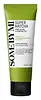
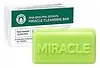
Some By Mi Super Matcha Pore Clean Cleansing Gel Versus Some By Mi AHA, BHA, PHA 30 Days Miracle Cleansing Bar
This mild gel cleanser is mild enough to cleanse without leaving skin feeling tight or stripped.

What's inside
What's inside
 Key Ingredients
Benefits
Concerns
Ingredients Side-by-side
Camellia Sinensis Leaf Water 62%
Masking
Glycerin
Humectant


Water
Skin ConditioningPotassium Cocoyl Glycinate
Surfactant
Lauryl Glucoside
CleansingCoco-Glucoside
Cleansing
Acrylates Copolymer
Sodium Cocoyl Isethionate
Cleansing
1,2-Hexanediol
Skin Conditioning
Salix Alba Bark Water
Astringent
Salix Alba Bark Extract
Astringent

Centella Asiatica Extract
Cleansing


Centella Asiatica Leaf Extract
Skin Conditioning
Melia Azadirachta Leaf Extract
Skin ConditioningMelia Azadirachta Flower Extract
Skin ConditioningCalamine
AbsorbentCamellia Sinensis Leaf Powder
Melaleuca Alternifolia Leaf Powder
Abrasive
Butylene Glycol
Humectant
Sodium
Hyaluronic Acid
Humectant
Allantoin
Skin Conditioning
Madecassic Acid
Skin Conditioning
Asiaticoside
Antioxidant
Asiatic Acid
Skin Conditioning
Madecassoside
Antioxidant
Cocos Nucifera Oil
Masking





Coco-Caprylate/Caprate
Emollient
Caprylyl Glycol
Emollient
Glyceryl Undecylenate
Emollient
Polyglyceryl-10 Myristate
Skin Conditioning
Potassium Cetyl Phosphate
EmulsifyingLauric Acid
Cleansing
Mannan
Lactobionic Acid
Buffering



Citric Acid
Buffering
Triethoxycaprylylsilane

Methylpropanediol
SolventBenzyl Glycol
SolventEthylhexylglycerin
Skin ConditioningRaspberry Ketone
Masking
Parfum
Masking
Camellia Sinensis Leaf Water 62%, Glycerin, Water, Potassium Cocoyl Glycinate, Lauryl Glucoside, Coco-Glucoside, Acrylates Copolymer, Sodium Cocoyl Isethionate, 1,2-Hexanediol, Salix Alba Bark Water, Salix Alba Bark Extract, Centella Asiatica Extract, Centella Asiatica Leaf Extract, Melia Azadirachta Leaf Extract, Melia Azadirachta Flower Extract, Calamine, Camellia Sinensis Leaf Powder, Melaleuca Alternifolia Leaf Powder, Butylene Glycol, Sodium, Hyaluronic Acid, Allantoin, Madecassic Acid, Asiaticoside, Asiatic Acid, Madecassoside, Cocos Nucifera Oil, Coco-Caprylate/Caprate, Caprylyl Glycol, Glyceryl Undecylenate, Polyglyceryl-10 Myristate, Potassium Cetyl Phosphate, Lauric Acid, Mannan, Lactobionic Acid, Citric Acid, Triethoxycaprylylsilane, Methylpropanediol, Benzyl Glycol, Ethylhexylglycerin, Raspberry Ketone, Parfum
Lauric Acid
Cleansing
Sodium Stearate
CleansingSodium Palmate
CleansingSodium Laurate
CleansingSodium Myristate
CleansingStearic Acid
Cleansing
Glycerin
Humectant
Sorbitol
Humectant
Lauramidopropyl Betaine
CleansingSodium Hyaluronate
Humectant
Niacinamide
Smoothing
Chlorella Vulgaris Powder
Skin ConditioningTriticum Vulgare Germ Powder
Skin ConditioningMelaleuca Alternifolia Leaf Extract
Perfuming
Houttuynia Cordata Extract
Skin Conditioning
Glycyrrhiza Glabra Root Extract
Bleaching
Leontopodium Alpinum Extract
Skin ConditioningOlea Europaea Fruit Oil
Masking
Argania Spinosa Kernel Oil
Emollient
Camellia Sinensis Seed Oil
Humectant
Hydrolyzed Adansonia Digitata Extract
EmollientSalix Alba Bark Extract
Astringent
Centella Asiatica Extract
Cleansing
Pyrus Malus Fruit Extract
Skin Conditioning
Citrus Limon Fruit Extract
Masking
Citrus Aurantium Dulcis Fruit Extract
MaskingBetula Platyphylla Japonica Bark Extract
Skin ConditioningHydrolyzed Potato Protein
Skin ConditioningHydrolyzed Wheat Protein
Skin ConditioningHydrolyzed Rice Protein
Skin ConditioningHydrolyzed Oat Protein
Skin ConditioningLactobionic Acid
Buffering
Melaleuca Alternifolia Leaf Oil
Antioxidant
Tetrasodium EDTA
ChelatingLauric Acid, Sodium Stearate, Sodium Palmate, Sodium Laurate, Sodium Myristate, Stearic Acid, Glycerin, Sorbitol, Lauramidopropyl Betaine, Sodium Hyaluronate, Niacinamide, Chlorella Vulgaris Powder, Triticum Vulgare Germ Powder, Melaleuca Alternifolia Leaf Extract, Houttuynia Cordata Extract, Glycyrrhiza Glabra Root Extract, Leontopodium Alpinum Extract, Olea Europaea Fruit Oil, Argania Spinosa Kernel Oil, Camellia Sinensis Seed Oil, Hydrolyzed Adansonia Digitata Extract, Salix Alba Bark Extract, Centella Asiatica Extract, Pyrus Malus Fruit Extract, Citrus Limon Fruit Extract, Citrus Aurantium Dulcis Fruit Extract, Betula Platyphylla Japonica Bark Extract, Hydrolyzed Potato Protein, Hydrolyzed Wheat Protein, Hydrolyzed Rice Protein, Hydrolyzed Oat Protein, Lactobionic Acid, Melaleuca Alternifolia Leaf Oil, Tetrasodium EDTA
Reviews
Ingredients Explained
These ingredients are found in both products.
Ingredients higher up in an ingredient list are typically present in a larger amount.
Centella Asiatica Extract (Centella) is one of the most researched botanical extracts in skincare with decades of studies backing its effects on inflammation, collagen, and the skin barrier.
That research keeps pointing back to the same four triterpenoid saponins: Asiaticoside, Madecassoside, Asiatic Acid, and Madecassic Acid.
These compounds allow centella to dial back inflammation, encourage the skin to build and hold onto collagen, support the barrier and hydration, and bring solid antioxidant activity to protect against signs of aging.
Centella also carries a nice supporting cast of Vitamin A, vitamin C, several B vitamins, and amino acids. Put it all together and you get an ingredient that soothes, hydrates, and protects, all at once.
Most of centella's magic comes from the four big compounds (Asiaticoside, Madecassoside, Asiatic Acid, and Madecassic Acid). These are the actives doing the heavy lifting in almost every centella study.
Here is the short version of what they do in the skin:
So it is not just soothing for the sake of soothing. Centella calms the skin AND helps it rebuild.
Just FYI, not all centella on an ingredient list is the same. What you are getting actually depends on the extract:
Fun fact on the ratios: the leaves tend to be richest in Madecassoside and Asiaticoside, and lower in the two acids. The exact amounts shift with where the plant is grown and how it is processed. This means purity really does vary brand to brand.
Centella is one of the most easygoing actives out there.
It layers well with basically everything: niacinamide, hyaluronic acid, peptides, and vitamin C, and also pairs nicely with stronger actives like retinoids and exfoliating acids where it can help take the edge off irritation.
On the safety side, centella and its triterpenes are classified as weak sensitizers, meaning allergic reactions are possible but uncommon.
Patch tests at 1% and 5% came back negative in test panels, and creams at typical use levels did not cause allergic reactions across large groups of people.
But as with any new active, a patch test is still a smart move for very reactive skin.
Centella is widely used because it is effective at low percentages. For context, human safety testing found no meaningful irritation from creams containing centella extract at everyday use levels (the tested amounts were well under 1%).
The irritancy threshold in animal testing was also above 30% (so real-world formulas sit far below anything concerning).
In collagen lab studies, higher concentrations drove more collagen synthesis, so serums built around centella tend to feature it more prominently.
Bottom line: you will find centella working nicely anywhere from a fraction of a percent up to hero-ingredient levels depending on whether it is a supporting soother or the main event.
Fun fact: Centella has been used as a medicine and in food for many centuries. As a medicine, it is used to treat burns, scratches, and wounds.
Learn more about Centella Asiatica ExtractGlycerin (or glycerol) is a compound naturally found in your skin. It's a powerhouse humectant that pulls water into the stratum corneum.
Topically, glycerin does several things at once:
Your skin makes glycerin on its own (mostly from sebaceous oil breakdown) and shuttles it to your outermost layer of skin, or your epidermis, via aquaporin-3.
Aquaporin-3 is a transporter that is essential for normal skin hydration, elasticity, and repair. Interestingly, mice lacking in AQP3 have dry and less elastic skin that can be fully corrected with glycerin.
This ingredient is non-irritating, plays well with almost every ingredient, and works across all skin types. Typical use is anywhere between 3-10% but can go up to 79% in some leave-on products.
Just know very high concentrations (>40%) can feel tacky in low humidity.
Glycerin is the name for this ingredient in American English. British English uses Glycerol/Glycerine.
Learn more about GlycerinLactobionic Acid is a PHA. PHAs are the gentle cousins to AHAS.
Like AHAs, they exfoliate the top layer of skin. Lactobionic acid also exhibits significant antioxidant activity.
PHAs are more gentle than AHAs due to their larger structure. This means they do not penetrate as deeply as AHAs and take a longer time to dissolve dead cells. Studies show PHAs do not cause as much irritation.
By removing dead skin cells, PHAs leave the skin brighter and with even-texture.
Learn more about Lactobionic AcidLauric Acid is a saturated fatty acid naturally found in coconut oil, palm kernel oil, and even breast milk.
In cosmetics, it is an:
Lab studies have found that lauric acid is surprisingly good at killing acne-causing bacteria. However, these tests were done on bacteria in a petri dish and not on real skin, so we can't say for certain it works the same in a formulation on a real face.
The comedogenic rating of 4 comes from the 1972 rabbit ear model using undiluted ingredients. Comedogenicity is highly individual and one comedogenic ingredient cannot predict how a formula will behave on skin.
This ingredient is not fungal acne safe and research has confirmed Malassezia can use it as a food source. Even though "fungal acne" has the word "acne" in it, they are completely different. Regular acne is driven by a bacteria called Cutibacterium acnes, clogged pores, and excess oil. Fungal acne isn't really acne; it's caused by an overgrowth of a yeast called Malassezia that already lives on everyone's skin. Because one is bacterial and the other is fungal, they respond to different ingredients.
Learn more about Lauric AcidSalix Alba Bark Extract comes from the bark of the white willow tree. The official CosIng listing states this ingredient to have astringent, skin conditioning, soothing, and tonic properties.
Its star compound is salicin, a natural glucoside that is chemically related to salicylic acid. That's why you'll often see it marketed as a "natural BHA alternative" but that's a bit of a stretch.
Your skin can't convert salicin to salicylic acid because it needs specific enzymes that aren't present on the skin's surface. It won't behave like true salicylic acid, especially at the concentrations used in cosmetics.
However, this ingredient has its own perks. It contains flavonoids, polyphenols, and tannins that give it proven antioxidant and soothing properties.
An 8-week clinical study found a cream with 2% of this extract improved skin microcirculation, elasticity, and dark circles. This is most likely due to its role in increasing hyaluronic acid synthesis in fibroblasts and improved vascular integrity.
Another study found a topical serum with 0.5% salicin showed improvements in visible signs of aging, hyperpigmentation, and texture.
Just be careful if you have a known aspirin/salicylate allergy and be sure to consult with a medical professional about using this ingredient if you do.
Fun fact: Willow Bark extract has been used for thousands of years and ancient civilizations used white willow to help treat pain and fevers.
Learn more about Salix Alba Bark Extract

