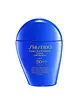
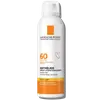
Shiseido Expert Sun Protector Lotion SPF 50+ Versus La Roche-Posay Anthelios Lotion Spray Sunscreen SPF 60
This hybrid sunscreen covers the full UV range and blocks ~98% of UVB at SPF 50.
This chemical sunscreen covers most of the UV range, lighter on the deep UVA that drives aging.


What's inside
What's inside
 Key Ingredients
Benefits
Concerns
Ingredients Side-by-side
Water
Skin ConditioningDiisopropyl Sebacate
EmollientTalc
Abrasive
Alcohol
Antimicrobial




Isododecane
EmollientTriethylhexanoin
MaskingPentaerythrityl Tetraethylhexanoate
Emollient
Octocrylene
UV Absorber

Ethylhexyl Salicylate
UV Absorber
Silica
Abrasive

PEG/PPG-9/2 Dimethyl Ether
Skin ConditioningC12-15 Alkyl Benzoate
AntimicrobialDipropylene Glycol
HumectantButyl Methoxydibenzoylmethane
UV Absorber
Dimethicone
Emollient

Glycerin
Humectant
Sucrose Tetrastearate Triacetate
Emollient
Dextrin Palmitate
Emulsifying
Diethylamino Hydroxybenzoyl Hexyl Benzoate
UV Filter
Trimethylsiloxysilicate
Emollient
Cetyl PEG/PPG-10/1 Dimethicone
Emulsifying
Lauryl PEG-9 Polydimethylsiloxyethyl Dimethicone
Skin Conditioning
Hydrogenated Polyisobutene
EmollientBis-Ethylhexyloxyphenol Methoxyphenyl Triazine
UV Absorber
Sodium Chloride
MaskingDipotassium Glycyrrhizate
Humectant

PEG/PPG-14/7 Dimethyl Ether
Skin ConditioningAminoethanesulfinic Acid
Antioxidant
Saxifraga Sarmentosa Extract
Skin ConditioningCamellia Sinensis Leaf Extract
Antimicrobial

Carthamus Tinctorius Flower Extract
Skin ConditioningEucheuma Serra/Grateloupia Sparsa/Saccharina Angustata/Ulva Linza/Undaria Pinnatifida Extract
EmollientSophora Angustifolia Root Extract
Skin ConditioningSaccharina Angustata/Undaria Pinnatifida Extract
EmollientEthylhexyl Triazone
UV Absorber
Disteardimonium Hectorite
StabilisingCalcium Stearate
Cosmetic ColorantIsostearic Acid
Cleansing
Polyglyceryl-6 Polyricinoleate
Emulsifying
Titanium Dioxide
Cosmetic Colorant
Butylene Glycol
Humectant
Trisodium EDTA
ChelatingHydrated Silica
Abrasive
BHT
Antioxidant
Limonene
Perfuming

Linalool
Perfuming
Hydrogen Dimethicone
Stearic Acid
Cleansing
Sodium Metabisulfite
Antioxidant
Bis-Butyldimethicone Polyglyceryl-3
Cleansing
PEG-6
HumectantCitronellol
Perfuming
Hexyl Cinnamal
Perfuming
Citral
Perfuming
Geraniol
Perfuming
Syzygium Jambos Leaf Extract
Skin ConditioningTocopherol
Antioxidant

Parfum
Masking
CI 17200
Cosmetic ColorantCI 19140
Cosmetic ColorantWater, Diisopropyl Sebacate, Talc, Alcohol, Isododecane, Triethylhexanoin, Pentaerythrityl Tetraethylhexanoate, Octocrylene, Ethylhexyl Salicylate, Silica, PEG/PPG-9/2 Dimethyl Ether, C12-15 Alkyl Benzoate, Dipropylene Glycol, Butyl Methoxydibenzoylmethane, Dimethicone, Glycerin, Sucrose Tetrastearate Triacetate, Dextrin Palmitate, Diethylamino Hydroxybenzoyl Hexyl Benzoate, Trimethylsiloxysilicate, Cetyl PEG/PPG-10/1 Dimethicone, Lauryl PEG-9 Polydimethylsiloxyethyl Dimethicone, Hydrogenated Polyisobutene, Bis-Ethylhexyloxyphenol Methoxyphenyl Triazine, Sodium Chloride, Dipotassium Glycyrrhizate, PEG/PPG-14/7 Dimethyl Ether, Aminoethanesulfinic Acid, Saxifraga Sarmentosa Extract, Camellia Sinensis Leaf Extract, Carthamus Tinctorius Flower Extract, Eucheuma Serra/Grateloupia Sparsa/Saccharina Angustata/Ulva Linza/Undaria Pinnatifida Extract, Sophora Angustifolia Root Extract, Saccharina Angustata/Undaria Pinnatifida Extract, Ethylhexyl Triazone, Disteardimonium Hectorite, Calcium Stearate, Isostearic Acid, Polyglyceryl-6 Polyricinoleate, Titanium Dioxide, Butylene Glycol, Trisodium EDTA, Hydrated Silica, BHT, Limonene, Linalool, Hydrogen Dimethicone, Stearic Acid, Sodium Metabisulfite, Bis-Butyldimethicone Polyglyceryl-3, PEG-6, Citronellol, Hexyl Cinnamal, Citral, Geraniol, Syzygium Jambos Leaf Extract, Tocopherol, Parfum, CI 17200, CI 19140
Butyl Methoxydibenzoylmethane 2.68%
UV Absorber
Homosalate 9.6%
Skin Conditioning
Ethylhexyl Salicylate 2.88%
UV Absorber
Octocrylene 5.38%
UV Absorber
Benzophenone-3 3.46%
UV Absorber
Water
Skin ConditioningDimethicone
Emollient
Isopropyl Lauroyl Sarcosinate
Skin ConditioningGlycerin
Humectant
Styrene/Acrylates Copolymer
Isotridecyl Isononanoate
EmollientPolyurethane-35
Caprylyl Methicone
Skin Conditioning
Octyldodecanol
Emollient
Phenoxyethanol
Preservative
Propylene Glycol
Humectant
Caprylyl Glycol
Emollient
Sodium Stearoyl Glutamate
CleansingPolysorbate 61
Emulsifying
Glyceryl Stearate
Emollient
PEG-8 Laurate
Emulsifying
Dimethiconol
Emollient
Octyldodecyl Xyloside
EmulsifyingPEG-12 Dimethicone
Skin Conditioning
P-Anisic Acid
MaskingStearyl Alcohol
Emollient
Disodium EDTA
ChelatingTocopherol
Antioxidant
Diethylhexyl Syringylidenemalonate
Skin Protecting
Cassia Alata Leaf Extract
AstringentMaltodextrin
Absorbent
Butyl Methoxydibenzoylmethane 2.68%, Homosalate 9.6%, Ethylhexyl Salicylate 2.88%, Octocrylene 5.38%, Benzophenone-3 3.46%, Water, Dimethicone, Isopropyl Lauroyl Sarcosinate, Glycerin, Styrene/Acrylates Copolymer, Isotridecyl Isononanoate, Polyurethane-35, Caprylyl Methicone, Octyldodecanol, Phenoxyethanol, Propylene Glycol, Caprylyl Glycol, Sodium Stearoyl Glutamate, Polysorbate 61, Glyceryl Stearate, PEG-8 Laurate, Dimethiconol, Octyldodecyl Xyloside, PEG-12 Dimethicone, P-Anisic Acid, Stearyl Alcohol, Disodium EDTA, Tocopherol, Diethylhexyl Syringylidenemalonate, Cassia Alata Leaf Extract, Maltodextrin
Reviews
Ingredients Explained
These ingredients are found in both products.
Ingredients higher up in an ingredient list are typically present in a larger amount.
Also known as Avobenzone, this ingredient is an oil-soluble used to absorb the full spectrum of UVA rays (peak 357 nm).
It's one of the most effective UVA filters available but has a major caveat of photostability: avobenzone is susceptible to photodegradation.
This means it can lose efficacy when exposed to sunlight without the help of a stabilizing agent.
Studies show antioxidants (like vitamin E or vitamin C) and some UV filters (like octocrylene and Tinosorb S) can meaningfully improve its stability in a formulation.
The maximum allowable concentration according to regulation is 3% in the US + Canada, and 5% in the EU, Australia, China, Korea, and ASEAN countries.
It has a well-support safety profile: a comprehensive 2025 review found minimal toxicity with no evidence of carcinogenicity.
Overall, avobenzone is a safe and regulated ingredient used in sunscreen for over 40 years.
Learn more about Butyl MethoxydibenzoylmethaneDimethicone is a type of synthetic silicone created from natural materials such as quartz. It is also known as polydimethylsiloxane.
What it does:
Dimethicone comes in different viscosities:
Depending on the viscosity, dimethicone has different properties.
Ingredients lists don't always show which type is used, so we recommend reaching out to the brand if you have questions about the viscosity.
This ingredient is unlikely to cause irritation because it does not get absorbed into skin. However, people with silicone allergies should be careful about using this ingredient.
Note: Dimethicone may contribute to pilling. This is because it is not oil or water soluble, so pilling may occur when layered with products. When mixed with heavy oils in a formula, the outcome is also quite greasy.
Learn more about DimethiconeEthylhexyl Salicylate (also called Octisalate or Octyl Salicylate) is an oil-soluble organic UV filter that's been used in sunscreen since the 1950's.
It absorbs UVB light in the 280-320 nm range with a peak absorbance around 306 nm.
You'll often see it paired with other UV filters to boost overall SPF because octisalate is a fairly week filter on its own.
The reason you'll see it so often is because it can help solubilize and stabilize the trickier filters like oxybenzone and avobenzone.
Unlike these filters, octisalate has pretty good photostability and doesn't create skin-damaging free radicals when exposed to sunlight.
The fatty-alcohol part of the molecule also gives it a light, emollient feel so it doubles as a nice texture enhancer.
Usage levels vary around the world:
Safety-wise, this ingredient has a pretty reassuring track record. The EU's Scientific Committee on Consumer Products (SCCP) found very low skin penetration in human skin tests and negative results for irritation, phototoxicity, and photoallergy.
The real-world allergy risk is pretty low too; a 2012 European study of 1,031 people recorded only 2 reactions to it (a rate of 0.19%).
You might have seen scary headlines about sunscreen getting into your blood.
In 2019, the FDA found that several chemical filters can absorb through the skin and show up in the bloodstream at small but measurable levels.
Here's the important part: these tiny levels are just a cutoff the FDA uses to decide which ingredients need more testing and doesn't mean anything harmful was found.
The researchers were clear that the results are no reason to stop wearing sunscreen.
Learn more about Ethylhexyl SalicylateGlycerin (or glycerol) is a compound naturally found in your skin. It's a powerhouse humectant that pulls water into the stratum corneum.
Topically, glycerin does several things at once:
Your skin makes glycerin on its own (mostly from sebaceous oil breakdown) and shuttles it to your outermost layer of skin, or your epidermis, via aquaporin-3.
Aquaporin-3 is a transporter that is essential for normal skin hydration, elasticity, and repair. Interestingly, mice lacking in AQP3 have dry and less elastic skin that can be fully corrected with glycerin.
This ingredient is non-irritating, plays well with almost every ingredient, and works across all skin types. Typical use is anywhere between 3-10% but can go up to 79% in some leave-on products.
Just know very high concentrations (>40%) can feel tacky in low humidity.
Glycerin is the name for this ingredient in American English. British English uses Glycerol/Glycerine.
Learn more about GlycerinOctocrylene is an oil-soluble organic UV filter that mainly absorbs UVB and short wave UVA II light.
Its real superpower is teamwork: octocrylene is remarkably photostable and is most famous for stabilizing avobenzone (the workhorse UVA filter).
This ingredient is commonly used to enhance both UVB and UVA protection due to its unique property in stabilizing avobenzone. It also pulls double duty by boosting water resistance and giving formulas a smooth, spreadable feel.
The EU's Scientific Committee on Consumer Safety (SCCS) has deemed octocrylene to be safe as a UV-filter at concentrations up to 10% (capped at 9% in propellant sprays). The US also permits it up to 10%.
Two things worth knowing:
You'll usually see this ingredient used in concentrations between 2-10% (higher amounts when used as a stabilizer for avobenzone).
Learn more about OctocryleneTocopherol is a fat-soluble antioxidant known as Vitamin E.
You'll find this ingredient in the vast majority of skincare (for good reason). It works to neutralize free radicals, or unstable molecules generated by UV exposure, pollution, and other environmental stressors, before they can cause oxidative damage to your skin cells.
Topically applied tocopherol has been shown to protect against UV damage by ramping up the skin's own natural defense enzymes.
It also acts as a skin conditioning agent; some studies show that regular topical use can improve the skin's water-binding capacity over 2-4 weeks.
This ingredient is especially loved for being a team player. When combined with Vitamin C, the photoprotective effect of both ingredients roughly doubles and the combo also helps reduce UV-induced DNA damage.
This ingredient has some brightening potential but it's more of a prevention ingredient than spot-fader. Cell studies show it can slow down melanin production but it's worth noting that it's not the most powerful brightener out there.
In formulations, it also serves as a stabilizer that helps protect other oxidation-prone ingredients from degrading.
Concentrations usually range from 0.1-1% in most leave-on products.
Learn more about TocopherolWater. It's the most common cosmetic ingredient of all. You'll usually see it at the top of ingredient lists, meaning that it makes up the largest part of the product.
So why is it so popular? Water most often acts as a solvent - this means that it helps dissolve other ingredients into the formulation.
You'll also recognize water as that liquid we all need to stay alive. If you see this, drink a glass of water. Remember to stay hydrated!
Learn more about Water

