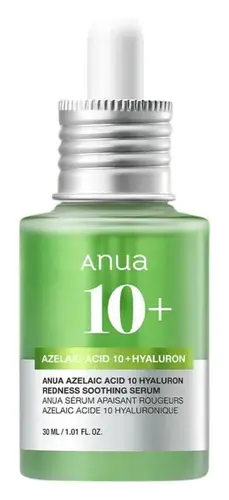
This calming ampoule is formulated around Centella Asiatica Extract and Niacinamide to calm redness and strengthen the skin barrier.
This calming serum is formulated around Camellia Sinensis Leaf Extract and Panthenol to calm redness and strengthen the skin barrier.

What's inside
What's inside
 Key Ingredients
Benefits
Concerns
No concerns
Ingredients Side-by-side
Centella Asiatica Extract
Cleansing





Butylene Glycol
Humectant
Aloe Barbadensis Leaf Water
MaskingNiacinamide
Smoothing





Acrylates/C10-30 Alkyl Acrylate Crosspolymer
Emulsion StabilisingArginine
Masking
Water
Skin ConditioningBenzyl Alcohol
Perfuming






Caprylhydroxamic Acid
ChelatingPPG-26-Buteth-26
Skin ConditioningBoswellia Serrata Resin Extract
Smoothing1,2-Hexanediol
Skin Conditioning
Camellia Sinensis Leaf Extract
Antimicrobial
Chamomilla Recutita Flower/Leaf Extract
AntimicrobialCitrus Grandis Fruit Extract
Astringent
Magnolia Kobus Bark Extract
Skin ConditioningPropolis Extract
Skin Conditioning
Salix Alba Bark Extract
Astringent
Thujopsis Dolabrata Branch Extract
Skin ConditioningPEG-40 Hydrogenated Castor Oil
Emulsifying


Disodium EDTA
ChelatingEucalyptus Globulus Leaf Oil
Perfuming
Propanediol
Solvent
Adenosine
Skin Conditioning
Pentylene Glycol
Skin Conditioning
Dehydroacetic Acid
Preservative
Caprylyl Glycol
Emollient
Bacillus/Soybean Ferment Extract
Skin ConditioningBorago Officinalis Seed Oil
Emollient
Simmondsia Chinensis Seed Oil
Emollient
Limonene
Perfuming
Scutellaria Baicalensis Root Extract
Astringent
Sodium Hyaluronate
Humectant
Phenoxyethanol
Preservative
Hydrolyzed Pea Protein
EmollientPhytosterols
Skin Conditioning
Lecithin
Emollient
Olea Europaea Fruit Oil
Masking
Squalane
Emollient
Butyrospermum Parkii Butter
Skin Conditioning
Ceramide NP
Skin Conditioning
Centella Asiatica Extract, Butylene Glycol, Aloe Barbadensis Leaf Water, Niacinamide, Acrylates/C10-30 Alkyl Acrylate Crosspolymer, Arginine, Water, Benzyl Alcohol, Caprylhydroxamic Acid, PPG-26-Buteth-26, Boswellia Serrata Resin Extract, 1,2-Hexanediol, Camellia Sinensis Leaf Extract, Chamomilla Recutita Flower/Leaf Extract, Citrus Grandis Fruit Extract, Magnolia Kobus Bark Extract, Propolis Extract, Salix Alba Bark Extract, Thujopsis Dolabrata Branch Extract, PEG-40 Hydrogenated Castor Oil, Disodium EDTA, Eucalyptus Globulus Leaf Oil, Propanediol, Adenosine, Pentylene Glycol, Dehydroacetic Acid, Caprylyl Glycol, Bacillus/Soybean Ferment Extract, Borago Officinalis Seed Oil, Simmondsia Chinensis Seed Oil, Limonene, Scutellaria Baicalensis Root Extract, Sodium Hyaluronate, Phenoxyethanol, Hydrolyzed Pea Protein, Phytosterols, Lecithin, Olea Europaea Fruit Oil, Squalane, Butyrospermum Parkii Butter, Ceramide NP
Camellia Sinensis Leaf Extract
Antimicrobial
Glycerin
Humectant
Butylene Glycol
Humectant
Panthenol
Skin Conditioning
Water
Skin ConditioningMethylpropanediol
SolventPentylene Glycol
Skin Conditioning
1,2-Hexanediol
Skin Conditioning
Betaine
Humectant
Carbomer
Emulsion StabilisingPhenoxyethanol
Preservative
Xanthan Gum
EmulsifyingZinc PCA
Humectant
Polyacrylate Crosspolymer-11
Emulsion StabilisingPolyacrylate Crosspolymer-6
Emulsion StabilisingTromethamine
BufferingDipotassium Glycyrrhizate
Humectant
Allantoin
Skin Conditioning
Polyquaternium-51
Skin Conditioning
Sodium Hyaluronate
Humectant
Melia Azadirachta Leaf Extract
Skin ConditioningGlyceryl Acrylate/Acrylic Acid Copolymer
HumectantEthylhexylglycerin
Skin ConditioningMelia Azadirachta Flower Extract
Skin ConditioningDextrin
AbsorbentTheobroma Cacao Extract
Skin ConditioningTocopherol
Antioxidant
Camellia Sinensis Leaf Extract, Glycerin, Butylene Glycol, Panthenol, Water, Methylpropanediol, Pentylene Glycol, 1,2-Hexanediol, Betaine, Carbomer, Phenoxyethanol, Xanthan Gum, Zinc PCA, Polyacrylate Crosspolymer-11, Polyacrylate Crosspolymer-6, Tromethamine, Dipotassium Glycyrrhizate, Allantoin, Polyquaternium-51, Sodium Hyaluronate, Melia Azadirachta Leaf Extract, Glyceryl Acrylate/Acrylic Acid Copolymer, Ethylhexylglycerin, Melia Azadirachta Flower Extract, Dextrin, Theobroma Cacao Extract, Tocopherol
Reviews
Ingredients Explained
These ingredients are found in both products.
Ingredients higher up in an ingredient list are typically present in a larger amount.
1,2-Hexanediol is a synthetic liquid and another multi-functional powerhouse.
It is a:
- Humectant, drawing moisture into the skin
- Emollient, helping to soften skin
- Solvent, dispersing and stabilizing formulas
- Preservative booster, enhancing the antimicrobial activity of other preservatives
Butylene Glycol (or BG) is used within cosmetic products for a few different reasons:
Overall, Butylene Glycol is a safe and well-rounded ingredient that works well with other ingredients.
Though this ingredient works well with most skin types, some people with sensitive skin may experience a reaction such as allergic rashes, closed comedones, or itchiness.
Learn more about Butylene GlycolCamellia Sinensis Leaf Extract (tea extract) is one of the most well-researched plant extracts in skincare with an impressive resume.
Black tea, green tea, and oolong tea are all harvested from the Camellia Sinensis plant.
Studies show green tea extract and its catechins (like epigallocatechin gallate (EGCG)) help your skin cells product energy more efficiently and reducing the number of free-radicals that can damage your skin from the inside.
In lab-grown skin models, this translated to younger, healthier, and stronger skin.
There's also good sun protection data; researchers saw less DNA damage and redness on human skin when green tea was applied before UVB exposure. And the more they applied, the better the protection.
Needless to say, this ingredient shouldn't replace your sunscreen. But it is a great supportive ingredient that you can already find in many sunscreens and antioxidant serums.
A 2009 study found a 2% green tea lotion was effective for mild-to-moderate acne thanks to its anti-inflammatory and mild antimicrobial activity.
The quality of the extract matters a lot here:
Good extracts contain 50-90% catechins while lower quality ones are mostly there for marketing. We recommend reaching out to the brand if you have questions about the quality or source of their ingredients.
Human Repeated Insult Patch Testing showed no irritation or sensitization at use concentrations (0.86% in leave-on products and up to 30% as leaf water).
Learn more about Camellia Sinensis Leaf ExtractPentylene Glycol (1,2-pentanediol) is a multitasking little diol with three main roles in a formula:
Research on alkanediols (the family pentylene glycol belongs to) show they work by disrupting microbial cell membranes. This disruption helps the primary preservative system in a product work more effectively at lower doses.
On the safety side, the Cosmetic Ingredient Review Expert Panel has concluded this ingredient to be safe as used in current cosmetic practices + concentrations.
Typical use levels in a formula run about 1-5%.
Learn more about Pentylene GlycolPhenoxyethanol is one of the most widely used preservatives in skincare (and for good reason!).
It has a large spectrum of antimicrobial activity and especially effective bacteria, yeast, and mold while only having a weak effect on your skin's natural microbiome.
On a cellular level, it disrupts the cell membranes of microbes by poking holes that make the cell leak. This shuts down the chemical reactions the microbe needs to make energy so it can no longer survive.
Another perk of this ingredient is that it stays functional across a wide pH range (3-10).
You'll often see it paired with boosters like Ethylhexylglycerin; one study showed that a 1:9 ratio of Ethylhexylglycerin to Phenoxyethanol damages bacterial membranes as effectively as doubling the Phenoxyethanol concentration on its own.
Typical use concentrations range from 0.3-1% depending on the formula, and this ingredient is capped at 1% int the EU.
Safety-wise, the fear mongering does not hold up to the evidence. The EU's Scientific Committee on Consumer Safety and FDA consider it safe as a preservative at up to 1%, including for children of all ages.
Adverse systemic effects only showed up in animal studies at exposures roughly 200x higher than what people get from cosmetics. And despite its very widespread use, this ingredient is a rare sensitizer and allergic reactions are uncommon.
Learn more about PhenoxyethanolSodium Hyaluronate is the salt form of hyaluronic acid. It is a long sugar chain that is naturally found in your skin, joints, and connective tissue that maintains hydration and elasticity.
In skincare, it works as a humectant. It pulls water from the environment and deeper layers of skin and binds it to the surface.
Interestingly, the size of the molecule affects its behavior:
Some clinical evidence links low molecular weight versions to improved wrinkle depth, elasticity, anti-inflammatory effects, and barrier repair.
Many serums use a blend of both weights so you can get surface hydration plus longer-lasting and deeper effects.
You'll typically see concentrations between 0.1-2% for this ingredient.
Learn more about Sodium HyaluronateWater. It's the most common cosmetic ingredient of all. You'll usually see it at the top of ingredient lists, meaning that it makes up the largest part of the product.
So why is it so popular? Water most often acts as a solvent - this means that it helps dissolve other ingredients into the formulation.
You'll also recognize water as that liquid we all need to stay alive. If you see this, drink a glass of water. Remember to stay hydrated!
Learn more about Water