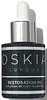
This hydrating oil is formulated around Oryza Sativa Bran Oil and Oenothera Biennis Oil to hydrate skin and calm redness.
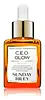
This brightening oil is formulated around Tetrahexyldecyl Ascorbate to brighten dull-looking skin.


What's inside
What's inside
 Key Ingredients
Benefits
Concerns
Ingredients Side-by-side
Oryza Sativa Bran Oil
Emollient





Helianthus Annuus Seed Oil
Emollient
Coconut Alkanes
Emollient


Caprylic/Capric Triglyceride
Masking
Helianthus Annuus Seed Oil Unsaponifiables
Emollient
Oenothera Biennis Oil
Emollient
Rosa Canina Seed Oil
Emollient
Octyldodecanol
Emollient
Coco-Caprylate/Caprate
Emollient
Echium Plantagineum Seed Oil
Skin Conditioning
Curcuma Longa Root Extract
Antioxidant

Tocopherol
Antioxidant



Lupinus Albus Seed Extract
Skin ConditioningAnthemis Nobilis Flower Oil
Masking

Borago Officinalis Seed Oil
Emollient
Citrus Aurantium Dulcis Peel Oil
Masking
Crithmum Maritimum Extract
Skin ConditioningLecithin
Emollient
Ascorbyl Palmitate
Antioxidant

Pelargonium Graveolens Oil
Masking
Spilanthes Acmella Flower Extract
Skin ConditioningRetinyl Palmitate
Skin Conditioning
Lavandula Hybrida Grosso Herb Oil
Perfuming
Rosa Damascena Flower Oil
Masking
Glyceryl Stearate
Emollient
Cinnamomum Camphora Linalooliferum Wood Oil
Perfuming
Alaria Esculenta Extract
Skin Protecting
Rosmarinus Officinalis Leaf Extract
AntimicrobialVitis Vinifera Seed Oil
Emollient
Cardiospermum Halicacabum Flower/Leaf/Vine Extract
Skin ConditioningGlyceryl Oleate
Emollient
Mentha Arvensis Leaf Oil
Masking
Vanilla Planifolia Fruit Extract
Skin Conditioning
Cymbopogon Nardus Oil
Masking
Santalum Album Oil
Masking
Eugenia Caryophyllus Leaf Oil
Masking
Menthol
Masking
Citric Acid
Buffering
Limonene
Perfuming
Geraniol
Perfuming
Linalool
Perfuming
Citronellol
Perfuming
Citral
Perfuming
Oryza Sativa Bran Oil, Helianthus Annuus Seed Oil, Coconut Alkanes, Caprylic/Capric Triglyceride, Helianthus Annuus Seed Oil Unsaponifiables, Oenothera Biennis Oil, Rosa Canina Seed Oil, Octyldodecanol, Coco-Caprylate/Caprate, Echium Plantagineum Seed Oil, Curcuma Longa Root Extract, Tocopherol, Lupinus Albus Seed Extract, Anthemis Nobilis Flower Oil, Borago Officinalis Seed Oil, Citrus Aurantium Dulcis Peel Oil, Crithmum Maritimum Extract, Lecithin, Ascorbyl Palmitate, Pelargonium Graveolens Oil, Spilanthes Acmella Flower Extract, Retinyl Palmitate, Lavandula Hybrida Grosso Herb Oil, Rosa Damascena Flower Oil, Glyceryl Stearate, Cinnamomum Camphora Linalooliferum Wood Oil, Alaria Esculenta Extract, Rosmarinus Officinalis Leaf Extract, Vitis Vinifera Seed Oil, Cardiospermum Halicacabum Flower/Leaf/Vine Extract, Glyceryl Oleate, Mentha Arvensis Leaf Oil, Vanilla Planifolia Fruit Extract, Cymbopogon Nardus Oil, Santalum Album Oil, Eugenia Caryophyllus Leaf Oil, Menthol, Citric Acid, Limonene, Geraniol, Linalool, Citronellol, Citral
Rubus Idaeus Seed Oil
Emollient
Neopentyl Glycol Diethylhexanoate
Emollient
Caprylyl Caprylate/Caprate
Emollient
Simmondsia Chinensis Seed Oil
Emollient
Cucumis Sativus Seed Oil
Emollient
Punica Granatum Seed Oil
Emollient
Vaccinium Macrocarpon Seed Oil
Skin Conditioning
Oenothera Biennis Oil
Emollient
Octyldodecanol
Emollient
Tetrahexyldecyl Ascorbate
Antioxidant

Curcuma Longa Root Extract
Antioxidant
Helianthus Annuus Seed Oil Unsaponifiables
Emollient
Citrus Aurantium Amara Flower Oil
Masking
Melia Azadirachta Leaf Extract
Skin ConditioningEclipta Prostrata Extract
Skin Conditioning
Moringa Oleifera Seed Oil
Emollient
Tocopherol
Antioxidant
Helianthus Annuus Seed Oil
Emollient
Pentylene Glycol
Skin Conditioning
4-T-Butylcyclohexanol
Masking
Ribes Nigrum Seed Oil
Emollient
Bisabolol
Antioxidant
Cetylhydroxyproline Palmitamide
Skin ConditioningHexyldecanol
Emollient
Hydroxyphenyl Propamidobenzoic Acid
Skin ConditioningStearic Acid
Cleansing
Brassica Campestris Sterols
EmollientCardiospermum Halicacabum Flower/Leaf/Vine Extract
Skin ConditioningZingiber Officinale Root Extract
Masking
Rosmarinus Officinalis Leaf Extract
AntimicrobialRubus Idaeus Seed Oil, Neopentyl Glycol Diethylhexanoate, Caprylyl Caprylate/Caprate, Simmondsia Chinensis Seed Oil, Cucumis Sativus Seed Oil, Punica Granatum Seed Oil, Vaccinium Macrocarpon Seed Oil, Oenothera Biennis Oil, Octyldodecanol, Tetrahexyldecyl Ascorbate, Curcuma Longa Root Extract, Helianthus Annuus Seed Oil Unsaponifiables, Citrus Aurantium Amara Flower Oil, Melia Azadirachta Leaf Extract, Eclipta Prostrata Extract, Moringa Oleifera Seed Oil, Tocopherol, Helianthus Annuus Seed Oil, Pentylene Glycol, 4-T-Butylcyclohexanol, Ribes Nigrum Seed Oil, Bisabolol, Cetylhydroxyproline Palmitamide, Hexyldecanol, Hydroxyphenyl Propamidobenzoic Acid, Stearic Acid, Brassica Campestris Sterols, Cardiospermum Halicacabum Flower/Leaf/Vine Extract, Zingiber Officinale Root Extract, Rosmarinus Officinalis Leaf Extract
Reviews
Ingredients Explained
These ingredients are found in both products.
Ingredients higher up in an ingredient list are typically present in a larger amount.
Cardiospermum halicacabum extract is more commonly known as Balloon Vine Extract.
Curcuma Longa Root Extract comes from the rhizome (underground stem) of the turmeric plant.
While the official EU Cosing Database lists this ingredient as a fragrance, it actually does more than give products a scent.
This ingredient contains a group of yellow pigments called curcuminoids (mostly curcumin) that give it genuine antioxidant and anti-inflammatory activity in skin.
Reviews of topical clinical studies have found turmeric/curcumin to be generally well-tolerated and useful across conditions like eczema and mild inflammation.
One thing working in its favor is that curcumin barely penetrates; in lab skin-permeation testing, the curcuminoids mostly stayed in the outermost layer of skin. This is a good thing because its soothing and antioxidant activity is a surface-level job anyway.
At this time, industry data shows there's no single "correct" cosmetic percentage. It's used across a wide range depending on the product and varies from tiny fractions of a percent up to a few percent.
Allergy-wise, curcumin is a documented (but uncommon) contact allergen. It can also cross react with related plants, so anyone with a turmeric/ginger/cinnamon allergy or reactive skin should patch test first.
Learn more about Curcuma Longa Root ExtractHelianthus Annuus Seed Oil is a plant oil derived from the seeds of a sunflower.
It is rich in fatty acids, primarily linoleic acid and oleic acid. This gives it emollient and skin conditioning properties.
The reason this ingredient is so effective is because it forms a thin film on the skin that reduces transepidermal water loss (TEWL) while supplying linoleic acid to the stratum corneum to improve barrier strength.
The high linoleic acid content is particularly noteworthy for acne-prone skin.
Research suggests that acne-prone skin tends to be deficient in linoleic acid in sebum. Topical application may help replenish this to support a healthier follicular environment and less comedone-promoting sebum.
One randomized study found sunflower seed oil preserved skin barrier integrity in adult volunteers with and without atopic dermatitis (outperforming olive oil).
This ingredient is well-studied, gentle, and an effective emollient suitable for most skin types.
On fungal acne: This ingredient may not be Fungal acne (Malassezia folliculitis) safe. This is because it contains fatty acids with carbon chain lengths in the C11-C24 range.
Learn more about Helianthus Annuus Seed OilThis ingredient is the small fraction of sunflower seed oil (~1.5-2% of the whole oil) that cannot be turned into soap.
This concentrated fraction is rich in skin-nourishing compounds like free fatty acids, tocopherols, and phytosterols. Linoleic acid makes up about 48-74% of its composition.
Unsaponifiables have high antioxidant potential due to the tocopherols, carotenoids, and phenolic acids that help protect skin from free radical damage. On the other hand, linoleic acid supports the skin's barrier by replenishing ceramides and reducing transepidermal water loss.
A manufacturer-sponsored clinical study found that a cream with 2% of this ingredient increased skin moisturization by 48.6% after 1 hour and 34.2% after 24 hours.
Using this cream twice-daily for 4 weeks showed meaningful improvement in dryness, roughness, and desquamation (the shedding of dead skin cells).
Keep in mind this is a small, industry-funded study so it'd be great to see independent replication. However, the mechanism is consistent with well-establish linoleic and phytosterol research.
While this ingredient is generally considered safe, those with an Asteraceae/Compositae plant allergy should patch test this ingredient.
Fungal acne: this ingredient is not considered safe for fungal acne because the Malassezia yeast preferentially metabolizes in the C11-24 range. Linoleic acid falls into this range at C18.
Learn more about Helianthus Annuus Seed Oil UnsaponifiablesOctyldodecanol is a fatty alcohol sourced from plant oils like coconut or palm (or made synthetically).
It is:
You'll likely see this in many BHA products because this is the go-to solvent for salicylic acid.
This ingredient is typically used at levels between 2-20%.
Regarding fungal acne:
In 2019, this ingredient was tested against multiple Malassezia species (the yeast that causes fungal acne) and showed no growth.
Oenothera Biennis Oil (aka Evening Primrose Oil) is a non-fragrant oil from the evening primrose. Like other botanical oils, it is an emollient that helps hydrate and nourish skin.
It has an interesting fatty acid profile: linoleic (70-74%) and γ-linolenic (8-10%), with some amounts ofoleic palmitic, and stearic acids.
The gamma-linoleic acid (GLA) is the headliner here; it's relatively rare in plant oils and acts as a precursor for anti-inflammatory signaling molecules in the skin.
There's a mixed body of clinical research with this ingredient as well, mostly on eczema/atopic dermatitis skin.
Some controlled trials showed improvement in inflammation, dryness, scaling, and overall severity. Other studies and large meta-analysis failed to show a significant effect; the honest takeaway here is "promising but inconsistent" rather than "miracle oil".
On the safety front, this ingredient is found to be safe as used in cosmetics and even has a history of safe food use.
This ingredient does have a comedogenic rating of 3, but this doesn't mean a formula with this ingredient will clog pores. Human testing has proved that any finished product with this ingredient won't automatically make you break out; it really comes down to concentration, formula, and your skin.
Since this oil is contains oleic acid and palmitic acid, it may not be fungal acne safe. The Malassezia yeast feeds on fatty acids with carbon chain lengths between C11-C24. Oleic Acid sits at C18 and Palmitic acid sits at C16.
In vitro studies have shown that oleic acid and palmitic acid are some of the fatty acids that induce rapid Malassezia growth in lab settings.
Learn more about Oenothera Biennis OilThis is a botanical extract from the rosemary plant (the same one you cook with). In skincare, it mostly works as a skin conditioning agent.
Its activity comes from a handful of polyphenols, carnosic acid, carnosol, and rosmarinic acid. Almost 90% of the antioxidant activity of this ingredient can be attributed to canosol and carnosic acid.
These compounds protect your skin two ways:
1) They fight off free radicals, or the unstable molecules from things like sun and pollution that age and damage skin.
2) They help calm inflammation by switching off the chemical signals that tell skin to get red and irritated.
Lab studies also suggest that rosmarinic acid may help protect collagen and slow sugar-related damage to it.
The Cosmetic Ingredient Review has concluded rosemary-derived ingredients to be safe when formulated to be non-sensitizing.
Rosemary can occasionally cause allergic contact dermatitis (due to carnosol), so be sure to patch test if you have reactive or fragrance-sensitive skin.
Learn more about Rosmarinus Officinalis Leaf ExtractTocopherol is a fat-soluble antioxidant known as Vitamin E.
You'll find this ingredient in the vast majority of skincare (for good reason). It works to neutralize free radicals, or unstable molecules generated by UV exposure, pollution, and other environmental stressors, before they can cause oxidative damage to your skin cells.
Topically applied tocopherol has been shown to protect against UV damage by ramping up the skin's own natural defense enzymes.
It also acts as a skin conditioning agent; some studies show that regular topical use can improve the skin's water-binding capacity over 2-4 weeks.
This ingredient is especially loved for being a team player. When combined with Vitamin C, the photoprotective effect of both ingredients roughly doubles and the combo also helps reduce UV-induced DNA damage.
This ingredient has some brightening potential but it's more of a prevention ingredient than spot-fader. Cell studies show it can slow down melanin production but it's worth noting that it's not the most powerful brightener out there.
In formulations, it also serves as a stabilizer that helps protect other oxidation-prone ingredients from degrading.
Concentrations usually range from 0.1-1% in most leave-on products.
Learn more about Tocopherol

