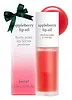
This barrier-repair lip moisturizer is formulated around Helianthus Annuus Seed Oil and Simmondsia Chinensis Seed Oil to strengthen the lip barrier and hydrate lips.

What's inside
What's inside
 Key Ingredients
Benefits
Concerns
Ingredients Side-by-side
Diisostearyl Malate
EmollientBis-Behenyl/Isostearyl/Phytosteryl Dimer Dilinoleyl Dimer Dilinoleate
EmollientBis-Diglyceryl Polyacyladipate-2
Emollient


Polyglyceryl-2 Triisostearate
Emulsifying
Hydrogenated Polyisobutene
EmollientParaffin
Skin Conditioning
Microcrystalline Wax
Emulsion StabilisingRhus Verniciflua Peel Wax
1,2-Hexanediol
Skin Conditioning
Sorbitan Isostearate
Emulsifying
CI 77492
Cosmetic ColorantTitanium Dioxide
Cosmetic Colorant

Tocopheryl Acetate
Antioxidant


Parfum
Masking


Limonene
Perfuming
CI 15850
Cosmetic ColorantLinalool
Perfuming
Geraniol
Perfuming
Water
Skin ConditioningRosa Centifolia Flower Extract
Astringent
Butylene Glycol
Humectant
Butyrospermum Parkii Butter
Skin Conditioning

Camellia Japonica Seed Oil
Emollient
Caprylic/Capric Triglyceride
Masking
Argania Spinosa Kernel Oil
Emollient


Simmondsia Chinensis Seed Oil
Emollient
Prunus Amygdalus Dulcis Oil
Skin Conditioning
Prunus Armeniaca Kernel Oil
Masking
Oenothera Biennis Oil
Emollient
Olea Europaea Fruit Oil
Masking
Rosa Canina Fruit Extract
Astringent
Mangifera Indica Fruit Extract
Skin ConditioningHoney Extract
Humectant
Phenoxyethanol
Preservative
Diisostearyl Malate, Bis-Behenyl/Isostearyl/Phytosteryl Dimer Dilinoleyl Dimer Dilinoleate, Bis-Diglyceryl Polyacyladipate-2, Polyglyceryl-2 Triisostearate, Hydrogenated Polyisobutene, Paraffin, Microcrystalline Wax, Rhus Verniciflua Peel Wax, 1,2-Hexanediol, Sorbitan Isostearate, CI 77492, Titanium Dioxide, Tocopheryl Acetate, Parfum, Limonene, CI 15850, Linalool, Geraniol, Water, Rosa Centifolia Flower Extract, Butylene Glycol, Butyrospermum Parkii Butter, Camellia Japonica Seed Oil, Caprylic/Capric Triglyceride, Argania Spinosa Kernel Oil, Simmondsia Chinensis Seed Oil, Prunus Amygdalus Dulcis Oil, Prunus Armeniaca Kernel Oil, Oenothera Biennis Oil, Olea Europaea Fruit Oil, Rosa Canina Fruit Extract, Mangifera Indica Fruit Extract, Honey Extract, Phenoxyethanol
Polyglyceryl-2 Isostearate/Dimer Dilinoleate Copolymer
EmollientHelianthus Annuus Seed Oil
Emollient
Diisostearyl Malate
EmollientSimmondsia Chinensis Seed Oil
Emollient
Tocopheryl Acetate
Antioxidant
Silica Dimethyl Silylate
EmollientOlea Europaea Fruit Oil
Masking
Rubus Idaeus Seed Oil
Emollient
Rubus Idaeus Fruit Extract
AstringentPyrus Malus Fruit Extract
Skin Conditioning
Pyrus Malus Seed Oil
Emollient
Citrus Paradisi Peel Oil
Masking

Camellia Sinensis Seed Oil
Humectant
Camellia Japonica Seed Oil
Emollient
Argania Spinosa Kernel Oil
Emollient
Macadamia Integrifolia Seed Oil
Skin Conditioning
Caprylic/Capric Triglyceride
Masking
Isostearic Acid
Cleansing
Ethylhexyl Palmitate
Emollient
Dehydroacetic Acid
Preservative
Monascus Extract
Skin ConditioningTribehenin
Emollient
Rosa Canina Fruit Oil
Emollient
Sorbitan Isostearate
Emulsifying
Water
Skin ConditioningButylene Glycol
Humectant
Lactic Acid
Buffering



Palmitoyl Tripeptide-1
Skin Conditioning
CI 45380
Cosmetic ColorantCI 15850
Cosmetic ColorantCI 77491
Cosmetic ColorantLimonene
Perfuming
Polyglyceryl-2 Isostearate/Dimer Dilinoleate Copolymer, Helianthus Annuus Seed Oil, Diisostearyl Malate, Simmondsia Chinensis Seed Oil, Tocopheryl Acetate, Silica Dimethyl Silylate, Olea Europaea Fruit Oil, Rubus Idaeus Seed Oil, Rubus Idaeus Fruit Extract, Pyrus Malus Fruit Extract, Pyrus Malus Seed Oil, Citrus Paradisi Peel Oil, Camellia Sinensis Seed Oil, Camellia Japonica Seed Oil, Argania Spinosa Kernel Oil, Macadamia Integrifolia Seed Oil, Caprylic/Capric Triglyceride, Isostearic Acid, Ethylhexyl Palmitate, Dehydroacetic Acid, Monascus Extract, Tribehenin, Rosa Canina Fruit Oil, Sorbitan Isostearate, Water, Butylene Glycol, Lactic Acid, Palmitoyl Tripeptide-1, CI 45380, CI 15850, CI 77491, Limonene
Reviews
Ingredients Explained
These ingredients are found in both products.
Ingredients higher up in an ingredient list are typically present in a larger amount.
You may know this ingredient as argan oil. It has emollient and skin conditioning properties that help soften skin and reinforce the lipid barrier.
The fatty acid profile of argan oil is roughly 45-55% oleic acid, 28-36% linoleic acid, 10-15% palmitic acid, and 5-7% stearic acid. It also contains vitamin E, sterols, squalene, and polyphenols like ferulic acid.
Two clinical studies in postmenopausal women found that applying argan oil for 60 days significantly improved skin elasticity and moisturization (reduced transepidermal water loss and increased epidermal water content).
Since it is high in oleic and linoleic acid, this ingredient may not be fungal acne safe. Both of these fall in the C11-C24 range that Malassezia yeast can metabolize.
Learn more about Argania Spinosa Kernel OilButylene Glycol (or BG) is used within cosmetic products for a few different reasons:
Overall, Butylene Glycol is a safe and well-rounded ingredient that works well with other ingredients.
Though this ingredient works well with most skin types, some people with sensitive skin may experience a reaction such as allergic rashes, closed comedones, or itchiness.
Learn more about Butylene GlycolThis ingredient is also known as Tsubaki oil, or the fixed oil from the seeds of the Japanese camellia.
It's basically a fatty acid delivery system (~75-85% oleic acid) plus some minor extras like squalene, tocopherols, and phytosterols.
That profile makes it a classic emollient; it works by hanging out with the skin's surface lipids, softens, and slows down water loss.
The most cited study on it was done on skin cells in a dish where this oil got them to make more of the building blocks for collagen while also slowing down the enzyme that breaks collagen down. Researchers tested this on human skin too; it didn't cause irritation and helped skin hold onto moisture better.
Another study done on cells and mice found this oil quieted down some of the body's inflammation signals.
These studies are still small, early, and not done on humans, so it's best to think of this ingredient as a great supporting ingredient for the rest of your routine and not the main active.
Concentrations can range from 1-5% in serums to 100% as a single face oil (how it's most traditionally used).
Because this ingredient is a triglyceride of long-chain fatty acids, this ingredient may not be Malassezia safe.
Allergies to this protein are quite rare as the refined seed oil contains very little residual protein. Human irritation testing also came back clean. But it is a plant and as with any botanical ingredient, contact allergy is possible.
Learn more about Camellia Japonica Seed OilCaprylic/Capric Triglyceride (aka MCT Oil) is a lightweight emollient, solvent, and texture enhancer. It is considered a skin-softener by helping to prevent moisture loss.
Though it behaves like an oil, it is not technically one due to its chemical composition. One perk of this ingredient is that it is very stable, resistant to oxidation, and unlikely to go rancid.
In practice, that translates to a long shelf life and a consistently elegant skin feel.
While there is an assumption Caprylic Triglyceride can clog pores due to it being derived from coconut oil, there is no research supporting this. Just patch test if you have concerns.
Fractionated coconut oil and MCT Oil are both listed as Caprylic/Capric Triglyceride according to INCI. This is because INCI names are based on the ingredient’s final chemical composition and not its marketing name or source.
This ingredient is treated as the gold standard fungal acne safe oil. Even though it is coconut derived, the problematic lauric acid is stripped out.
This leaves just caprylic (C8) and capric (C10) acid. These chain lengths actually trend antifungal; a 2020 study found caprylic acid was enough to disrupt Malassezia furfur cell membrane, with a caprylic acid derivative damaging membrane structures at concentrations as low as 0.2%.
Learn more about Caprylic/Capric TriglycerideCi 15850 is the pigment color red. It is an azo dye and created synthetically.
Azo dyes need to be thoroughly purified before use. This allows them to be more stable and longer-lasting.
This ingredient is common in foundations, lipsticks, and blushes. This color is described as brown/orangey red.
It has many secondary names such as Red 6 and Red 7. According to a manufacturer, Red 6 usually contains aluminum.
Learn more about CI 15850Diisostearyl Malate is an emollient and most often used in lip products. It comes from isostearyl alcohol, a fatty acid, and malic acid, an AHA.
As an emollient, Diisostearyl Malate helps create a thin film on your skin to trap moisture in. This helps keep your skin soft and smooth.
Limonene is the compound that gives citrus peel its smell.
In skincare, it shows up as a standalone fragrance ingredient or as a natural compound of citrus and other essential oils.
You'll typically see this ingredient used in very small amounts; anything above 0.001% in a leave-on product or 0.01% in a rinse-off has to be named on the label in the EU. The citrus oils that carry it sit around 0.5-1% in a finished formula.
Fresh limonene is a weak allergen; the real issue is that it slowly reacts with air and then breaks down from oxidation to create hydroperoxides (which are strong sensitizers). This is why suppliers are required to keep the peroxide value below 20 mmol.
Positive reactions in people being investigated for eczema vary:
It's worth skipping if you have a known fragrance allergy or a compromised barrier, but the risk is low for most people.
Older or long-opened products are also more likely to bother you than fresh ones due to oxidation.
Learn more about LimoneneThis ingredient is also known as olive oil. It has been used in skincare for centuries and science largely backs up its reputation as a nourishing emollient.
The main components of olive oil are oleic acid (55-83%), linoleic acid (3.5-20%), and palmitic acid (7-20%). Oleic acid promotes skin regeneration and helps regulate inflammatory responses.
Squalene is also naturally present in olive oil and exhibits moisturizing and antioxidant properties.
The polyphenols in olive oil also show anti-aging promise; one clinical study found a measurable improvement in skin appearance after 30 days of topical serum use.
Just be aware that applying olive oil directly to skin can weaken the barrier and cause redness. One study with volunteers found even people without sensitive skin experienced a significant reduction in stratum corneum integrity and induced mild erythema.
It's best to use this ingredient as part of a carefully crafted formula (instead of putting it on skin directly from the bottle).
Because it has a 0-2 on the comedogenic scale, it is low risk for acne-prone skin. Just remember the overall formulation of a product matters more than a few ingredients with comedogenic ratings.
This ingredient may not be fungal acne safe because of the oleic and palmitic acid content. These fall within the C11-24 fatty acid range that the Malassezia yeast can metabolize to grow.
Overall, olive oil is a well-studied and nourishing skincare ingredient.
Learn more about Olea Europaea Fruit OilJojoba oil is one of the most well-studied plant-derived ingredients in cosmetics. It is an emollient with a special structure.
Because it is made up of 97-98% wax esters, it closely mirrors the linear monoesters found in human sebum. This makes it skin compatible, non-greasy, and lightweight.
Unlike other plant oils, jojoba wax doesn't easily penetrate skin. It mostly works in the uppermost layers as an emollient. This just means it forms a light barrier on the skin to help retain moisture.
Formulations with jojoba esters up to 90% reduced transepidermal water loss (TEWL) and increased barrier recovery by 81% (outperforming bisabolol at 47%).
Besides barrier support, the science also suggests jojoba to have anti-inflammatory effects and potential applications for skin infections, aging, and wound healing.
Fun fact: Indigenous cultures have used jojoba as a moisturizer and to help treat burns for centuries.
Fungal acne: The Malassezia yeast is known to metabolize fatty acids in the C11-24 range and jojoba's dominant fatty acid components fall into this range. This ingredient may not be fungal acne safe.
Learn more about Simmondsia Chinensis Seed OilSorbitan Isostearate is an emulsifer. It is created from isostearic acid and sorbitol.
As an emulsifier, it keeps the water and oil ingredients from separating. This keeps formulas stable and smooth.
In a 24 hour occlusive patch test on 56 subjects, 10% sorbitan isostearate was completely non-irritating. Most formulas use less than 10%.
Because it's a fatty acid ester, it may not be fungal acne safe since the Malassezia yeast can utilize it as a nutrient source.
Learn more about Sorbitan IsostearateTocopheryl Acetate is a stable, shelf-friendly form of vitamin E.
Formulators love it because plain vitamin E oxidizes quickly once it hits air. This acetate version stays stable and resists going off, helping to extend a product's shelf life.
It's actually inactive on its own and works like a slow-release "storage" form; the enzymes in your skin called esterases gradually convert it into active vitamin E over time.
One in vivo study showed 5% of the acetate in the living layer of the epidermis converted to vitamin E after 5 days of application. This study also found the skin gained protection against UV damage even though the conversion was slow and small.
Once converted, vitamin E acts as a skin's main fat-soluble antioxidant that fights free radicals to protect skin from damage.
Topical vitamin E generally boosts the skin's photoprotection, and it reduced UV-damage in animal models.
This ingredient has some brightening potential but it's more of a prevention ingredient than spot-fader. Cell studies show it can slow down melanin production but it's worth noting that it's not the most powerful brightener out there.
Overall, it has a pretty solid safety profile and has been found to be non-irritating and non-comedogenic. Allergic reactions may happen but stay rare due to how widely the ingredient gets used.
The concentration will vary depending on the formula; industry data shows 0.1% in baby lotions, 3% in lipsticks, and 5% in foot powders. You can also find this ingredient at 100% in a pure vitamin E oil.
Most leave-on skincare keeps it at the lower end, often between 0.5-1%.
Learn more about Tocopheryl AcetateWater. It's the most common cosmetic ingredient of all. You'll usually see it at the top of ingredient lists, meaning that it makes up the largest part of the product.
So why is it so popular? Water most often acts as a solvent - this means that it helps dissolve other ingredients into the formulation.
You'll also recognize water as that liquid we all need to stay alive. If you see this, drink a glass of water. Remember to stay hydrated!
Learn more about Water

