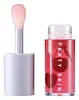
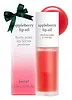
This barrier-repair lip moisturizer is formulated around Helianthus Annuus Seed Oil and Simmondsia Chinensis Seed Oil to strengthen the lip barrier and hydrate lips.


What's inside
What's inside
 Key Ingredients
No key ingredients
Benefits
Concerns
Ingredients Side-by-side
Polyglyceryl-2 Triisostearate
Emulsifying

Polyglyceryl-2 Isostearate/Dimer Dilinoleate Copolymer
EmollientDiphenyl Dimethicone
Emollient
Silica Dimethyl Silylate
EmollientPrunus Avium Seed Oil
Emollient
Simmondsia Chinensis Seed Oil
Emollient


Dextrin Palmitate
Emulsifying
Rosa Canina Fruit Oil
Emollient
Malpighia Glabra Fruit Extract
Skin ConditioningPrunus Serotina Fruit Extract
MaskingRaphanus Sativus Root Extract
AstringentMaltodextrin
Absorbent
Citric Acid
Buffering

Water
Skin ConditioningBenzyl Alcohol
Perfuming






Benzyl Benzoate
Antimicrobial
Dehydroacetic Acid
Preservative
Butylene Glycol
Humectant
1,2-Hexanediol
Skin Conditioning
Aroma
Polyglyceryl-2 Triisostearate, Polyglyceryl-2 Isostearate/Dimer Dilinoleate Copolymer, Diphenyl Dimethicone, Silica Dimethyl Silylate, Prunus Avium Seed Oil, Simmondsia Chinensis Seed Oil, Dextrin Palmitate, Rosa Canina Fruit Oil, Malpighia Glabra Fruit Extract, Prunus Serotina Fruit Extract, Raphanus Sativus Root Extract, Maltodextrin, Citric Acid, Water, Benzyl Alcohol, Benzyl Benzoate, Dehydroacetic Acid, Butylene Glycol, 1,2-Hexanediol, Aroma
Polyglyceryl-2 Isostearate/Dimer Dilinoleate Copolymer
EmollientHelianthus Annuus Seed Oil
Emollient
Diisostearyl Malate
EmollientSimmondsia Chinensis Seed Oil
Emollient
Tocopheryl Acetate
Antioxidant

Silica Dimethyl Silylate
EmollientOlea Europaea Fruit Oil
Masking
Rubus Idaeus Seed Oil
Emollient
Rubus Idaeus Fruit Extract
AstringentPyrus Malus Fruit Extract
Skin Conditioning
Pyrus Malus Seed Oil
Emollient
Citrus Paradisi Peel Oil
Masking

Camellia Sinensis Seed Oil
Humectant
Camellia Japonica Seed Oil
Emollient
Argania Spinosa Kernel Oil
Emollient

Macadamia Integrifolia Seed Oil
Skin Conditioning
Caprylic/Capric Triglyceride
Masking
Isostearic Acid
Cleansing
Ethylhexyl Palmitate
Emollient
Dehydroacetic Acid
Preservative
Monascus Extract
Skin ConditioningTribehenin
Emollient
Rosa Canina Fruit Oil
Emollient
Sorbitan Isostearate
Emulsifying
Water
Skin ConditioningButylene Glycol
Humectant
Lactic Acid
Buffering


Palmitoyl Tripeptide-1
Skin Conditioning
CI 45380
Cosmetic ColorantCI 15850
Cosmetic ColorantCI 77491
Cosmetic ColorantLimonene
Perfuming
Polyglyceryl-2 Isostearate/Dimer Dilinoleate Copolymer, Helianthus Annuus Seed Oil, Diisostearyl Malate, Simmondsia Chinensis Seed Oil, Tocopheryl Acetate, Silica Dimethyl Silylate, Olea Europaea Fruit Oil, Rubus Idaeus Seed Oil, Rubus Idaeus Fruit Extract, Pyrus Malus Fruit Extract, Pyrus Malus Seed Oil, Citrus Paradisi Peel Oil, Camellia Sinensis Seed Oil, Camellia Japonica Seed Oil, Argania Spinosa Kernel Oil, Macadamia Integrifolia Seed Oil, Caprylic/Capric Triglyceride, Isostearic Acid, Ethylhexyl Palmitate, Dehydroacetic Acid, Monascus Extract, Tribehenin, Rosa Canina Fruit Oil, Sorbitan Isostearate, Water, Butylene Glycol, Lactic Acid, Palmitoyl Tripeptide-1, CI 45380, CI 15850, CI 77491, Limonene
Reviews
Ingredients Explained
These ingredients are found in both products.
Ingredients higher up in an ingredient list are typically present in a larger amount.
Butylene Glycol (or BG) is used within cosmetic products for a few different reasons:
Overall, Butylene Glycol is a safe and well-rounded ingredient that works well with other ingredients.
Though this ingredient works well with most skin types, some people with sensitive skin may experience a reaction such as allergic rashes, closed comedones, or itchiness.
Learn more about Butylene GlycolDehydroacetic Acid is a synthetic preservative that keeps your products safe from microbes.
As an organic acid, it penetrates microbial cell walls and disrupts cellular metabolism. This makes it effective against bacteria, yeast, and mold.
It is effective at low concentrations (<0.6%). Clinical studies have found it to be non-irritating, non-sensitizing, and non-photosensitizing.
Learn more about Dehydroacetic AcidWe don't have a description for Polyglyceryl-2 Isostearate/Dimer Dilinoleate Copolymer yet.
Rosa Canina Fruit Oil is a non-fragrant plant oil that has earned its skincare reputation through chemistry.
It's dominated by fatty acids like linoleic acid (~35-55%), alpha-linolenic acid (~17-27%), and oleic acid (~14-22%). This is the exact profile that supports skin barrier, locks in hydration, and calms inflammation.
A 2024 review found evidence for the Rosa canina species supports its use for scarring, hyperpigmentation, wrinkles, and atopic dermatitis; this was mostly credited to its vitamin C content and fatty acid composition as the primary active mechanisms.
You might see this ingredient marketed as a "natural retinol". Some rosehip seed oils contains traces of all-trans-retinoic acid but these trace amounts are far below biologically active levels.
The Cosmetic Ingredient Review Panel has deemed this ingredient safe and it's well-tolerated.
Fungal acne: The fatty acids of this oil fall into the C11-24 range that Malassezia yeast can metabolize, so this ingredient may not be fungal acne safe.
Learn more about Rosa Canina Fruit OilThis silica is mainly used to thicken oils and suspend particles in oils. It is not water soluble.
According to the manufacturer, it:
The manufacturer also claims this ingredient to be useful in makeup.
In lipstick formulations, this ingredient improves color payoff, reduces pigment settling, and reduces oil bleeding. This ingredient also improves the grip of powder products such as dry shampoos.
Learn more about Silica Dimethyl SilylateJojoba oil is one of the most well-studied plant-derived ingredients in cosmetics. It is an emollient with a special structure.
Because it is made up of 97-98% wax esters, it closely mirrors the linear monoesters found in human sebum. This makes it skin compatible, non-greasy, and lightweight.
Unlike other plant oils, jojoba wax doesn't easily penetrate skin. It mostly works in the uppermost layers as an emollient. This just means it forms a light barrier on the skin to help retain moisture.
Formulations with jojoba esters up to 90% reduced transepidermal water loss (TEWL) and increased barrier recovery by 81% (outperforming bisabolol at 47%).
Besides barrier support, the science also suggests jojoba to have anti-inflammatory effects and potential applications for skin infections, aging, and wound healing.
Fun fact: Indigenous cultures have used jojoba as a moisturizer and to help treat burns for centuries.
Fungal acne: The Malassezia yeast is known to metabolize fatty acids in the C11-24 range and jojoba's dominant fatty acid components fall into this range. This ingredient may not be fungal acne safe.
Learn more about Simmondsia Chinensis Seed OilWater. It's the most common cosmetic ingredient of all. You'll usually see it at the top of ingredient lists, meaning that it makes up the largest part of the product.
So why is it so popular? Water most often acts as a solvent - this means that it helps dissolve other ingredients into the formulation.
You'll also recognize water as that liquid we all need to stay alive. If you see this, drink a glass of water. Remember to stay hydrated!
Learn more about Water

