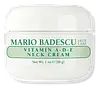
Mario Badescu Vitamin A-D-E Neck Cream Versus RoC Multi Correxion 5 In 1 Daily Moisturizer with Sunscreen
This anti-aging moisturizer is formulated around Oryza Sativa Bran Oil and Hyaluronic Acid to soften the look of wrinkles and hydrate skin.
This brightening moisturizer is formulated around Ascorbyl Glucoside and Hexylresorcinol to fade the look of dark spots and brighten dull-looking skin.


What's inside
What's inside
 Key Ingredients
Benefits
Concerns
Ingredients Side-by-side
Water
Skin ConditioningOryza Sativa Bran Oil
Emollient





Vegetable Oil
Skin Conditioning
Glycerin
Humectant

Cera Alba
Emollient


Dimethicone
Emollient
Cetearyl Alcohol
Emollient

Isodecyl Salicylate
Skin Conditioning
Zea Mays Oil
Emulsifying
Hyaluronic Acid
Humectant

Cetyl Alcohol
Emollient
Ceteareth-20
Cleansing
Theobroma Cacao Seed Butter
Emollient
Tocopheryl Acetate
Antioxidant


Rna
Skin ConditioningErgocalciferol
Skin ConditioningRetinyl Palmitate
Skin Conditioning

Isopropyl Myristate
Emollient
Glyceryl Acrylate/Acrylic Acid Copolymer
HumectantParfum
Masking
Propylene Glycol
Humectant
Propylparaben
Preservative


Sodium Benzoate
Masking
Methylparaben
Preservative
Diazolidinyl Urea
Preservative
Sodium Chloride
MaskingAmyl Cinnamal
Perfuming
Benzyl Benzoate
Antimicrobial
Benzyl Salicylate
Perfuming
Limonene
Perfuming
Eugenol
Perfuming
Geraniol
Perfuming
Linalool
Perfuming
Hydroxycitronellol
Perfuming
Hexyl Cinnamal
Perfuming
Butylphenyl Methylpropional
Perfuming
Hydroxyisohexyl 3-Cyclohexene Carboxaldehyde
Masking
CI 19140
Cosmetic ColorantCI 15985
Cosmetic ColorantCI 16035
Cosmetic ColorantWater, Oryza Sativa Bran Oil, Vegetable Oil, Glycerin, Cera Alba, Dimethicone, Cetearyl Alcohol, Isodecyl Salicylate, Zea Mays Oil, Hyaluronic Acid, Cetyl Alcohol, Ceteareth-20, Theobroma Cacao Seed Butter, Tocopheryl Acetate, Rna, Ergocalciferol, Retinyl Palmitate, Isopropyl Myristate, Glyceryl Acrylate/Acrylic Acid Copolymer, Parfum, Propylene Glycol, Propylparaben, Sodium Benzoate, Methylparaben, Diazolidinyl Urea, Sodium Chloride, Amyl Cinnamal, Benzyl Benzoate, Benzyl Salicylate, Limonene, Eugenol, Geraniol, Linalool, Hydroxycitronellol, Hexyl Cinnamal, Butylphenyl Methylpropional, Hydroxyisohexyl 3-Cyclohexene Carboxaldehyde, CI 19140, CI 15985, CI 16035
Butyl Methoxydibenzoylmethane 2%
UV Absorber
Homosalate 4%
Skin Conditioning
Ethylhexyl Salicylate 4%
UV Absorber
Octocrylene 2%
UV Absorber
Water
Skin ConditioningPropylene Glycol
Humectant
Glycerin
Humectant
Isononyl Isononanoate
EmollientDimethicone
Emollient
Steareth-2
EmulsifyingAscorbyl Glucoside
Antioxidant
Ethylhexyl Palmitate
Emollient
Styrene/Acrylates Copolymer
Butyrospermum Parkii Butter
Skin Conditioning
Methyl Methacrylate Crosspolymer

Hexylresorcinol
Antimicrobial
Steareth-21
CleansingBehenyl Alcohol
Emollient
Dimethicone Crosspolymer
Emulsion Stabilising
Phenoxyethanol
Preservative
Ammonium Acryloyldimethyltaurate/Vp Copolymer
Sodium Hydroxide
BufferingCaprylyl Glycol
Emollient
Sclerotium Gum
Emulsion StabilisingParfum
Masking
Mica
Cosmetic ColorantTitanium Dioxide
Cosmetic Colorant
Methylparaben
Preservative
Disodium EDTA
ChelatingEthylparaben
Preservative
Propylparaben
Preservative
Butyl Methoxydibenzoylmethane 2%, Homosalate 4%, Ethylhexyl Salicylate 4%, Octocrylene 2%, Water, Propylene Glycol, Glycerin, Isononyl Isononanoate, Dimethicone, Steareth-2, Ascorbyl Glucoside, Ethylhexyl Palmitate, Styrene/Acrylates Copolymer, Butyrospermum Parkii Butter, Methyl Methacrylate Crosspolymer, Hexylresorcinol, Steareth-21, Behenyl Alcohol, Dimethicone Crosspolymer, Phenoxyethanol, Ammonium Acryloyldimethyltaurate/Vp Copolymer, Sodium Hydroxide, Caprylyl Glycol, Sclerotium Gum, Parfum, Mica, Titanium Dioxide, Methylparaben, Disodium EDTA, Ethylparaben, Propylparaben
Ingredients Explained
These ingredients are found in both products.
Ingredients higher up in an ingredient list are typically present in a larger amount.
Dimethicone is a type of synthetic silicone created from natural materials such as quartz. It is also known as polydimethylsiloxane.
What it does:
Dimethicone comes in different viscosities:
Depending on the viscosity, dimethicone has different properties.
Ingredients lists don't always show which type is used, so we recommend reaching out to the brand if you have questions about the viscosity.
This ingredient is unlikely to cause irritation because it does not get absorbed into skin. However, people with silicone allergies should be careful about using this ingredient.
Note: Dimethicone may contribute to pilling. This is because it is not oil or water soluble, so pilling may occur when layered with products. When mixed with heavy oils in a formula, the outcome is also quite greasy.
Learn more about DimethiconeGlycerin (or glycerol) is a compound naturally found in your skin. It's a powerhouse humectant that pulls water into the stratum corneum.
Topically, glycerin does several things at once:
Your skin makes glycerin on its own (mostly from sebaceous oil breakdown) and shuttles it to your outermost layer of skin, or your epidermis, via aquaporin-3.
Aquaporin-3 is a transporter that is essential for normal skin hydration, elasticity, and repair. Interestingly, mice lacking in AQP3 have dry and less elastic skin that can be fully corrected with glycerin.
This ingredient is non-irritating, plays well with almost every ingredient, and works across all skin types. Typical use is anywhere between 3-10% but can go up to 79% in some leave-on products.
Just know very high concentrations (>40%) can feel tacky in low humidity.
Glycerin is the name for this ingredient in American English. British English uses Glycerol/Glycerine.
Learn more about GlycerinMethylparaben is a synthetic preservative and one of the most widely used in the world. It has a simple, but important job: prevent your products from going bad by stopping bacteria, yeast, and mold from growing.
Typical use levels are low, often 0.1-0.3%.
This is also one of the most heavily studied preservatives out there and major regulatory bodies have repeatedly given it the green light.
In 2023, the EU's Scientific Committee on Consumer Safety (SCCS) confirmed that this ingredient is safe up to 0.4% on its own, of up to 0.8% when mixed with other paraben esters.
Here's the science behind the noise behind parabens/hormones as well:
Methylparaben shows very weak estrogen-like activity in vitro tests (more than 1,000x weaker than your body's own estradiol). In vivo (live-organism) studies don't support a meaningful endocrine-disrupting effect either.
You get a stronger estrogenic effect from eating tofu, actually.
It's also a low sensitizer and allergic reactions are uncommon; they usually happen on damage or broken skin.
There is a caveat: France has proposed to formally re-examine its endocrine classification in 2025 so the regulatory conversation isn't fully closed as of yet.
But as it stands today, this ingredient is considered safe at permitted levels.
Learn more about MethylparabenParfum is a catch-all term for an ingredient or more that is used to give a scent to products.
Also called "fragrance", this ingredient can be a blend of hundreds of chemicals or plant oils. This means every product with "fragrance" or "parfum" in the ingredients list is a different mixture.
For instance, Habanolide is a proprietary trade name for a specific aroma chemical. When used as a fragrance ingredient in cosmetics, most aroma chemicals fall under the broad labeling category of “FRAGRANCE” or “PARFUM” according to EU and US regulations.
The term 'parfum' or 'fragrance' is not regulated in many countries. In many cases, it is up to the brand to define this term.
For instance, many brands choose to label themselves as "fragrance-free" because they are not using synthetic fragrances. However, their products may still contain ingredients such as essential oils that are considered a fragrance by INCI standards.
One example is Calendula flower extract. Calendula is an essential oil that still imparts a scent or 'fragrance'.
Depending on the blend, the ingredients in the mixture can cause allergies and sensitivities on the skin. Some ingredients that are known EU allergens include linalool and citronellol.
Parfum can also be used to mask or cover an unpleasant scent.
The bottom line is: not all fragrances/parfum/ingredients are created equally. If you are worried about fragrances, we recommend taking a closer look at an ingredient. And of course, we always recommend speaking with a professional.
Learn more about ParfumPropylene Glycol is a synthetic, colorless, odorless liquid that has been a staple in cosmetics for decades. It is a skin conditioning agent, humectant, and solvent.
As a humectant, it draw water to the skin to reduce flaking and restore suppleness. It's also a solvent that helps dissolve other actives and keeps formulas stable across temperature changes.
The CIR Expert Panel has confirmed this ingredient to be nontoxic and clinical studies show no sensitization at cosmetic use concentrations.
True allergic reactions are quite rare: a 15-year retrospective study of 6,751 patients found only 0.31% had a positive reaction (and less than half were considered clinically relevant).
It seemed that when sensitization does occur, it's most commonly linked to topical medication (like corticosteroids) and not cosmetics. Allergic contact dermatitis also appears largely limited to individuals with underlying skin conditions.
Overall, propylene glycol is a well-studied ingredient that most people can tolerate without issue.
Learn more about Propylene GlycolPropylparaben is a preservative and one of the most widely used members of the paraben family (it's been used in cosmetics for over a century now).
It works by disrupting microbial cell membranes and enzymes, and is a broad-spectrum protector that works exceptionally well against molds, yeasts, and gram-positive bacteria.
You'll likely see it paired with methylparaben to cover the full range (including gram-negative bacteria).
This ingredient is effective at low concentrations (~0.2-0.5%) and stable across a wide pH range (4.5-7.5 pH). It's effectiveness drops off above pH 8 and it can lose potency when combined with non-ionic surfactants like polysorbate 80 due to micellization.
The regulatory bodies have concluded this ingredient to be safe as used in cosmetics. The EU has capped it at 0.14% and combined parabens are not to exceed 0.8%.
While parabens do cross the stratum corneum, only about 1% remains for absorption into the body. This is because most of it is metabolized within living skin.
Learn more about PropylparabenWater. It's the most common cosmetic ingredient of all. You'll usually see it at the top of ingredient lists, meaning that it makes up the largest part of the product.
So why is it so popular? Water most often acts as a solvent - this means that it helps dissolve other ingredients into the formulation.
You'll also recognize water as that liquid we all need to stay alive. If you see this, drink a glass of water. Remember to stay hydrated!
Learn more about Water

