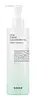
This oil-based makeup remover is made to dissolve makeup, sunscreen, and daily buildup.
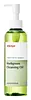
This oil-based cleanser is made to cleanse while calming and soothing your skin.

What's inside
What's inside
 Key Ingredients
Benefits
Concerns
Ingredients Side-by-side
Glycine Soja Oil
Emollient








Sorbeth-30 Tetraoleate
Emulsifying
Isoamyl Laurate
Emollient
Caprylic/Capric Triglyceride
Masking

Camellia Sinensis Leaf Oil
Antioxidant
Olea Europaea Fruit Oil
Masking
Vitis Vinifera Seed Oil
Emollient
Artemisia Vulgaris Oil
Perfuming

Salvia Officinalis Oil
Masking
Simmondsia Chinensis Seed Oil
Emollient
Glyceryl Caprylate
EmollientPrunus Amygdalus Dulcis Oil
Skin Conditioning
Moringa Oleifera Seed Oil
Emollient
Melaleuca Alternifolia Leaf Oil
Antioxidant

Eucalyptus Globulus Leaf Oil
Perfuming
Rosmarinus Officinalis Leaf Oil
Masking
Lavandula Angustifolia Oil
Masking
Tocopherol
Antioxidant


Camellia Sinensis Leaf Extract
Antimicrobial
Camellia Sinensis Leaf Water
Masking
Artemisia Vulgaris Extract
Skin Conditioning
Carica Papaya Fruit Extract
Skin ConditioningPogostemon Cablin Leaf Oil
Masking
Olibanum
MaskingGlycine Soja Oil, Sorbeth-30 Tetraoleate, Isoamyl Laurate, Caprylic/Capric Triglyceride, Camellia Sinensis Leaf Oil, Olea Europaea Fruit Oil, Vitis Vinifera Seed Oil, Artemisia Vulgaris Oil, Salvia Officinalis Oil, Simmondsia Chinensis Seed Oil, Glyceryl Caprylate, Prunus Amygdalus Dulcis Oil, Moringa Oleifera Seed Oil, Melaleuca Alternifolia Leaf Oil, Eucalyptus Globulus Leaf Oil, Rosmarinus Officinalis Leaf Oil, Lavandula Angustifolia Oil, Tocopherol, Camellia Sinensis Leaf Extract, Camellia Sinensis Leaf Water, Artemisia Vulgaris Extract, Carica Papaya Fruit Extract, Pogostemon Cablin Leaf Oil, Olibanum
Ethylhexyl Palmitate
Emollient
Sorbeth-30 Tetraoleate
Emulsifying
Triethylhexanoin
MaskingGlycine Soja Oil
Emollient
Caprylic/Capric Triglyceride
Masking
Simmondsia Chinensis Seed Oil
Emollient
Citrus Aurantifolia Oil
Cleansing
Citrus Limon Peel Oil
Masking
Citrus Aurantium Bergamia Fruit Oil
Masking
Tocopherol
Antioxidant
Helianthus Annuus Seed Oil
Emollient
Caprylyl Glycol
Emollient
Ethylhexylglycerin
Skin ConditioningAvena Sativa Kernel Oil
Skin Conditioning
Olea Europaea Fruit Oil
Masking
Oenothera Biennis Oil
Emollient
Persea Gratissima Oil
Skin Conditioning
Prunus Amygdalus Dulcis Oil
Skin Conditioning
Water
Skin Conditioning1,2-Hexanediol
Skin Conditioning
Centella Asiatica Extract
Cleansing
Centella Asiatica Leaf Extract
Skin Conditioning
Centella Asiatica Root Extract
Skin Conditioning
Pinus Pinaster Bark Extract
Antioxidant
Asiaticoside
Antioxidant
Asiatic Acid
Skin Conditioning
Madecassoside
Antioxidant
Madecassic Acid
Skin Conditioning
Ethylhexyl Palmitate, Sorbeth-30 Tetraoleate, Triethylhexanoin, Glycine Soja Oil, Caprylic/Capric Triglyceride, Simmondsia Chinensis Seed Oil, Citrus Aurantifolia Oil, Citrus Limon Peel Oil, Citrus Aurantium Bergamia Fruit Oil, Tocopherol, Helianthus Annuus Seed Oil, Caprylyl Glycol, Ethylhexylglycerin, Avena Sativa Kernel Oil, Olea Europaea Fruit Oil, Oenothera Biennis Oil, Persea Gratissima Oil, Prunus Amygdalus Dulcis Oil, Water, 1,2-Hexanediol, Centella Asiatica Extract, Centella Asiatica Leaf Extract, Centella Asiatica Root Extract, Pinus Pinaster Bark Extract, Asiaticoside, Asiatic Acid, Madecassoside, Madecassic Acid
Reviews
Ingredients Explained
These ingredients are found in both products.
Ingredients higher up in an ingredient list are typically present in a larger amount.
Caprylic/Capric Triglyceride (aka MCT Oil) is a lightweight emollient, solvent, and texture enhancer. It is considered a skin-softener by helping to prevent moisture loss.
Though it behaves like an oil, it is not technically one due to its chemical composition. One perk of this ingredient is that it is very stable, resistant to oxidation, and unlikely to go rancid.
In practice, that translates to a long shelf life and a consistently elegant skin feel.
While there is an assumption Caprylic Triglyceride can clog pores due to it being derived from coconut oil, there is no research supporting this. Just patch test if you have concerns.
Fractionated coconut oil and MCT Oil are both listed as Caprylic/Capric Triglyceride according to INCI. This is because INCI names are based on the ingredient’s final chemical composition and not its marketing name or source.
This ingredient is treated as the gold standard fungal acne safe oil. Even though it is coconut derived, the problematic lauric acid is stripped out.
This leaves just caprylic (C8) and capric (C10) acid. These chain lengths actually trend antifungal; a 2020 study found caprylic acid was enough to disrupt Malassezia furfur cell membrane, with a caprylic acid derivative damaging membrane structures at concentrations as low as 0.2%.
Learn more about Caprylic/Capric TriglycerideGlycine Soja Oil is a plant-derived oil from soybean seeds. Like other oils, it is rich in essential fatty acids (mostly linoleic and oleic) that support skin hydration and barrier function.
The fatty acids are able to integrate into the lipid matrix of the stratum corneum to help soften skin and reduce water loss.
On top of that, soybean oil is rich in vitamins like vitamin E, a potent antioxidant.
Research on soybean's active components also point to anti-inflammatory, collagen-stimulating, antioxidant activity, and protection against UV-induced oxidative damage.
Most of this research applies to the broader soybean plant and not just the oil fraction alone.
This ingredient does carry a comedogenic rating of 3 from the old rabbit-ear assay. Just remember testing finished products in humans showed that formulas built with "comedogenic" ingredients are not necessarily comedogenic themselves. It's worth patch testing if you're breakout prone, and always listen to your skin.
Because this ingredient is a saturated triglyceride, it may not be fungal acne safe. This is because Malassezia breaks down sebum triglycerides into fatty acids it can consume, making this ingredient a possible source for the yeast.
Learn more about Glycine Soja OilThis ingredient is also known as olive oil. It has been used in skincare for centuries and science largely backs up its reputation as a nourishing emollient.
The main components of olive oil are oleic acid (55-83%), linoleic acid (3.5-20%), and palmitic acid (7-20%). Oleic acid promotes skin regeneration and helps regulate inflammatory responses.
Squalene is also naturally present in olive oil and exhibits moisturizing and antioxidant properties.
The polyphenols in olive oil also show anti-aging promise; one clinical study found a measurable improvement in skin appearance after 30 days of topical serum use.
Just be aware that applying olive oil directly to skin can weaken the barrier and cause redness. One study with volunteers found even people without sensitive skin experienced a significant reduction in stratum corneum integrity and induced mild erythema.
It's best to use this ingredient as part of a carefully crafted formula (instead of putting it on skin directly from the bottle).
Because it has a 0-2 on the comedogenic scale, it is low risk for acne-prone skin. Just remember the overall formulation of a product matters more than a few ingredients with comedogenic ratings.
This ingredient may not be fungal acne safe because of the oleic and palmitic acid content. These fall within the C11-24 fatty acid range that the Malassezia yeast can metabolize to grow.
Overall, olive oil is a well-studied and nourishing skincare ingredient.
Learn more about Olea Europaea Fruit OilThis ingredient is also known as sweet almond oil. It is a lightweight, cold-pressed oil from the ripe seeds of the sweet almond tree.
Sweet almond oil is rich in skin-nourishing fatty acids such as oleic acid (55-86%) and linolenic acid (7-35%).
As an emollient, it softens and hydrates skin by forming a thin barrier that locks in moisture.
Clinical studies have found it to be non-irritating and non-sensitizing. The CIR Expert Panel has evaluated the available safety data and concluded it is safe for topical use.
Because of the oleic acid content, this ingredient may not be fungal acne safe.
This ingredient does have a comedogenic rating of 3, but this doesn't mean a formula with this ingredient will clog pores.
Human testing has proved that any finished product with a comedogenic ingredient won't automatically make you break out; it really comes down to concentration, formula, and your skin.
Learn more about Prunus Amygdalus Dulcis OilJojoba oil is one of the most well-studied plant-derived ingredients in cosmetics. It is an emollient with a special structure.
Because it is made up of 97-98% wax esters, it closely mirrors the linear monoesters found in human sebum. This makes it skin compatible, non-greasy, and lightweight.
Unlike other plant oils, jojoba wax doesn't easily penetrate skin. It mostly works in the uppermost layers as an emollient. This just means it forms a light barrier on the skin to help retain moisture.
Formulations with jojoba esters up to 90% reduced transepidermal water loss (TEWL) and increased barrier recovery by 81% (outperforming bisabolol at 47%).
Besides barrier support, the science also suggests jojoba to have anti-inflammatory effects and potential applications for skin infections, aging, and wound healing.
Fun fact: Indigenous cultures have used jojoba as a moisturizer and to help treat burns for centuries.
Fungal acne: The Malassezia yeast is known to metabolize fatty acids in the C11-24 range and jojoba's dominant fatty acid components fall into this range. This ingredient may not be fungal acne safe.
Learn more about Simmondsia Chinensis Seed OilSorbeth-30 Tetraoleate is a surfactant and emulsifier.
This ingredient is a tetraester from oleic acid and polyethylene glycol ether of sorbitol.
As an emulsifier, it helps ingredients such as oil and water mix together. This allows the dirt and oils in your skin to be washed away.
One study found pumpkin oil containing Sorbeth-30 Tetraoleate helped hydrate the skin and did not cause any irritation.
Learn more about Sorbeth-30 TetraoleateTocopherol is a fat-soluble antioxidant known as Vitamin E.
You'll find this ingredient in the vast majority of skincare (for good reason). It works to neutralize free radicals, or unstable molecules generated by UV exposure, pollution, and other environmental stressors, before they can cause oxidative damage to your skin cells.
Topically applied tocopherol has been shown to protect against UV damage by ramping up the skin's own natural defense enzymes.
It also acts as a skin conditioning agent; some studies show that regular topical use can improve the skin's water-binding capacity over 2-4 weeks.
This ingredient is especially loved for being a team player. When combined with Vitamin C, the photoprotective effect of both ingredients roughly doubles and the combo also helps reduce UV-induced DNA damage.
This ingredient has some brightening potential but it's more of a prevention ingredient than spot-fader. Cell studies show it can slow down melanin production but it's worth noting that it's not the most powerful brightener out there.
In formulations, it also serves as a stabilizer that helps protect other oxidation-prone ingredients from degrading.
Concentrations usually range from 0.1-1% in most leave-on products.
Learn more about Tocopherol

