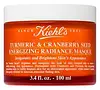
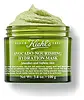
Kiehl's Turmeric & Cranberry Seed Energizing Radiance Mask Versus Kiehl's Avocado Nourishing Hydration Mask
This wash off mask is made with Kaolin for a rinse-off oil-control boost.
This wash off mask is made with Squalane and Oenothera Biennis Oil for a rinse-off hydration boost.

What's inside
What's inside
 Key Ingredients
Benefits
Concerns
Ingredients Side-by-side
Water
Skin ConditioningKaolin
Abrasive



Sorbitol
Humectant

Bentonite
Absorbent
Butylene Glycol
Humectant
Silica
Abrasive
CI 77891
Cosmetic ColorantVaccinium Macrocarpon Seed
Abrasive
Pentylene Glycol
Skin Conditioning
1,2-Hexanediol
Skin Conditioning
Simmondsia Chinensis Seed Oil
Emollient



Caprylyl Glycol
Emollient
Xanthan Gum
EmulsifyingPolysorbate 60
Emulsifying
Polyacrylamide
CI 77492
Cosmetic ColorantGlycerin
Humectant
C13-14 Isoparaffin
Emollient
Curcuma Longa Root Extract
Antioxidant

Ascorbyl Glucoside
Antioxidant


Trisodium Ethylenediamine Disuccinate
ChelatingLaureth-7
EmulsifyingEucalyptus Globulus Leaf Oil
Perfuming


Camellia Oleifera Leaf Extract
AstringentMentha Piperita Leaf Extract
Skin ConditioningMenthol
Masking

Epilobium Angustifolium Flower/Leaf/Stem Extract
Skin ConditioningAminomethyl Propanol
BufferingVaccinium Macrocarpon Seed Oil
Skin Conditioning
Water, Kaolin, Sorbitol, Bentonite, Butylene Glycol, Silica, CI 77891, Vaccinium Macrocarpon Seed, Pentylene Glycol, 1,2-Hexanediol, Simmondsia Chinensis Seed Oil, Caprylyl Glycol, Xanthan Gum, Polysorbate 60, Polyacrylamide, CI 77492, Glycerin, C13-14 Isoparaffin, Curcuma Longa Root Extract, Ascorbyl Glucoside, Trisodium Ethylenediamine Disuccinate, Laureth-7, Eucalyptus Globulus Leaf Oil, Camellia Oleifera Leaf Extract, Mentha Piperita Leaf Extract, Menthol, Epilobium Angustifolium Flower/Leaf/Stem Extract, Aminomethyl Propanol, Vaccinium Macrocarpon Seed Oil
Water
Skin ConditioningGlycerin
Humectant
Caprylic/Capric Triglyceride
Masking
Bis-Diglyceryl Polyacyladipate-2
Emollient
Squalane
Emollient
Ethylhexyl Palmitate
Emollient
Cetearyl Alcohol
Emollient
Cetyl Esters
Emollient
Propanediol
Solvent
Oenothera Biennis Oil
Emollient
Butyrospermum Parkii Butter
Skin Conditioning
PEG-100 Stearate
Surfactant
Glyceryl Stearate
Emollient
Persea Gratissima Oil
Skin Conditioning
Theobroma Grandiflorum Seed Butter
Skin Conditioning
Persea Gratissima Fruit Extract
EmollientBentonite
Absorbent
Phenoxyethanol
Preservative
Gellan Gum
Caprylyl Glycol
Emollient
Melia Azadirachta Leaf
Skin ConditioningCI 77492
Cosmetic ColorantSodium Chloride
MaskingCI 77288
Cosmetic ColorantMagnesium Sulfate
Tocopheryl Acetate
Antioxidant
Ethylhexylglycerin
Skin ConditioningMelia Azadirachta Flower Extract
Skin ConditioningCI 77163
Cosmetic Colorant
Mica
Cosmetic ColorantCaramel
Cosmetic ColorantTocopherol
Antioxidant
Helianthus Annuus Seed Oil
Emollient
Citric Acid
Buffering
Water, Glycerin, Caprylic/Capric Triglyceride, Bis-Diglyceryl Polyacyladipate-2, Squalane, Ethylhexyl Palmitate, Cetearyl Alcohol, Cetyl Esters, Propanediol, Oenothera Biennis Oil, Butyrospermum Parkii Butter, PEG-100 Stearate, Glyceryl Stearate, Persea Gratissima Oil, Theobroma Grandiflorum Seed Butter, Persea Gratissima Fruit Extract, Bentonite, Phenoxyethanol, Gellan Gum, Caprylyl Glycol, Melia Azadirachta Leaf, CI 77492, Sodium Chloride, CI 77288, Magnesium Sulfate, Tocopheryl Acetate, Ethylhexylglycerin, Melia Azadirachta Flower Extract, CI 77163, Mica, Caramel, Tocopherol, Helianthus Annuus Seed Oil, Citric Acid
Reviews
Ingredients Explained
These ingredients are found in both products.
Ingredients higher up in an ingredient list are typically present in a larger amount.
Bentonite is an aluminium phyllosilicate clay with great absorbent properties. The name 'bentonite' comes from the area where the largest source is found: Fort Benton, Wyoming.
As a clay, bentonite is often used to absorb excess oil and provide exfoliation. It has also been shown to have some antibacterial and anti-inflammatory properties. Studies show bentonite was effective at calming dermatitis from poison ivy and in diaper dermatitis of infants. Bentonite has also been shown to act as a barrier against toxic compounds on your skin.
Sunscreens containing bentonite display higher water resistance and stay on the skin for much longer. The sunscreens containing bentonite also show higher potency and UV light absorbtion.
Bentonite is naturally created from volcanic ash and several natural weathering/hydrothermal processes.
A common usage of bentonite is removing excess protein from white wines. Bentonite contains a property of being able to absorb large amounts of protein from aqueous solutions.
Phyllosilicate clay has a structure formed by sheets.
Learn more about BentoniteCaprylyl Glycol is a humectant, skin conditioner, emollient, and preservative booster derived from either caprylic acid or synthetically created.
Typical use levels vary from 0.3-1% as a preservative booster and go up to 2% to condition skin.
Because it is not a free-fatty acid, this ingredient is fungal acne safe (there's nothing for Malassezia to feed on).
Learn more about Caprylyl GlycolCI 77492 is also hydrated iron III oxide. It's sole purpose is to give a yellow hue to products.
Iron III oxides are classified as inorganic chemicals for coloring.
Synthetically created CI 77492 is considered safer than those naturally found. This is because the synthetically created version may contain less impurities. Iron oxides are generally non-toxic and non-allergenic.
Learn more about CI 77492Glycerin (or glycerol) is a compound naturally found in your skin. It's a powerhouse humectant that pulls water into the stratum corneum.
Topically, glycerin does several things at once:
Your skin makes glycerin on its own (mostly from sebaceous oil breakdown) and shuttles it to your outermost layer of skin, or your epidermis, via aquaporin-3.
Aquaporin-3 is a transporter that is essential for normal skin hydration, elasticity, and repair. Interestingly, mice lacking in AQP3 have dry and less elastic skin that can be fully corrected with glycerin.
This ingredient is non-irritating, plays well with almost every ingredient, and works across all skin types. Typical use is anywhere between 3-10% but can go up to 79% in some leave-on products.
Just know very high concentrations (>40%) can feel tacky in low humidity.
Glycerin is the name for this ingredient in American English. British English uses Glycerol/Glycerine.
Learn more about GlycerinWater. It's the most common cosmetic ingredient of all. You'll usually see it at the top of ingredient lists, meaning that it makes up the largest part of the product.
So why is it so popular? Water most often acts as a solvent - this means that it helps dissolve other ingredients into the formulation.
You'll also recognize water as that liquid we all need to stay alive. If you see this, drink a glass of water. Remember to stay hydrated!
Learn more about Water

