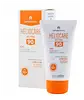
This hybrid sunscreen covers the full UV range and blocks ~98% of UVB at SPF 50.
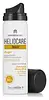
This chemical sunscreen covers the full UV range and blocks ~98% of UVB at SPF 50.

What's inside
What's inside
 Key Ingredients
Benefits
Concerns
Ingredients Side-by-side
Water
Skin ConditioningOctocrylene
UV Absorber



Homosalate
Skin Conditioning
PEG/PPG-20/6 Dimethicone
Emulsifying
Hexylene Glycol
EmulsifyingCyclopentasiloxane
Emollient
Glycerin
Humectant


Butyl Methoxydibenzoylmethane
UV Absorber
Zinc Oxide
Cosmetic Colorant
Ethylhexyl Triazone
UV Absorber
Polyacrylamide
Styrene/Acrylates Copolymer
Polypodium Leucotomos Leaf Extract
Skin Protecting
Phenoxyethanol
Preservative
Diethylamino Hydroxybenzoyl Hexyl Benzoate
UV Filter
Tris-Biphenyl Triazine
UV Absorber
C13-14 Isoparaffin
Emollient
Titanium Dioxide
Cosmetic Colorant
Camellia Sinensis Extract
Antioxidant


Cetyl Dimethicone
Emollient
Laureth-7
EmulsifyingTocopheryl Acetate
Antioxidant

Dichlorobenzyl Alcohol
Antimicrobial
Plankton Extract
Skin ConditioningParfum
Masking


Alumina
Abrasive
Phytosphingosine Hcl
Skin ConditioningBHT
Antioxidant
Simethicone
Emollient
Lecithin
Emollient
Linalool
Perfuming
Triethoxycaprylylsilane
Lactic Acid
Buffering



Limonene
Perfuming
Water, Octocrylene, Homosalate, PEG/PPG-20/6 Dimethicone, Hexylene Glycol, Cyclopentasiloxane, Glycerin, Butyl Methoxydibenzoylmethane, Zinc Oxide, Ethylhexyl Triazone, Polyacrylamide, Styrene/Acrylates Copolymer, Polypodium Leucotomos Leaf Extract, Phenoxyethanol, Diethylamino Hydroxybenzoyl Hexyl Benzoate, Tris-Biphenyl Triazine, C13-14 Isoparaffin, Titanium Dioxide, Camellia Sinensis Extract, Cetyl Dimethicone, Laureth-7, Tocopheryl Acetate, Dichlorobenzyl Alcohol, Plankton Extract, Parfum, Alumina, Phytosphingosine Hcl, BHT, Simethicone, Lecithin, Linalool, Triethoxycaprylylsilane, Lactic Acid, Limonene
Water
Skin ConditioningIsobutane
Octocrylene
UV Absorber
Propane
Ethylhexyl Salicylate
UV Absorber
C12-15 Alkyl Benzoate
AntimicrobialButyl Methoxydibenzoylmethane
UV Absorber
C14-22 Alcohols
Emulsion Stabilising
Phenylbenzimidazole Sulfonic Acid
UV Absorber
Hexylene Glycol
EmulsifyingSaccharide Isomerate
Humectant
Arginine
Masking
Diethylhexyl Butamido Triazone
UV Absorber
Diethylamino Hydroxybenzoyl Hexyl Benzoate
UV Filter
Myristyl Alcohol
Emollient

Ceteareth-25
CleansingC12-20 Alkyl Glucoside
EmulsifyingPolypodium Leucotomos Leaf Extract
Skin Protecting
Ferulic Acid
Antimicrobial
Caffeic Acid
Antioxidant
Physalis Angulata Extract
Skin ProtectingMelanin
Skin ProtectingPlankton Extract
Skin ConditioningCaprylyl Glycol
Emollient
Disodium Ethylene Dicocamide PEG-15 Disulfate
Cleansing

Sodium Citrate
BufferingTocopheryl Acetate
Antioxidant
Citric Acid
Buffering
Xanthan Gum
EmulsifyingPhenylpropanol
Masking
Ethylhexyl Triazone
UV Absorber
Myristyl Glucoside
CleansingTrisiloxane
Skin Conditioning
Propylene Glycol
Humectant
Caprylic/Capric Triglyceride
Masking
Silica
Abrasive
Oxothiazolidine
Skin ProtectingButylene Glycol
Humectant
Lecithin
Emollient
Sodium Benzoate
Masking
Tocopherol
Antioxidant
Propanediol
Solvent
Disodium EDTA
ChelatingPhenoxyethanol
Preservative
Parfum
Masking
Linalool
Perfuming
Limonene
Perfuming
Butane
Water, Isobutane, Octocrylene, Propane, Ethylhexyl Salicylate, C12-15 Alkyl Benzoate, Butyl Methoxydibenzoylmethane, C14-22 Alcohols, Phenylbenzimidazole Sulfonic Acid, Hexylene Glycol, Saccharide Isomerate, Arginine, Diethylhexyl Butamido Triazone, Diethylamino Hydroxybenzoyl Hexyl Benzoate, Myristyl Alcohol, Ceteareth-25, C12-20 Alkyl Glucoside, Polypodium Leucotomos Leaf Extract, Ferulic Acid, Caffeic Acid, Physalis Angulata Extract, Melanin, Plankton Extract, Caprylyl Glycol, Disodium Ethylene Dicocamide PEG-15 Disulfate, Sodium Citrate, Tocopheryl Acetate, Citric Acid, Xanthan Gum, Phenylpropanol, Ethylhexyl Triazone, Myristyl Glucoside, Trisiloxane, Propylene Glycol, Caprylic/Capric Triglyceride, Silica, Oxothiazolidine, Butylene Glycol, Lecithin, Sodium Benzoate, Tocopherol, Propanediol, Disodium EDTA, Phenoxyethanol, Parfum, Linalool, Limonene, Butane
Ingredients Explained
These ingredients are found in both products.
Ingredients higher up in an ingredient list are typically present in a larger amount.
Also known as Avobenzone, this ingredient is an oil-soluble used to absorb the full spectrum of UVA rays (peak 357 nm).
It's one of the most effective UVA filters available but has a major caveat of photostability: avobenzone is susceptible to photodegradation.
This means it can lose efficacy when exposed to sunlight without the help of a stabilizing agent.
Studies show antioxidants (like vitamin E or vitamin C) and some UV filters (like octocrylene and Tinosorb S) can meaningfully improve its stability in a formulation.
The maximum allowable concentration according to regulation is 3% in the US + Canada, and 5% in the EU, Australia, China, Korea, and ASEAN countries.
It has a well-support safety profile: a comprehensive 2025 review found minimal toxicity with no evidence of carcinogenicity.
Overall, avobenzone is a safe and regulated ingredient used in sunscreen for over 40 years.
Learn more about Butyl MethoxydibenzoylmethaneDiethylamino Hydroxybenzoyl Hexyl Benzoate (DHHB) is a chemical UV-A absorber. It is formulated for high UVA protection (320-400 nm).
DHHB is well-liked for:
DHHB has been approved by the EU, Japan, Taiwan, and South America for use up to 10%. Unfortunately, it has not been approved for use in the US or Canada due to slow regulatory processes.
This ingredient is soluble in oils, fats, and lipids.
Learn more about Diethylamino Hydroxybenzoyl Hexyl BenzoateEthylhexyl Triazone (aka Octyl Triazone) is an oil-soluble organic UVB filter. It has peak absorption around 314 nm, right in the middle of the UVB range.
This ingredient is described as one of the most effective UVB filters available and small concentrations are enough to deliver a high SPF thanks to its strong UV absorbing power.
Formulators love it for its stability; its ability to filter UV stays practically unchanged even under intense radiation and it can also help boost the photostability of less stable filters like avobenzone.
It's also a great pick for water resistant products because it's insoluble in water and has a good affinity for keratin.
Because it's a big, heavy molecule, the European Scientific Committee has found to to have very low dermal penetration and negative results for allergenicity.
In vitro testing also showed a low absorption rate and clean results on irritation.
Typical use levels are 1-5% with 5% being the maximum in the EU, Japan, and other markets that allow it. However, this ingredient is not approved yet in the US or Canada.
Learn more about Ethylhexyl TriazoneHexylene Glycol is a multitasker ingredient that works as a solvent, humectant, emulsifier, viscosity reducer, and preservative booster.
It is able to dissolve both water and oil-soluble ingredients to stabilize tricky actives and make products spread more easily.
As a humectant, it pulls water into the skin. But it's a pretty minor moisturizing ingredient compared to other humectants, like glycerin.
Interestingly, it can act as a mild penetration enhancer. One in vitro study on human skin found a 12% concentration upped the absorption of mometasone furoate (a medicinal ingredient used to treat inflammatory skin conditions) up to 7%.
This ingredient is typically used at levels of 0.1-10% depending on the role it's playing.
A patch test study on eczema patients didn't find a significant increase in irritation versus the control group, but the potential for irritation rises at higher concentrations.
Learn more about Hexylene GlycolLecithin is a term for a group of substances found in the cell membranes of plants, animals, and humans. They are made up of phospholipids.
Thanks to its amphiphilic structure (water-loving head and oil-loving tail), it is a true multitasker:
It plays well with most ingredients and is typically used at 0.1-1%. However, concentrations up to 50% have been reported in moisturizers.
Learn more about LecithinLimonene is the compound that gives citrus peel its smell.
In skincare, it shows up as a standalone fragrance ingredient or as a natural compound of citrus and other essential oils.
You'll typically see this ingredient used in very small amounts; anything above 0.001% in a leave-on product or 0.01% in a rinse-off has to be named on the label in the EU. The citrus oils that carry it sit around 0.5-1% in a finished formula.
Fresh limonene is a weak allergen; the real issue is that it slowly reacts with air and then breaks down from oxidation to create hydroperoxides (which are strong sensitizers). This is why suppliers are required to keep the peroxide value below 20 mmol.
Positive reactions in people being investigated for eczema vary:
It's worth skipping if you have a known fragrance allergy or a compromised barrier, but the risk is low for most people.
Older or long-opened products are also more likely to bother you than fresh ones due to oxidation.
Learn more about LimoneneLinalool is a small, naturally occurring scent molecule found in plants like lavender, coriander, bergamot, and more.
It is one of the two most-used fragrance ingredients in cosmetics and added purely for smell. Since it's not used for a skin benefit, there's no "effective dose". Concentration depends on the fragrance load of the product.
The EU requires it to be named on the label above 0.001% in leave-on and 0.01% in rinse-off products.
Fresh linalool is a weak sensitizer but air exposure turns some of it into hydroperoxides, which are strong sensitizers. Those oxidation products are the actual allergy concern.
Patch-test clinics see positive reactions to linalool hydroperoxides in about 4% to 12% of dermatitis patients depending on country and test concentration.
Resassuringly, one analytical study found hydroperoxide levels in real fragranced products to be orders of magnitude below what induced sensitization in animal studies with no evidence of oxidation building up during normal storage.
The practical takeaway is that linalool is fine for most people but worth avoiding if you have a confirmed fragrance contact allergy or a badly compromised barrier.
Products stored a long time after opening are also the high-risk scenario since that is when oxidation happens.
The scent of linalool is described as floral, spicy tropical, and citrus-like.
Learn more about LinaloolOctocrylene is an oil-soluble organic UV filter that mainly absorbs UVB and short wave UVA II light.
Its real superpower is teamwork: octocrylene is remarkably photostable and is most famous for stabilizing avobenzone (the workhorse UVA filter).
This ingredient is commonly used to enhance both UVB and UVA protection due to its unique property in stabilizing avobenzone. It also pulls double duty by boosting water resistance and giving formulas a smooth, spreadable feel.
The EU's Scientific Committee on Consumer Safety (SCCS) has deemed octocrylene to be safe as a UV-filter at concentrations up to 10% (capped at 9% in propellant sprays). The US also permits it up to 10%.
Two things worth knowing:
You'll usually see this ingredient used in concentrations between 2-10% (higher amounts when used as a stabilizer for avobenzone).
Learn more about OctocryleneParfum is a catch-all term for an ingredient or more that is used to give a scent to products.
Also called "fragrance", this ingredient can be a blend of hundreds of chemicals or plant oils. This means every product with "fragrance" or "parfum" in the ingredients list is a different mixture.
For instance, Habanolide is a proprietary trade name for a specific aroma chemical. When used as a fragrance ingredient in cosmetics, most aroma chemicals fall under the broad labeling category of “FRAGRANCE” or “PARFUM” according to EU and US regulations.
The term 'parfum' or 'fragrance' is not regulated in many countries. In many cases, it is up to the brand to define this term.
For instance, many brands choose to label themselves as "fragrance-free" because they are not using synthetic fragrances. However, their products may still contain ingredients such as essential oils that are considered a fragrance by INCI standards.
One example is Calendula flower extract. Calendula is an essential oil that still imparts a scent or 'fragrance'.
Depending on the blend, the ingredients in the mixture can cause allergies and sensitivities on the skin. Some ingredients that are known EU allergens include linalool and citronellol.
Parfum can also be used to mask or cover an unpleasant scent.
The bottom line is: not all fragrances/parfum/ingredients are created equally. If you are worried about fragrances, we recommend taking a closer look at an ingredient. And of course, we always recommend speaking with a professional.
Learn more about ParfumPhenoxyethanol is one of the most widely used preservatives in skincare (and for good reason!).
It has a large spectrum of antimicrobial activity and especially effective bacteria, yeast, and mold while only having a weak effect on your skin's natural microbiome.
On a cellular level, it disrupts the cell membranes of microbes by poking holes that make the cell leak. This shuts down the chemical reactions the microbe needs to make energy so it can no longer survive.
Another perk of this ingredient is that it stays functional across a wide pH range (3-10).
You'll often see it paired with boosters like Ethylhexylglycerin; one study showed that a 1:9 ratio of Ethylhexylglycerin to Phenoxyethanol damages bacterial membranes as effectively as doubling the Phenoxyethanol concentration on its own.
Typical use concentrations range from 0.3-1% depending on the formula, and this ingredient is capped at 1% int the EU.
Safety-wise, the fear mongering does not hold up to the evidence. The EU's Scientific Committee on Consumer Safety and FDA consider it safe as a preservative at up to 1%, including for children of all ages.
Adverse systemic effects only showed up in animal studies at exposures roughly 200x higher than what people get from cosmetics. And despite its very widespread use, this ingredient is a rare sensitizer and allergic reactions are uncommon.
Learn more about PhenoxyethanolWe don't have a description for Plankton Extract yet.
Polypodium Leucotomos Leaf Extract can help to reduce redness.
Tocopheryl Acetate is a stable, shelf-friendly form of vitamin E.
Formulators love it because plain vitamin E oxidizes quickly once it hits air. This acetate version stays stable and resists going off, helping to extend a product's shelf life.
It's actually inactive on its own and works like a slow-release "storage" form; the enzymes in your skin called esterases gradually convert it into active vitamin E over time.
One in vivo study showed 5% of the acetate in the living layer of the epidermis converted to vitamin E after 5 days of application. This study also found the skin gained protection against UV damage even though the conversion was slow and small.
Once converted, vitamin E acts as a skin's main fat-soluble antioxidant that fights free radicals to protect skin from damage.
Topical vitamin E generally boosts the skin's photoprotection, and it reduced UV-damage in animal models.
This ingredient has some brightening potential but it's more of a prevention ingredient than spot-fader. Cell studies show it can slow down melanin production but it's worth noting that it's not the most powerful brightener out there.
Overall, it has a pretty solid safety profile and has been found to be non-irritating and non-comedogenic. Allergic reactions may happen but stay rare due to how widely the ingredient gets used.
The concentration will vary depending on the formula; industry data shows 0.1% in baby lotions, 3% in lipsticks, and 5% in foot powders. You can also find this ingredient at 100% in a pure vitamin E oil.
Most leave-on skincare keeps it at the lower end, often between 0.5-1%.
Learn more about Tocopheryl AcetateWater. It's the most common cosmetic ingredient of all. You'll usually see it at the top of ingredient lists, meaning that it makes up the largest part of the product.
So why is it so popular? Water most often acts as a solvent - this means that it helps dissolve other ingredients into the formulation.
You'll also recognize water as that liquid we all need to stay alive. If you see this, drink a glass of water. Remember to stay hydrated!
Learn more about Water

