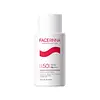
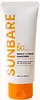
Facerinna Niacinamide Brightening Serum Sunscreen SPF 50 Versus Sunbare Bright-C Tinted Sunscreen SPF 50+
This chemical sunscreen covers the full UV range and blocks ~98% of UVB at SPF 50.
This hybrid sunscreen covers the full UV range and blocks ~98% of UVB at SPF 50.

What's inside
What's inside
 Key Ingredients
Benefits
Concerns
Ingredients Side-by-side
Water
Skin ConditioningEthylhexyl Methoxycinnamate
UV Absorber


Dimethicone
Emollient

Diethylamino Hydroxybenzoyl Hexyl Benzoate
UV Filter
Phenylbenzimidazole Sulfonic Acid
UV Absorber
Niacinamide
Smoothing










Isohexadecane
EmollientBis-Ethylhexyloxyphenol Methoxyphenyl Triazine
UV Absorber
Methylene Bis-Benzotriazolyl Tetramethylbutylphenol
UV Filter
Glyceryl Stearate
Emollient

Behenyl Alcohol
Emollient
Cetearyl Olivate
Tapioca Starch
Polymethylsilsesquioxane
Sodium Hydroxide
BufferingHydroxyacetophenone
Antioxidant
PEG-100 Stearate
Surfactant
1,2-Hexanediol
Skin Conditioning
Sorbitan Olivate
Emulsifying
Triacontanyl Pvp
HumectantCarbomer
Emulsion StabilisingUrea
Buffering
Decyl Glucoside
Cleansing
Dimethicone/Vinyl Dimethicone Crosspolymer
Skin Conditioning
Bisabolol
Antioxidant
Squalane
Emollient
Propylene Glycol
Humectant
Xanthan Gum
EmulsifyingBHT
Antioxidant
Water, Ethylhexyl Methoxycinnamate, Dimethicone, Diethylamino Hydroxybenzoyl Hexyl Benzoate, Phenylbenzimidazole Sulfonic Acid, Niacinamide, Isohexadecane, Bis-Ethylhexyloxyphenol Methoxyphenyl Triazine, Methylene Bis-Benzotriazolyl Tetramethylbutylphenol, Glyceryl Stearate, Behenyl Alcohol, Cetearyl Olivate, Tapioca Starch, Polymethylsilsesquioxane, Sodium Hydroxide, Hydroxyacetophenone, PEG-100 Stearate, 1,2-Hexanediol, Sorbitan Olivate, Triacontanyl Pvp, Carbomer, Urea, Decyl Glucoside, Dimethicone/Vinyl Dimethicone Crosspolymer, Bisabolol, Squalane, Propylene Glycol, Xanthan Gum, BHT
Water
Skin ConditioningButyl Methoxydibenzoylmethane
UV Absorber
Cetearyl Alcohol
Emollient

Titanium Dioxide
Cosmetic Colorant
Glycerin
Humectant
Cetyl Ethylhexanoate
EmollientCera Alba
Emollient
Butyrospermum Parkii Butter
Skin Conditioning
Potassium Cetyl Phosphate
EmulsifyingMethylene Bis-Benzotriazolyl Tetramethylbutylphenol
UV Filter
PEG-20 Stearate
Emulsifying
Niacinamide
Smoothing
Phenoxyethanol
Preservative
Butylene Glycol
Humectant
Carbomer
Emulsion StabilisingMethylparaben
Preservative
Allantoin
Skin Conditioning
CI 77492
Cosmetic ColorantTriethanolamine
BufferingDecyl Glucoside
Cleansing
Arctostaphylos Uva-Ursi Leaf Extract
Skin Conditioning
Alumina
Abrasive
CI 77491
Cosmetic ColorantMorus Alba Fruit Extract
Antioxidant
3-O-Ethyl Ascorbic Acid
Skin Conditioning
Sorbitan Olivate
Emulsifying
Cetearyl Olivate
1,2-Hexanediol
Skin Conditioning
Propylene Glycol
Humectant
Zinc Oxide
Cosmetic Colorant
Alpha-Arbutin
Antioxidant
Xanthan Gum
EmulsifyingSaururus Chinensis Leaf/Root Extract
Antimicrobial
Taraxacum Officinale Leaf Extract
Skin ConditioningHydroxyacetophenone
Antioxidant
Fructose
Humectant
Sodium Hyaluronate
Humectant
Stephania Tetrandra Root Extract
Skin ConditioningPhosphatidylcholine
EmulsifyingTocopherol
Antioxidant
Ceramide NP
Skin Conditioning
Polyglyceryl-10 Oleate
Skin Conditioning
Glycyrrhiza Uralensis Root Extract
Skin Conditioning
Aloe Barbadensis Leaf Extract
Emollient
Portulaca Oleracea Flower/Leaf/Stem Extract
Antioxidant
Sodium Stearoyl Glutamate
CleansingAnthemis Nobilis Flower Extract
Masking
Pelargonium Graveolens Flower/Leaf/Stem Extract
MaskingGlyceryl Caprylate
EmollientWater, Butyl Methoxydibenzoylmethane, Cetearyl Alcohol, Titanium Dioxide, Glycerin, Cetyl Ethylhexanoate, Cera Alba, Butyrospermum Parkii Butter, Potassium Cetyl Phosphate, Methylene Bis-Benzotriazolyl Tetramethylbutylphenol, PEG-20 Stearate, Niacinamide, Phenoxyethanol, Butylene Glycol, Carbomer, Methylparaben, Allantoin, CI 77492, Triethanolamine, Decyl Glucoside, Arctostaphylos Uva-Ursi Leaf Extract, Alumina, CI 77491, Morus Alba Fruit Extract, 3-O-Ethyl Ascorbic Acid, Sorbitan Olivate, Cetearyl Olivate, 1,2-Hexanediol, Propylene Glycol, Zinc Oxide, Alpha-Arbutin, Xanthan Gum, Saururus Chinensis Leaf/Root Extract, Taraxacum Officinale Leaf Extract, Hydroxyacetophenone, Fructose, Sodium Hyaluronate, Stephania Tetrandra Root Extract, Phosphatidylcholine, Tocopherol, Ceramide NP, Polyglyceryl-10 Oleate, Glycyrrhiza Uralensis Root Extract, Aloe Barbadensis Leaf Extract, Portulaca Oleracea Flower/Leaf/Stem Extract, Sodium Stearoyl Glutamate, Anthemis Nobilis Flower Extract, Pelargonium Graveolens Flower/Leaf/Stem Extract, Glyceryl Caprylate
Reviews
Ingredients Explained
These ingredients are found in both products.
Ingredients higher up in an ingredient list are typically present in a larger amount.
1,2-Hexanediol is a synthetic liquid and another multi-functional powerhouse.
It is a:
- Humectant, drawing moisture into the skin
- Emollient, helping to soften skin
- Solvent, dispersing and stabilizing formulas
- Preservative booster, enhancing the antimicrobial activity of other preservatives
Carbomer is a synthetic thickening and gelling agent. It's basically the ingredient that gives a lot of serums, gels, creams, and sunscreens their smooth, non-sticky texture.
Although legally permitted at very high levels, carbomers are normally used at concentrations below 1%.
It also needs to be neutralized to actually thicken, and because it is a large molecule, it doesn't really penetrate the skin barrier.
Allergy-wise, the risk is very low. Clinical studies show carbomers have low potential for skin irritation/sensitization even at concentrations up to 100%.
A 2024 UK study patch-tested 1,302 patients and found true allergy to the parent group of carbomer to be rare with no confirmed relevant reactions.
Learn more about CarbomerCetearyl Olivate is a plant-derived emulsifier and texture enhancer. It helps keep the oil and water phases from separating so your formulas stay stable.
You'll likely see it combined with Sorbitan Olivate (together sold as the trade name Olivem 1000). This combination generates a liquid crystal structure that closely resemble the lipid organization of the stratum corneum.
These "skin-like" liquid crystals improve skin barrier integrity and promote the delivery of actives into the skin.
This ingredient is well-tolerated and has no significant sensitization data.
Because it is derived from the fatty acids in olive oil, this ingredient may not be fungal acne safe.
Learn more about Cetearyl OlivateDecyl Glucoside is a plant-derived surfactant and emulsion stabilizer. It is created by reacting glucose with the fatty acids from plants.
Like all surfactants, it works by lowering the surface tension between water and oil. This makes it so that dirt, sebum, and makeup can be lifted off your skin and rinsed away. It also produces a dense and creamy foam.
Because it has a neutral charge, it is compatible with a wide range of ingredients and stays stable across a broad pH range/water hardiness conditions.
Patch testing has shown it to have the lowest irritation potential among common cleansing surfactants (like SLS).
Typical use levels range from 5-20% in rinse-off cleansers.
One thing worth knowing: The American Contact Dermatitis Society named the parent family, alkyl glucosides, "Allergen of the Year" in 2017. The prevalence of allergy is pretty low but be sure to patch test if you've reacted to "gentle" or sulfate-free cleansers before.
This ingredient is fungal acne safe because the fatty alcohol portion of this ingredient is not within the C11-24 chain length that Malassezia can metabolize.
Learn more about Decyl GlucosideHydroxyacetophenone is a small phenolic molecule that earns its place in a formulas as an antioxidant and preservative booster.
As a phenol, it is able to neutralize free radicals to protect both the product and the skin from oxidative stress.
Though it can't kill microbes on its own, it works as a good supporting agent when combined with other preservatives like Phenoxyethanol or 1,2-Hexanediol.
This ingredient naturally occurs as piceol in Norwegian spruce needles (~0.4-1.1% dry weight and in cloudberries). Though the cosmetic-grade material is synthesized for purity and consistency.
You'll usually see it used at low levels and suppliers recommend up to 1% added to a water phase.
Safety testing was done at concentrations like 0.05% in SPF products and 0.5% in a Human Repeated Insult Patch Test. The safety evidence is assuring; this ingredient is safe for cosmetics in current use and also holds safety status as a food flavoring as well.
An honest caveat: the "soothing" and "anti-inflammatory" claims come mostly from supplier marketing rather than published clinical trials. The Cosmetic Ingredient Review's own literature search found no useful efficacy studies on this ingredient.
So the antioxidant and preservative-boosting roles are the well supported ones while the calming benefit is plausible but thinly evidenced.
Overall, this is a well-tolerated, low-irritation multitasker that quietly helps a formula stay fresh and stable.
Learn more about HydroxyacetophenoneThis ingredient is also known as Tinosorb M or Bisoctrizole and is a bit of an overachiever in the sunscreen world.
It's a hybrid broad-spectrum filter that covers UVA and UVB (~280-400nm) with peak absorption around 305nm for UVB or 360nm for UVA (and a tiny bit in blue-light territory as well).
One of its best party tricks is photostability; it doesn't break down with repeated sun exposure and doesn't generate free radicals in the process either. You'll also see it paired with wobbly filters like avobenzone because it helps stabilize them.
The safety profile is assuring as well. Because it's a large molecule, it doesn't easily absorb into skin and rarely causes irritation.
It's approved in the EU, Asia, and Australia up to 10% and most formulas land somewhere in the 2-10% range.
You won't find it as a sunscreen active in the US, but it can make an appearance as a formula-protecting UV-absorber.
Learn more about Methylene Bis-Benzotriazolyl TetramethylbutylphenolNiacinamide is a multitasking form of vitamin B3 that strengthens the skin barrier, reduces pores and dark spots, regulates oil, and improves signs of aging.
And the best part? It's gentle and well-tolerated by most skin types, including sensitive and reactive skin.
You might have heard of "niacin flush", or the reddening of skin that causes itchiness. Niacinamide has not been found to cause this.
In very rare cases, some individuals may not be able to tolerate niacinamide at all or experience an allergic reaction to it.
If you are experiencing flaking, irritation, and dryness with this ingredient, be sure to double check all your products as this ingredient can be found in all categories of skincare.
When incorporating niacinamide into your routine, look out for concentration amounts. Typically, 5% niacinamide provides benefits such as fading dark spots. However, if you have sensitive skin, it is better to begin with a smaller concentration.
When you apply niacinamide to your skin, your body converts it into nicotinamide adenine dinucleotide (NAD). NAD is an essential coenzyme that is already found in your cells as "fuel" and powers countless biological processes.
In your skin, NAD helps repair cell damage, produce new healthy cells, support collagen production, strengthen the skin barrier, and fight environmental stressors (like UV and pollution).
Our natural NAD levels start to decline with age, leading to slower skin repair, visible aging, and a weaker skin barrier. By providing your skin niacinamide, you're recharging your skin's NAD levels. This leads to stronger, healthier, and younger looking skin.
Another name for vitamin B3 is nicotinamide. This vitamin is water-soluble and our bodies don't store it. We obtain Vitamin B3 from either food or skincare. Meat, fish, wheat, yeast, and leafy greens contain vitamin B3.
The type of niacinamide used in skincare is synthetically created.
Learn more about NiacinamidePropylene Glycol is a synthetic, colorless, odorless liquid that has been a staple in cosmetics for decades. It is a skin conditioning agent, humectant, and solvent.
As a humectant, it draw water to the skin to reduce flaking and restore suppleness. It's also a solvent that helps dissolve other actives and keeps formulas stable across temperature changes.
The CIR Expert Panel has confirmed this ingredient to be nontoxic and clinical studies show no sensitization at cosmetic use concentrations.
True allergic reactions are quite rare: a 15-year retrospective study of 6,751 patients found only 0.31% had a positive reaction (and less than half were considered clinically relevant).
It seemed that when sensitization does occur, it's most commonly linked to topical medication (like corticosteroids) and not cosmetics. Allergic contact dermatitis also appears largely limited to individuals with underlying skin conditions.
Overall, propylene glycol is a well-studied ingredient that most people can tolerate without issue.
Learn more about Propylene GlycolSorbitan Olivate is created from the fatty acids in olive oil and sorbitol.
This ingredient is an oil in water emulsifier. It helps stabilize a product by preventing oils and waters from separating. Sorbitan Olivate also helps hydrate the skin.
This ingredient is also known as part of Olivem 1000, with Cetearyl Olivate being the other part.
According to a manufacturer, this ingredient helps preserve the natural microbiome of skin. Having a healthy microbiome helps keep our skin healthy and protects against harmful bacteria.
Please note, having a healthy microbiome is different from fungal acne; a healthy microbiome includes small amounts of yeast that normally live on your skin without causing problems.
Fungal acne happens when one type of yeast (Malassezia) grows out of control. This is usually because it's feeding on certain oils or fatty acids. Due to the olive oil base, this ingredient may not be fungal acne safe.
Learn more about Sorbitan OlivateWater. It's the most common cosmetic ingredient of all. You'll usually see it at the top of ingredient lists, meaning that it makes up the largest part of the product.
So why is it so popular? Water most often acts as a solvent - this means that it helps dissolve other ingredients into the formulation.
You'll also recognize water as that liquid we all need to stay alive. If you see this, drink a glass of water. Remember to stay hydrated!
Learn more about WaterXanthan gum is used as a stabilizer and thickener within cosmetic products. It helps give products a sticky, thick feeling - preventing them from being too runny.
On the technical side of things, xanthan gum is a polysaccharide - a combination consisting of multiple sugar molecules bonded together.
Xanthan gum is a pretty common and great ingredient. It is a natural, non-toxic, non-irritating ingredient that is also commonly used in food products.
Learn more about Xanthan Gum

