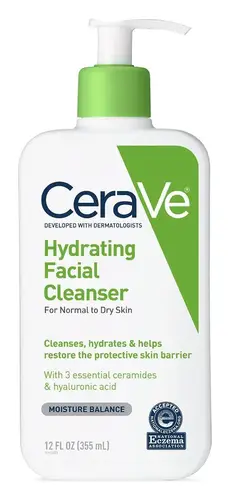
This mild cream cleanser is made to cleanse while respecting your skin barrier.
This mild cream makeup remover is made to dissolve makeup, sunscreen, and daily buildup.

What's inside
What's inside
 Key Ingredients
Benefits
Concerns
Ingredients Side-by-side
Brassica Oleracea Italica Water
Skin ProtectingHelianthus Annuus Seed Oil
Emollient



Simmondsia Chinensis Seed Oil
Emollient

Glycerin
Humectant
Glyceryl Stearate
Emollient
Decyl Glucoside
Cleansing
Madecassoside
Antioxidant




Ceramide NP
Skin Conditioning
Panthenol
Skin Conditioning
Centella Asiatica Extract
Cleansing
Asiaticoside
Antioxidant
Asiatic Acid
Skin Conditioning
Madecassic Acid
Skin Conditioning
Propolis Extract
Skin Conditioning

Limnanthes Alba Seed Oil
Skin Conditioning
Butylene Glycol
Humectant
Sodium Hyaluronate
Humectant
Hydrolyzed Hyaluronic Acid
Humectant
Sodium Acetylated Hyaluronate
Humectant
Cetearyl Olivate
Sorbitan Olivate
Emulsifying
Carbomer
Emulsion StabilisingArginine
Masking
Allantoin
Skin Conditioning
Xanthan Gum
EmulsifyingPropanediol
Solvent
Arachidyl Alcohol
Emollient
Behenyl Alcohol
Emollient
Arachidyl Glucoside
EmulsifyingCitric Acid
Buffering

Caprylyl Glycol
Emollient
Ethylhexylglycerin
Skin ConditioningBrassica Oleracea Italica Water, Helianthus Annuus Seed Oil, Simmondsia Chinensis Seed Oil, Glycerin, Glyceryl Stearate, Decyl Glucoside, Madecassoside, Ceramide NP, Panthenol, Centella Asiatica Extract, Asiaticoside, Asiatic Acid, Madecassic Acid, Propolis Extract, Limnanthes Alba Seed Oil, Butylene Glycol, Sodium Hyaluronate, Hydrolyzed Hyaluronic Acid, Sodium Acetylated Hyaluronate, Cetearyl Olivate, Sorbitan Olivate, Carbomer, Arginine, Allantoin, Xanthan Gum, Propanediol, Arachidyl Alcohol, Behenyl Alcohol, Arachidyl Glucoside, Citric Acid, Caprylyl Glycol, Ethylhexylglycerin
Water
Skin ConditioningGlycerin
Humectant
Cetyl Ethylhexanoate
EmollientIsopropyl Myristate
Emollient



Ethylhexyl Palmitate
Emollient
Caprylic/Capric Triglyceride
Masking
Arachidyl Alcohol
Emollient
Lauryl Glucoside
CleansingManicouagan Clay
AbsorbentBehenyl Alcohol
Emollient
1,2-Hexanediol
Skin Conditioning
Hydroxyacetophenone
Antioxidant
Hydroxyethyl Acrylate/Sodium Acryloyldimethyl Taurate Copolymer
Emulsion StabilisingArachidyl Glucoside
EmulsifyingSqualane
Emollient
Acrylates/C10-30 Alkyl Acrylate Crosspolymer
Emulsion StabilisingArginine
Masking
Camellia Japonica Seed Oil
Emollient
Propanediol
Solvent
Polysorbate 60
Emulsifying
Xanthan Gum
EmulsifyingCitric Acid
Buffering
Disodium EDTA
Sorbitan Isostearate
Emulsifying
Sodium DNA
Skin Conditioning
Oryza Sativa Bran Oil
Emollient
Gluconolactone
Skin Conditioning


Capryloyl Salicylic Acid
Exfoliating

Sodium Phytate
Lactic Acid
Buffering
Butylene Glycol
Humectant
Milk Protein Extract
Water, Glycerin, Cetyl Ethylhexanoate, Isopropyl Myristate, Ethylhexyl Palmitate, Caprylic/Capric Triglyceride, Arachidyl Alcohol, Lauryl Glucoside, Manicouagan Clay, Behenyl Alcohol, 1,2-Hexanediol, Hydroxyacetophenone, Hydroxyethyl Acrylate/Sodium Acryloyldimethyl Taurate Copolymer, Arachidyl Glucoside, Squalane, Acrylates/C10-30 Alkyl Acrylate Crosspolymer, Arginine, Camellia Japonica Seed Oil, Propanediol, Polysorbate 60, Xanthan Gum, Citric Acid, Disodium EDTA, Sorbitan Isostearate, Sodium DNA, Oryza Sativa Bran Oil, Gluconolactone, Capryloyl Salicylic Acid, Sodium Phytate, Lactic Acid, Butylene Glycol, Milk Protein Extract
Reviews
Ingredients Explained
These ingredients are found in both products.
Ingredients higher up in an ingredient list are typically present in a larger amount.
Arachidyl Alcohol is a fatty alcohol made from the the arachidic acid found in peanut oil.
Despite having "alcohol" in the name, it is not related to denatured alcohol or ethanol.
This ingredient is a multitasker:
Just be sure to patch this ingredient if you have a peanut allergy (though this ingredient is highly processed and the allergenic proteins are typically removed).
Learn more about Arachidyl AlcoholThis ingredient is a plant-based surfactant and emulsifier. It helps oil and water based ingredients mix evenly to improve formula stability without adding a "greasy" feel.
Arginine is a semi-essential amino acid. This just means our bodies can product a bit on its own, but sometimes needs a little boost from food sources.
It is a part of your skin's natural moisturizing factor (NMF), or the water-loving molecules in your outermost layer of skin (stratum corneum) that keeps everything hydrated and happy.
Here's an interesting thing about Arginine: your skin converts it into urea through the Krebs-Henseleit urea cycle. Urea is one of the most effective humectants your skin naturally produces.
A clinical study showed applying 2.5% arginine hydrochloride to atopic dermatitis skin showed significant urea levels in the stratum corneum and improved moisture in just four weeks.
Arginine is also a precursor to nitric oxide; nitric oxide improves microcirculation and supports wound healing and collagen synthesis.
One study found that an amino acid complex containing Arginine reduced skin irritation, improved hydration, and accelerated skin repair in clinical / in-vivo studies.
Arginine itself is an amino acid and not a fatty acid, oil, or ester. On its own, it's not a direct food source for Malassezia, or the yeast that causes fungal acne.
Learn more about ArginineBehenyl Alcohol is a type of fatty alcohol (these are different from the drying, solvent alcohols).
Fatty Alcohols have hydrating properties and are most often used as an emollient or to thicken a product. They are usually derived from natural fats and oils; behenyl alcohol is derived from the fats of vegetable oils.
Emollients help keep your skin soft and hydrated by creating a film that traps moisture in.
In 2000, Behenyl Alcohol was approved by the US as medicine to reduce the duration of cold sores.
Learn more about Behenyl AlcoholButylene Glycol (or BG) is used within cosmetic products for a few different reasons:
Overall, Butylene Glycol is a safe and well-rounded ingredient that works well with other ingredients.
Though this ingredient works well with most skin types, some people with sensitive skin may experience a reaction such as allergic rashes, closed comedones, or itchiness.
Learn more about Butylene GlycolCitric Acid is an alpha hydroxy acid (AHA) naturally found in citrus fruits like oranges, lemons, and limes.
Like other AHAs, citric acid can exfoliate skin by breaking down the bonds that hold dead skin cells together. This helps reveal smoother and brighter skin underneath.
However, this exfoliating effect only happens at high concentrations (20%) which can be hard to find in cosmetic products.
Due to this, citric acid is usually included in small amounts as a pH adjuster. This helps keep products slightly more acidic and compatible with skin's natural pH.
In skincare formulas, citric acid can:
While it can provide some skin benefits, research shows lactic acid and glycolic acid are generally more effective and less irritating exfoliants.
Most citric acid used in skincare today is made by fermenting sugars (usually from molasses). This synthetic version is identical to the natural citrus form but easier to stabilize and use in formulations.
Rosacea skin has a lower threshold for acids generally, with 62.5% of rosacea subjects in one study reacting to lactic acid in a sting test. This is why we mark citric acid as a potential rosacea trigger.
However, this ingredient shows up as a pH adjuster or chelator at roughly 0.1-1% in many products. These low levels are unlikely to be an issue for rosacea skin and becomes a potential trigger at exfoliating concentrations (20%). Because everybody's skin is unique, we recommend a patch test if you are unsure.
Learn more about Citric AcidGlycerin (or glycerol) is a compound naturally found in your skin. It's a powerhouse humectant that pulls water into the stratum corneum.
Topically, glycerin does several things at once:
Your skin makes glycerin on its own (mostly from sebaceous oil breakdown) and shuttles it to your outermost layer of skin, or your epidermis, via aquaporin-3.
Aquaporin-3 is a transporter that is essential for normal skin hydration, elasticity, and repair. Interestingly, mice lacking in AQP3 have dry and less elastic skin that can be fully corrected with glycerin.
This ingredient is non-irritating, plays well with almost every ingredient, and works across all skin types. Typical use is anywhere between 3-10% but can go up to 79% in some leave-on products.
Just know very high concentrations (>40%) can feel tacky in low humidity.
Glycerin is the name for this ingredient in American English. British English uses Glycerol/Glycerine.
Learn more about GlycerinPropanediol is an all-star ingredient. It softens, hydrates, and smooths the skin.
It’s often used to:
Propanediol is not likely to cause sensitivity and considered safe to use. It is derived from corn or petroleum with a clear color and no scent.
Learn more about PropanediolXanthan gum is used as a stabilizer and thickener within cosmetic products. It helps give products a sticky, thick feeling - preventing them from being too runny.
On the technical side of things, xanthan gum is a polysaccharide - a combination consisting of multiple sugar molecules bonded together.
Xanthan gum is a pretty common and great ingredient. It is a natural, non-toxic, non-irritating ingredient that is also commonly used in food products.
Learn more about Xanthan Gum