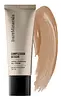
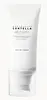
bareMinerals Complexion Rescue Tinted Hydrating Gel Cream SPF30 Versus SKIN1004 Tone Brightening Tone-up Sunscreen SPF50+ PA++++


What's inside
What's inside
 Key Ingredients
Benefits
Concerns
Ingredients Side-by-side
Water
Skin ConditioningCoconut Alkanes
Emollient
Propanediol
Solvent

Squalane
Emollient
Trehalose
Humectant
Isostearic Acid
Cleansing

Glycerin
Humectant
Silica
Abrasive


Agar
MaskingCaprylic/Capric Triglyceride
Masking
Globularia Cordifolia Callus Culture Extract
Skin ConditioningSalicornia Herbacea Extract
Skin ConditioningMelilotus Officinalis Extract
AstringentCoco-Caprylate/Caprate
Emollient
Butylene Glycol
Humectant
Lauroyl Lysine
Skin Conditioning
Sodium Hyaluronate
Humectant

Succinoglycan
Skin ConditioningPolysorbate 60
Emulsifying
Cellulose Gum
Emulsion StabilisingPolyglyceryl-4 Laurate/Succinate
Sorbitan Sesquiisostearate
Emulsifying
Magnesium Stearate
Cosmetic ColorantMagnesium Hydroxide
AbsorbentMagnesium Chloride
Potassium Chloride
Calcium Chloride
AstringentPotassium Sorbate
Preservative
Phenoxyethanol
Preservative
Titanium Dioxide
Cosmetic Colorant

Iron Oxides
Water, Coconut Alkanes, Propanediol, Squalane, Trehalose, Isostearic Acid, Glycerin, Silica, Agar, Caprylic/Capric Triglyceride, Globularia Cordifolia Callus Culture Extract, Salicornia Herbacea Extract, Melilotus Officinalis Extract, Coco-Caprylate/Caprate, Butylene Glycol, Lauroyl Lysine, Sodium Hyaluronate, Succinoglycan, Polysorbate 60, Cellulose Gum, Polyglyceryl-4 Laurate/Succinate, Sorbitan Sesquiisostearate, Magnesium Stearate, Magnesium Hydroxide, Magnesium Chloride, Potassium Chloride, Calcium Chloride, Potassium Sorbate, Phenoxyethanol, Titanium Dioxide, Iron Oxides
Water
Skin ConditioningDibutyl Adipate
EmollientTitanium Dioxide
Cosmetic Colorant
Propanediol
Solvent
Caprylic/Capric Triglyceride
Masking
Centella Asiatica Extract
Cleansing

C12-15 Alkyl Benzoate
AntimicrobialDiethylamino Hydroxybenzoyl Hexyl Benzoate
UV Filter
Ethylhexyl Triazone
UV Absorber
Niacinamide
Smoothing



Caprylyl Methicone
Skin Conditioning
Diethylhexyl Butamido Triazone
UV Absorber
1,2-Hexanediol
Skin Conditioning
Pentylene Glycol
Skin Conditioning
Corchorus Olitorius Leaf Extract
Skin ConditioningHordeum Vulgare Sprout Extract
Antioxidant
Nymphaea Alba Flower Extract
Skin ConditioningSodium Hyaluronate
Humectant
Coco-Caprylate/Caprate
Emollient
Glycerin
Humectant
Polyhydroxystearic Acid
Emulsifying
Dimethicone/Vinyl Dimethicone Crosspolymer
Skin Conditioning
Vp/Eicosene Copolymer
Dimethiconol
Emollient
Trisiloxane
Skin Conditioning
Stearic Acid
Cleansing
Alumina
Abrasive
Sodium Polyacryloyldimethyl Taurate
Emulsion StabilisingPolyacrylate Crosspolymer-6
Emulsion StabilisingHydroxypropyl Methylcellulose Stearoxy Ether
Dicaprylyl Carbonate
EmollientEthylhexylglycerin
Skin ConditioningXanthan Gum
EmulsifyingTriethoxycaprylylsilane
Adenosine
Skin Conditioning
Sodium Polyacrylate
Absorbent
Madecassoside
Antioxidant
Pvm/Ma Copolymer
Emulsion StabilisingPolyether-1
T-Butyl Alcohol
Perfuming


Tranexamic Acid
Astringent
Dipropylene Glycol
HumectantSodium Palmitoyl Proline
Skin ConditioningButylene Glycol
Humectant
CI 77492
Cosmetic ColorantCI 77491
Cosmetic ColorantWater, Dibutyl Adipate, Titanium Dioxide, Propanediol, Caprylic/Capric Triglyceride, Centella Asiatica Extract, C12-15 Alkyl Benzoate, Diethylamino Hydroxybenzoyl Hexyl Benzoate, Ethylhexyl Triazone, Niacinamide, Caprylyl Methicone, Diethylhexyl Butamido Triazone, 1,2-Hexanediol, Pentylene Glycol, Corchorus Olitorius Leaf Extract, Hordeum Vulgare Sprout Extract, Nymphaea Alba Flower Extract, Sodium Hyaluronate, Coco-Caprylate/Caprate, Glycerin, Polyhydroxystearic Acid, Dimethicone/Vinyl Dimethicone Crosspolymer, Vp/Eicosene Copolymer, Dimethiconol, Trisiloxane, Stearic Acid, Alumina, Sodium Polyacryloyldimethyl Taurate, Polyacrylate Crosspolymer-6, Hydroxypropyl Methylcellulose Stearoxy Ether, Dicaprylyl Carbonate, Ethylhexylglycerin, Xanthan Gum, Triethoxycaprylylsilane, Adenosine, Sodium Polyacrylate, Madecassoside, Pvm/Ma Copolymer, Polyether-1, T-Butyl Alcohol, Tranexamic Acid, Dipropylene Glycol, Sodium Palmitoyl Proline, Butylene Glycol, CI 77492, CI 77491
Reviews
Ingredients Explained
These ingredients are found in both products.
Ingredients higher up in an ingredient list are typically present in a larger amount.
Butylene Glycol (or BG) is used within cosmetic products for a few different reasons:
Overall, Butylene Glycol is a safe and well-rounded ingredient that works well with other ingredients.
Though this ingredient works well with most skin types, some people with sensitive skin may experience a reaction such as allergic rashes, closed comedones, or itchiness.
Learn more about Butylene GlycolThis ingredient is a lightweight emollient, solvent, and texture enhancer. It is considered a skin-softener by helping the skin prevent moisture loss.
It helps thicken a product's formula and makes it easier to spread by dissolving clumping compounds.
Caprylic Triglyceride is made by combining glycerin with coconut oil, forming a clear liquid. Though it behaves like an oil, it is not technically one due to its chemical composition. It is very stable, resistant to oxidation, and unlikely to go rancid. In practice, that translates to a long shelf life and a consistently elegant skin feel.
While there is an assumption Caprylic Triglyceride can clog pores due to it being derived from coconut oil, there is no research supporting this. Be sure to patch test if you have concerns.
Fractionated coconut oil and MCT Oil are both listed as Caprylic/Capric Triglyceride according to INCI. This is because INCI names are based on the ingredient’s final chemical composition and not its marketing name or source.
Learn more about Caprylic/Capric TriglycerideCoco-Caprylate/Caprate is a lightweight ester created from coconut oil fatty acids, caprylic acid, and capric acid.
It is an emollient that helps soften skin and reduce transepidermal water loss (TEWL). What sets it apart from heavier emollients is its ultralight, non-greasy feel.
Once applied, this ingredient dries down quickly and leaves a dry, silky finish behind. This also helps improve spreadability and texture.
This ingredient has an excellent safety-record and is non-irritating.
Typical concentrations for cosmetics range from 0.5-62%.
Research on Malassezia growth found no growth on fatty acid esters with chain lengths shorter than 12 carbons (it prefers C11-24).
Since Coco-Caprylate/Caprate is built on C8 and C10 fatty acids, it is out of the range that Malassezia metabolizes, and therefore safe for fungal acne.
Learn more about Coco-Caprylate/CaprateGlycerin (or glycerol) is a compound naturally found in your skin. It's a powerhouse humectant that pulls water into the stratum corneum.
Topically, glycerin does several things at once:
Your skin makes glycerin on its own (mostly from sebaceous oil breakdown) and shuttles it to your outermost layer of skin, or your epidermis, via aquaporin-3.
Aquaporin-3 is a transporter that is essential for normal skin hydration, elasticity, and repair. Interestingly, mice lacking in AQP3 have dry and less elastic skin that can be fully corrected with glycerin.
This ingredient is non-irritating, plays well with almost every ingredient, and works across all skin types. Typical use is anywhere between 3-10% but can go up to 79% in some leave-on products.
Just know very high concentrations (>40%) can feel tacky in low humidity.
Glycerin is the name for this ingredient in American English. British English uses Glycerol/Glycerine.
Learn more about GlycerinPropanediol is an all-star ingredient. It softens, hydrates, and smooths the skin.
It’s often used to:
Propanediol is not likely to cause sensitivity and considered safe to use. It is derived from corn or petroleum with a clear color and no scent.
Learn more about PropanediolSodium Hyaluronate is the salt form of hyaluronic acid. It is a long sugar chain that is naturally found in your skin, joints, and connective tissue that maintains hydration and elasticity.
In skincare, it works as a humectant. It pulls water from the environment and deeper layers of skin and binds it to the surface.
Interestingly, the size of the molecule affects its behavior:
Some clinical evidence links low molecular weight versions to improved wrinkle depth, elasticity, anti-inflammatory effects, and barrier repair.
Many serums use a blend of both weights so you can get surface hydration plus longer-lasting and deeper effects.
You'll typically see concentrations between 0.1-2% for this ingredient.
Learn more about Sodium HyaluronateTitanium dioxide is a mineral UV filter widely used in sunscreens and cosmetics.
It is one of only two UV filters officially classified as “mineral” by regulatory agencies, the other being zinc oxide.
Titanium dioxide provides broad-spectrum protection mostly in the UVB and UVAII range, with some protection in the UVAI range.
While its UVA protection isn’t as strong as zinc oxide’s, the difference is minor.
A common myth is that mineral UV filters reflect UV light. However, modern research shows titanium dioxide absorbs UV radiation like chemical filters (~95% absorption & 5% reflection).
Thanks to its non-irritating nature, titanium dioxide is suitable for sensitive, acne-prone, or redness-prone skin. It is unlikely to cause "eye sting" like other sunscreen ingredients.
A major drawback of this ingredient is its white cast and thick texture. This is why mineral sunscreens often leave a white cast and are less cosmetically elegant than chemical/hybrid sunscreens.
To improve white cast and spreadability, micronized or nano-sized titanium dioxide is often used.
There are ongoing concerns surrounding nano-titanium oxide's impact on marine ecosystems.
There is no conclusive evidence that any form of titanium oxide (or any other sunscreen ingredients) will cause harm to marine ecosystems or coral reefs. The science is still developing but many consumers are keeping a close eye on this issue.
Please note, many destinations have reef-safety sunscreen rules. For instance, the U.S. Virgin Islands advises all visitors to use non-nano mineral sunscreens.
Nano mineral sunscreens once raised safety concerns about absorption into skin.
Extensive research has shown that they do not penetrate healthy or damaged skin; they remain safely on the surface and the top layer of dead skin (stratum corneum).
You'll likely find titanium dioxide bundled with alumina, silica, or dimethicone. These ingredients help make titanium dioxide highly photostable; this prevents it from interacting with other formula components under UV light.
Learn more about Titanium DioxideWater. It's the most common cosmetic ingredient of all. You'll usually see it at the top of ingredient lists, meaning that it makes up the largest part of the product.
So why is it so popular? Water most often acts as a solvent - this means that it helps dissolve other ingredients into the formulation.
You'll also recognize water as that liquid we all need to stay alive. If you see this, drink a glass of water. Remember to stay hydrated!
Learn more about Water
