Jejuby Gluta Rice Clay Mask
A wash off mask with 51 ingredients, including AHA, exfoliants, and ceramides.
This wash off mask is formulated around Mandelic Acid to exfoliate and smooth skin.
Worth noting
Contains Mandelic Acid, an exfoliating acid best introduced gradually.
We independently verify ingredients, backed by peer-reviewed research. Suggest an update.
What's inside
Ingredients List
Water
Skin ConditioningPropylene Glycol
Humectant


Isopropyl Palmitate
Emollient


Milk
Skin Conditioning
Glutathione



Acetyl Glycyl Beta-Alanine
Skin ConditioningSodium PCA
Humectant

Sodium Lactate
Buffering
Glycerin
Humectant
Alpha-Glucan Oligosaccharide
Cleansing
Kaolin
Abrasive



Mandelic Acid
Antimicrobial



Oryza Sativa Powder
Glyceryl Stearate
Emollient
Arginine
Masking
Methylpropanediol
SolventSodium Acrylate/Sodium Acryloyldimethyl Taurate Copolymer
Emulsion StabilisingAspartic Acid
Masking
PCA
Humectant
Titanium Dioxide
Cosmetic Colorant

Sodium Carboxymethyl Beta-Glucan
CleansingXanthan Gum
EmulsifyingCaprylic/Capric Triglyceride
Masking
Sodium Benzoate
Masking
Potassium Sorbate
Preservative
Allantoin
Skin Conditioning
Tetrasodium EDTA
Hydrogenated Lecithin
Emulsifying
Polyglyceryl-2 Oleate
Emulsifying
Polyglyceryl-2 Stearate
Emulsifying
Polyhydroxystearic Acid
Emulsifying
Glycine
Buffering
Alanine
Masking
Ceteareth-20
Cleansing
Cetearyl Alcohol
Emollient
PEG-40 Stearate
Emulsifying
Serine
Masking
1,2-Hexanediol
Skin Conditioning
Valine
MaskingIsoleucine
Skin ConditioningProline
Skin Conditioning
Threonine
Sucrose Stearate
EmollientCitric Acid
Buffering
Ceramide NP
Skin Conditioning
Histidine
Humectant
Phenylalanine
Masking
Ceramide AP
Skin Conditioning
Ceramide As
Skin Conditioning
Ceramide Ng
Skin Conditioning
Glycosphingolipids
EmollientWater, Propylene Glycol, Isopropyl Palmitate, Milk, Glutathione, Acetyl Glycyl Beta-Alanine, Sodium PCA, Sodium Lactate, Glycerin, Alpha-Glucan Oligosaccharide, Kaolin, Mandelic Acid, Oryza Sativa Powder, Glyceryl Stearate, Arginine, Methylpropanediol, Sodium Acrylate/Sodium Acryloyldimethyl Taurate Copolymer, Aspartic Acid, PCA, Titanium Dioxide, Sodium Carboxymethyl Beta-Glucan, Xanthan Gum, Caprylic/Capric Triglyceride, Sodium Benzoate, Potassium Sorbate, Allantoin, Tetrasodium EDTA, Hydrogenated Lecithin, Polyglyceryl-2 Oleate, Polyglyceryl-2 Stearate, Polyhydroxystearic Acid, Glycine, Alanine, Ceteareth-20, Cetearyl Alcohol, PEG-40 Stearate, Serine, 1,2-Hexanediol, Valine, Isoleucine, Proline, Threonine, Sucrose Stearate, Citric Acid, Ceramide NP, Histidine, Phenylalanine, Ceramide AP, Ceramide As, Ceramide Ng, Glycosphingolipids
Key Ingredients
Benefits
Concerns
Ingredients Explained
Water. It's the most common cosmetic ingredient of all. You'll usually see it at the top of ingredient lists, meaning that it makes up the largest part of the product.
So why is it so popular? Water most often acts as a solvent - this means that it helps dissolve other ingredients into the formulation.
You'll also recognize water as that liquid we all need to stay alive. If you see this, drink a glass of water. Remember to stay hydrated!
Learn more about WaterPropylene Glycol is a synthetic, colorless, odorless liquid that has been a staple in cosmetics for decades. It is a skin conditioning agent, humectant, and solvent.
As a humectant, it draw water to the skin to reduce flaking and restore suppleness. It's also a solvent that helps dissolve other actives and keeps formulas stable across temperature changes.
The CIR Expert Panel has confirmed this ingredient to be nontoxic and clinical studies show no sensitization at cosmetic use concentrations.
True allergic reactions are quite rare: a 15-year retrospective study of 6,751 patients found only 0.31% had a positive reaction (and less than half were considered clinically relevant).
It seemed that when sensitization does occur, it's most commonly linked to topical medication (like corticosteroids) and not cosmetics. Allergic contact dermatitis also appears largely limited to individuals with underlying skin conditions.
Overall, propylene glycol is a well-studied ingredient that most people can tolerate without issue.
Learn more about Propylene GlycolIsopropyl Palmitate is a lightweight emollient made by combining isopropyl alcohol and palmitic acid.
It is an emollient that leaves skin feeling smooth and silky without leaving a greasy feel.
Typical usage concentrations range from 1-5%.
Human testing shows it's non-irritating and non-sensitizing, and the EU Scientific Committee on Consumer Safety (SCCS) has cleared it at very high levels (79% in leave-on products).
The one thing worth knowing about its comedogenic score of 3-4 is to keep it in perspective: these ratings come from old rabbit-ear tests using 100% of pure ingredient and doesn't reflect how it behaves at low levels in a finished product.
Because it is an ester of palmitic acid (C16), it falls into the range that the Malassezia yeast can feed on and is considered not fungal acne safe.
Learn more about Isopropyl PalmitateMilk comes from cows. It contains proteins, lactic acid, and vitamin A, D, and E.
Milk contains fatty acids in the C12-18 range that are the exact carbon chain lengths that the Malassezia yeast feeds on, like oleic acid and palmitic acid.
Glutathione is a tiny protein-like molecule (a "tripeptide" build from 3 amino acids: glycine, cysteine, and glutamic acid) that your body already makes on its own.
Inside your body, it acts as one of the skin's main antioxidants that help fight against free radicals.
In skincare, it's best known as a brightening ingredient that slows down tyrosinase, the key enzyme that makes skin pigment. It also nudges the skin toward making a lighter type of pigment instead of a darker one.
This is why you'll see it in products aimed at dark spots and uneven tone.
A small number of real human trials have found a topical glutathione lotion:
The honest caveat is that the current evidence is still thin (few studies, small groups, short timelines). Glutathione also doesn't absorb into skin very easily so results tend to be modest and fade if you stop using it.
One thing worth clearing up:
The scary side effects you may have heard about come from glutathione injected intravenously, which has real safety concerns. Applying it topically is a completely different thing and has a clean track record.
Most human studies used it around 2% (as Glutathione or Glutathione Disulfide) and a 2% oxidized glutathione lotion and a 2% S-acyl glutathione cream are the concentrations with actual clinical data behind them.
There's no established "ideal" percentage yet but 1-2% is the evidence-backed range.
Allergy-wise, there is very low risk for this ingredient; it was well-tolerated across the topical trials. Only one participant had mild temporary redness that cleared up on its own and another study reported no adverse reactions at all.
One trial had ~10% of users drop out for irritation was using a combination cream that also had 10% azelaic acid so the irritation likely wasn't from the glutathione. There's no notable contact-allergy signal for topical glutathione in the literature but patch-testing before first use is still sensible for those with sensitive skin.
Learn more about GlutathioneWe don't have a description for Acetyl Glycyl Beta-Alanine yet.
Sodium PCA (the salt of PCA) is one of the most well-established humectants in skincare.
Why is it so special? Your skin already makes it naturally; it's a natural component of your skin's Natural Moisturizing Factor (NMF), or the mix of water-binding compounds inside your skin cells that keeps things soft and hydrated.
As a cosmetic ingredient, it grabs water and holds it in the upper layers of skin to smooth roughness and ease dehydration.
There's some clinical support for the NMF approach with a study showing that a cream built to mimic the skin's NMF significantly boosted hydration.
Safety-wise, this ingredient non-irritating, non-comedogenic, and non-phototoxic in testing, with minimal skin absorption.
It also works really well with other hydrators like glycerin or hyaluronic acid, and typical usage is somewhere between 0.2-4%.
Learn more about Sodium PCASodium Lactate is the sodium salt of lactic acid, an AHA. It is a humectant and sometimes used to adjust the pH of a product.
This ingredient is part of our skin's NMF, or natural moisturizing factor. Our NMF is essential for the hydration of our top skin layers and plasticity of skin. NMF also influences our skin's natural acid mantle and pH, which protects our skin from harmful bacteria.
High percentages of Sodium Lactate can have an exfoliating effect.
Fun fact: Sodium Lactate is produced from fermented sugar.
Learn more about Sodium LactateGlycerin (or glycerol) is a compound naturally found in your skin. It's a powerhouse humectant that pulls water into the stratum corneum.
Topically, glycerin does several things at once:
Your skin makes glycerin on its own (mostly from sebaceous oil breakdown) and shuttles it to your outermost layer of skin, or your epidermis, via aquaporin-3.
Aquaporin-3 is a transporter that is essential for normal skin hydration, elasticity, and repair. Interestingly, mice lacking in AQP3 have dry and less elastic skin that can be fully corrected with glycerin.
This ingredient is non-irritating, plays well with almost every ingredient, and works across all skin types. Typical use is anywhere between 3-10% but can go up to 79% in some leave-on products.
Just know very high concentrations (>40%) can feel tacky in low humidity.
Glycerin is the name for this ingredient in American English. British English uses Glycerol/Glycerine.
Learn more about GlycerinAlpha-Glucan Oligosaccharide is a prebiotic. It prevents harmful bacteria from growing on skin by keeping the skin's microbiome in balance.
Another benefit of this ingredient is its antioxidant properties. Antioxidants protect our skin from oxidative damage.
Kaolin is a clay. It is used for oil control and to help minimize pores. Like other clays, kaolin has the ability to absorb excess sebum or oil. This can help clean out pores and mattify the skin.
Some types of kaolin may have exfoliating properties. When water is added to kaolin, it becomes a paste with small abrasive particles.
Most kaolin is a white color, but may be pink/orange/red depending on where it comes from.
The name 'kaolin' comes from a Chinese village named 'Gaoling'. Kaolin clay comes from rocks rich in kaolinite. Kaolinite, the mineral, has a silicate layered structure. Kaolinite is formed from chemical weathering of aluminum siilicate minerals.
Besides skincare, kaolin is commonly used to make glossy paper, in ceramics, toothpaste, and as medicine to soothe stomach issues.
Learn more about KaolinMandelic Acid is an alpha hydroxy acid (AHA).
Like other AHAs, it helps exfoliate the surface of the skin by breaking down the bonds that hold dead skin cells together. This helps reveal smoother and brighter skin underneath.
Mandelic acid helps with:
Due to it having a larger molecular size than glycolic acid, mandelic acid is able to penetrate the skin more slowly and evenly. This makes it gentler and less irritating, making it a great option for sensitive or beginner skin.
Despite being milder, mandelic acid is still an effective exfoliant that improves skin texture and tone over time.
What makes mandelic acid stand out from other AHAs? It has antibacterial and antioxidant properties.
These traits make it a great option for acne-prone or problem skin by reducing active breakouts and fading post-acne marks. Studies show that mandelic acid (especially when combined with salicylic acid) can significantly reduce pimples and hyperpigmentation while causing fewer side effects than stronger acids.
Mandelic acid is effective in concentrations of 5% and up with an ideal pH range of 3-4 for at-home use.
Like other AHAs, it’s important to wear sunscreen daily to protect your newly exfoliated skin.
However, unlike glycolic acid, mandelic acid is light-sensitive. Be sure your mandelic acid is packaged in opaque containers to ensure it stays stable and effective.
In short, mandelic acid is a gentle yet powerful AHA that exfoliates, brightens, and helps clarify skin while keeping irritation low. Its antibacterial action makes it especially beneficial for those with acne-prone, sensitive, or uneven skin, offering smoother, clearer, and more even-toned results over time.
Read more about some other popular AHA's here:
Learn more about Mandelic AcidOryza Sativa Powder is created by grinding dried seeds of rice, Oryza Sativa.
It is used to add volume and increase the thickness of a product. This ingredient may also have mildly exfoliating properties.
Rice contains numerous antioxidants which may help with anti-aging, such as vitamin E.
Learn more about Oryza Sativa PowderGlyceryl Stearate is made by reacting glycerin with stearic acid (typically sourced from plant oils like palm or coconut). It's an emulsifier, emollient, and mild occlusive.
Emulsifiers help ingredients like oil and water stay mixed so your formula stays nicely blended and uniform in texture.
This ingredient is typically used in concentrations between 1-10%. Studies have found it to be non-sensitizing, non-phototoxic, and non-photoallergenic.
A close cousin of this ingredient is Glyceryl Stearate SE ("self-emulsifying"). This just has a small amount of sodium or potassium stearate added so it can emulsify without a co-emulsifier.
Since this ingredient is an ester of a C18 fatty acid, it may not be fungal acne safe. The Malassezia yeast can potentially metabolize within the C11-C24 range.
Fun fact: The human body also creates Glyceryl Stearate naturally.
Learn more about Glyceryl StearateArginine is a semi-essential amino acid. This just means our bodies can product a bit on its own, but sometimes needs a little boost from food sources.
It is a part of your skin's natural moisturizing factor (NMF), or the water-loving molecules in your outermost layer of skin (stratum corneum) that keeps everything hydrated and happy.
Here's an interesting thing about Arginine: your skin converts it into urea through the Krebs-Henseleit urea cycle. Urea is one of the most effective humectants your skin naturally produces.
A clinical study showed applying 2.5% arginine hydrochloride to atopic dermatitis skin showed significant urea levels in the stratum corneum and improved moisture in just four weeks.
Arginine is also a precursor to nitric oxide; nitric oxide improves microcirculation and supports wound healing and collagen synthesis.
One study found that an amino acid complex containing Arginine reduced skin irritation, improved hydration, and accelerated skin repair in clinical / in-vivo studies.
Arginine itself is an amino acid and not a fatty acid, oil, or ester. On its own, it's not a direct food source for Malassezia, or the yeast that causes fungal acne.
Learn more about ArginineMethylpropanediol is a synthetic solvent and humectant.
As a solvent, it helps dissolve other ingredients, helping to evenly distribute ingredients throughout the product. This ingredient has also been shown to have antimicrobial properties which makes it a preservative booster.
Methylpropanediol is able to add a bit of moisture to the skin. It also helps other ingredients be better absorbed into the skin, such as salicylic acid.
Learn more about MethylpropanediolThis long ingredient is a copolymer of sodium acrylate and sodium acryloyldimethyl taurate monomers.
It is used to help stabilize other ingredients and create a thicker gel-like texture.
Emulsifiers prevent oils and waters from separating.
Learn more about Sodium Acrylate/Sodium Acryloyldimethyl Taurate CopolymerAspartic Acid is an amino acid that our bodies produce naturally. It is an antioxidant.
Our body uses Aspartic Acid to help build collagen and elastin. It also plays a role in hydrating skin.
PCA is an amino acid derivative and one of the star players in your skin's own Natural Moisturizing Factor (NMF).
The NMF is the built-in cocktail of small molecules that keeps your outer layer of skin hydrated and your body makes it naturally.
This is why it works so well topically; PCA is a humectant that holds water in the stratum corneum and studies link higher skin PCA levels to better hydration + lower water loss. Interestingly, people show more PCA in summer and in normal vs dry skin.
Most of the benefits of this ingredient are related to hydration, softness, and barrier support.
A long-running review found that formulas with at least 2% PCA or its salts improved dry skin over both the short and long term. And the zinc salt is also used for its mild antimicrobial and astringent properties.
The salt forms are more common in cosmetics (like sodium PCA).
This ingredient is compatible with basically everything and pairs well with other humectants like glycerin or hyaluronic acid.
Usage-wise, it's typically used at low percentages (~0.2-2%).
The Cosmetic Ingredient Review Expert Panel has concluded PCA and its salts are safe as used and is non-irritating on skin even at high concentrations.
Learn more about PCATitanium Dioxide (TD) is a mineral UV filter widely used in sunscreens and cosmetics.
It's one of only two UV filters officially classified as "mineral" by regulatory agencies (the other being Zinc Oxide).
A really common myth is that mineral filters work by reflecting UV light off your skin like tiny mirrors.
They don't only do that; modern research shows TD protects mostly by absorbing UV radiation, the same way chemical filters do.
When researchers measured this, reflection accounted for only about 4-5% of the protection (and less than SPF 2 on its own). The other ~95% comes from absorption: the UV photons hit the particle and their energy gets soaked up by its semiconductor band gap rather than bouncing off.
So "reflects vs. absorbs" was never really the right way to split mineral from chemical filters.
TD gives broad-spectrum protection that's strongest in the UVB and UVA-2 range and weaker in the UVA-1 range. Its UVA protection isn't quite as strong as Zinc Oxide's which is why you'll often see the two paired together.
Together, they make a solid broad-spectrum system.
TD is a great pick for sensitive, acne-prone, or redness-prone skin because it's non-irritating and chemically inert. Regulatory reviews classify it as a non-sensitizer and mild-to-non-irritant.
It's also unlikely to cause the "eye sting" some chemical filters are known for.
The main trade-off is cosmetic; TD can leave a white cast and has a thicker texture. This is why mineral sunscreens are often less cosmetically elegant than chemical or hybrid formulas (and harder to shade-match on deeper skin tones).
Formulators often use micronized or nano-sized TD to cut down on white case and improve spreadability. Smaller particles scatter less visible light so the formula looks less chalky while still filtering UV.
TD is almost always bundled with coatings like Alumina, Silica, Stearic Acid, or Dimethicone. These coatings do two important jobs:
TD can be used at up to 25% in a finished sunscreen; this is the regulatory ceiling in both the US and the EU.
In practice, the amount in any given product varies a lot depending on the target SPF and whether it's paired with other UV filters.
TD is one of the most heavily vetted sunscreen ingredients out there. It is approved as a UV filter in all major markets worldwide, including the US, EU, UK, Japan, Korea, China, Australia, and Canada.
The safety evidence is solid. There was an old worry that nano particles might absorb through skin into the body but multiple studies (including on damaged, sunburned, and UV-irradiated skin) have shown that TD stays on the surface and the layer of dead skin cells on top of everything else.
There's also no evidence of carcinogenicity, mutagenicity, or reproductive toxicity from dermal exposure of this ingredient.
For those who have seen the headline about a 2022 EU ban on TD, that was on TD as a food additive (a complete separate use from topical sunscreen).
There are ongoing questions about how nano-TD might affect marine ecosystems. As of now, there has been no conclusive evidence that any form of TD (or any other sunscreen filter) harms coral reefs or marine life.
The science is still developing and it's a space worth watching rather than packing over.
However, several destinations have reef-safety sunscreen rules that restrict certain chemical filters and steer visitors toward mineral, non-nano options. If you're traveling somewhere with these rules, a non-nano mineral sunscreen is the safe bet.
Learn more about Titanium DioxideWe don't have a description for Sodium Carboxymethyl Beta-Glucan yet.
Xanthan gum is used as a stabilizer and thickener within cosmetic products. It helps give products a sticky, thick feeling - preventing them from being too runny.
On the technical side of things, xanthan gum is a polysaccharide - a combination consisting of multiple sugar molecules bonded together.
Xanthan gum is a pretty common and great ingredient. It is a natural, non-toxic, non-irritating ingredient that is also commonly used in food products.
Learn more about Xanthan GumCaprylic/Capric Triglyceride (aka MCT Oil) is a lightweight emollient, solvent, and texture enhancer. It is considered a skin-softener by helping to prevent moisture loss.
Though it behaves like an oil, it is not technically one due to its chemical composition. One perk of this ingredient is that it is very stable, resistant to oxidation, and unlikely to go rancid.
In practice, that translates to a long shelf life and a consistently elegant skin feel.
While there is an assumption Caprylic Triglyceride can clog pores due to it being derived from coconut oil, there is no research supporting this. Just patch test if you have concerns.
Fractionated coconut oil and MCT Oil are both listed as Caprylic/Capric Triglyceride according to INCI. This is because INCI names are based on the ingredient’s final chemical composition and not its marketing name or source.
This ingredient is treated as the gold standard fungal acne safe oil. Even though it is coconut derived, the problematic lauric acid is stripped out.
This leaves just caprylic (C8) and capric (C10) acid. These chain lengths actually trend antifungal; a 2020 study found caprylic acid was enough to disrupt Malassezia furfur cell membrane, with a caprylic acid derivative damaging membrane structures at concentrations as low as 0.2%.
Learn more about Caprylic/Capric TriglycerideSodium Benzoate is a preservative. It's used in both cosmetic and food products to inhibit the growth of mold and bacteria. It is typically produced synthetically.
Both the US FDA and EU Health Committee have approved the use of sodium benzoate. In the US, levels of 0.1% (of the total product) are allowed.
Sodium benzoate works as a preservative by inhibiting the growth of bacteria inside of cells. It prevents the cell from fermenting a type of sugar using an enzyme called phosphofructokinase.
It is the salt of benzoic acid. Foods containing sodium benzoate include soda, salad dressings, condiments, fruit juices, wines, and snack foods.
Studies for using ascorbic acid and sodium benzoate in cosmetics are lacking, especially in skincare routines with multiple steps.
We always recommend speaking with a professional, such as a dermatologist, if you have any concerns.
Learn more about Sodium BenzoatePotassium Sorbate is a preservative used to prevent yeast and mold in products. It is commonly found in both cosmetic and food products.
This ingredient comes from potassium salt derived from sorbic acid. Sorbic acid is a natural antibiotic and effective against fungus.
Both potassium sorbate and sorbic acid can be found in baked goods, cheeses, dried meats, dried fruit, ice cream, pickles, wine, yogurt, and more.
You'll often find this ingredient used with other preservatives.
Learn more about Potassium SorbateAllantoin is a soothing ingredient known for its protective and moisturizing properties; it's basically a quiet workhorse ingredient you can find in a huge range of cosmetics.
Though it can be derived from the comfrey plant, allantoin is produced synthetically for cosmetic products to ensure purity.
Research shows it can encourage your skin cells to turn over and renew by stimulating keratinocyte and fibroblast proliferation.
It also has mild keratolytic properties to help loosen and shed dead skin cells without being harsh.
Studies also suggest allantoin can help calm inflammation by dialing down some of the chemical signals your skin sends out when it is irritated.
This ingredient is typically used in the 0.1-0.5% range, and the FDA recognizes it as a skin protectant in OTC products up to 2%.
Overall, allantoin is a wonderful addition to most routines; it is stable across a wide pH range (~4-8), works well with other ingredients, and is considered non-sensitizing/non-irritating.
Fun fact: Allantoin is naturally occurring in comfrey root, beets, chamomile, and wheat sprouts. Our bodies even produce it as a byproduct of uric acid metabolism.
Learn more about AllantoinTetrasodium EDTA is the salt formed from neutralizing ethylenediamine tetraacetic acid with sodium hydroxide. It is a chelating agent and used to prevent metal ions from binding to other ingredients. This helps keep the product and ingredients stable.
Tetrasodium EDTA comes as a white solid and is soluble in water.
Hydrogenated Lecithin is a more stable version of lecithin.
It's made by taking lecithin (a phospholipid commonly found in soybeans and egg yolks) and hydrogenating it. This just means the unsaturated fatty acids are turned into saturated ones so they don't go bad as easily.
This ingredient is an emollient, emulsifier, and penetration enhancer. As an emollient, it helps soften and hydrate skin by trapping moisture within. As an emulsifier, it prevents oil and water ingredients from separating.
Hydrogenated Lecithin can form tiny spherical structures made of phospholipid bilayers called liposomes. These liposomes are able to capture compounds inside their structure and deliver them through the skin barrier.
Because phospholipids are a natural component of our cell membranes, this ingredient is inherently compatible with skin.
A 2021 study found lecithin-based surfactants were less harsh and more tolerable comared to Sodium Lauryl Sulfate (SLS).
Learn more about Hydrogenated LecithinPolyglyceryl-2 Oleate isn't fungal acne safe.
Polyglyceryl-2 Stearate isn't fungal acne safe.
Polyhydroxystearic Acid is a vegetable-derived soft wax made from castor oil. It's an emulsion stabilizer, thickener, and film former.
You'll likely see it in sunscreens because it helps disperse pigments and UV-reflecting minerals like titanium dioxide and zinc oxide evenly.
Depending on the concentration, it can drastically change the texture of a product from pasty solid (like lipstick) to sprayable liquid.
The CIR Expert Panel for Cosmetic Ingredient Safety has concluded this ingredient to be safe in cosmetics. The highest reported use concentration is 14.2% in lipsticks.
Learn more about Polyhydroxystearic AcidGlycine is the smallest amino acid and a key building block of collagen. It's part if your skin's Natural Moisturizing Factor (NMF), or the water-loving molecules in your outermost layer of skin (stratum corneum) that keeps everything hydrated and happy.
A study from 2022 found that an amino acid complex featuring taurine, arginine, and glycine significantly reduced skin irritation, improved redness, and accelerated the skin repair process.
Alanine is an amino acid and is already found in the human body. Our skin uses alanine to build collagen, elastin, and keratin.
Ceteareth-20 is an emulsifier and surfactant made by reacting cetearyl alcohol with 20 moles of ethylene oxide.
This gives it both oil and water-loving properties that makes it an effect emulsifier; it's really great at pulling oil droplets into water to create a stable, creamy, and easy-to-spread base.
Typical use ranges from 0.5-30%. Most leave-on products are in the 1-10% zone.
The 20 ethylene oxide units is well above the PEG-10 threshold and therefore not a food source for Malassezia (it's fungal acne safe).
This ingredient has a comedogenic rating of 2 and an irritancy rating of 3. These numbers come from testing the raw ingredient on rabbit ears and doesn't reflect how it will behave in a finished product.
In practice, this ingredient is a well-tolerated ingredient. The ratings reflect cautious lab conditions and not real-world use. Just be sure to patch test any formulas you feel unsure about.
Learn more about Ceteareth-20Cetearyl alcohol is a waxy mixture of two fatty alcohols: cetyl alcohol and stearyl alcohol. It is an emollient and emulsifier.
Despite having "alcohol" in its name, it has nothing to do with drying solvent alcohols; the FDA also allows "alcohol-free" products to contain fatty alcohols like this ingredient.
It plays several roles in a formula:
Typical use levels for this ingredient sit around 1-10% and the Cosmetic Ingredient Review Expert Panel has affirmed safety at concentrations up to 25% in leave-on products.
Multiple assessments have found it to be non-irritating and non-sensitizing to most people.
However, there have been some cases of allergic contact dermatitis in patients with chronically compromised skin barriers.
Cetearyl alcohol has a comedogenic rating of 2 and irritancy rating of 1. Both of these numbers come from the 1989 study that used rabbit ears; a "2" means mildly comedogenic and a "1" means low irritancy.
Here's the catch: rabbit skin is more sensitive than human skin and throws a lot of false positives. A 1996 reappraisal found that ingredients rated 1-2 in the rabbit ear tests are generally safe for humans.
Remember comedogenic ratings are unable to assess the entire formula of a product or how it will react on your skin. Just be sure to patch test if you are unsure about certain ingredients.
This ingredient is not fungal acne safe. Cetearyl alcohol is a fatty alcohol with chain lengths that fall within the range that Malassezia can metabolize.
A 2019 study has also observed Malassezia growth in the presence of this ingredient, confirming it to be not-fungal acne safe.
Learn more about Cetearyl AlcoholPEG-40 Stearate is a nonionic emulsifier and surfactant made from stearic acid.
It's water-soluble and good at coaxing oil + water to mix to keep everything stable.
The CIR Expert Panel has repeatedly concluded this ingredient to be safe at current cosmetic use levels with minimal skin/eye irritation when tested at 100%.
Your skincare also won't be containing 100% of this ingredient: the supplier recommends using 1-5% in a formula.
Broader reviews back this up: PEGs and their fatty-acid esters produce little or no skin/eye irritation, don't readily penetract intact skin, and rarely cause sensitization.
Because this ingredient is a PEG ester of stearic acid, it may not be fungal acne, or Malassezia, safe. Stearic acid (C18) sits in the C11-24 "edible window" that Malassezia lipases can cleave and metabolize.
Learn more about PEG-40 StearateSerine is a non-essential amino acid (your body makes it on its own!). It is a major player in your skin's natural moisturizing factor (NMF), or the water-loving molecules in your outermost layer of skin (stratum corneum) that keeps everything hydrated and happy.
Serine is one of your NMF's most abundant components that works as a skin-identical humectant. Its hydroxyl group grabs onto water molecules to boost hydration without any heaviness or occlusion.
Research on a hydrogel with serine confirmed this serine got delivered to your stratum corneum and demonstrated enhanced skin moisturization.
Interestingly serine also helps your skin produce filaggrin, a protein that keeps your skin barrier strong and used to create collagen.
Learn more about Serine1,2-Hexanediol is a synthetic liquid and another multi-functional powerhouse.
It is a:
- Humectant, drawing moisture into the skin
- Emollient, helping to soften skin
- Solvent, dispersing and stabilizing formulas
- Preservative booster, enhancing the antimicrobial activity of other preservatives
Valine is one of the essential amino acids (meaning your body can't make it on its own and has to get it from food).
In skincare, it's usually synthetically-made or pulled from plant proteins like soy.
It's one of the small building blocks that make up your skin's natural moisturizing factor (NMF), or the built-in system that helps skin hold onto water. So its main job in a formula is to give the skin gentle hydration and help it feel more comfortable.
Typical amounts are very tiny: roughly 0.00004%-0.5% in leave on products and up to 1% in rinse-off ones.
The Cosmetic Ingredient Review panel has looked at this ingredient and found no evidence of it being a skin irritant or allergen at cosmetic levels.
Learn more about ValineIsoleucine is an amino acid that helps reinforce our skin barrier. This amino acid plays a role in creating protein for the body.
Fun fact: Isoleucine is found in meat, fish, dairy, legumes, and nuts.
Proline is a non-essential amino acid, meaning your body can make it on its own. In skincare, it is a skin conditioning ingredient that keeps skin soft and hydrated.
It makes up about 23% of the collagen molecule (collagen is the protein responsible for keeping your skin firm) and is involved in your skin's natural hyaluronic acid production. When applied topically, proline can penetrate the skin fairly well due to its small molecular size.
Reviews of this ingredient have found it to be neither a dermal irritant nor a sensitizer.
Fun fact: Proline can be found in protein-rich foods like meat, fish, eggs, and dairy.
Learn more about ProlineThreonine is an amino-acid. It helps hydrate the skin and has antioxidant benefits.
Our skin uses threonine for creating collagen and elastin. Humans are not able to create threonine and must get it through eating foods such as fish, lentils, poultry, sesame seeds, and more.
Sucrose Stearate is derived from stearic acid and sucrose (sugar). It is an emollient and emulsifier.
As an emulsifier, it prevents oils and water from separating in a product. This property also makes it a surfactant and therefore a cleansing agent.
Citric Acid is an alpha hydroxy acid (AHA) naturally found in citrus fruits like oranges, lemons, and limes.
Like other AHAs, citric acid can exfoliate skin by breaking down the bonds that hold dead skin cells together. This helps reveal smoother and brighter skin underneath.
However, this exfoliating effect only happens at high concentrations (20%) which can be hard to find in cosmetic products.
Due to this, citric acid is usually included in small amounts as a pH adjuster. This helps keep products slightly more acidic and compatible with skin's natural pH.
In skincare formulas, citric acid can:
While it can provide some skin benefits, research shows lactic acid and glycolic acid are generally more effective and less irritating exfoliants.
Most citric acid used in skincare today is made by fermenting sugars (usually from molasses). This synthetic version is identical to the natural citrus form but easier to stabilize and use in formulations.
Rosacea skin has a lower threshold for acids generally, with 62.5% of rosacea subjects in one study reacting to lactic acid in a sting test. This is why we mark citric acid as a potential rosacea trigger.
However, this ingredient shows up as a pH adjuster or chelator at roughly 0.1-1% in many products. These low levels are unlikely to be an issue for rosacea skin and becomes a potential trigger at exfoliating concentrations (20%). Because everybody's skin is unique, we recommend a patch test if you are unsure.
Learn more about Citric AcidCeramide NP (formerly known as Ceramide 3) is one of the skin's naturally occurring lipids.
Since ceramides are the major lipid components of the skin, they are crucial for maintaining skin barrier and hydration. Ceramide NP most closely mirrors the dominant kind in human skin amongst ceramide subtypes.
This ceramide works by slotting into gaps within the stratum corneum's lipid matrix to limit trans-epidermal water loss (TEWL) and shield the skin against external irritants.
A study with 312 patients found that using a ceramide-containing routine for 4 weeks reduced the severity of atopic dermatitis by over 61%.
Another clinical study in subjects aged 60 and older found that a ceramide body wash and moisturizer improved skin dryness and itchy skin in 15 days.
Overall, ceramides are considered non-irritating and safety tests have found little to no observable adverse effects from using this ingredient.
Ceramide NP is usually sourced from plants (like soybean or rice bran), or produced synthetically.
Learn more about Ceramide NPHistidine is a semi-essential amino acid used by our bodies to create protein. It has humectant and skin conditioning properties.
Our bodies use histidine to create filaggrin - filaggrin is a structural protein that the skin uses in maintaining skin barrier.
One study found histidine and carnosine to be a dynamic duo for your skin:
Oral histidine has also been found to help with filaggrin-deficit skin disorders such as atopic dermatitis.
Why is it considered a semi-essential amino acid? This is because adults are able to create it but children must get it from their diet.
Learn more about HistidinePhenylalanine is an amino acid. It is a skin soothing and hydrating ingredient. Amino acids play a crucial role in wound healing and skin hydration.
This ingredient is also used to help even out skin tone due to its ability to disrupt the melanin production process.
Two structures of phenylalanine exist: L-phenylalanine and D-phenylalanine. L-phenylalanine is essential, this means our bodies cannot produce it naturally and we must get it from foods. Our bodies convert D-phenylalanine to neurotransmitters, and D-phenylalanine is found in our bodies naturally.
Some foods that contain L-phenylalanine include eggs, soybeans, beef, milk.
Learn more about PhenylalanineCeramide AP is is a skin-identical lipid that mimics what your skin already makes naturally. Ceramides help maintain epidermal integrity and barrier function.
You'll often see this ingredient paired with other ceramides (like ceramide NP), cholesterol, or fatty acids because this combination best mimics the natural lipid mix your skin already has.
The skin's ability to produce ceramides gets disrupted in skin conditions like eczema. This in turn weakens the skin barrier and applying ceramides topically has been shown to replenish what's been lost to restore barrier function.
Most of the studies with Ceramide AP test it as part of a multi-ceramide complex; studies reinforce ceramide AP's role in rebalancing ceramides in skin and improving skin hydration.
Learn more about Ceramide APCeramide AS is formally known as Ceramides 4 and 5.
Ceramides are intercellular lipids naturally found in our skin that bonds dead skin cells together to create a barrier. They are known for their ability to hold water and thus are a great ingredient for dry skin.
Ceramide NG is a type of Ceramide. The NG stands for a sphinganine base.
Ceramides are intercellular lipids naturally found in our skin that bonds dead skin cells together to create a barrier. They are known for their ability to hold water and thus are a great ingredient for dry skin.
Ceramides are an important building block for our skin barrier. A stronger barrier helps the skin look more firm and hydrated. By bolstering the skin ceramides act as a barrier against irritating ingredients. This can help with inflammation as well.
If you would like to eat ceramides, sweet potatoes contain a small amount.
Read more about other common types of ceramides here:
Ceramide AP
Ceramide EOP
Ceramide NP
Glycosphingolipids are naturally found in the cell membranes of organisms. In animals, they are the major glycolipids found.
Glyolipids help ensure the stability of cell membranes. They also help with cellular recognition, such as allowing cells to form tissues in skin.
Reviews
No written reviews yet. Be the first to review this product.
Recent searches
Search reviews by skin type, ingredient, or keyword.
Where it's from
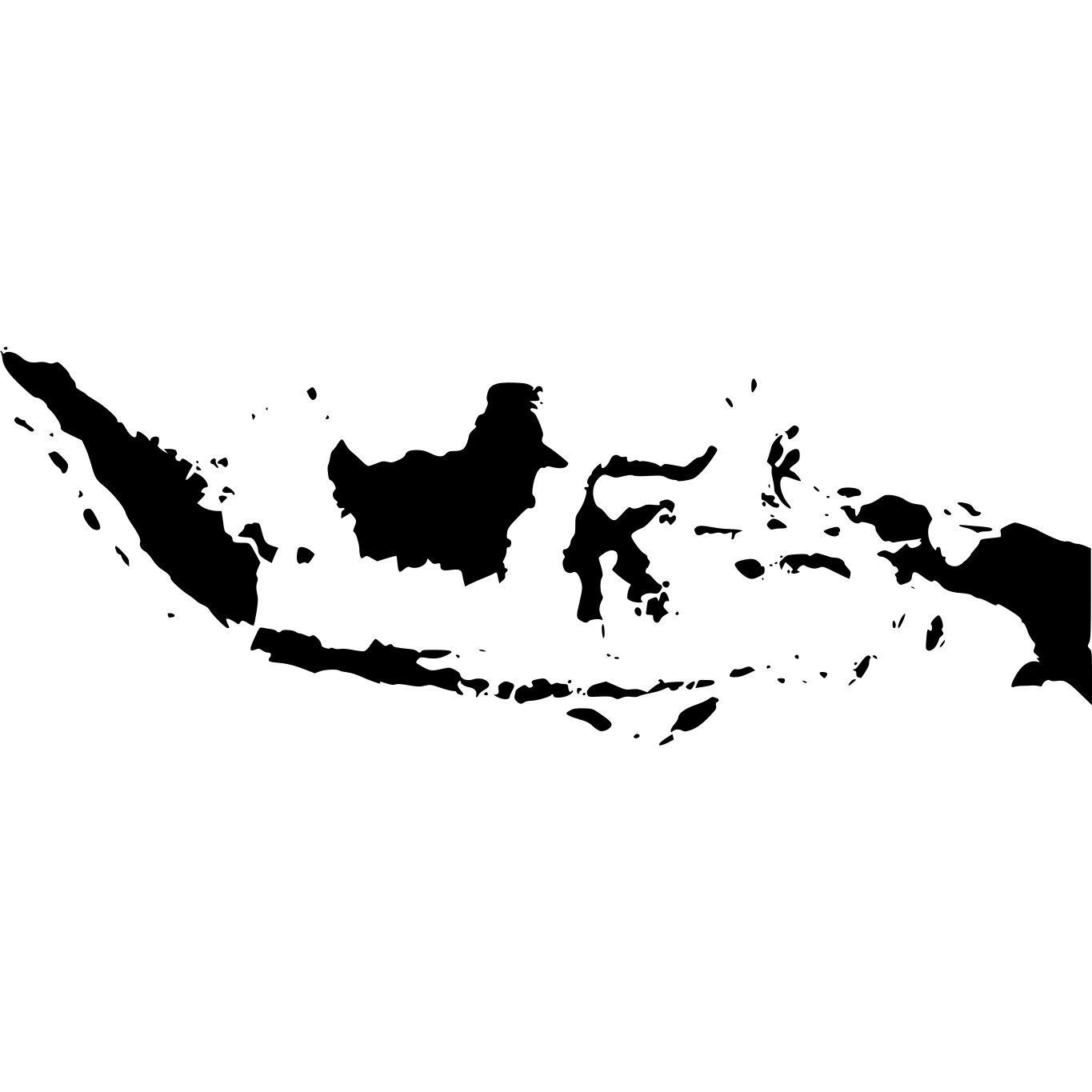
Jejuby is a Indonesian brand
Often compared with

We're dedicated to providing you with the most up-to-date and science-backed ingredient info out there.
The data we've presented on this page has been verified by a member of the SkinSort Team.
Read more about us· Updated June 22, 2026 • Added by indaah


