Weleda Skin Food Face Care Nourishing Day Cream Versus KORRES Black Pine Primus Wrinkle Defying Day Cream
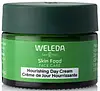
This barrier-repair day moisturizer is formulated around Helianthus Annuus Seed Oil and Butyrospermum Parkii Butter to strengthen the skin barrier and hydrate skin.
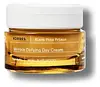
This anti-aging day moisturizer is formulated around Acetyl Hexapeptide-8 to soften the look of wrinkles.


What's inside
What's inside
 Key Ingredients
Benefits
Concerns
Ingredients Side-by-side
Water
Skin ConditioningHelianthus Annuus Seed Oil
Emollient



Glycerin
Humectant

Isoamyl Laurate
Emollient
Butyrospermum Parkii Butter
Skin Conditioning


Pentylene Glycol
Skin Conditioning
Betaine
Humectant
Alcohol
Antimicrobial


Glyceryl Stearate Citrate
Emollient
Behenyl Alcohol
Emollient
Squalane
Emollient
Rhus Verniciflua Peel Wax
Viola Tricolor Extract
EmollientOlea Europaea Leaf Extract
Perfuming
Rosmarinus Officinalis Leaf Extract
AntimicrobialChamomilla Recutita Flower Extract
Masking
Calendula Officinalis Flower Extract
Masking
Hectorite
AbsorbentAcacia Senegal Gum
MaskingXanthan Gum
EmulsifyingTocopherol
Antioxidant



Lactic Acid
Buffering



Glyceryl Caprylate
EmollientParfum
Masking
Limonene
Perfuming
Linalool
Perfuming
Benzyl Benzoate
Antimicrobial
Citral
Perfuming
Water, Helianthus Annuus Seed Oil, Glycerin, Isoamyl Laurate, Butyrospermum Parkii Butter, Pentylene Glycol, Betaine, Alcohol, Glyceryl Stearate Citrate, Behenyl Alcohol, Squalane, Rhus Verniciflua Peel Wax, Viola Tricolor Extract, Olea Europaea Leaf Extract, Rosmarinus Officinalis Leaf Extract, Chamomilla Recutita Flower Extract, Calendula Officinalis Flower Extract, Hectorite, Acacia Senegal Gum, Xanthan Gum, Tocopherol, Lactic Acid, Glyceryl Caprylate, Parfum, Limonene, Linalool, Benzyl Benzoate, Citral
Water
Skin ConditioningAcacia Decurrens/Jojoba/Sunflower Seed Wax Polyglyceryl-3 Esters
EmollientCaprylic/Capric Triglyceride
Masking
Propanediol
Solvent
Methylpropanediol
SolventSodium Acrylates Copolymer
Acetyl Hexapeptide-8
Humectant
Acmella Oleracea Extract
Skin ProtectingAlgin
MaskingBetaine
Humectant
Caprylyl Glycol
Emollient
Cellulase
Crithmum Maritimum Extract
Skin ConditioningDisodium Phosphate
BufferingEpigallocatechin Gallatyl Glucoside
Antioxidant
Ethylhexylglycerin
Skin ConditioningGallyl Glucoside
Antioxidant
Glycerin
Humectant
Glyceryl Polyacrylate
Hydrolyzed Sodium Hyaluronate
Skin Conditioning
Hydroxyacetophenone
Antioxidant
Lactic Acid
Buffering
Lecithin
Emollient
Linolenic Acid
Cleansing
Pentylene Glycol
Skin Conditioning
Phenylpropanol
Masking
Pinus Nigra Bud/Needle Extract
Antimicrobial
Polyacrylate Crosspolymer-6
Emulsion StabilisingPotassium Phosphate
BufferingPropyl Gallate
Antioxidant
Pullulan
Serine
Masking
Sodium Carboxymethyl Beta-Glucan
CleansingSodium Hyaluronate
Humectant
Sodium Hyaluronate Crosspolymer
Humectant
Sodium Phosphate
BufferingTamarindus Indica Seed Gum
Emulsion Stabilising
Trehalose
Humectant
Urea
Buffering
Xanthan Gum
EmulsifyingBenzyl Alcohol
Perfuming
Dehydroacetic Acid
Preservative
Potassium Sorbate
Preservative
Parfum
Masking
Water, Acacia Decurrens/Jojoba/Sunflower Seed Wax Polyglyceryl-3 Esters, Caprylic/Capric Triglyceride, Propanediol, Methylpropanediol, Sodium Acrylates Copolymer, Acetyl Hexapeptide-8, Acmella Oleracea Extract, Algin, Betaine, Caprylyl Glycol, Cellulase, Crithmum Maritimum Extract, Disodium Phosphate, Epigallocatechin Gallatyl Glucoside, Ethylhexylglycerin, Gallyl Glucoside, Glycerin, Glyceryl Polyacrylate, Hydrolyzed Sodium Hyaluronate, Hydroxyacetophenone, Lactic Acid, Lecithin, Linolenic Acid, Pentylene Glycol, Phenylpropanol, Pinus Nigra Bud/Needle Extract, Polyacrylate Crosspolymer-6, Potassium Phosphate, Propyl Gallate, Pullulan, Serine, Sodium Carboxymethyl Beta-Glucan, Sodium Hyaluronate, Sodium Hyaluronate Crosspolymer, Sodium Phosphate, Tamarindus Indica Seed Gum, Trehalose, Urea, Xanthan Gum, Benzyl Alcohol, Dehydroacetic Acid, Potassium Sorbate, Parfum
Ingredients Explained
These ingredients are found in both products.
Ingredients higher up in an ingredient list are typically present in a larger amount.
Betaine is a humectant. Like hyaluronic acid, it helps attract and retain moisture in the skin. It’s known for being gentle and for helping the skin maintain balanced hydration.
Betaine is mainly used to improve hydration and support calmer skin. It helps skin cells regulate water balance because it functions as an osmolyte.
Some studies suggest betaine may support making skin tone more even.
Fun fact: Betaine naturally exists in the skin and the body. In cosmetic products, it can be either plant-derived (most commonly from sugar beets) or synthetically produced for consistency and stability.
Betaine is also known as trimethylglycine.
Learn more about BetaineGlycerin (or glycerol) is a compound naturally found in your skin. It's a powerhouse humectant that pulls water into the stratum corneum.
Topically, glycerin does several things at once:
Your skin makes glycerin on its own (mostly from sebaceous oil breakdown) and shuttles it to your outermost layer of skin, or your epidermis, via aquaporin-3.
Aquaporin-3 is a transporter that is essential for normal skin hydration, elasticity, and repair. Interestingly, mice lacking in AQP3 have dry and less elastic skin that can be fully corrected with glycerin.
This ingredient is non-irritating, plays well with almost every ingredient, and works across all skin types. Typical use is anywhere between 3-10% but can go up to 79% in some leave-on products.
Just know very high concentrations (>40%) can feel tacky in low humidity.
Glycerin is the name for this ingredient in American English. British English uses Glycerol/Glycerine.
Learn more about GlycerinLactic Acid is another well-loved alpha hydroxy acid (AHA). It is gentler than glycolic acid but still highly effective.
Its main role is to exfoliate the surface of the skin by loosening the “glue” that holds dead skin cells together. Shedding those old cells leads to smoother, softer, and more even-toned skin.
Because lactic acid molecules are larger than glycolic acid, they don’t penetrate as deeply. This means they’re less likely to sting or irritate, making it a great choice for beginners or those with sensitive skin.
Like glycolic acid, it can:
Lactic acid also acts as a humectant (like hyaluronic acid). It can draw water into the skin to improve hydration and also plays a role in the skin's natural moisturizing factor (NMF) in the form of sodium lactate.
Studies show it can boost ceramide production to strengthen the skin barrier and even help balance the skin’s microbiome.
To get results, choose products with a pH between 3-4.
Lower strengths (5-12%) focus on surface exfoliation; higher strengths (12% and up) can reach deeper in the dermis (deeper, supportive layer) to improve skin texture and firmness over time.
Though it was originally derived from milk, most modern lactic acid used in skincare is vegan. It is made through non-dairy fermentation to create a bio-identical and stable form suitable for all formulations.
When lactic acid shows up near the end of an ingredient list, it usually means the brand added just a tiny amount to adjust the product’s pH.
Legend has it that Cleopatra used to bathe in sour milk to help reduce wrinkles.
Lactic acid is truly a gentle multitasker: it exfoliates, hydrates, strengthens, and brightens. It's a great ingredient for giving your skin a smooth, glowing, and healthy look without the harshness of stronger acids.
Read more about some other popular AHA's here:
Learn more about Lactic AcidParfum is a catch-all term for an ingredient or more that is used to give a scent to products.
Also called "fragrance", this ingredient can be a blend of hundreds of chemicals or plant oils. This means every product with "fragrance" or "parfum" in the ingredients list is a different mixture.
For instance, Habanolide is a proprietary trade name for a specific aroma chemical. When used as a fragrance ingredient in cosmetics, most aroma chemicals fall under the broad labeling category of “FRAGRANCE” or “PARFUM” according to EU and US regulations.
The term 'parfum' or 'fragrance' is not regulated in many countries. In many cases, it is up to the brand to define this term.
For instance, many brands choose to label themselves as "fragrance-free" because they are not using synthetic fragrances. However, their products may still contain ingredients such as essential oils that are considered a fragrance by INCI standards.
One example is Calendula flower extract. Calendula is an essential oil that still imparts a scent or 'fragrance'.
Depending on the blend, the ingredients in the mixture can cause allergies and sensitivities on the skin. Some ingredients that are known EU allergens include linalool and citronellol.
Parfum can also be used to mask or cover an unpleasant scent.
The bottom line is: not all fragrances/parfum/ingredients are created equally. If you are worried about fragrances, we recommend taking a closer look at an ingredient. And of course, we always recommend speaking with a professional.
Learn more about ParfumPentylene Glycol (1,2-pentanediol) is a multitasking little diol with three main roles in a formula:
Research on alkanediols (the family pentylene glycol belongs to) show they work by disrupting microbial cell membranes. This disruption helps the primary preservative system in a product work more effectively at lower doses.
On the safety side, the Cosmetic Ingredient Review Expert Panel has concluded this ingredient to be safe as used in current cosmetic practices + concentrations.
Typical use levels in a formula run about 1-5%.
Learn more about Pentylene GlycolWater. It's the most common cosmetic ingredient of all. You'll usually see it at the top of ingredient lists, meaning that it makes up the largest part of the product.
So why is it so popular? Water most often acts as a solvent - this means that it helps dissolve other ingredients into the formulation.
You'll also recognize water as that liquid we all need to stay alive. If you see this, drink a glass of water. Remember to stay hydrated!
Learn more about WaterXanthan gum is used as a stabilizer and thickener within cosmetic products. It helps give products a sticky, thick feeling - preventing them from being too runny.
On the technical side of things, xanthan gum is a polysaccharide - a combination consisting of multiple sugar molecules bonded together.
Xanthan gum is a pretty common and great ingredient. It is a natural, non-toxic, non-irritating ingredient that is also commonly used in food products.
Learn more about Xanthan Gum

