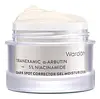
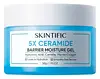
Wardah Dark Spot Corrector Gel Moisturizer Versus Skintific 5x Ceramide Barrier Repair Moisturize Gel
This brightening moisturizer is formulated around Niacinamide and Alpha-Arbutin to fade the look of dark spots and brighten dull-looking skin.
This barrier-repair moisturizer is formulated around Panthenol and Ceramide NP to strengthen the skin barrier and hydrate skin.


What's inside
What's inside
 Key Ingredients
Benefits
Concerns
Ingredients Side-by-side
Water
Skin ConditioningNiacinamide
Smoothing











Butylene Glycol
Humectant
C13-15 Alkane
SolventDicaprylyl Ether
Emollient
Pentylene Glycol
Skin Conditioning
Jojoba Esters
Emollient

Glycerin
Humectant
Arachidyl Alcohol
Emollient
Ammonium Acryloyldimethyltaurate/Vp Copolymer
Bisabolol
Antioxidant
Alpha-Arbutin
Antioxidant
Actinidia Polygama Fruit Extract
Skin ConditioningTranexamoyl Dipeptide-23
Bleaching
Leontopodium Alpinum Extract
Skin ConditioningAllantoin
Skin Conditioning
Ceramide NP
Skin Conditioning
Phenoxyethanol
Preservative
Phenyl Trimethicone
Skin Conditioning
Chlorphenesin
Antimicrobial
Behenyl Alcohol
Emollient
Arachidyl Glucoside
EmulsifyingXanthan Gum
EmulsifyingCaprylic/Capric Triglyceride
Masking
Vinyl Dimethicone/Methicone Silsesquioxane Crosspolymer
Carbomer
Emulsion StabilisingDeoxyphytantriyl Palmitamide Mea
Skin ConditioningHydrogenated Lecithin
Emulsifying
Cholesterol
Emollient
Potassium Hydroxide
BufferingTocopherol
Antioxidant
Parfum
Masking



Citric Acid
Buffering
Potassium Sorbate
Preservative
Sodium Benzoate
Masking
1,2-Hexanediol
Skin Conditioning
Caprylyl Glycol
Emollient
Water, Niacinamide, Butylene Glycol, C13-15 Alkane, Dicaprylyl Ether, Pentylene Glycol, Jojoba Esters, Glycerin, Arachidyl Alcohol, Ammonium Acryloyldimethyltaurate/Vp Copolymer, Bisabolol, Alpha-Arbutin, Actinidia Polygama Fruit Extract, Tranexamoyl Dipeptide-23, Leontopodium Alpinum Extract, Allantoin, Ceramide NP, Phenoxyethanol, Phenyl Trimethicone, Chlorphenesin, Behenyl Alcohol, Arachidyl Glucoside, Xanthan Gum, Caprylic/Capric Triglyceride, Vinyl Dimethicone/Methicone Silsesquioxane Crosspolymer, Carbomer, Deoxyphytantriyl Palmitamide Mea, Hydrogenated Lecithin, Cholesterol, Potassium Hydroxide, Tocopherol, Parfum, Citric Acid, Potassium Sorbate, Sodium Benzoate, 1,2-Hexanediol, Caprylyl Glycol
Water
Skin ConditioningButylene Glycol
Humectant
Hydrogenated Polyisobutene
EmollientDimethicone
Emollient
Glycerin
Humectant
Propylene Glycol
Humectant
1,2-Hexanediol
Skin Conditioning
Hydroxyacetophenone
Antioxidant
PEG-400
Emulsion StabilisingAmmonium Acryloyldimethyltaurate/Vp Copolymer
Hydrogenated Lecithin
Emulsifying
Panthenol
Skin Conditioning
Phytosteryl/Octyldodecyl Lauroyl Glutamate
Skin ConditioningCarbomer
Emulsion StabilisingAllantoin
Skin Conditioning
PCA
Humectant
Hydroxyethyl Acrylate/Sodium Acryloyldimethyl Taurate Copolymer
Emulsion StabilisingSqualane
Emollient
Ceramide NP
Skin Conditioning
Ceramide Ns
Skin Conditioning
Ceramide Ng
Skin Conditioning
Ceramide As
Skin Conditioning
Ceramide EOP
Skin Conditioning
Ceramide AP
Skin Conditioning
Sodium Hyaluronate
Humectant
Hydrolyzed Collagen
Emollient
Centella Asiatica Extract
Cleansing
Sodium Hydroxide
BufferingHamamelis Virginiana Extract
Antiseborrhoeic
Trehalose
Humectant
Ectoin
Skin Conditioning
Sophora Flavescens Root Extract
Antioxidant
Opuntia Ficus-Indica Stem Extract
Skin Conditioning
Ophiopogon Japonicus Root Extract
Skin ConditioningYeast Polysaccharides
Skin ConditioningPentylene Glycol
Skin Conditioning
Disodium EDTA
ChelatingPolysorbate 60
Emulsifying
T-Butyl Alcohol
Perfuming
Citrus Aurantium Amara Flower Oil
Masking
Sorbitan Isostearate
Emulsifying
Citrus Aurantium Bergamia Fruit Oil
Masking
Citrus Limon Peel Oil
Masking
Water, Butylene Glycol, Hydrogenated Polyisobutene, Dimethicone, Glycerin, Propylene Glycol, 1,2-Hexanediol, Hydroxyacetophenone, PEG-400, Ammonium Acryloyldimethyltaurate/Vp Copolymer, Hydrogenated Lecithin, Panthenol, Phytosteryl/Octyldodecyl Lauroyl Glutamate, Carbomer, Allantoin, PCA, Hydroxyethyl Acrylate/Sodium Acryloyldimethyl Taurate Copolymer, Squalane, Ceramide NP, Ceramide Ns, Ceramide Ng, Ceramide As, Ceramide EOP, Ceramide AP, Sodium Hyaluronate, Hydrolyzed Collagen, Centella Asiatica Extract, Sodium Hydroxide, Hamamelis Virginiana Extract, Trehalose, Ectoin, Sophora Flavescens Root Extract, Opuntia Ficus-Indica Stem Extract, Ophiopogon Japonicus Root Extract, Yeast Polysaccharides, Pentylene Glycol, Disodium EDTA, Polysorbate 60, T-Butyl Alcohol, Citrus Aurantium Amara Flower Oil, Sorbitan Isostearate, Citrus Aurantium Bergamia Fruit Oil, Citrus Limon Peel Oil
Reviews
Ingredients Explained
These ingredients are found in both products.
Ingredients higher up in an ingredient list are typically present in a larger amount.
1,2-Hexanediol is a synthetic liquid and another multi-functional powerhouse.
It is a:
- Humectant, drawing moisture into the skin
- Emollient, helping to soften skin
- Solvent, dispersing and stabilizing formulas
- Preservative booster, enhancing the antimicrobial activity of other preservatives
Allantoin is a soothing ingredient known for its protective and moisturizing properties; it's basically a quiet workhorse ingredient you can find in a huge range of cosmetics.
Though it can be derived from the comfrey plant, allantoin is produced synthetically for cosmetic products to ensure purity.
Research shows it can encourage your skin cells to turn over and renew by stimulating keratinocyte and fibroblast proliferation.
It also has mild keratolytic properties to help loosen and shed dead skin cells without being harsh.
Studies also suggest allantoin can help calm inflammation by dialing down some of the chemical signals your skin sends out when it is irritated.
This ingredient is typically used in the 0.1-0.5% range, and the FDA recognizes it as a skin protectant in OTC products up to 2%.
Overall, allantoin is a wonderful addition to most routines; it is stable across a wide pH range (~4-8), works well with other ingredients, and is considered non-sensitizing/non-irritating.
Fun fact: Allantoin is naturally occurring in comfrey root, beets, chamomile, and wheat sprouts. Our bodies even produce it as a byproduct of uric acid metabolism.
Learn more about AllantoinAmmonium Acryloyldimethyltaurate/Vp Copolymer is a synthetically created polymer. It's used as a film-forming agent and used to thicken the consistency of products.
Think of it as a supportive ingredient that helps your gel-creams feel silky, "cloud cream-like", and spread evenly without being greasy.
The Cosmetic Ingredient Review (CIR) Expert Panel evaluated it (along with 22 other acryloyldimethyltaurate polymers) and concluded it's:
Due to its large molecular size, it sits on the surface of skin rather than penetrating it.
Learn more about Ammonium Acryloyldimethyltaurate/Vp CopolymerButylene Glycol (or BG) is used within cosmetic products for a few different reasons:
Overall, Butylene Glycol is a safe and well-rounded ingredient that works well with other ingredients.
Though this ingredient works well with most skin types, some people with sensitive skin may experience a reaction such as allergic rashes, closed comedones, or itchiness.
Learn more about Butylene GlycolCarbomer is a synthetic thickening and gelling agent. It's basically the ingredient that gives a lot of serums, gels, creams, and sunscreens their smooth, non-sticky texture.
Although legally permitted at very high levels, carbomers are normally used at concentrations below 1%.
It also needs to be neutralized to actually thicken, and because it is a large molecule, it doesn't really penetrate the skin barrier.
Allergy-wise, the risk is very low. Clinical studies show carbomers have low potential for skin irritation/sensitization even at concentrations up to 100%.
A 2024 UK study patch-tested 1,302 patients and found true allergy to the parent group of carbomer to be rare with no confirmed relevant reactions.
Learn more about CarbomerCeramide NP (formerly known as Ceramide 3) is one of the skin's naturally occurring lipids.
Since ceramides are the major lipid components of the skin, they are crucial for maintaining skin barrier and hydration. Ceramide NP most closely mirrors the dominant kind in human skin amongst ceramide subtypes.
This ceramide works by slotting into gaps within the stratum corneum's lipid matrix to limit trans-epidermal water loss (TEWL) and shield the skin against external irritants.
A study with 312 patients found that using a ceramide-containing routine for 4 weeks reduced the severity of atopic dermatitis by over 61%.
Another clinical study in subjects aged 60 and older found that a ceramide body wash and moisturizer improved skin dryness and itchy skin in 15 days.
Overall, ceramides are considered non-irritating and safety tests have found little to no observable adverse effects from using this ingredient.
Ceramide NP is usually sourced from plants (like soybean or rice bran), or produced synthetically.
Learn more about Ceramide NPGlycerin (or glycerol) is a compound naturally found in your skin. It's a powerhouse humectant that pulls water into the stratum corneum.
Topically, glycerin does several things at once:
Your skin makes glycerin on its own (mostly from sebaceous oil breakdown) and shuttles it to your outermost layer of skin, or your epidermis, via aquaporin-3.
Aquaporin-3 is a transporter that is essential for normal skin hydration, elasticity, and repair. Interestingly, mice lacking in AQP3 have dry and less elastic skin that can be fully corrected with glycerin.
This ingredient is non-irritating, plays well with almost every ingredient, and works across all skin types. Typical use is anywhere between 3-10% but can go up to 79% in some leave-on products.
Just know very high concentrations (>40%) can feel tacky in low humidity.
Glycerin is the name for this ingredient in American English. British English uses Glycerol/Glycerine.
Learn more about GlycerinHydrogenated Lecithin is a more stable version of lecithin.
It's made by taking lecithin (a phospholipid commonly found in soybeans and egg yolks) and hydrogenating it. This just means the unsaturated fatty acids are turned into saturated ones so they don't go bad as easily.
This ingredient is an emollient, emulsifier, and penetration enhancer. As an emollient, it helps soften and hydrate skin by trapping moisture within. As an emulsifier, it prevents oil and water ingredients from separating.
Hydrogenated Lecithin can form tiny spherical structures made of phospholipid bilayers called liposomes. These liposomes are able to capture compounds inside their structure and deliver them through the skin barrier.
Because phospholipids are a natural component of our cell membranes, this ingredient is inherently compatible with skin.
A 2021 study found lecithin-based surfactants were less harsh and more tolerable comared to Sodium Lauryl Sulfate (SLS).
Learn more about Hydrogenated LecithinPentylene Glycol (1,2-pentanediol) is a multitasking little diol with three main roles in a formula:
Research on alkanediols (the family pentylene glycol belongs to) show they work by disrupting microbial cell membranes. This disruption helps the primary preservative system in a product work more effectively at lower doses.
On the safety side, the Cosmetic Ingredient Review Expert Panel has concluded this ingredient to be safe as used in current cosmetic practices + concentrations.
Typical use levels in a formula run about 1-5%.
Learn more about Pentylene GlycolWater. It's the most common cosmetic ingredient of all. You'll usually see it at the top of ingredient lists, meaning that it makes up the largest part of the product.
So why is it so popular? Water most often acts as a solvent - this means that it helps dissolve other ingredients into the formulation.
You'll also recognize water as that liquid we all need to stay alive. If you see this, drink a glass of water. Remember to stay hydrated!
Learn more about Water

