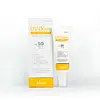
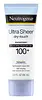
UV Doux D-Tan Aqua Sunscreen Lotion SPF 50 Versus Neutrogena Ultra Sheer Dry-Touch Sunscreen SPF 100+
This hybrid sunscreen covers the full UV range and blocks ~98% of UVB at SPF 50.
This chemical sunscreen covers most of the UV range, lighter on the deep UVA that drives aging.


What's inside
What's inside
 Key Ingredients
Benefits
Concerns
Ingredients Side-by-side
Butyl Methoxydibenzoylmethane
UV Absorber
Octocrylene
UV Absorber


Butylene Glycol
Humectant

Lecithin
Emollient
Titanium Dioxide
Cosmetic Colorant
Glycerin
Humectant
Niacinamide
Smoothing









Melanin
Skin ProtectingGlyceryl Stearate
Emollient

Phenoxyethanol
Preservative
Sodium Polyacrylate
Absorbent
Ceramide NP
Skin Conditioning
Ceramide AP
Skin Conditioning
Ceramide EOP
Skin Conditioning
Phytosphingosine
Skin Conditioning
Cholesterol
Emollient
Sodium Lauroyl Lactylate
EmulsifyingHelianthus Annuus Seed Oil
Emollient
Hyaluronic Acid
Humectant
Ascorbic Acid
Antioxidant

Caprylic Acid
CleansingTerminalia Ferdinandiana Fruit Extract
Antioxidant
C12-15 Alkyl Benzoate
AntimicrobialSodium Levulinate
Skin ConditioningDimethicone
Emollient
Aloe Barbadensis Leaf Extract
Emollient
Calendula Officinalis Flower Extract
Masking
Dicaprylyl Carbonate
EmollientXylitol
Humectant
Sodium Benzoate
Masking
Phospholipids
Skin Conditioning
Allantoin
Skin Conditioning
Thermus Thermophillus Ferment
Skin ConditioningTocopheryl Acetate
Antioxidant
Butyl Methoxydibenzoylmethane, Octocrylene, Butylene Glycol, Lecithin, Titanium Dioxide, Glycerin, Niacinamide, Melanin, Glyceryl Stearate, Phenoxyethanol, Sodium Polyacrylate, Ceramide NP, Ceramide AP, Ceramide EOP, Phytosphingosine, Cholesterol, Sodium Lauroyl Lactylate, Helianthus Annuus Seed Oil, Hyaluronic Acid, Ascorbic Acid, Caprylic Acid, Terminalia Ferdinandiana Fruit Extract, C12-15 Alkyl Benzoate, Sodium Levulinate, Dimethicone, Aloe Barbadensis Leaf Extract, Calendula Officinalis Flower Extract, Dicaprylyl Carbonate, Xylitol, Sodium Benzoate, Phospholipids, Allantoin, Thermus Thermophillus Ferment, Tocopheryl Acetate
Butyl Methoxydibenzoylmethane 3%
UV Absorber
Homosalate 15%
Skin Conditioning
Ethylhexyl Salicylate 5%
UV Absorber
Octocrylene 10%
UV Absorber
Benzophenone-3 6%
UV Absorber
Water
Skin ConditioningStyrene/Acrylates Copolymer
Silica
Abrasive
Beeswax
Emulsion Stabilising

Cyclopentasiloxane
Emollient
Ethylhexylglycerin
Skin ConditioningGlyceryl Stearate
Emollient
PEG-100 Stearate
Surfactant
Acrylates/Dimethicone Copolymer
Skin Conditioning
Acrylates/C10-30 Alkyl Acrylate Crosspolymer
Emulsion StabilisingParfum
Masking
Chlorphenesin
Antimicrobial
Triethanolamine
BufferingDiethylhexyl 2,6-Naphthalate
EmollientDipotassium Glycyrrhizate
Humectant
Disodium EDTA
BHT
Antioxidant
Methylisothiazolinone
Preservative
Butyl Methoxydibenzoylmethane 3%, Homosalate 15%, Ethylhexyl Salicylate 5%, Octocrylene 10%, Benzophenone-3 6%, Water, Styrene/Acrylates Copolymer, Silica, Beeswax, Cyclopentasiloxane, Ethylhexylglycerin, Glyceryl Stearate, PEG-100 Stearate, Acrylates/Dimethicone Copolymer, Acrylates/C10-30 Alkyl Acrylate Crosspolymer, Parfum, Chlorphenesin, Triethanolamine, Diethylhexyl 2,6-Naphthalate, Dipotassium Glycyrrhizate, Disodium EDTA, BHT, Methylisothiazolinone
Reviews
Ingredients Explained
These ingredients are found in both products.
Ingredients higher up in an ingredient list are typically present in a larger amount.
Also known as Avobenzone, this ingredient is an oil-soluble used to absorb the full spectrum of UVA rays (peak 357 nm).
It's one of the most effective UVA filters available but has a major caveat of photostability: avobenzone is susceptible to photodegradation.
This means it can lose efficacy when exposed to sunlight without the help of a stabilizing agent.
Studies show antioxidants (like vitamin E or vitamin C) and some UV filters (like octocrylene and Tinosorb S) can meaningfully improve its stability in a formulation.
The maximum allowable concentration according to regulation is 3% in the US + Canada, and 5% in the EU, Australia, China, Korea, and ASEAN countries.
It has a well-support safety profile: a comprehensive 2025 review found minimal toxicity with no evidence of carcinogenicity.
Overall, avobenzone is a safe and regulated ingredient used in sunscreen for over 40 years.
Learn more about Butyl MethoxydibenzoylmethaneGlyceryl Stearate is made by reacting glycerin with stearic acid (typically sourced from plant oils like palm or coconut). It's an emulsifier, emollient, and mild occlusive.
Emulsifiers help ingredients like oil and water stay mixed so your formula stays nicely blended and uniform in texture.
This ingredient is typically used in concentrations between 1-10%. Studies have found it to be non-sensitizing, non-phototoxic, and non-photoallergenic.
A close cousin of this ingredient is Glyceryl Stearate SE ("self-emulsifying"). This just has a small amount of sodium or potassium stearate added so it can emulsify without a co-emulsifier.
Since this ingredient is an ester of a C18 fatty acid, it may not be fungal acne safe. The Malassezia yeast can potentially metabolize within the C11-C24 range.
Fun fact: The human body also creates Glyceryl Stearate naturally.
Learn more about Glyceryl StearateOctocrylene is an oil-soluble organic UV filter that mainly absorbs UVB and short wave UVA II light.
Its real superpower is teamwork: octocrylene is remarkably photostable and is most famous for stabilizing avobenzone (the workhorse UVA filter).
This ingredient is commonly used to enhance both UVB and UVA protection due to its unique property in stabilizing avobenzone. It also pulls double duty by boosting water resistance and giving formulas a smooth, spreadable feel.
The EU's Scientific Committee on Consumer Safety (SCCS) has deemed octocrylene to be safe as a UV-filter at concentrations up to 10% (capped at 9% in propellant sprays). The US also permits it up to 10%.
Two things worth knowing:
You'll usually see this ingredient used in concentrations between 2-10% (higher amounts when used as a stabilizer for avobenzone).
Learn more about Octocrylene

