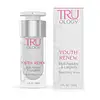
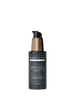
TRUology Youth Renew Multi Peptides & Longevity Serum Versus DRMTLGY Needle-less Growth Factor Serum
This anti-aging serum is formulated around Niacinamide and Palmitoyl Tripeptide-5 to soften the look of wrinkles and refine skin texture.
This anti-aging serum is formulated around Palmitoyl Tripeptide-1 and Palmitoyl Tetrapeptide-7 to soften the look of wrinkles.

What's inside
What's inside
 Key Ingredients
Benefits
Concerns
Ingredients Side-by-side
Aloe Barbadensis Leaf Juice
Skin Conditioning


Water
Skin ConditioningGlycerin
Humectant

Pentylene Glycol
Skin Conditioning
Pentapeptide-48
Skin Conditioning
Niacinamide
Smoothing







Maltodextrin
Absorbent
Propanediol
Solvent
Fructooligosaccharides
Humectant
Sodium Hyaluronate
Humectant
Sodium Acetylated Hyaluronate
Humectant
Hydrolyzed Sodium Hyaluronate
Skin Conditioning
Sodium Hyaluronate Crosspolymer
Humectant
Acetyl Tetrapeptide-2
Skin Conditioning
Palmitoyl Heptapeptide-18
Skin Conditioning
Palmitoyl Tripeptide-5
Skin Conditioning
Palmitoyl Dipeptide-5 Diaminobutyroyl Hydroxythreonine
Skin Conditioning
Palmitoyl Hexapeptide-52
Skin Conditioning
Tetradecyl Aminobutyroylvalylaminobutyric Urea Trifluoroacetate
Skin ConditioningDipeptide Diaminobutyroyl Benzylamide Diacetate
Skin Conditioning
Cyclotetrapeptide-24 Aminocyclohexane Carboxylate
Antioxidant
Panthenol
Skin Conditioning
Hydroxyethylcellulose
Emulsion StabilisingPotassium Lactate
BufferingPolyvinyl Alcohol
Alcohol Denat.
Antimicrobial




Ectoin
Skin Conditioning
Glycolic Acid
Buffering

Lactic Acid
Buffering
Beta Vulgaris Root Extract
Skin ConditioningHelianthus Annuus Sprout Extract
Skin ConditioningPsidium Guajava Fruit Extract
AstringentLecithin
Emollient
Xanthan Gum
EmulsifyingCarbomer
Emulsion StabilisingCaprylyl Glycol
Emollient
Phenoxyethanol
Preservative
Ethylhexylglycerin
Skin ConditioningSodium Hydroxide
BufferingAloe Barbadensis Leaf Juice, Water, Glycerin, Pentylene Glycol, Pentapeptide-48, Niacinamide, Maltodextrin, Propanediol, Fructooligosaccharides, Sodium Hyaluronate, Sodium Acetylated Hyaluronate, Hydrolyzed Sodium Hyaluronate, Sodium Hyaluronate Crosspolymer, Acetyl Tetrapeptide-2, Palmitoyl Heptapeptide-18, Palmitoyl Tripeptide-5, Palmitoyl Dipeptide-5 Diaminobutyroyl Hydroxythreonine, Palmitoyl Hexapeptide-52, Tetradecyl Aminobutyroylvalylaminobutyric Urea Trifluoroacetate, Dipeptide Diaminobutyroyl Benzylamide Diacetate, Cyclotetrapeptide-24 Aminocyclohexane Carboxylate, Panthenol, Hydroxyethylcellulose, Potassium Lactate, Polyvinyl Alcohol, Alcohol Denat., Ectoin, Glycolic Acid, Lactic Acid, Beta Vulgaris Root Extract, Helianthus Annuus Sprout Extract, Psidium Guajava Fruit Extract, Lecithin, Xanthan Gum, Carbomer, Caprylyl Glycol, Phenoxyethanol, Ethylhexylglycerin, Sodium Hydroxide
Water
Skin ConditioningGlycerin
Humectant
Butylene Glycol
Humectant
Pentylene Glycol
Skin Conditioning
Maltodextrin
Absorbent
Coco-Caprylate/Caprate
Emollient
Saccharide Isomerate
Humectant
Sodium Hyaluronate
Humectant
Palmitoyl Tripeptide-1
Skin Conditioning
Oligopeptide-3
Skin Conditioning
Oligopeptide-2
Skin Conditioning
Oligopeptide-1
Skin Conditioning
Hexapeptide-11
Skin Conditioning
Palmitoyl Tripeptide-5
Skin Conditioning
Palmitoyl Tetrapeptide-7
Skin Conditioning
Ceramide NP
Skin Conditioning
Folic Acid
Skin ConditioningPhytosphingosine
Skin Conditioning
Ceramide AP
Skin Conditioning
Ceramide EOP
Skin Conditioning
Triheptanoin
Skin ConditioningSwertia Chirata Extract
HumectantPhenoxyethanol
Preservative
Acrylates/C10-30 Alkyl Acrylate Crosspolymer
Emulsion StabilisingC9-12 Alkane
SolventPolyurethane-100
Ethylhexylglycerin
Skin ConditioningSodium Hydroxide
BufferingLecithin
Emollient
Trisodium Ethylenediamine Disuccinate
ChelatingAcetyl Glutamine
Skin Conditioning1,2-Hexanediol
Skin Conditioning
Tremella Fuciformis Sporocarp Extract
Antioxidant
Hydrolyzed Hyaluronic Acid
Humectant
Decyl Glucoside
Cleansing
Bacillus/Soybean Ferment Extract
Skin ConditioningSodium Lauroyl Lactylate
EmulsifyingCaprylyl Glycol
Emollient
Carbomer
Emulsion StabilisingPolysorbate 20
Emulsifying
Cholesterol
Emollient
Xanthan Gum
EmulsifyingWater, Glycerin, Butylene Glycol, Pentylene Glycol, Maltodextrin, Coco-Caprylate/Caprate, Saccharide Isomerate, Sodium Hyaluronate, Palmitoyl Tripeptide-1, Oligopeptide-3, Oligopeptide-2, Oligopeptide-1, Hexapeptide-11, Palmitoyl Tripeptide-5, Palmitoyl Tetrapeptide-7, Ceramide NP, Folic Acid, Phytosphingosine, Ceramide AP, Ceramide EOP, Triheptanoin, Swertia Chirata Extract, Phenoxyethanol, Acrylates/C10-30 Alkyl Acrylate Crosspolymer, C9-12 Alkane, Polyurethane-100, Ethylhexylglycerin, Sodium Hydroxide, Lecithin, Trisodium Ethylenediamine Disuccinate, Acetyl Glutamine, 1,2-Hexanediol, Tremella Fuciformis Sporocarp Extract, Hydrolyzed Hyaluronic Acid, Decyl Glucoside, Bacillus/Soybean Ferment Extract, Sodium Lauroyl Lactylate, Caprylyl Glycol, Carbomer, Polysorbate 20, Cholesterol, Xanthan Gum
Ingredients Explained
These ingredients are found in both products.
Ingredients higher up in an ingredient list are typically present in a larger amount.
Caprylyl Glycol is a humectant, skin conditioner, emollient, and preservative booster derived from either caprylic acid or synthetically created.
Typical use levels vary from 0.3-1% as a preservative booster and go up to 2% to condition skin.
Because it is not a free-fatty acid, this ingredient is fungal acne safe (there's nothing for Malassezia to feed on).
Learn more about Caprylyl GlycolCarbomer is a synthetic thickening and gelling agent. It's basically the ingredient that gives a lot of serums, gels, creams, and sunscreens their smooth, non-sticky texture.
Although legally permitted at very high levels, carbomers are normally used at concentrations below 1%.
It also needs to be neutralized to actually thicken, and because it is a large molecule, it doesn't really penetrate the skin barrier.
Allergy-wise, the risk is very low. Clinical studies show carbomers have low potential for skin irritation/sensitization even at concentrations up to 100%.
A 2024 UK study patch-tested 1,302 patients and found true allergy to the parent group of carbomer to be rare with no confirmed relevant reactions.
Learn more about CarbomerEthylhexylglycerin is created from glycerin. It is a multitasker ingredient that:
The CIR Expert Panel found minimal skin absorption or sensitization of any kind in a safety assessment. Though this ingredient is considered well-tolerated, a small number of cases of allergic dermatitis have been published since 2002. Just be sure to patch test if you are unsure.
Industry-reported use ranges from 8% in rinse-off products and 2% in leave-on formulations.
Learn more about EthylhexylglycerinGlycerin (or glycerol) is a compound naturally found in your skin. It's a powerhouse humectant that pulls water into the stratum corneum.
Topically, glycerin does several things at once:
Your skin makes glycerin on its own (mostly from sebaceous oil breakdown) and shuttles it to your outermost layer of skin, or your epidermis, via aquaporin-3.
Aquaporin-3 is a transporter that is essential for normal skin hydration, elasticity, and repair. Interestingly, mice lacking in AQP3 have dry and less elastic skin that can be fully corrected with glycerin.
This ingredient is non-irritating, plays well with almost every ingredient, and works across all skin types. Typical use is anywhere between 3-10% but can go up to 79% in some leave-on products.
Just know very high concentrations (>40%) can feel tacky in low humidity.
Glycerin is the name for this ingredient in American English. British English uses Glycerol/Glycerine.
Learn more about GlycerinLecithin is a term for a group of substances found in the cell membranes of plants, animals, and humans. They are made up of phospholipids.
Thanks to its amphiphilic structure (water-loving head and oil-loving tail), it is a true multitasker:
It plays well with most ingredients and is typically used at 0.1-1%. However, concentrations up to 50% have been reported in moisturizers.
Learn more about LecithinMaltodextrin is a plant-derived carbohydrate made by breaking down starch (usually from corn, potato, or rice). In cosmetic formulas, it's a multitasking absorbent, emulsion stabilizer, and skin conditioner.
This ingredient is mostly used to stabilize emulsions and improve the powdery, non-greasy feel of products (like dry shampoos).
Safety-wise, this ingredient is pretty solid; it's even recognized as a food additive. Both animal and clinical studies found no adverse effects at the levels used in cosmetics.
Industry data shows this ingredient is used up to 45.7% in spray products and up to 33% in powder products.
Learn more about MaltodextrinPalmitoyl Tripeptide-5 is a synthetic signal lipopeptide. This just means it is a three amino acid chain bolted onto a palmitic acid tail so it can slip through the skin's lipid barrier.
This peptide has a "build more, lose less" approach.
It's designed to mimic the collagen-stimulating activity in your skin by copying a snippet of one of your skin's own matrix proteins. This nudges fibroblasts into making more collagen while inhibiting the enzyme that breaks down skin protein.
The manufacturer's in vivo study of 45 volunteers found 1% and 2.5% reduced the appearance of wrinkles by 7% and 12% respectively, after using it twice daily for 84 days.
This is in the expected range for peptides; they're slow and cumulative actives and not overnight fixers.
Typical use levels range from 1-3% and this ingredient gets along with pretty much everything.
On the fungal acne front:
Although palmitic acid sits in the chain length that Malassezia can feed on, this ingredient has it locked in an amine bond. This makes it hard for Malassezia to access as a source of food, and therefore fungal acne safe.
Pentylene Glycol (1,2-pentanediol) is a multitasking little diol with three main roles in a formula:
Research on alkanediols (the family pentylene glycol belongs to) show they work by disrupting microbial cell membranes. This disruption helps the primary preservative system in a product work more effectively at lower doses.
On the safety side, the Cosmetic Ingredient Review Expert Panel has concluded this ingredient to be safe as used in current cosmetic practices + concentrations.
Typical use levels in a formula run about 1-5%.
Learn more about Pentylene GlycolPhenoxyethanol is one of the most widely used preservatives in skincare (and for good reason!).
It has a large spectrum of antimicrobial activity and especially effective bacteria, yeast, and mold while only having a weak effect on your skin's natural microbiome.
On a cellular level, it disrupts the cell membranes of microbes by poking holes that make the cell leak. This shuts down the chemical reactions the microbe needs to make energy so it can no longer survive.
Another perk of this ingredient is that it stays functional across a wide pH range (3-10).
You'll often see it paired with boosters like Ethylhexylglycerin; one study showed that a 1:9 ratio of Ethylhexylglycerin to Phenoxyethanol damages bacterial membranes as effectively as doubling the Phenoxyethanol concentration on its own.
Typical use concentrations range from 0.3-1% depending on the formula, and this ingredient is capped at 1% int the EU.
Safety-wise, the fear mongering does not hold up to the evidence. The EU's Scientific Committee on Consumer Safety and FDA consider it safe as a preservative at up to 1%, including for children of all ages.
Adverse systemic effects only showed up in animal studies at exposures roughly 200x higher than what people get from cosmetics. And despite its very widespread use, this ingredient is a rare sensitizer and allergic reactions are uncommon.
Learn more about PhenoxyethanolSodium Hyaluronate is the salt form of hyaluronic acid. It is a long sugar chain that is naturally found in your skin, joints, and connective tissue that maintains hydration and elasticity.
In skincare, it works as a humectant. It pulls water from the environment and deeper layers of skin and binds it to the surface.
Interestingly, the size of the molecule affects its behavior:
Some clinical evidence links low molecular weight versions to improved wrinkle depth, elasticity, anti-inflammatory effects, and barrier repair.
Many serums use a blend of both weights so you can get surface hydration plus longer-lasting and deeper effects.
You'll typically see concentrations between 0.1-2% for this ingredient.
Learn more about Sodium HyaluronateSodium Hydroxide is also known as lye or caustic soda. It is used to adjust the pH of products; many ingredients require a specific pH to be effective.
In small amounts, sodium hydroxide is considered safe to use. However, large amounts may cause chemical burns due to its high alkaline.
Your skin has a natural pH and acid mantle. This acid mantle helps prevent harmful bacteria from breaking through. The acid mantle also helps keep your skin hydrated.
"Alkaline" refers to a high pH level. A low pH level would be considered acidic.
Learn more about Sodium HydroxideWater. It's the most common cosmetic ingredient of all. You'll usually see it at the top of ingredient lists, meaning that it makes up the largest part of the product.
So why is it so popular? Water most often acts as a solvent - this means that it helps dissolve other ingredients into the formulation.
You'll also recognize water as that liquid we all need to stay alive. If you see this, drink a glass of water. Remember to stay hydrated!
Learn more about WaterXanthan gum is used as a stabilizer and thickener within cosmetic products. It helps give products a sticky, thick feeling - preventing them from being too runny.
On the technical side of things, xanthan gum is a polysaccharide - a combination consisting of multiple sugar molecules bonded together.
Xanthan gum is a pretty common and great ingredient. It is a natural, non-toxic, non-irritating ingredient that is also commonly used in food products.
Learn more about Xanthan Gum

