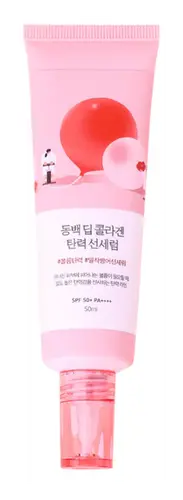
This chemical sunscreen covers the full UV range and blocks ~98% of UVB at SPF 50.
This chemical sunscreen covers burning UVB and near UVA but not the deep UVA that drives aging.


What's inside
What's inside
 Key Ingredients
Benefits
Concerns
Ingredients Side-by-side
Water
Skin ConditioningBetula Platyphylla Japonica Juice
Skin Conditioning
Glycerin
Humectant

Dibutyl Adipate
EmollientButylene Glycol
Humectant
Ethylhexyl Triazone
UV Absorber
Terephthalylidene Dicamphor Sulfonic Acid
UV Absorber
Niacinamide
Smoothing









Silica
Abrasive
Dimethicone
Emollient
Tromethamine
BufferingPolyglyceryl-6 Stearate
Emollient

Sodium Hyaluronate
Humectant
Artemisia Annua Extract
Masking
Anthemis Nobilis Flower Oil
Masking



Pinus Sylvestris Leaf Oil
Masking
Aloe Barbadensis Leaf Extract
Emollient
Dioscorea Japonica Root Extract
Skin Conditioning
Laminaria Japonica Extract
Skin Protecting
Ulmus Davidiana Root Extract
Skin Conditioning
Viola Mandshurica Flower Extract
Antioxidant
Hydrolyzed Hyaluronic Acid
Humectant
Hyaluronic Acid
Humectant
Diethylamino Hydroxybenzoyl Hexyl Benzoate
UV Filter
Methyl Trimethicone
Skin Conditioning
Polysilicone-15
UV Filter
Pentylene Glycol
Skin Conditioning
Bis-Ethylhexyloxyphenol Methoxyphenyl Triazine
UV Absorber
Hydroxyethyl Urea
Humectant
1,2-Hexanediol
Skin Conditioning
Poly C10-30 Alkyl Acrylate
Emulsion StabilisingDimethicone/Vinyl Dimethicone Crosspolymer
Skin Conditioning
Hydroxyacetophenone
Antioxidant
Sodium Polyacryloyldimethyl Taurate
Emulsion StabilisingPolyglyceryl-6 Behenate
Emulsion Stabilising
Glyceryl Stearate
Emollient
Hydroxypropyl Methylcellulose Stearoxy Ether
Sodium Stearoyl Glutamate
CleansingMethylpropanediol
SolventPolyether-1
Glyceryl Glucoside
Humectant
Dehydroxanthan Gum
Emulsion StabilisingPolyacrylate Crosspolymer-6
Emulsion StabilisingAdenosine
Skin Conditioning
Arginine
Masking
Caprylic Acid
CleansingDipropylene Glycol
HumectantCetearyl Olivate
Sorbitan Olivate
Emulsifying
Hydrogenated Lecithin
Emulsifying
Betulin
Skin ConditioningHydroxypropyltrimonium Hyaluronate
Sodium Acetylated Hyaluronate
Humectant
Sodium DNA
Skin Conditioning
Glycine
Buffering
Glutamic Acid
Humectant
Hydrolyzed Sodium Hyaluronate
Skin Conditioning
Sodium Hyaluronate Crosspolymer
Humectant
Potassium Hyaluronate
Skin ConditioningBehenyl Alcohol
Emollient
Carbomer
Emulsion StabilisingCetearyl Alcohol
Emollient



Water, Betula Platyphylla Japonica Juice, Glycerin, Dibutyl Adipate, Butylene Glycol, Ethylhexyl Triazone, Terephthalylidene Dicamphor Sulfonic Acid, Niacinamide, Silica, Dimethicone, Tromethamine, Polyglyceryl-6 Stearate, Sodium Hyaluronate, Artemisia Annua Extract, Anthemis Nobilis Flower Oil, Pinus Sylvestris Leaf Oil, Aloe Barbadensis Leaf Extract, Dioscorea Japonica Root Extract, Laminaria Japonica Extract, Ulmus Davidiana Root Extract, Viola Mandshurica Flower Extract, Hydrolyzed Hyaluronic Acid, Hyaluronic Acid, Diethylamino Hydroxybenzoyl Hexyl Benzoate, Methyl Trimethicone, Polysilicone-15, Pentylene Glycol, Bis-Ethylhexyloxyphenol Methoxyphenyl Triazine, Hydroxyethyl Urea, 1,2-Hexanediol, Poly C10-30 Alkyl Acrylate, Dimethicone/Vinyl Dimethicone Crosspolymer, Hydroxyacetophenone, Sodium Polyacryloyldimethyl Taurate, Polyglyceryl-6 Behenate, Glyceryl Stearate, Hydroxypropyl Methylcellulose Stearoxy Ether, Sodium Stearoyl Glutamate, Methylpropanediol, Polyether-1, Glyceryl Glucoside, Dehydroxanthan Gum, Polyacrylate Crosspolymer-6, Adenosine, Arginine, Caprylic Acid, Dipropylene Glycol, Cetearyl Olivate, Sorbitan Olivate, Hydrogenated Lecithin, Betulin, Hydroxypropyltrimonium Hyaluronate, Sodium Acetylated Hyaluronate, Sodium DNA, Glycine, Glutamic Acid, Hydrolyzed Sodium Hyaluronate, Sodium Hyaluronate Crosspolymer, Potassium Hyaluronate, Behenyl Alcohol, Carbomer, Cetearyl Alcohol
Homosalate 5.5%
Skin Conditioning
Ethylhexyl Salicylate 4.5%
UV Absorber
Octocrylene 4%
UV Absorber
Water
Skin ConditioningPentylene Glycol
Skin Conditioning
Dimethicone
Emollient
Octyldodecanol
Emollient
Caprylyl Methicone
Skin Conditioning
Propanediol
Solvent
Potassium Cetyl Phosphate
EmulsifyingAmmonium Acryloyldimethyltaurate/Vp Copolymer
Hyaluronic Acid
Humectant
1,2-Hexanediol
Skin Conditioning
Hydrolyzed Sodium Hyaluronate
Skin Conditioning
Biosaccharide Gum-4
Skin Conditioning
Jasminum Sambac Leaf Cell Extract
Masking
Glycerin
Humectant
Dibutyl Lauroyl Glutamide
Skin ConditioningCarbomer
Emulsion StabilisingAminomethyl Propanol
BufferingDibutyl Ethylhexanoyl Glutamide
Skin ConditioningCapryloyl Glycerin/Sebacic Acid Copolymer
Skin ConditioningCaprylhydroxamic Acid
ChelatingDisodium EDTA
ChelatingParfum
Masking
Homosalate 5.5%, Ethylhexyl Salicylate 4.5%, Octocrylene 4%, Water, Pentylene Glycol, Dimethicone, Octyldodecanol, Caprylyl Methicone, Propanediol, Potassium Cetyl Phosphate, Ammonium Acryloyldimethyltaurate/Vp Copolymer, Hyaluronic Acid, 1,2-Hexanediol, Hydrolyzed Sodium Hyaluronate, Biosaccharide Gum-4, Jasminum Sambac Leaf Cell Extract, Glycerin, Dibutyl Lauroyl Glutamide, Carbomer, Aminomethyl Propanol, Dibutyl Ethylhexanoyl Glutamide, Capryloyl Glycerin/Sebacic Acid Copolymer, Caprylhydroxamic Acid, Disodium EDTA, Parfum
Reviews
Ingredients Explained
These ingredients are found in both products.
Ingredients higher up in an ingredient list are typically present in a larger amount.
1,2-Hexanediol is a synthetic liquid and another multi-functional powerhouse.
It is a:
- Humectant, drawing moisture into the skin
- Emollient, helping to soften skin
- Solvent, dispersing and stabilizing formulas
- Preservative booster, enhancing the antimicrobial activity of other preservatives
Carbomer is a synthetic thickening and gelling agent. It's basically the ingredient that gives a lot of serums, gels, creams, and sunscreens their smooth, non-sticky texture.
Although legally permitted at very high levels, carbomers are normally used at concentrations below 1%.
It also needs to be neutralized to actually thicken, and because it is a large molecule, it doesn't really penetrate the skin barrier.
Allergy-wise, the risk is very low. Clinical studies show carbomers have low potential for skin irritation/sensitization even at concentrations up to 100%.
A 2024 UK study patch-tested 1,302 patients and found true allergy to the parent group of carbomer to be rare with no confirmed relevant reactions.
Learn more about CarbomerDimethicone is a type of synthetic silicone created from natural materials such as quartz. It is also known as polydimethylsiloxane.
What it does:
Dimethicone comes in different viscosities:
Depending on the viscosity, dimethicone has different properties.
Ingredients lists don't always show which type is used, so we recommend reaching out to the brand if you have questions about the viscosity.
This ingredient is unlikely to cause irritation because it does not get absorbed into skin. However, people with silicone allergies should be careful about using this ingredient.
Note: Dimethicone may contribute to pilling. This is because it is not oil or water soluble, so pilling may occur when layered with products. When mixed with heavy oils in a formula, the outcome is also quite greasy.
Learn more about DimethiconeGlycerin (or glycerol) is a compound naturally found in your skin. It's a powerhouse humectant that pulls water into the stratum corneum.
Topically, glycerin does several things at once:
Your skin makes glycerin on its own (mostly from sebaceous oil breakdown) and shuttles it to your outermost layer of skin, or your epidermis, via aquaporin-3.
Aquaporin-3 is a transporter that is essential for normal skin hydration, elasticity, and repair. Interestingly, mice lacking in AQP3 have dry and less elastic skin that can be fully corrected with glycerin.
This ingredient is non-irritating, plays well with almost every ingredient, and works across all skin types. Typical use is anywhere between 3-10% but can go up to 79% in some leave-on products.
Just know very high concentrations (>40%) can feel tacky in low humidity.
Glycerin is the name for this ingredient in American English. British English uses Glycerol/Glycerine.
Learn more about GlycerinHyaluronic acid (HA) is a glycosaminoglycan (basically a long sugar chain) that your skin already makes on its own. In your skin, HA lives in the extracellular matrix and acts as the body's moisture reservoir.
Topically, HA is a humectant that binds water and helps skin look more plump, smooth, and hydrated.
The only catch is that HA isn't a single thing; it actually comes in a wide range of molecular weights (~50 - 2,000+ kDA) and size matters.
Some clinical evidence links low molecular weight versions to improved wrinkle depth, elasticity, anti-inflammatory effects, and barrier repair.
This is why the best HA serums blend the two sizes together so you get the best of both worlds.
The majority of cosmetic HA is produced by bacterial fermentation, typically using Streptococcus or Bacillus strains. Typical use levels in skincare sit around 0.1-2%.
A clinical study using a 0.2% low-molecular weight HA gel showed improvement in facial seborrheic dermatitis with excellent tolerance.
These are some other common types of Hyaluronic Acid:
Learn more about Hyaluronic AcidThis ingredient is created by putting sodium hyaluronate through hydrolysis.
You might know this as 'mini' or 'ultra low-molecular weight' hyaluronic acid. The small molecule size means it is able to travel deeper in the skin.
According to studies, low molecular-weight hyaluronic acid can:
One study from 2011 found ultra-low weight HA to show pro-inflammatory properties. Another study from 2022 found it to downregulate UV-B induced inflammation.
Hydrolysis is a process of changing a molecule using water or enzymes.
This ingredient is water-soluble.
Learn more about Hydrolyzed Sodium HyaluronatePentylene Glycol (1,2-pentanediol) is a multitasking little diol with three main roles in a formula:
Research on alkanediols (the family pentylene glycol belongs to) show they work by disrupting microbial cell membranes. This disruption helps the primary preservative system in a product work more effectively at lower doses.
On the safety side, the Cosmetic Ingredient Review Expert Panel has concluded this ingredient to be safe as used in current cosmetic practices + concentrations.
Typical use levels in a formula run about 1-5%.
Learn more about Pentylene GlycolWater. It's the most common cosmetic ingredient of all. You'll usually see it at the top of ingredient lists, meaning that it makes up the largest part of the product.
So why is it so popular? Water most often acts as a solvent - this means that it helps dissolve other ingredients into the formulation.
You'll also recognize water as that liquid we all need to stay alive. If you see this, drink a glass of water. Remember to stay hydrated!
Learn more about Water