Philosophy Hope In A Jar Smooth-Glow Multi-Tasking Moisturizer Versus Philosophy Hope In A Jar Instant Glow Peeling Mousse
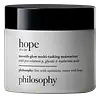
This smoothing moisturizer is formulated around Glycolic Acid and Squalane to refine skin texture and brighten dull-looking skin.
This facial treatment is formulated around Cellulose to control oil.

What's inside
What's inside
 Key Ingredients
Benefits
Concerns
Ingredients Side-by-side
Water
Skin ConditioningDimethicone
Emollient

Stearic Acid
Cleansing



Glycerin
Humectant
Butylene Glycol
Humectant
Glycolic Acid
Buffering









C12-15 Alkyl Benzoate
AntimicrobialPentylene Glycol
Skin Conditioning
Hydroxyethyl Acrylate/Sodium Acryloyldimethyl Taurate Copolymer
Emulsion StabilisingCetearyl Alcohol
Emollient



Squalane
Emollient
Sodium Hydroxide
BufferingDimethicone Crosspolymer
Emulsion Stabilising
Ceteareth-20
Cleansing
Boron Nitride
Absorbent
Ammonium Acryloyldimethyltaurate/Vp Copolymer
Polysilicone-11
Acrylates/C10-30 Alkyl Acrylate Crosspolymer
Emulsion Stabilising1,2-Hexanediol
Skin Conditioning
Caprylyl Glycol
Emollient
Hydroxyacetophenone
Antioxidant
Polysorbate 60
Emulsifying
Parfum
Masking

Methylpropanediol
SolventSorbitan Isostearate
Emulsifying
Citrus Reticulata Peel Extract
Skin ConditioningGlucosyl Hesperidin
HumectantLimonene
Perfuming
Hyaluronic Acid
Humectant
Silanetriol
Citric Acid
Buffering
Citrus Reticulata Fruit Extract
Skin ProtectingSodium Benzoate
Masking
Potassium Sorbate
Preservative
Water, Dimethicone, Stearic Acid, Glycerin, Butylene Glycol, Glycolic Acid, C12-15 Alkyl Benzoate, Pentylene Glycol, Hydroxyethyl Acrylate/Sodium Acryloyldimethyl Taurate Copolymer, Cetearyl Alcohol, Squalane, Sodium Hydroxide, Dimethicone Crosspolymer, Ceteareth-20, Boron Nitride, Ammonium Acryloyldimethyltaurate/Vp Copolymer, Polysilicone-11, Acrylates/C10-30 Alkyl Acrylate Crosspolymer, 1,2-Hexanediol, Caprylyl Glycol, Hydroxyacetophenone, Polysorbate 60, Parfum, Methylpropanediol, Sorbitan Isostearate, Citrus Reticulata Peel Extract, Glucosyl Hesperidin, Limonene, Hyaluronic Acid, Silanetriol, Citric Acid, Citrus Reticulata Fruit Extract, Sodium Benzoate, Potassium Sorbate
Water
Skin ConditioningPEG-8
HumectantCellulose
Absorbent
Butylene Glycol
Humectant
Glycerin
Humectant
PEG-7 Glyceryl Cocoate
Emulsifying
Hamamelis Virginiana Water
Astringent
Carbomer
Emulsion StabilisingSaccharide Isomerate
Humectant
1,2-Hexanediol
Skin Conditioning
Caprylyl Glycol
Emollient
Panthenol
Skin Conditioning
Alcohol
Antimicrobial
Sodium Hydroxide
BufferingParfum
Masking
Ananas Sativus Fruit Extract
Skin ConditioningPropylene Glycol
Humectant
Trisodium Ethylenediamine Disuccinate
ChelatingCitric Acid
Buffering
Methylpropanediol
SolventGuar Hydroxypropyltrimonium Chloride
Skin ConditioningPentylene Glycol
Skin Conditioning
Sodium Citrate
BufferingPanthenyl Triacetate
Taraxacum Officinale Rhizome/Root Extract
Skin ConditioningPantolactone
Humectant
Sodium Benzoate
Masking
Hydroxyethylcellulose
Emulsion StabilisingHydroxypropylcellulose
EmulsifyingPotassium Sorbate
Preservative
Centaurea Cyanus Flower Extract
Astringent
Hyaluronic Acid
Humectant
Silanetriol
CI 77891
Cosmetic ColorantAdenosine Phosphate
Skin ConditioningCI 42090
Cosmetic ColorantCI 17200
Cosmetic ColorantWater, PEG-8, Cellulose, Butylene Glycol, Glycerin, PEG-7 Glyceryl Cocoate, Hamamelis Virginiana Water, Carbomer, Saccharide Isomerate, 1,2-Hexanediol, Caprylyl Glycol, Panthenol, Alcohol, Sodium Hydroxide, Parfum, Ananas Sativus Fruit Extract, Propylene Glycol, Trisodium Ethylenediamine Disuccinate, Citric Acid, Methylpropanediol, Guar Hydroxypropyltrimonium Chloride, Pentylene Glycol, Sodium Citrate, Panthenyl Triacetate, Taraxacum Officinale Rhizome/Root Extract, Pantolactone, Sodium Benzoate, Hydroxyethylcellulose, Hydroxypropylcellulose, Potassium Sorbate, Centaurea Cyanus Flower Extract, Hyaluronic Acid, Silanetriol, CI 77891, Adenosine Phosphate, CI 42090, CI 17200
Reviews
Ingredients Explained
These ingredients are found in both products.
Ingredients higher up in an ingredient list are typically present in a larger amount.
1,2-Hexanediol is a synthetic liquid and another multi-functional powerhouse.
It is a:
- Humectant, drawing moisture into the skin
- Emollient, helping to soften skin
- Solvent, dispersing and stabilizing formulas
- Preservative booster, enhancing the antimicrobial activity of other preservatives
Butylene Glycol (or BG) is used within cosmetic products for a few different reasons:
Overall, Butylene Glycol is a safe and well-rounded ingredient that works well with other ingredients.
Though this ingredient works well with most skin types, some people with sensitive skin may experience a reaction such as allergic rashes, closed comedones, or itchiness.
Learn more about Butylene GlycolCaprylyl Glycol is a humectant, skin conditioner, emollient, and preservative booster derived from either caprylic acid or synthetically created.
Typical use levels vary from 0.3-1% as a preservative booster and go up to 2% to condition skin.
Because it is not a free-fatty acid, this ingredient is fungal acne safe (there's nothing for Malassezia to feed on).
Learn more about Caprylyl GlycolCitric Acid is an alpha hydroxy acid (AHA) naturally found in citrus fruits like oranges, lemons, and limes.
Like other AHAs, citric acid can exfoliate skin by breaking down the bonds that hold dead skin cells together. This helps reveal smoother and brighter skin underneath.
However, this exfoliating effect only happens at high concentrations (20%) which can be hard to find in cosmetic products.
Due to this, citric acid is usually included in small amounts as a pH adjuster. This helps keep products slightly more acidic and compatible with skin's natural pH.
In skincare formulas, citric acid can:
While it can provide some skin benefits, research shows lactic acid and glycolic acid are generally more effective and less irritating exfoliants.
Most citric acid used in skincare today is made by fermenting sugars (usually from molasses). This synthetic version is identical to the natural citrus form but easier to stabilize and use in formulations.
Rosacea skin has a lower threshold for acids generally, with 62.5% of rosacea subjects in one study reacting to lactic acid in a sting test. This is why we mark citric acid as a potential rosacea trigger.
However, this ingredient shows up as a pH adjuster or chelator at roughly 0.1-1% in many products. These low levels are unlikely to be an issue for rosacea skin and becomes a potential trigger at exfoliating concentrations (20%). Because everybody's skin is unique, we recommend a patch test if you are unsure.
Learn more about Citric AcidGlycerin (or glycerol) is a compound naturally found in your skin. It's a powerhouse humectant that pulls water into the stratum corneum.
Topically, glycerin does several things at once:
Your skin makes glycerin on its own (mostly from sebaceous oil breakdown) and shuttles it to your outermost layer of skin, or your epidermis, via aquaporin-3.
Aquaporin-3 is a transporter that is essential for normal skin hydration, elasticity, and repair. Interestingly, mice lacking in AQP3 have dry and less elastic skin that can be fully corrected with glycerin.
This ingredient is non-irritating, plays well with almost every ingredient, and works across all skin types. Typical use is anywhere between 3-10% but can go up to 79% in some leave-on products.
Just know very high concentrations (>40%) can feel tacky in low humidity.
Glycerin is the name for this ingredient in American English. British English uses Glycerol/Glycerine.
Learn more about GlycerinHyaluronic acid (HA) is a glycosaminoglycan (basically a long sugar chain) that your skin already makes on its own. In your skin, HA lives in the extracellular matrix and acts as the body's moisture reservoir.
Topically, HA is a humectant that binds water and helps skin look more plump, smooth, and hydrated.
The only catch is that HA isn't a single thing; it actually comes in a wide range of molecular weights (~50 - 2,000+ kDA) and size matters.
Some clinical evidence links low molecular weight versions to improved wrinkle depth, elasticity, anti-inflammatory effects, and barrier repair.
This is why the best HA serums blend the two sizes together so you get the best of both worlds.
The majority of cosmetic HA is produced by bacterial fermentation, typically using Streptococcus or Bacillus strains. Typical use levels in skincare sit around 0.1-2%.
A clinical study using a 0.2% low-molecular weight HA gel showed improvement in facial seborrheic dermatitis with excellent tolerance.
These are some other common types of Hyaluronic Acid:
Learn more about Hyaluronic AcidMethylpropanediol is a synthetic solvent and humectant.
As a solvent, it helps dissolve other ingredients, helping to evenly distribute ingredients throughout the product. This ingredient has also been shown to have antimicrobial properties which makes it a preservative booster.
Methylpropanediol is able to add a bit of moisture to the skin. It also helps other ingredients be better absorbed into the skin, such as salicylic acid.
Learn more about MethylpropanediolParfum is a catch-all term for an ingredient or more that is used to give a scent to products.
Also called "fragrance", this ingredient can be a blend of hundreds of chemicals or plant oils. This means every product with "fragrance" or "parfum" in the ingredients list is a different mixture.
For instance, Habanolide is a proprietary trade name for a specific aroma chemical. When used as a fragrance ingredient in cosmetics, most aroma chemicals fall under the broad labeling category of “FRAGRANCE” or “PARFUM” according to EU and US regulations.
The term 'parfum' or 'fragrance' is not regulated in many countries. In many cases, it is up to the brand to define this term.
For instance, many brands choose to label themselves as "fragrance-free" because they are not using synthetic fragrances. However, their products may still contain ingredients such as essential oils that are considered a fragrance by INCI standards.
One example is Calendula flower extract. Calendula is an essential oil that still imparts a scent or 'fragrance'.
Depending on the blend, the ingredients in the mixture can cause allergies and sensitivities on the skin. Some ingredients that are known EU allergens include linalool and citronellol.
Parfum can also be used to mask or cover an unpleasant scent.
The bottom line is: not all fragrances/parfum/ingredients are created equally. If you are worried about fragrances, we recommend taking a closer look at an ingredient. And of course, we always recommend speaking with a professional.
Learn more about ParfumPentylene Glycol (1,2-pentanediol) is a multitasking little diol with three main roles in a formula:
Research on alkanediols (the family pentylene glycol belongs to) show they work by disrupting microbial cell membranes. This disruption helps the primary preservative system in a product work more effectively at lower doses.
On the safety side, the Cosmetic Ingredient Review Expert Panel has concluded this ingredient to be safe as used in current cosmetic practices + concentrations.
Typical use levels in a formula run about 1-5%.
Learn more about Pentylene GlycolPotassium Sorbate is a preservative used to prevent yeast and mold in products. It is commonly found in both cosmetic and food products.
This ingredient comes from potassium salt derived from sorbic acid. Sorbic acid is a natural antibiotic and effective against fungus.
Both potassium sorbate and sorbic acid can be found in baked goods, cheeses, dried meats, dried fruit, ice cream, pickles, wine, yogurt, and more.
You'll often find this ingredient used with other preservatives.
Learn more about Potassium SorbateWe don't have a description for Silanetriol yet.
Sodium Benzoate is a preservative. It's used in both cosmetic and food products to inhibit the growth of mold and bacteria. It is typically produced synthetically.
Both the US FDA and EU Health Committee have approved the use of sodium benzoate. In the US, levels of 0.1% (of the total product) are allowed.
Sodium benzoate works as a preservative by inhibiting the growth of bacteria inside of cells. It prevents the cell from fermenting a type of sugar using an enzyme called phosphofructokinase.
It is the salt of benzoic acid. Foods containing sodium benzoate include soda, salad dressings, condiments, fruit juices, wines, and snack foods.
Studies for using ascorbic acid and sodium benzoate in cosmetics are lacking, especially in skincare routines with multiple steps.
We always recommend speaking with a professional, such as a dermatologist, if you have any concerns.
Learn more about Sodium BenzoateSodium Hydroxide is also known as lye or caustic soda. It is used to adjust the pH of products; many ingredients require a specific pH to be effective.
In small amounts, sodium hydroxide is considered safe to use. However, large amounts may cause chemical burns due to its high alkaline.
Your skin has a natural pH and acid mantle. This acid mantle helps prevent harmful bacteria from breaking through. The acid mantle also helps keep your skin hydrated.
"Alkaline" refers to a high pH level. A low pH level would be considered acidic.
Learn more about Sodium HydroxideWater. It's the most common cosmetic ingredient of all. You'll usually see it at the top of ingredient lists, meaning that it makes up the largest part of the product.
So why is it so popular? Water most often acts as a solvent - this means that it helps dissolve other ingredients into the formulation.
You'll also recognize water as that liquid we all need to stay alive. If you see this, drink a glass of water. Remember to stay hydrated!
Learn more about Water

