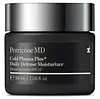
Perricone MD Cold Plasma Plus+ Daily Defense Moisturizer Broad Spectrum SPF 35 Versus Isispharma Geneskin Lift
This anti-aging day moisturizer is formulated around Niacinamide and Tetrahexyldecyl Ascorbate to soften the look of wrinkles and brighten dull-looking skin.
This anti-aging day moisturizer is formulated around Sodium Hyaluronate and Superoxide Dismutase to soften the look of wrinkles and hydrate skin.


What's inside
What's inside
 Key Ingredients

Benefits
Concerns
Ingredients Side-by-side
Water
Skin ConditioningGlycerin
Humectant


Dimethicone
Emollient
Isononyl Isononanoate
EmollientEthylhexyl Methoxycrylene
Skin Conditioning
C12-15 Alkyl Benzoate
AntimicrobialNiacinamide
Smoothing









Silica
Abrasive
Hydroxyethyl Acrylate/Sodium Acryloyldimethyl Taurate Copolymer
Emulsion StabilisingHydrogenated Lecithin
Emulsifying
Phenoxyethanol
Preservative
Stearic Acid
Cleansing


Isohexadecane
EmollientTetrahexyldecyl Ascorbate
Antioxidant

Polysilicone-11
Butylene Glycol
Humectant
Aluminum Hydroxide
EmollientPhosphatidylcholine
EmulsifyingBisabolol
Antioxidant
Polyhydroxystearic Acid
Emulsifying
Isopropyl Titanium Triisostearate
Emollient
Polysorbate 60
Emulsifying
Xanthan Gum
EmulsifyingSorbitan Isostearate
Emulsifying
Copper Tripeptide-1
Skin Conditioning
Citric Acid
Buffering
Mica
Cosmetic ColorantCarbomer
Emulsion StabilisingPotassium Sorbate
Preservative
Polysorbate 20
Emulsifying
Sodium Hyaluronate
Humectant
Sodium Lactate
Buffering
Helianthus Annuus Seed Oil
Emollient
Sodium Benzoate
Masking
Acetyl Hexapeptide-8
Humectant
Tocopherol
Antioxidant
Rosmarinus Officinalis Leaf Extract
AntimicrobialAscorbyl Palmitate
Antioxidant
Palmitoyl Tripeptide-1
Skin Conditioning
Palmitoyl Tetrapeptide-7
Skin Conditioning
Triethoxycaprylylsilane
CI 77891
Cosmetic ColorantCI 42090
Cosmetic ColorantWater, Glycerin, Dimethicone, Isononyl Isononanoate, Ethylhexyl Methoxycrylene, C12-15 Alkyl Benzoate, Niacinamide, Silica, Hydroxyethyl Acrylate/Sodium Acryloyldimethyl Taurate Copolymer, Hydrogenated Lecithin, Phenoxyethanol, Stearic Acid, Isohexadecane, Tetrahexyldecyl Ascorbate, Polysilicone-11, Butylene Glycol, Aluminum Hydroxide, Phosphatidylcholine, Bisabolol, Polyhydroxystearic Acid, Isopropyl Titanium Triisostearate, Polysorbate 60, Xanthan Gum, Sorbitan Isostearate, Copper Tripeptide-1, Citric Acid, Mica, Carbomer, Potassium Sorbate, Polysorbate 20, Sodium Hyaluronate, Sodium Lactate, Helianthus Annuus Seed Oil, Sodium Benzoate, Acetyl Hexapeptide-8, Tocopherol, Rosmarinus Officinalis Leaf Extract, Ascorbyl Palmitate, Palmitoyl Tripeptide-1, Palmitoyl Tetrapeptide-7, Triethoxycaprylylsilane, CI 77891, CI 42090
Water
Skin ConditioningIsopentyldiol
Humectant
Propanediol
Solvent
Methylpropanediol
SolventCocoglycerides
Emollient
Isodecyl Neopentanoate
EmollientSilica
Abrasive
Glycerin
Humectant
Butylene Glycol
Humectant
Lauryl Glucoside
CleansingPolyglyceryl-2 Dipolyhydroxystearate
Skin Conditioning
PPG-26-Buteth-26
Skin ConditioningAlumina
Abrasive
Dimethicone
Emollient
Glyceryl Caprylate
EmollientPEG-40 Hydrogenated Castor Oil
Emulsifying
Sodium Hyaluronate
Humectant
Superoxide Dismutase
Antioxidant
Hydroxyethyl Acrylate/Sodium Acryloyldimethyl Taurate Copolymer
Emulsion StabilisingIsohexadecane
EmollientParfum
Masking



Chlorphenesin
Antimicrobial
Xanthan Gum
EmulsifyingRetinyl Palmitate
Skin Conditioning
Helianthus Annuus Seed Oil
Emollient
Polysorbate 60
Emulsifying
Disodium Acetyl Glucosamine Phosphate
Skin ConditioningCitric Acid
Buffering
Sorbitan Isostearate
Emulsifying
Hexyl Cinnamal
Perfuming
Limonene
Perfuming
Tocopherol
Antioxidant
Linalool
Perfuming
Acetyl Hexapeptide-51 Amide
Skin Conditioning
Water, Isopentyldiol, Propanediol, Methylpropanediol, Cocoglycerides, Isodecyl Neopentanoate, Silica, Glycerin, Butylene Glycol, Lauryl Glucoside, Polyglyceryl-2 Dipolyhydroxystearate, PPG-26-Buteth-26, Alumina, Dimethicone, Glyceryl Caprylate, PEG-40 Hydrogenated Castor Oil, Sodium Hyaluronate, Superoxide Dismutase, Hydroxyethyl Acrylate/Sodium Acryloyldimethyl Taurate Copolymer, Isohexadecane, Parfum, Chlorphenesin, Xanthan Gum, Retinyl Palmitate, Helianthus Annuus Seed Oil, Polysorbate 60, Disodium Acetyl Glucosamine Phosphate, Citric Acid, Sorbitan Isostearate, Hexyl Cinnamal, Limonene, Tocopherol, Linalool, Acetyl Hexapeptide-51 Amide
Alternatives
Ingredients Explained
These ingredients are found in both products.
Ingredients higher up in an ingredient list are typically present in a larger amount.
Butylene Glycol (or BG) is used within cosmetic products for a few different reasons:
Overall, Butylene Glycol is a safe and well-rounded ingredient that works well with other ingredients.
Though this ingredient works well with most skin types, some people with sensitive skin may experience a reaction such as allergic rashes, closed comedones, or itchiness.
Learn more about Butylene GlycolCitric Acid is an alpha hydroxy acid (AHA) naturally found in citrus fruits like oranges, lemons, and limes.
Like other AHAs, citric acid can exfoliate skin by breaking down the bonds that hold dead skin cells together. This helps reveal smoother and brighter skin underneath.
However, this exfoliating effect only happens at high concentrations (20%) which can be hard to find in cosmetic products.
Due to this, citric acid is usually included in small amounts as a pH adjuster. This helps keep products slightly more acidic and compatible with skin's natural pH.
In skincare formulas, citric acid can:
While it can provide some skin benefits, research shows lactic acid and glycolic acid are generally more effective and less irritating exfoliants.
Most citric acid used in skincare today is made by fermenting sugars (usually from molasses). This synthetic version is identical to the natural citrus form but easier to stabilize and use in formulations.
Rosacea skin has a lower threshold for acids generally, with 62.5% of rosacea subjects in one study reacting to lactic acid in a sting test. This is why we mark citric acid as a potential rosacea trigger.
However, this ingredient shows up as a pH adjuster or chelator at roughly 0.1-1% in many products. These low levels are unlikely to be an issue for rosacea skin and becomes a potential trigger at exfoliating concentrations (20%). Because everybody's skin is unique, we recommend a patch test if you are unsure.
Learn more about Citric AcidDimethicone is a type of synthetic silicone created from natural materials such as quartz. It is also known as polydimethylsiloxane.
What it does:
Dimethicone comes in different viscosities:
Depending on the viscosity, dimethicone has different properties.
Ingredients lists don't always show which type is used, so we recommend reaching out to the brand if you have questions about the viscosity.
This ingredient is unlikely to cause irritation because it does not get absorbed into skin. However, people with silicone allergies should be careful about using this ingredient.
Note: Dimethicone may contribute to pilling. This is because it is not oil or water soluble, so pilling may occur when layered with products. When mixed with heavy oils in a formula, the outcome is also quite greasy.
Learn more about DimethiconeGlycerin (or glycerol) is a compound naturally found in your skin. It's a powerhouse humectant that pulls water into the stratum corneum.
Topically, glycerin does several things at once:
Your skin makes glycerin on its own (mostly from sebaceous oil breakdown) and shuttles it to your outermost layer of skin, or your epidermis, via aquaporin-3.
Aquaporin-3 is a transporter that is essential for normal skin hydration, elasticity, and repair. Interestingly, mice lacking in AQP3 have dry and less elastic skin that can be fully corrected with glycerin.
This ingredient is non-irritating, plays well with almost every ingredient, and works across all skin types. Typical use is anywhere between 3-10% but can go up to 79% in some leave-on products.
Just know very high concentrations (>40%) can feel tacky in low humidity.
Glycerin is the name for this ingredient in American English. British English uses Glycerol/Glycerine.
Learn more about GlycerinHelianthus Annuus Seed Oil is a plant oil derived from the seeds of a sunflower.
It is rich in fatty acids, primarily linoleic acid and oleic acid. This gives it emollient and skin conditioning properties.
The reason this ingredient is so effective is because it forms a thin film on the skin that reduces transepidermal water loss (TEWL) while supplying linoleic acid to the stratum corneum to improve barrier strength.
The high linoleic acid content is particularly noteworthy for acne-prone skin.
Research suggests that acne-prone skin tends to be deficient in linoleic acid in sebum. Topical application may help replenish this to support a healthier follicular environment and less comedone-promoting sebum.
One randomized study found sunflower seed oil preserved skin barrier integrity in adult volunteers with and without atopic dermatitis (outperforming olive oil).
This ingredient is well-studied, gentle, and an effective emollient suitable for most skin types.
On fungal acne: This ingredient may not be Fungal acne (Malassezia folliculitis) safe. This is because it contains fatty acids with carbon chain lengths in the C11-C24 range.
Learn more about Helianthus Annuus Seed OilThis is a synthetic polymer. It helps improve the texture of products by adding thickness and gel-like feel.
It is also an emulsifer, meaning it prevents ingredients such as oil and water from separating. It also helps evenly disperse other ingredients.
Isohexadecane is added to enhance texture, emulsify, and to help cleanse. It is an isoparrafin. It is a component of petrolatum.
Due to its large size, Isohexadecane is not absorbed by the skin. Instead, it sits on top and acts as an emollient. Emollients help keep your skin soft and smooth by trapping moisture within.
Isohexadecane is often used in products designed to help oily skin. It is lightweight and non-greasy while helping to moisturize. When mixed with silicones, it gives a product a silky feel.
Learn more about IsohexadecanePolysorbate 60 is used to help stabilize products. It is a surfactant and emulsifier. These properties help keep ingredients together in a product. Surfactants help reduce surface tension between ingredients with different states, such as liquids and solids. Emulsifiers help prevent oils and waters from separating.
Polysorbate 60 is sorbitol-based and created from the ethoxylation of sorbitan. Ethoxylation is a chemical reaction used to add ethylene oxide. Sorbitan is a the dehydrated version of sorbitol, a sugar found in fruits.
In this case, the 60 comes from reacting 60 units of ethylene oxide with sorbitan.
Polysorbates are commonly used in medicine and foods.
Learn more about Polysorbate 60Silica, also known as silicon dioxide, is a naturally occurring mineral. It is used as a fine, spherical, and porous powder in cosmetics.
Though it has exfoliant properties, the function of silica varies depending on the product.
The unique structure of silica enhances the spreadability and adds smoothness, making it a great texture enhancer.
It is also used as an active carrier, emulsifier, and mattifier due to its ability to absorb excess oil.
In some products, tiny microneedles called spicules are made from silica or hydrolyzed sponge. When you rub them in, they lightly polish away dead skin layers and enhance the penetration of active ingredients.
Learn more about SilicaSodium Hyaluronate is the salt form of hyaluronic acid. It is a long sugar chain that is naturally found in your skin, joints, and connective tissue that maintains hydration and elasticity.
In skincare, it works as a humectant. It pulls water from the environment and deeper layers of skin and binds it to the surface.
Interestingly, the size of the molecule affects its behavior:
Some clinical evidence links low molecular weight versions to improved wrinkle depth, elasticity, anti-inflammatory effects, and barrier repair.
Many serums use a blend of both weights so you can get surface hydration plus longer-lasting and deeper effects.
You'll typically see concentrations between 0.1-2% for this ingredient.
Learn more about Sodium HyaluronateSorbitan Isostearate is an emulsifer. It is created from isostearic acid and sorbitol.
As an emulsifier, it keeps the water and oil ingredients from separating. This keeps formulas stable and smooth.
In a 24 hour occlusive patch test on 56 subjects, 10% sorbitan isostearate was completely non-irritating. Most formulas use less than 10%.
Because it's a fatty acid ester, it may not be fungal acne safe since the Malassezia yeast can utilize it as a nutrient source.
Learn more about Sorbitan IsostearateTocopherol is a fat-soluble antioxidant known as Vitamin E.
You'll find this ingredient in the vast majority of skincare (for good reason). It works to neutralize free radicals, or unstable molecules generated by UV exposure, pollution, and other environmental stressors, before they can cause oxidative damage to your skin cells.
Topically applied tocopherol has been shown to protect against UV damage by ramping up the skin's own natural defense enzymes.
It also acts as a skin conditioning agent; some studies show that regular topical use can improve the skin's water-binding capacity over 2-4 weeks.
This ingredient is especially loved for being a team player. When combined with Vitamin C, the photoprotective effect of both ingredients roughly doubles and the combo also helps reduce UV-induced DNA damage.
This ingredient has some brightening potential but it's more of a prevention ingredient than spot-fader. Cell studies show it can slow down melanin production but it's worth noting that it's not the most powerful brightener out there.
In formulations, it also serves as a stabilizer that helps protect other oxidation-prone ingredients from degrading.
Concentrations usually range from 0.1-1% in most leave-on products.
Learn more about TocopherolWater. It's the most common cosmetic ingredient of all. You'll usually see it at the top of ingredient lists, meaning that it makes up the largest part of the product.
So why is it so popular? Water most often acts as a solvent - this means that it helps dissolve other ingredients into the formulation.
You'll also recognize water as that liquid we all need to stay alive. If you see this, drink a glass of water. Remember to stay hydrated!
Learn more about WaterXanthan gum is used as a stabilizer and thickener within cosmetic products. It helps give products a sticky, thick feeling - preventing them from being too runny.
On the technical side of things, xanthan gum is a polysaccharide - a combination consisting of multiple sugar molecules bonded together.
Xanthan gum is a pretty common and great ingredient. It is a natural, non-toxic, non-irritating ingredient that is also commonly used in food products.
Learn more about Xanthan Gum

