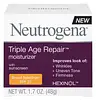
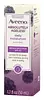
Neutrogena Triple Age Repair Anti-Aging Daily Facial Moisturizer SPF 25 Versus Aveeno Absolutely Ageless Daily Facial Moisturizer with Broad Spectrum SPF 30 Sunscreen
This brightening day moisturizer is formulated around Hexylresorcinol and Ascorbyl Glucoside to fade the look of dark spots.
This brightening moisturizer is formulated around Hexylresorcinol and Ascorbyl Glucoside to fade the look of dark spots.

What's inside
What's inside
 Key Ingredients
Benefits
Concerns
Ingredients Side-by-side
Butyl Methoxydibenzoylmethane 2%
UV Absorber
Homosalate 4%
Skin Conditioning
Ethylhexyl Salicylate 4%
UV Absorber
Octocrylene 2%
UV Absorber

Water
Skin ConditioningPropylene Glycol
Humectant

Glycerin
Humectant

Dimethicone
Emollient
Steareth-2
EmulsifyingEthylhexyl Palmitate
Emollient


Isononyl Isononanoate
EmollientButyrospermum Parkii Butter
Skin Conditioning
Styrene/Acrylates Copolymer
Methyl Methacrylate Crosspolymer

Steareth-21
CleansingHexylresorcinol
Antimicrobial
Behenyl Alcohol
Emollient
Bisabolol
Antioxidant


Ascorbyl Glucoside
Antioxidant


Anhydroxylitol
Humectant
Xylitol
Humectant
Xylitylglucoside
Humectant
Dimethicone Crosspolymer
Emulsion Stabilising
Caprylyl Glycol
Emollient
Ammonium Acryloyldimethyltaurate/Vp Copolymer
Sclerotium Gum
Emulsion StabilisingDisodium EDTA
ChelatingSodium Hydroxide
BufferingMica
Cosmetic ColorantTitanium Dioxide
Cosmetic Colorant
Methylparaben
Preservative

Propylparaben
Preservative
Ethylparaben
Preservative
Phenoxyethanol
Preservative
Parfum
Masking

Butyl Methoxydibenzoylmethane 2%, Homosalate 4%, Ethylhexyl Salicylate 4%, Octocrylene 2%, Water, Propylene Glycol, Glycerin, Dimethicone, Steareth-2, Ethylhexyl Palmitate, Isononyl Isononanoate, Butyrospermum Parkii Butter, Styrene/Acrylates Copolymer, Methyl Methacrylate Crosspolymer, Steareth-21, Hexylresorcinol, Behenyl Alcohol, Bisabolol, Ascorbyl Glucoside, Anhydroxylitol, Xylitol, Xylitylglucoside, Dimethicone Crosspolymer, Caprylyl Glycol, Ammonium Acryloyldimethyltaurate/Vp Copolymer, Sclerotium Gum, Disodium EDTA, Sodium Hydroxide, Mica, Titanium Dioxide, Methylparaben, Propylparaben, Ethylparaben, Phenoxyethanol, Parfum
Butyl Methoxydibenzoylmethane 2%
UV Absorber
Homosalate 4%
Skin Conditioning
Ethylhexyl Salicylate 4%
UV Absorber
Octocrylene 2%
UV Absorber
Water
Skin ConditioningPropylene Glycol
Humectant
Glycerin
Humectant
Isononyl Isononanoate
EmollientDimethicone
Emollient
Steareth-2
EmulsifyingEthylhexyl Palmitate
Emollient
Styrene/Acrylates Copolymer
Butyrospermum Parkii Butter
Skin Conditioning
Vinyl Dimethicone/Methicone Silsesquioxane Crosspolymer
Hexylresorcinol
Antimicrobial
Steareth-21
CleansingBehenyl Alcohol
Emollient
Phenoxyethanol
Preservative
Dimethicone Crosspolymer
Emulsion Stabilising
Ammonium Acryloyldimethyltaurate/Vp Copolymer
Ascorbyl Glucoside
Antioxidant
Parfum
Masking
Sclerotium Gum
Emulsion StabilisingChlorphenesin
Antimicrobial
Disodium EDTA
ChelatingTocopheryl Acetate
Antioxidant
Maltodextrin
Absorbent
Ethylhexylglycerin
Skin ConditioningSodium Hydroxide
BufferingButylene Glycol
Humectant
Peucedanum Graveolens Extract
TonicRubus Fruticosus Leaf Extract
MaskingXanthan Gum
EmulsifyingButyl Methoxydibenzoylmethane 2%, Homosalate 4%, Ethylhexyl Salicylate 4%, Octocrylene 2%, Water, Propylene Glycol, Glycerin, Isononyl Isononanoate, Dimethicone, Steareth-2, Ethylhexyl Palmitate, Styrene/Acrylates Copolymer, Butyrospermum Parkii Butter, Vinyl Dimethicone/Methicone Silsesquioxane Crosspolymer, Hexylresorcinol, Steareth-21, Behenyl Alcohol, Phenoxyethanol, Dimethicone Crosspolymer, Ammonium Acryloyldimethyltaurate/Vp Copolymer, Ascorbyl Glucoside, Parfum, Sclerotium Gum, Chlorphenesin, Disodium EDTA, Tocopheryl Acetate, Maltodextrin, Ethylhexylglycerin, Sodium Hydroxide, Butylene Glycol, Peucedanum Graveolens Extract, Rubus Fruticosus Leaf Extract, Xanthan Gum
Reviews
Ingredients Explained
These ingredients are found in both products.
Ingredients higher up in an ingredient list are typically present in a larger amount.
Ammonium Acryloyldimethyltaurate/Vp Copolymer is a synthetically created polymer. It's used as a film-forming agent and used to thicken the consistency of products.
Think of it as a supportive ingredient that helps your gel-creams feel silky, "cloud cream-like", and spread evenly without being greasy.
The Cosmetic Ingredient Review (CIR) Expert Panel evaluated it (along with 22 other acryloyldimethyltaurate polymers) and concluded it's:
Due to its large molecular size, it sits on the surface of skin rather than penetrating it.
Learn more about Ammonium Acryloyldimethyltaurate/Vp CopolymerAscorbyl Glucoside (AA-2G) is one of the most stable vitamin C derivatives out there.
It's made by attaching a glucose molecule to ascorbic acid; this glucose "cap" shields the vitamin C from air, light, heat, and metal ions that normally cause pure ascorbic acid to oxidize.
Once on your skin, the enzyme alpha-glucosidase snips off the glucose and gradually releases active ascorbic acid right where it's needed. Basically, it behaves like a slow-release pro-vitamin C with less of a stinging that high-strength ascorbic acid can cause.
The research supports the classic vitamin C benefits as well. In lab and human studies, AA-2G slowed down the skin's production of melanin (the pigment behind dark spots) and helped shield skin cells against sun damage better than ascorbyl phosphate.
These studies also showed AA-2G released vitamin C over a longer period.
A frequently cited manufacturer trial found that a 2% AA-2G face cream significantly improved wrinkle depth and skin roughness after 45 days.
And in 2009, a clinical trial showed it meaningfully lightened dark patches on the gums compared to a placebo.
There's also collagen-synthesis support (since vitamin C is a required cofactor for that) and an antioxidant effect too.
Typical usage is usually between 0.5-5% and most studies/products land around 2%.
AA-2G performs best when formulated at a mildly acidic pH (~5-7) which is much gentler than the pH that pure vitamin C demands (~2.5-3.5).
Just one thing worth knowing: the in-skin conversation rate is only about 55-60% by weight. So a 5% AA-2G product delivers roughly 2.75-3% of actual active vitamin C. On top of that, skin absorption is relatively low because the ingredient is water-soluble.
Learn more about Ascorbyl GlucosideBehenyl Alcohol is a type of fatty alcohol (these are different from the drying, solvent alcohols).
Fatty Alcohols have hydrating properties and are most often used as an emollient or to thicken a product. They are usually derived from natural fats and oils; behenyl alcohol is derived from the fats of vegetable oils.
Emollients help keep your skin soft and hydrated by creating a film that traps moisture in.
In 2000, Behenyl Alcohol was approved by the US as medicine to reduce the duration of cold sores.
Learn more about Behenyl AlcoholAlso known as Avobenzone, this ingredient is an oil-soluble used to absorb the full spectrum of UVA rays (peak 357 nm).
It's one of the most effective UVA filters available but has a major caveat of photostability: avobenzone is susceptible to photodegradation.
This means it can lose efficacy when exposed to sunlight without the help of a stabilizing agent.
Studies show antioxidants (like vitamin E or vitamin C) and some UV filters (like octocrylene and Tinosorb S) can meaningfully improve its stability in a formulation.
The maximum allowable concentration according to regulation is 3% in the US + Canada, and 5% in the EU, Australia, China, Korea, and ASEAN countries.
It has a well-support safety profile: a comprehensive 2025 review found minimal toxicity with no evidence of carcinogenicity.
Overall, avobenzone is a safe and regulated ingredient used in sunscreen for over 40 years.
Learn more about Butyl MethoxydibenzoylmethaneThis ingredient is also known as shea butter. It is a plant-derived extract from the nuts of the Africa shea tree and one of the most well-studied emollients.
Because it has a high concentration of fatty acids (primarily oleic, stearic, and linoleic) it is able to form a protective barrier on the skin's surface. This helps seal in moisture and prevents transepidermal water loss (TEWL).
In vitro research found an increase in skin hydration by 58% and a decrease in TEWL by 37.8% after 24 hours of applying this ingredient (pretty impressive for a single ingredient!).
Besides hydration, shea butter also contains triterpenes that have anti-inflammatory potential. In particule, lupeol cinnamate has shown the highest anti-inflammatory activity in vivo.
Shea butter also contains vitamins A and E which may contribute to antioxidant activity.
While Shea Butter has an SPF rating of about 3-4, it is not a sunscreen replacement.
This ingredient may not be fungal acne safe because its fatty acids fall within the C11-C24 range that the Malassezia yeast can metabolize.
This ingredient shows up on a lot of "pore-clogging" lists but there's no real evidence behind that. It doesn't even have a comedogenic rating from an actual study; the numbers you'll find online come from blogs citing other blogs.
Ratings for other ingredients mostly come from a 1980s rabbit ear test. This test doesn't translate well to human skin or to real products because the ingredient sits at a much lower percentage.
Some people still find it breaks them out. So if that's you, definitely trust your skin. Just know this one's based on experience and not evidence.
Learn more about Butyrospermum Parkii ButterDimethicone is a type of synthetic silicone created from natural materials such as quartz. It is also known as polydimethylsiloxane.
What it does:
Dimethicone comes in different viscosities:
Depending on the viscosity, dimethicone has different properties.
Ingredients lists don't always show which type is used, so we recommend reaching out to the brand if you have questions about the viscosity.
This ingredient is unlikely to cause irritation because it does not get absorbed into skin. However, people with silicone allergies should be careful about using this ingredient.
Note: Dimethicone may contribute to pilling. This is because it is not oil or water soluble, so pilling may occur when layered with products. When mixed with heavy oils in a formula, the outcome is also quite greasy.
Learn more about DimethiconeDimethicone Crosspolymer is a silicone created by modifying dimethicone with hydrocarbon side chains. Due to its large size, it does not penetrate skin. It is considered non-occlusive.
Dimethicone Crosspolymer is used to stabilize and thicken products. It also helps give products a silky feel.
Disodium EDTA is a chelating agent. It grabs onto and deactivates metal ions that sneak into your products from water, packaging, or air.
This ingredient mainly works behind the scenes and helps with:
On top of that, this ingredient can counteract the effects of hard water by binding to the minerals in it.
One thing worth knowing is that Disodium EDTA has been shown to be a mild penetration enhancer. It can help other ingredients absorb into skin more effectively which can be a double-edged sword (great for actives, but can also make the active too strong if you have sensitive skin).
Clinical patch testing showed no significant skin irritation at typical use concentrations and minimal dermal absorption.
You'll most likely see this ingredient near the end of an ingredient list. It's typically found in concentrations less than 1%.
Learn more about Disodium EDTAEthylhexyl Palmitate, also known as octyl palmitate, is created from 2-ethylhexyl alcohol and palmitic acid.
In cosmetics, it plays many roles:
One thing worth noting: a controlled study found this ingredient applied under occlusion to acne-prone subjects increased microcomedones. Just keep in mind this was under occlusive conditions and don't reflect how most products are used day-to-day.
For most people, this is a well-tolerated and lightweight ingredient.
This ingredient may not be fungal acne safe because it is an ester of palmitic acid, a C16 fatty acid that falls within the C11-24 range that Malassezia can metabolize.
You'll see this one rated 4 comedogenic all over the internet. That number isn't from a single study, and the actual research is more interesting.
The original rating comes from 1980s rabbit ear tests (which are a shaky basis for anything). But Ethylhexyl Palmitate is one of the few ingredients with real human data behind it. A 2021 controlled trial found this ingredient increased microcomedones by an average of 365% over four weeks.
Just know that test used the pure ingredient under an occlusive pad on back skin; most products use it at much lower levels alongside other ingredients and plenty of people use those with no issue.
Learn more about Ethylhexyl PalmitateEthylhexyl Salicylate (also called Octisalate or Octyl Salicylate) is an oil-soluble organic UV filter that's been used in sunscreen since the 1950's.
It absorbs UVB light in the 280-320 nm range with a peak absorbance around 306 nm.
You'll often see it paired with other UV filters to boost overall SPF because octisalate is a fairly week filter on its own.
The reason you'll see it so often is because it can help solubilize and stabilize the trickier filters like oxybenzone and avobenzone.
Unlike these filters, octisalate has pretty good photostability and doesn't create skin-damaging free radicals when exposed to sunlight.
The fatty-alcohol part of the molecule also gives it a light, emollient feel so it doubles as a nice texture enhancer.
Usage levels vary around the world:
Safety-wise, this ingredient has a pretty reassuring track record. The EU's Scientific Committee on Consumer Products (SCCP) found very low skin penetration in human skin tests and negative results for irritation, phototoxicity, and photoallergy.
The real-world allergy risk is pretty low too; a 2012 European study of 1,031 people recorded only 2 reactions to it (a rate of 0.19%).
You might have seen scary headlines about sunscreen getting into your blood.
In 2019, the FDA found that several chemical filters can absorb through the skin and show up in the bloodstream at small but measurable levels.
Here's the important part: these tiny levels are just a cutoff the FDA uses to decide which ingredients need more testing and doesn't mean anything harmful was found.
The researchers were clear that the results are no reason to stop wearing sunscreen.
Learn more about Ethylhexyl SalicylateGlycerin (or glycerol) is a compound naturally found in your skin. It's a powerhouse humectant that pulls water into the stratum corneum.
Topically, glycerin does several things at once:
Your skin makes glycerin on its own (mostly from sebaceous oil breakdown) and shuttles it to your outermost layer of skin, or your epidermis, via aquaporin-3.
Aquaporin-3 is a transporter that is essential for normal skin hydration, elasticity, and repair. Interestingly, mice lacking in AQP3 have dry and less elastic skin that can be fully corrected with glycerin.
This ingredient is non-irritating, plays well with almost every ingredient, and works across all skin types. Typical use is anywhere between 3-10% but can go up to 79% in some leave-on products.
Just know very high concentrations (>40%) can feel tacky in low humidity.
Glycerin is the name for this ingredient in American English. British English uses Glycerol/Glycerine.
Learn more about GlycerinAnother popular name for this ingredient is Synovea HR. This ingredient is a skin lightener and antioxidant.
Like other skin lighteners, it blocks the process of skin darkening. Specifically, this ingredient blocks tyrosinase, the enzyme responsible for darkening skin when exposed to UV.
Hexylresorcinol works well with other ingredients. Studies show this ingredient boosts the effect of niacinamide, various forms of vitamin C, and retinoids.
Many consider this to be a safer alternative to hydroquinone. In fact, this ingredient produces the same results as hydroquinone in lower amounts.
Fun fact: This ingredient can also be found food and medicine for treating skin infections.
Gentle reminder from SkinSort: all skin tones are beautiful!
Learn more about HexylresorcinolHomosalate is an oil-soluble organic UVB filter that has been a sunscreen staple for decades. Its job is to absorb UVB rays (~295-315 nm) and protect your skin against sunburn,
This is one of the more photostable organic UV filters; it holds up pretty well under UV and a 2022 quantum-chemistry study found it stays stable in sunlight.
It's actually so reliable that formulators often pair it with shakier ingredients like oxybenzone and avobenzone. Formulators also use it to help dissolve the other UV filters into the oil phase.
One thing to keep in mind: "stable" isn't the same as "strong". On its own, homosalate is actually a pretty weak UV filter so it's better off as a helpful team player that helps boost overall SPF protection.
The safety picture is a bit nuanced but not scary.
This ingredient has a long track record of being gentle and regulators agree it isn't an irritant; EU's Scientific Committee on Consumer Safety found that homosalate is not considered a skin irritant and doesn't raise eye-irritation flags either.
There's talk about homosalate because your skin absorbs a little bit of it into your bloodstream. A 2020 FDA-backed study found homosalate showed up in people's blood levels at the level where the FDA decides to double check.
The EU's Scientific Committee on Consumer Safety (SCCS) also found small amounts in blood and breast milk. They estimated that about 5% of what you apply gets absorbed through the skin.
Due to the debate about whether it might mess with hormones, the SCCS recommended a maximum limit of 0.5% in most products of 7.3% in face creams/pump sprays.
One important thing to keep in mind: in the US, Homosalate is currently labeled "non-GRASE" by the FDA. This sounds alarming but really just means the FDA wants more data to confirm it's safe. It's not confidently saying this ingredient is harmful.
As of now, homosalate is still completely legal and widely used while that research gets done.
The current maximum limits are:
Learn more about HomosalateIsononyl Isononanoate is a synthetic skin-conditioner and texture enhancer. It is created from nonanoic acid, a fatty acid found in cocoa and lavender oil.
As an emollient, Isononyl Isononanoate helps keep your skin soft and smooth. This is because emollients create a barrier on the skin to trap moisture in.
Isononyl Isononanoate helps give products a velvet feel and improves spreadability.
Learn more about Isononyl IsononanoateOctocrylene is an oil-soluble organic UV filter that mainly absorbs UVB and short wave UVA II light.
Its real superpower is teamwork: octocrylene is remarkably photostable and is most famous for stabilizing avobenzone (the workhorse UVA filter).
This ingredient is commonly used to enhance both UVB and UVA protection due to its unique property in stabilizing avobenzone. It also pulls double duty by boosting water resistance and giving formulas a smooth, spreadable feel.
The EU's Scientific Committee on Consumer Safety (SCCS) has deemed octocrylene to be safe as a UV-filter at concentrations up to 10% (capped at 9% in propellant sprays). The US also permits it up to 10%.
Two things worth knowing:
You'll usually see this ingredient used in concentrations between 2-10% (higher amounts when used as a stabilizer for avobenzone).
Learn more about OctocryleneParfum is a catch-all term for an ingredient or more that is used to give a scent to products.
Also called "fragrance", this ingredient can be a blend of hundreds of chemicals or plant oils. This means every product with "fragrance" or "parfum" in the ingredients list is a different mixture.
For instance, Habanolide is a proprietary trade name for a specific aroma chemical. When used as a fragrance ingredient in cosmetics, most aroma chemicals fall under the broad labeling category of “FRAGRANCE” or “PARFUM” according to EU and US regulations.
The term 'parfum' or 'fragrance' is not regulated in many countries. In many cases, it is up to the brand to define this term.
For instance, many brands choose to label themselves as "fragrance-free" because they are not using synthetic fragrances. However, their products may still contain ingredients such as essential oils that are considered a fragrance by INCI standards.
One example is Calendula flower extract. Calendula is an essential oil that still imparts a scent or 'fragrance'.
Depending on the blend, the ingredients in the mixture can cause allergies and sensitivities on the skin. Some ingredients that are known EU allergens include linalool and citronellol.
Parfum can also be used to mask or cover an unpleasant scent.
The bottom line is: not all fragrances/parfum/ingredients are created equally. If you are worried about fragrances, we recommend taking a closer look at an ingredient. And of course, we always recommend speaking with a professional.
Learn more about ParfumPhenoxyethanol is one of the most widely used preservatives in skincare (and for good reason!).
It has a large spectrum of antimicrobial activity and especially effective bacteria, yeast, and mold while only having a weak effect on your skin's natural microbiome.
On a cellular level, it disrupts the cell membranes of microbes by poking holes that make the cell leak. This shuts down the chemical reactions the microbe needs to make energy so it can no longer survive.
Another perk of this ingredient is that it stays functional across a wide pH range (3-10).
You'll often see it paired with boosters like Ethylhexylglycerin; one study showed that a 1:9 ratio of Ethylhexylglycerin to Phenoxyethanol damages bacterial membranes as effectively as doubling the Phenoxyethanol concentration on its own.
Typical use concentrations range from 0.3-1% depending on the formula, and this ingredient is capped at 1% int the EU.
Safety-wise, the fear mongering does not hold up to the evidence. The EU's Scientific Committee on Consumer Safety and FDA consider it safe as a preservative at up to 1%, including for children of all ages.
Adverse systemic effects only showed up in animal studies at exposures roughly 200x higher than what people get from cosmetics. And despite its very widespread use, this ingredient is a rare sensitizer and allergic reactions are uncommon.
Learn more about PhenoxyethanolPropylene Glycol is a synthetic, colorless, odorless liquid that has been a staple in cosmetics for decades. It is a skin conditioning agent, humectant, and solvent.
As a humectant, it draw water to the skin to reduce flaking and restore suppleness. It's also a solvent that helps dissolve other actives and keeps formulas stable across temperature changes.
The CIR Expert Panel has confirmed this ingredient to be nontoxic and clinical studies show no sensitization at cosmetic use concentrations.
True allergic reactions are quite rare: a 15-year retrospective study of 6,751 patients found only 0.31% had a positive reaction (and less than half were considered clinically relevant).
It seemed that when sensitization does occur, it's most commonly linked to topical medication (like corticosteroids) and not cosmetics. Allergic contact dermatitis also appears largely limited to individuals with underlying skin conditions.
Overall, propylene glycol is a well-studied ingredient that most people can tolerate without issue.
Learn more about Propylene GlycolSclerotium Gum is a natural sugar-based fiber made by fermenting a fungus called Sclerotium rolfsii. It's often used as the plant-friendly alternative for synthetic thickeners like carbomer.
In skincare, it works as a thickener, gel former, and stabilizer that keeps heavy ingredients suspended so a product does not separate.
It is non-ionic and forms a triple helix in solution. This is just a fancy way of saying it builds a smooth, cushiony, and non-sticky gel that feels silkier than many other gums.
Another perk of this ingredient is that it is very sturdy and holds up across a wide pH range (~2-11). It's also good at resisting heat and hydrolysis.
Since it holds water at the skin surface, it can provide some light hydration as well.
Typical use levels are around 0.25-2%; formulators usually use 0.2-0.5% to thicken lotions and up to 2% for a firmer gel base.
This ingredient has been found safe in cosmetics with no meaningful evidence of skin sensitization.
Learn more about Sclerotium GumSodium Hydroxide is also known as lye or caustic soda. It is used to adjust the pH of products; many ingredients require a specific pH to be effective.
In small amounts, sodium hydroxide is considered safe to use. However, large amounts may cause chemical burns due to its high alkaline.
Your skin has a natural pH and acid mantle. This acid mantle helps prevent harmful bacteria from breaking through. The acid mantle also helps keep your skin hydrated.
"Alkaline" refers to a high pH level. A low pH level would be considered acidic.
Learn more about Sodium HydroxideSteareth-2 is a waxy compound used to emulsify ingredients. It is created from polyethylene glycol and stearyl alcohol. The 2 stands for the number of ethylene oxide units used to create this ingredient.
Due to the low degree of ethoxylation, the molecule stays mostly oil-loving. That's why you'll often see it paired with water-loving steareth-20 or steareth-21 to create elegant emulsions.
In testing, this ingredient was nontoxic in acute oral studies and not a skin irritant or sensitizer.
You might hear concerns about 1,4-dioxane as a byproduct of ethoxylation; this is well-known in the industry and is controlled through purification steps before the ingredient is blended into finished products.
Learn more about Steareth-2Steareth-21 is a nonionic emulsifier made by reacting stearyl alcohol with 21 units of ethylene oxide. It is mainly a cleansing agent and emulsifier.
The "21" in the name just tells you it has a longer water-loving chain. This makes it more gentle and less likely to irritate skin compared to lower-numbered steareths.
You'll most likely see it paired with steareth-2 because the two work together to create stable formulations.
1,4-dioxane is often brought up as a concern but this is usually removed through purification.
Learn more about Steareth-21This ingredient is a synthetic polymer that mainly works as a film former. It creates a thin, flexible film on the surface of your skin. Once applied, it helps improves wear, durability, and resistance to water/smudging.
Due to its large molecule size, it sits on top of your skin rather than absorbing into it.
Water. It's the most common cosmetic ingredient of all. You'll usually see it at the top of ingredient lists, meaning that it makes up the largest part of the product.
So why is it so popular? Water most often acts as a solvent - this means that it helps dissolve other ingredients into the formulation.
You'll also recognize water as that liquid we all need to stay alive. If you see this, drink a glass of water. Remember to stay hydrated!
Learn more about Water

