L'Oreal Revitalift Laser Renew Retinol + Niacinamide Pressed Night Cream Versus Kiehl's Midnight Recovery Omega Rich Botanical Night Cream
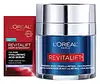
This anti-aging night moisturizer is formulated around Niacinamide and Acetyl Dipeptide-1 Cetyl Ester to soften the look of wrinkles and refine skin texture.
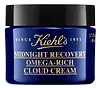
This barrier-repair night moisturizer is formulated around Squalane and Oenothera Biennis Oil to strengthen the skin barrier and hydrate skin.


What's inside
What's inside
 Key Ingredients
Benefits
Concerns
Ingredients Side-by-side
Water
Skin ConditioningButylene Glycol
Humectant

Glycerin
Humectant
Niacinamide
Smoothing









Isononyl Isononanoate
EmollientGlycine Soja Oil
Emollient





Aluminum Starch Octenylsuccinate
Absorbent
Caprylic/Capric Triglyceride
Masking
Acetyl Dipeptide-1 Cetyl Ester
Skin Conditioning
Pentaerythrityl Tetra-Di-T-Butyl Hydroxyhydrocinnamate
Antioxidant
Sodium Hyaluronate
Humectant
Trisodium Ethylenediamine Disuccinate
ChelatingPanthenol
Skin Conditioning
Retinol
Skin Conditioning

Retinyl Palmitate
Skin Conditioning
Acrylates/Beheneth-25 Methacrylate Copolymer
Hydroxyethylcellulose
Emulsion StabilisingPolyglyceryl-3 Methylglucose Distearate
Emulsifying
Sodium Polyacrylate
Absorbent
Sorbitan Laurate
Emulsifying
Tocopherol
Antioxidant
Dimethicone
Emollient
Benzyl Alcohol
Perfuming




Citronellol
Perfuming
Isoeugenol
Perfuming
Limonene
Perfuming
Linalool
Perfuming
Caprylyl Glycol
Emollient
Chlorphenesin
Antimicrobial
Phenoxyethanol
Preservative
Parfum
Masking
Water, Butylene Glycol, Glycerin, Niacinamide, Isononyl Isononanoate, Glycine Soja Oil, Aluminum Starch Octenylsuccinate, Caprylic/Capric Triglyceride, Acetyl Dipeptide-1 Cetyl Ester, Pentaerythrityl Tetra-Di-T-Butyl Hydroxyhydrocinnamate, Sodium Hyaluronate, Trisodium Ethylenediamine Disuccinate, Panthenol, Retinol, Retinyl Palmitate, Acrylates/Beheneth-25 Methacrylate Copolymer, Hydroxyethylcellulose, Polyglyceryl-3 Methylglucose Distearate, Sodium Polyacrylate, Sorbitan Laurate, Tocopherol, Dimethicone, Benzyl Alcohol, Citronellol, Isoeugenol, Limonene, Linalool, Caprylyl Glycol, Chlorphenesin, Phenoxyethanol, Parfum
Water
Skin ConditioningGlycerin
Humectant
Caprylic/Capric Triglyceride
Masking
Cetearyl Alcohol
Emollient
Propanediol
Solvent
Butyrospermum Parkii Butter
Skin Conditioning
Squalane
Emollient
Dicaprylyl Carbonate
EmollientGlyceryl Stearate
Emollient
Cellulose
Absorbent
Cetearyl Glucoside
Emulsifying
Passiflora Edulis Seed Oil
Emollient
Pelargonium Graveolens Flower Oil
Masking
Rosa Damascena Flower Oil
Masking
Lavandula Angustifolia Oil
Masking
Lavandula Hybrida Oil
Emollient
Glycine Soja Oil
Emollient
Coriandrum Sativum Seed Oil
Emollient
Simmondsia Chinensis Seed Oil
Emollient
Rosmarinus Officinalis Leaf Oil
Masking
Oenothera Biennis Oil
Emollient
Zinc Gluconate
Skin Conditioning
Sodium Polyacrylate Starch
AbsorbentSilica
Abrasive
Adenosine
Skin Conditioning
Caprylyl Glycol
Emollient
Citric Acid
Buffering
Xanthan Gum
EmulsifyingTocopherol
Antioxidant
Salicylic Acid
Masking

Benzoic Acid
Masking
CI 77007
Cosmetic ColorantLinalool
Perfuming
Geraniol
Perfuming
Citral
Perfuming
Citronellol
Perfuming
Water, Glycerin, Caprylic/Capric Triglyceride, Cetearyl Alcohol, Propanediol, Butyrospermum Parkii Butter, Squalane, Dicaprylyl Carbonate, Glyceryl Stearate, Cellulose, Cetearyl Glucoside, Passiflora Edulis Seed Oil, Pelargonium Graveolens Flower Oil, Rosa Damascena Flower Oil, Lavandula Angustifolia Oil, Lavandula Hybrida Oil, Glycine Soja Oil, Coriandrum Sativum Seed Oil, Simmondsia Chinensis Seed Oil, Rosmarinus Officinalis Leaf Oil, Oenothera Biennis Oil, Zinc Gluconate, Sodium Polyacrylate Starch, Silica, Adenosine, Caprylyl Glycol, Citric Acid, Xanthan Gum, Tocopherol, Salicylic Acid, Benzoic Acid, CI 77007, Linalool, Geraniol, Citral, Citronellol
Reviews
Ingredients Explained
These ingredients are found in both products.
Ingredients higher up in an ingredient list are typically present in a larger amount.
Caprylic/Capric Triglyceride (aka MCT Oil) is a lightweight emollient, solvent, and texture enhancer. It is considered a skin-softener by helping to prevent moisture loss.
Though it behaves like an oil, it is not technically one due to its chemical composition. One perk of this ingredient is that it is very stable, resistant to oxidation, and unlikely to go rancid.
In practice, that translates to a long shelf life and a consistently elegant skin feel.
While there is an assumption Caprylic Triglyceride can clog pores due to it being derived from coconut oil, there is no research supporting this. Just patch test if you have concerns.
Fractionated coconut oil and MCT Oil are both listed as Caprylic/Capric Triglyceride according to INCI. This is because INCI names are based on the ingredient’s final chemical composition and not its marketing name or source.
This ingredient is treated as the gold standard fungal acne safe oil. Even though it is coconut derived, the problematic lauric acid is stripped out.
This leaves just caprylic (C8) and capric (C10) acid. These chain lengths actually trend antifungal; a 2020 study found caprylic acid was enough to disrupt Malassezia furfur cell membrane, with a caprylic acid derivative damaging membrane structures at concentrations as low as 0.2%.
Learn more about Caprylic/Capric TriglycerideCaprylyl Glycol is a humectant, skin conditioner, emollient, and preservative booster derived from either caprylic acid or synthetically created.
Typical use levels vary from 0.3-1% as a preservative booster and go up to 2% to condition skin.
Because it is not a free-fatty acid, this ingredient is fungal acne safe (there's nothing for Malassezia to feed on).
Learn more about Caprylyl GlycolCitronellol is used to add fragrance/parfum to a product. It is often derived from plants such as roses. In fact, it can be found in many essential oils including geranium, lavender, neroli, and more. The scent of Citronellol is often described as "fresh, grassy, and citrus-like".
Since the Citronellol molecule is already unstable, Citronellol becomes irritating on the skin when exposed to air.
Citronellol is a modified terpene. Terpenes are unsaturated hydrocarbons found in plants. They make up the primary part of essential oils.
Citronellol is not able to be absorbed into deeper layers of the skin. It has low permeability,
Citronellol is also a natural insect repellent.
Learn more about CitronellolGlycerin (or glycerol) is a compound naturally found in your skin. It's a powerhouse humectant that pulls water into the stratum corneum.
Topically, glycerin does several things at once:
Your skin makes glycerin on its own (mostly from sebaceous oil breakdown) and shuttles it to your outermost layer of skin, or your epidermis, via aquaporin-3.
Aquaporin-3 is a transporter that is essential for normal skin hydration, elasticity, and repair. Interestingly, mice lacking in AQP3 have dry and less elastic skin that can be fully corrected with glycerin.
This ingredient is non-irritating, plays well with almost every ingredient, and works across all skin types. Typical use is anywhere between 3-10% but can go up to 79% in some leave-on products.
Just know very high concentrations (>40%) can feel tacky in low humidity.
Glycerin is the name for this ingredient in American English. British English uses Glycerol/Glycerine.
Learn more about GlycerinGlycine Soja Oil is a plant-derived oil from soybean seeds. Like other oils, it is rich in essential fatty acids (mostly linoleic and oleic) that support skin hydration and barrier function.
The fatty acids are able to integrate into the lipid matrix of the stratum corneum to help soften skin and reduce water loss.
On top of that, soybean oil is rich in vitamins like vitamin E, a potent antioxidant.
Research on soybean's active components also point to anti-inflammatory, collagen-stimulating, antioxidant activity, and protection against UV-induced oxidative damage.
Most of this research applies to the broader soybean plant and not just the oil fraction alone.
This ingredient does carry a comedogenic rating of 3 from the old rabbit-ear assay. Just remember testing finished products in humans showed that formulas built with "comedogenic" ingredients are not necessarily comedogenic themselves. It's worth patch testing if you're breakout prone, and always listen to your skin.
This ingredient may not be fungal acne safe due to the oleic acid content.
Learn more about Glycine Soja OilLinalool is a small, naturally occurring scent molecule found in plants like lavender, coriander, bergamot, and more.
It is one of the two most-used fragrance ingredients in cosmetics and added purely for smell. Since it's not used for a skin benefit, there's no "effective dose". Concentration depends on the fragrance load of the product.
The EU requires it to be named on the label above 0.001% in leave-on and 0.01% in rinse-off products.
Fresh linalool is a weak sensitizer but air exposure turns some of it into hydroperoxides, which are strong sensitizers. Those oxidation products are the actual allergy concern.
Patch-test clinics see positive reactions to linalool hydroperoxides in about 4% to 12% of dermatitis patients depending on country and test concentration.
Resassuringly, one analytical study found hydroperoxide levels in real fragranced products to be orders of magnitude below what induced sensitization in animal studies with no evidence of oxidation building up during normal storage.
The practical takeaway is that linalool is fine for most people but worth avoiding if you have a confirmed fragrance contact allergy or a badly compromised barrier.
Products stored a long time after opening are also the high-risk scenario since that is when oxidation happens.
The scent of linalool is described as floral, spicy tropical, and citrus-like.
Learn more about LinaloolTocopherol is a fat-soluble antioxidant known as Vitamin E.
You'll find this ingredient in the vast majority of skincare (for good reason). It works to neutralize free radicals, or unstable molecules generated by UV exposure, pollution, and other environmental stressors, before they can cause oxidative damage to your skin cells.
Topically applied tocopherol has been shown to protect against UV damage by ramping up the skin's own natural defense enzymes.
It also acts as a skin conditioning agent; some studies show that regular topical use can improve the skin's water-binding capacity over 2-4 weeks.
This ingredient is especially loved for being a team player. When combined with Vitamin C, the photoprotective effect of both ingredients roughly doubles and the combo also helps reduce UV-induced DNA damage.
This ingredient has some brightening potential but it's more of a prevention ingredient than spot-fader. Cell studies show it can slow down melanin production but it's worth noting that it's not the most powerful brightener out there.
In formulations, it also serves as a stabilizer that helps protect other oxidation-prone ingredients from degrading.
Concentrations usually range from 0.1-1% in most leave-on products.
Learn more about TocopherolWater. It's the most common cosmetic ingredient of all. You'll usually see it at the top of ingredient lists, meaning that it makes up the largest part of the product.
So why is it so popular? Water most often acts as a solvent - this means that it helps dissolve other ingredients into the formulation.
You'll also recognize water as that liquid we all need to stay alive. If you see this, drink a glass of water. Remember to stay hydrated!
Learn more about Water

